Group 9 (Companion and Toy Dogs) · France (though its roots are in Germany)
Toy Poodle
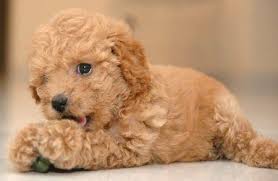
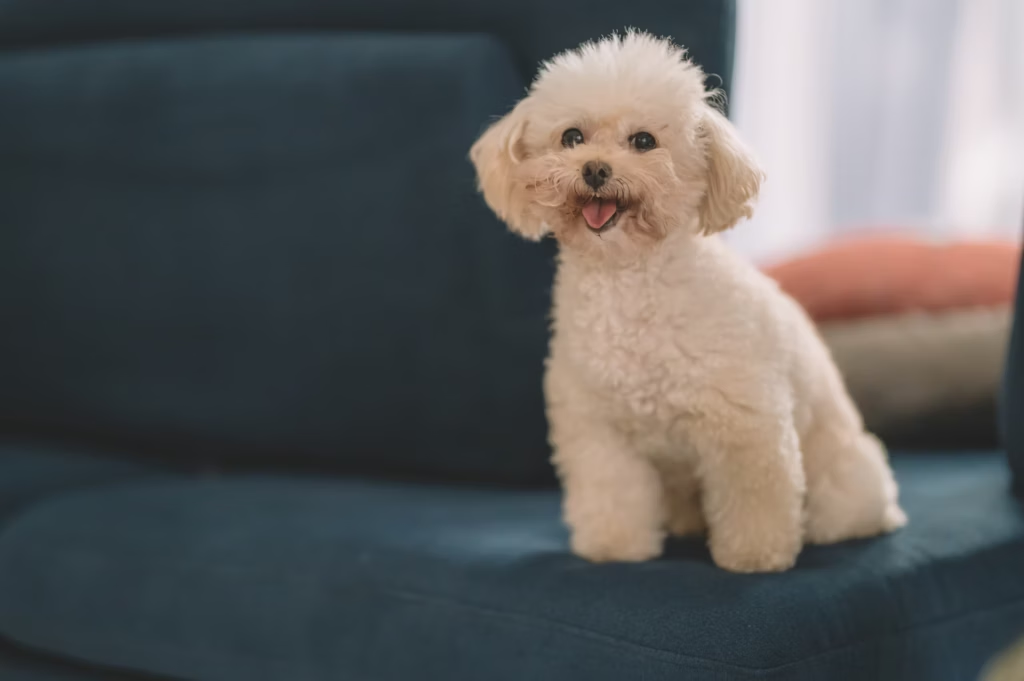
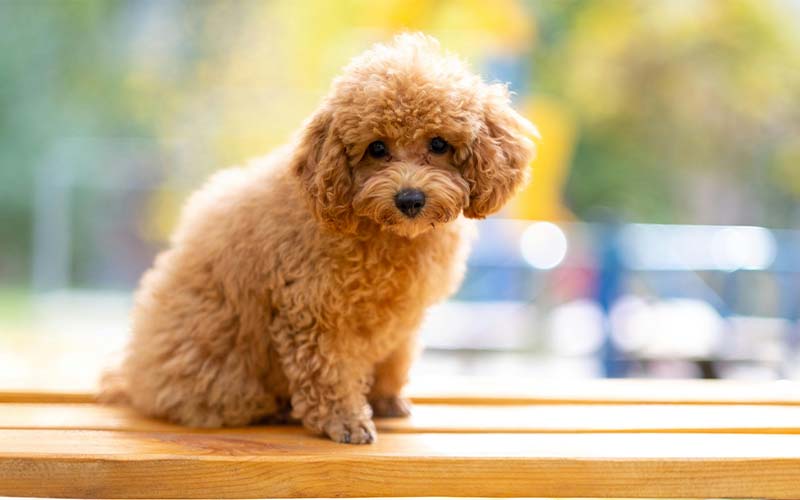
The smallest of the brilliant poodles — an elegant clever-clogs in a curly coat: clever, obedient, playful and devoted. The Toy Poodle is the smallest variety of the poodle, an ideal "performer" companion with outstanding intelligence and a hypoallergenic coat; it adores learning and games with children, lives well in a flat, but needs professional grooming and attention.
The Toy Poodle is the smallest member of the illustrious Poodle family, celebrated worldwide for its elegant appearance, remarkable intelligence, and lively, almost "toy-like" personality. This breed, which France claims as its national pride, is the perfect embodiment of a companion dog. Often called a "toy dog" (hence the name), behind this charming exterior lies a sharp mind, a high capacity for learning, and a big, devoted heart. It's an obedient companion that will happily join in active games with children and amaze its owners with various tricks. This elegant little one, atypically for most toy breeds, can be left alone for short periods, although it's not fond of it. The rest of the time, this four-legged fluffball will demand your attention and affection. You'll also need to commit to professional grooming for its beautiful coat. Find out more on this at Tvaryny.
Toy Poodle: A Breed Snapshot
Toy Poodle: A Breed Snapshot · 11
Characteristic
Details
Origin
France (though its roots are in Germany)
Recognition as "Toy"
~1954 (as a separate size)
Lifespan
15–18 years (average)
Height at withers
24–28 cm (per FCI standard)
Weight
3–4 kg (sometimes up to 5 kg)
FCI Group
Group 9 (Companion and Toy Dogs)
Temperament
Intelligent, active, loyal, playful, sensitive
Grooming needs
Very high
Shedding
Almost non-existent
Tendency to bark
High (requires training)
Activity needs
Medium (requires games and mental stimulation)
What the Toy Poodle Looks Like: An External Description
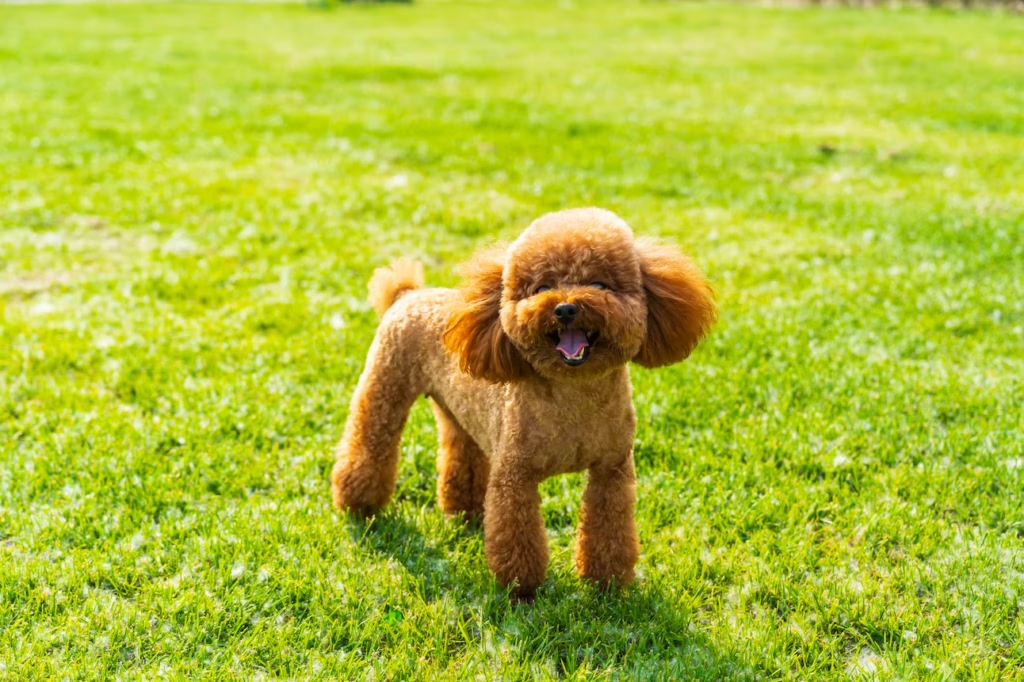
The Toy Poodle is a miniature copy of the Standard Poodle, impressing with its harmony, elegance, and proud posture. It is a refined, tiny dog with a sturdy, but not massive, build. It must look proportional, giving neither the impression of an "overgrown" puppy nor a fragile, delicate creature.
Head and Muzzle
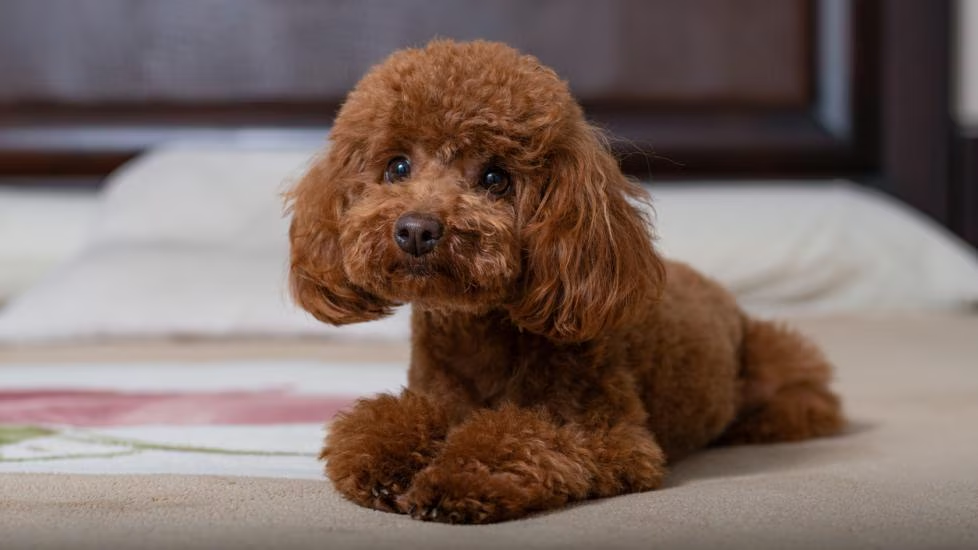
The Toy Poodle's head is refined, elongated, but proportional to its body. The skull is slightly convex, and the transition from forehead to muzzle (the stop) is smooth and barely noticeable. The muzzle is long, straight, and not pointed. The nose leather is well-developed, pigmented black in black, white, and silver dogs, and brown in brown dogs. In apricot or red dogs, the nose can be black or brown.
Eyes, Ears, and Neck
The Toy Poodle's eyes are almond-shaped and set slightly obliquely. The eye colour is very dark - almost black or dark brown. Dark amber eyes are permitted in brown dogs. The expression is lively, intelligent, and inquisitive. The ears are long, flat, hang along the cheeks, and are set low (at eye level or slightly below). They are covered with long, wavy hair. The neck is strong, of medium length, and slightly arched, giving the dog a proud appearance.
Body and Tail
The Toy Poodle's body is well-balanced. The body length slightly exceeds the height at the withers. The back is short and strong, the loin is muscular, and the chest is deep and moderately broad. The abdomen is tucked up. The tail was traditionally docked to half or one-third of its length. However, today in many countries (including the UK), tail docking is banned. The natural tail is set high, and the dog carries it raised.
Coat: Structure and Colour
The coat is the Poodle's hallmark. The standard recognises two types of coat:
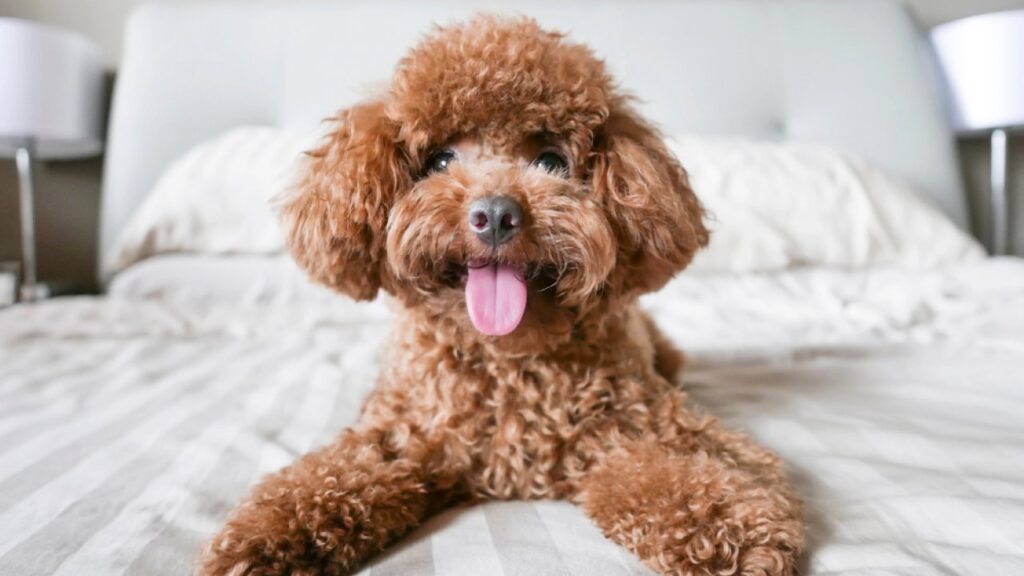
Curly coat: Very dense, springy, fine, with a woolly texture. It forms small, tight curls.
Corded coat: Also dense and fine, but forms characteristic cords of equal length, which should be at least 20 cm long.
Poodles shed practically no hair. Dead hair doesn't fall to the floor but gets tangled in the curls, which is why they are considered a hypoallergenic breed. This also means they require regular brushing to prevent matting.
The FCI and Kennel Club standards recognise only solid (self-coloured) coats. These include:
Black
White (must be pure, without yellowing)
Brown (a deep, warm shade)
Silver (born black, clearing with age)
Apricot
Red (a rich, russet shade)
The colour must be uniform. Parti-colours or phantom markings are not recognised by the FCI standard, although they do exist and are popular in some countries, particularly the US.
Toy Poodle vs. Other Poodles: What's the Difference?
The main, and essentially only, difference between the four officially recognised Poodle varieties is size (height at the withers). The Toy Poodle is the smallest. They are all one breed, with the same standard for character, proportions, and coat types. Besides the Toy (24–28 cm), there are:
Standard Poodle: height from 45 to 60 cm (sometimes up to 62 cm).
Although the temperament of all poodles is similar, many owners note that the smaller varieties (Toy and Miniature) are more energetic, "yappy", and human-oriented, whereas the Standard Poodle is often calmer and more reserved, retaining more of its hunting ancestors' traits.
Fun Facts About the Toy Poodle
Circus performers: Thanks to their intelligence and playfulness, Poodles (especially small ones) were stars of travelling circuses in the 18th and 19th centuries. They performed complex acrobatic tricks.
A "French" dog with German roots: Although the Poodle is the national dog of France, its name comes from the German "pudeln" (to splash).
The hunting clip: The famous "lion clip" had a purely practical purpose. Dense coat was left on the chest and joints to protect the dog from cold water, while the rest of the body was clipped to make swimming easier.
Truffle hunters: Thanks to their excellent sense of smell, small poodles were once used to search for precious truffles.
They don't shed: Poodles don't have a seasonal moult. Their coat grows like human hair and, if it falls out, it gets caught in the curls. This makes them a good choice for allergy sufferers.
History and Origin of the Breed
The Toy Poodle's history is inextricably linked with its larger ancestors. Poodles are believed to descend from German water dogs, known as "Pudel" (from the German "pudeln," meaning "to splash in water"). These dogs were outstanding hunters and retrievers, especially for waterfowl. Their famous curly coat not only protected them from cold water but was also clipped in a specific way (the "lion clip") to protect vital organs and joints, while leaving the hindquarters free for swimming.
Over time, Poodles made their way to France, where their elegance and exceptional intelligence were highly prized by the aristocracy. It was in France that the breed was "polished" and standardised. Gradually, smaller variations began to appear alongside the large (Standard) Poodles. First, the Medium Poodle, and then the Miniature Poodle, became popular companions.
The Toy Poodle is the result of selective breeding for miniaturisation, which peaked in the 18th and 19th centuries. Aristocratic ladies desired an even smaller companion dog that could be easily carried. King Louis XVI and Madame de Pompadour were famous admirers of miniature poodles, which further boosted their prestige. Small poodles also frequently performed in circuses, showing off amazing tricks thanks to their intelligence and desire to please.
Official recognition of the Toy Poodle as a separate size variety came much later. The breed standards were finalised in the mid-20th century, setting clear height limits (up to 28 cm at the withers) to separate the Toy from the Miniature. Today, the Toy Poodle is exclusively a companion dog, retaining the intelligence of its working ancestors but fully adapted to life in a city flat.
Character: Temperament and Behaviour
The Toy Poodle's character is a unique combination of high intelligence, energy, and deep affection for people. They are extremely sensitive to their owner's mood and strive to be the centre of attention.
Intelligence and Trainability
Poodles consistently rank second among the most intelligent dog breeds (according to Stanley Coren). This means the Toy Poodle can learn new commands with minimal repetition. They literally "pick things up on the fly." This makes them excellent pupils. They enjoy the learning process, especially if it's in the form of a game with positive reinforcement. Affectionate and playful Toy Poodles have an innate desire to please thier owner, and they will use their full arsenal of learned tricks to do so.
The Toy Poodle in the Family: Attitude Towards Children and Pets
Toy Poodles are wonderful family dogs. They love being part of the "pack" and actively participate in all family activities. However, due to their tiny size and fragility, they are not recommended for families with very young children. A small child could accidentally injure the dog. They are ideal for families with older, sensible children who know how to handle an animal gently.
When it comes to other pets, Toy Poodles are generally sociable. If they grow up with other dogs or cats, they usually get along splendidly. Their hunting instincts (compared to the Standard Poodle) have almost vanished. That said, representatives of this small breed can be shy around strangers or other dogs if they haven't had proper early socialisation.
Separation Anxiety and "Yappiness"
Contrary to what is sometimes written, Toy Poodles are highly human-oriented and can find it very difficult to be alone. This is not a dog that can be left alone for 8–10 hours. They are prone to separation anxiety, which can manifest as destructive behaviour or constant barking. They are also often called "little alarm bells." They are vigilant and prone to barking at any suspicious sound or strangers at the door. This trait must be managed from a young age so it doesn't become a problem.
Pros and Cons of the Breed
Pros and Cons of the Breed · 6
Advantages (Pros)
Disadvantages (Cons)
High intelligence: Easy to train, one of the smartest breeds.
High grooming needs: Requires daily brushing and regular professional clipping.
Hypoallergenic coat: Sheds very little, suitable for allergy sufferers.
Prone to anxiety: Dislikes being left alone, can have separation anxiety.
Compact size: Ideal for flats, easy to travel with.
"Yappiness": Can bark a lot without proper training.
Longevity: Lives 15–18 years.
Fragility: Easily injured, not suitable for families with small children.
Loyalty: Human-oriented, very attached to the family.
Health issues: Prone to hereditary diseases.
Adaptability: Can be both active and quiet pets.
Dental problems: Prone to tartar and early tooth loss.
Training and Rearing a Toy Poodle
Thanks to their intelligence, Poodles can learn a great deal and will happily expend their natural energy on learning and performing new tricks. They adore being the centre of attention and receiving praise. Besides tricks, ensure the little one gets regular walks - and their need for physical activity will be met.
During training, use positive reinforcement methods exclusively - praise, treats, and toys. Toy Poodles are very sensitive to their owner's tone of voice. Shouting or physical punishment can frighten the dog and permanently destroy its desire to cooperate. Your praise will motivate your pet more than anything else.
Socialisation: The Key to a Confident Dog
To prevent potential shyness, fearfulness, or fear-based aggression, remember the importance of early socialisation - starting from puppyhood. Introduce the puppy to different people, sounds, surfaces, and other calm, vaccinated dogs (once your vet gives the all-clear). This will help raise a balanced and self-confident dog.
Puppy's Age
Key Socialisation Tasks
3–12 weeks
"Imprinting period." Introduction to different people, safe places, sounds (hoover, hairdryer, street noise).
12–16 weeks
Start of walks after vaccinations. Controlled meetings with other dogs, car rides.
4–6 months
Consolidating skills. Visits to the groomer (first hygiene procedures), calm reaction to city noise.
Tricks and "Canine Sports"
For a Toy Poodle, simple walks aren't enough. They need mental stimulation. Learning tricks (like "give paw," "spin," "fetch the toy") is an excellent way to engage their mind. Thanks to their agility and obedience, Toy Poodles excel in sports like agility (for small breeds), nosework, and musical freestyle (dog dancing).
Grooming and Hygiene
Caring for a Toy Poodle means, first and foremost, caring for its unique coat. This requires time, effort, and money. The little Toy Poodle is intended exclusively for indoor living - it's hard to imagine this tiny dog in a kennel in the back garden.
Grooming: Clipping and Brushing
This is the most crucial aspect of their care. The Toy Poodle's coat grows constantly. If not brushed, it quickly mats into dense clumps, which can cause skin irritation, infections, and severe pain for the animal. A Toy Poodle must be brushed daily, using a special slicker brush and a metal comb, brushing right down to the skin.
In addition to daily brushing, a Toy Poodle needs a professional clip every 4–8 weeks. It's best to entrust this task to a professional groomer, as clipping a Poodle is a true art form. There are various clip styles:
Clip Name
Description
"Puppy Clip"
Short, uniform length all over the body. The most practical option.
"Continental Clip"
Classic show clip with "bracelets" on the legs and a "pompon" on the tail.
"Modern Clip"
Softer transitions, with longer hair on the legs and head.
"Scandinavian Clip"
A variation of the show clip, very popular in Europe.
Bathing and Ear Hygiene
Bathing a Toy Poodle needs to happen quite frequently - usually with each visit to the groomer, or every 2–3 weeks if the dog gets dirty. Use only high-quality dog shampoos and conditioners. After bathing, the coat must be dried thoroughly with a hairdryer while simultaneously brushing it, otherwise it will mat up again.
Ears - are a weak spot for Poodles. Due to their drop shape and the hair growth inside the ear canal, ventilation is poor. This creates ideal conditions for bacteria and fungi, which leads to otitis (ear infections). It's necessary to inspect the ears regularly (once a week), clean them with a special lotion, and remove the hair from the ear canal (this is done by a groomer or vet).
Eye and Nail Care
Toy Poodles, especially light-coloured ones, often have excessive tearing, which leads to unsightly "tear stains". The area under the eyes needs to be wiped daily with special lotions or just a damp cotton pad. If the discharge is excessive or changes colour, contact your vet.
Nails need to be trimmed every 2–4 weeks. As Toy Poodles are light, they don't always wear down their nails on the pavement. Long nails are uncomfortable for the dog and can deform the paw.
Nutrition
Nutrition: What to Feed a Toy Poodle
Health and risks
Health: Typical Diseases and Prevention
Frequently Asked Questions (FAQ) · 5
Do Toy Poodles bark a lot?
Yes, they have a tendency to bark. They are vigilant dogs that react to every sound. This trait needs to be managed from a young age by teaching the dog a "Quiet!" command and not encouraging baseless barking.
Are Toy Poodles good for families with children?
They get on wonderfully with older, careful children. However, due to their fragility (small size and thin bones), they are not recommended for families with toddlers who might accidentally injure the dog.
How much does a Toy Poodle cost?
Judge transparency rather than the sum: a written contract, registration papers, screening results for the hereditary conditions of the breed, a vaccination record, and the chance to meet the mother with her litter. That is what separates a responsible breeder from a dealer. It's important to remember that grooming is a significant, ongoing expense throughout the dog's life.
Can a Toy Poodle be left home alone?
It's not recommended. They are very social and prone to separation anxiety. If you work full-time out of the house, this breed is probably not for you. They can tolerate being alone for 3–4 hours, but no longer, and must be gradually trained to do so.
Is the Toy Poodle a "ladies' dog"?
That's a stereotype. Thanks to its intelligence and adaptability, the Toy Poodle can be a wonderful companion for anyone - man or woman, young or old - who is willing to give it time, attention, and proper care.
Video About the Breed
FAQ
Is the Toy Poodle really hypoallergenic?
It is one of the most "allergy-friendly" dogs: the curly coat barely sheds and holds dander, but no dog is 100% hypoallergenic — the reaction is individual.
How clever is the Toy Poodle?
Very — poodles consistently rank among the three cleverest breeds in the world; the Toy Poodle learns commands and tricks in a flash despite its miniature size.
Is the Toy Poodle suitable for a novice?
Yes — it is a clever, obedient and affectionate companion, ideal for a flat; the key is professional grooming and attention.