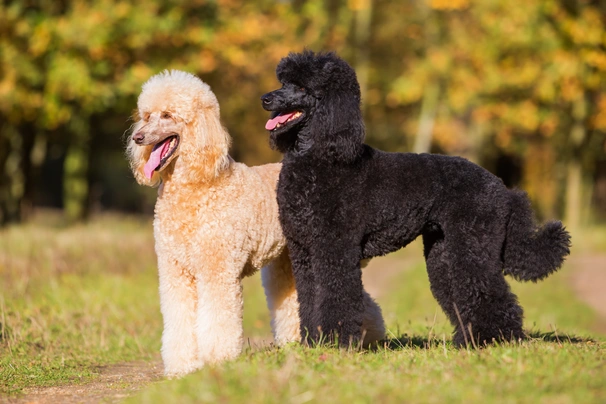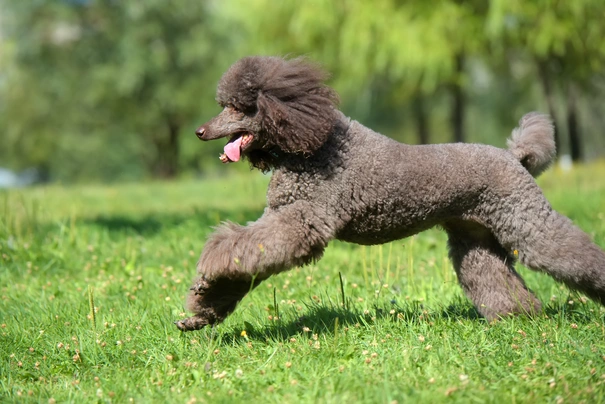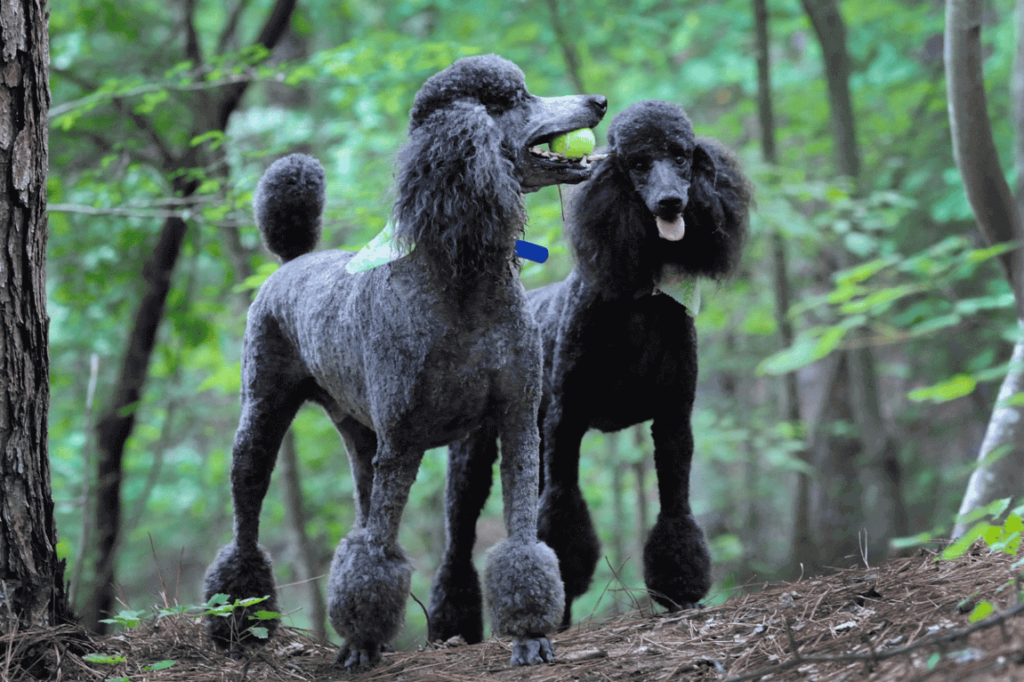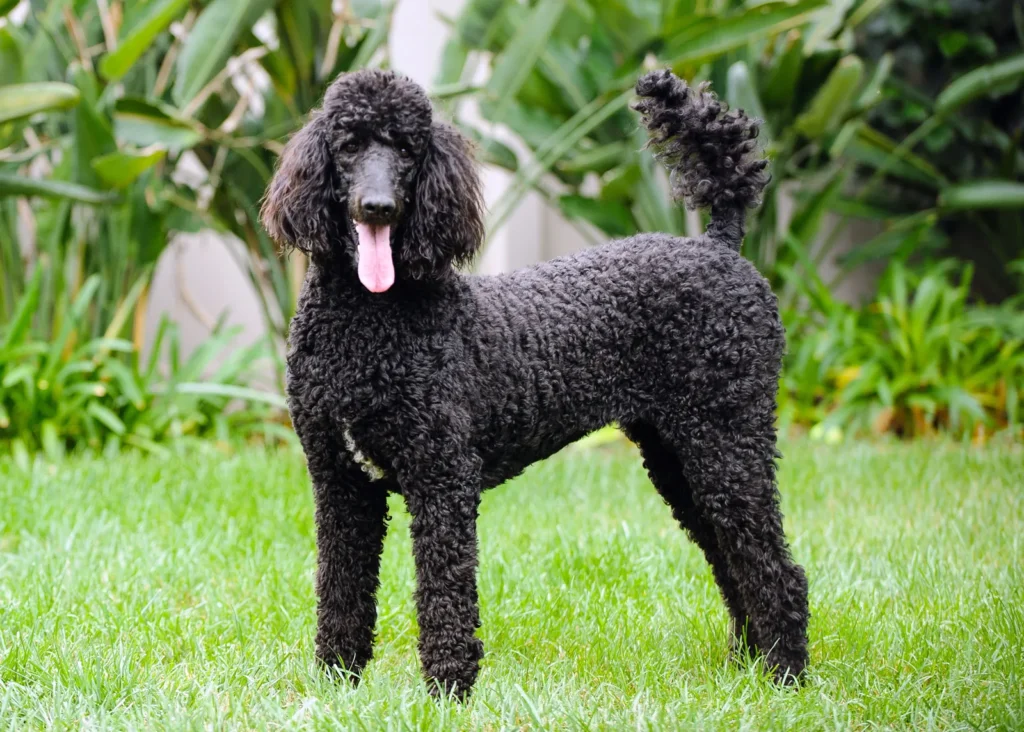
The Standard Poodle is a descendant of various hunting dogs and the ancestor of several companion breeds. This dog, often associated with elegance and aristocracy, actually has working roots and incredibly high intelligence. The smaller varieties - the Medium, Miniature, and Toy Poodle - all stem from the Standard. They are united by their characteristic curly, solid-coloured coat and natural talent.
These cheerful family pets are always ready for fun and tricks, and they also get along splendidly with other household animals. They are not just sofa decorations but are also superb athletes and companions. You can read more about all aspects of keeping this amazing breed on Tvaryny.
The Poodle (Standard): A Brief Breed Overview
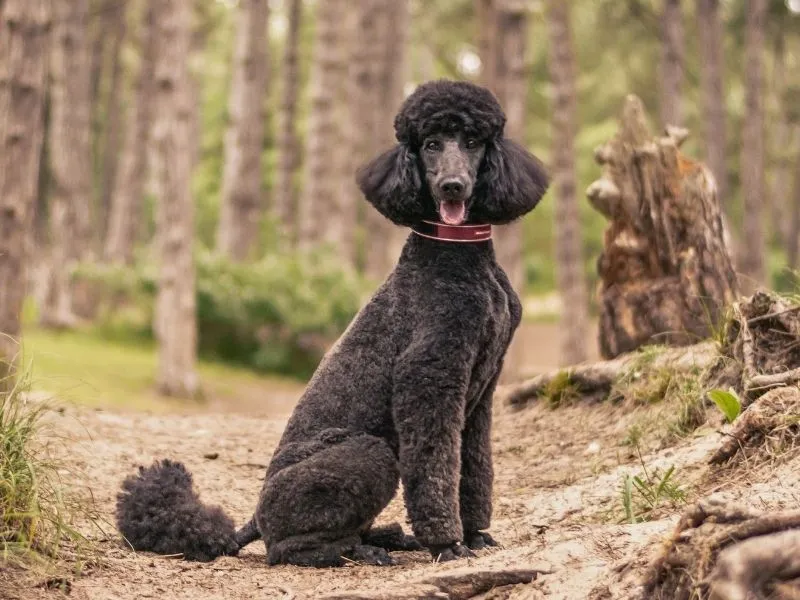
The Poodle (Standard): A Brief Breed Overview · 11
| Breed Name (Original) | Poodle (Standard) / Grosspudel |
|---|---|
| Origin | France (considered country of origin), Germany (roots) |
| First Mentioned | 16th century (depictions), 1954 (from info card) |
| FCI Classification | Group 9 (Companion and Toy Dogs), Section 2 (Poodles) |
| Lifespan | 12–15 years |
| Height at Withers (Standard) | 45–62 cm (usually 56–62 cm for Standard) |
| Weight | 20–32 kg (depending on height and sex) |
| Intelligence | Exceptionally high (ranks in the top 3 most intelligent breeds) |
| Energy Level | High |
| Grooming Needs | Very high |
| Shedding | Minimal (hypoallergenic coat) |
History and Origin
Although the Standard Poodle is France's national dog today, its history is a subject of debate, with roots tracing back to Germany. The breed's name comes from the German word "pudeln," meaning "to splash in water." This directly points to their original purpose. Standard Poodles were bred as water retrievers - dogs that fetched shot game (mainly ducks) from the water for hunters.
Their unique coat, now a hallmark of the show ring, had a purely practical function. The dense curls protected the dog from cold water. The famous clips, such as the "lion clip," also arose from practical needs: hair was left on the chest and joints (to protect vital organs and limbs from hypothermia and arthritis), while the rest of the body was clipped to make swimming easier.
From Germany, the breed made its way to France, where it was highly valued for its intelligence and trainability. The French began using them not only for hunting but also in circus performances, where the Poodle's showmanship truly shone. It was in France that the breed gained its aristocratic reputation and elegant look. They were also used for truffle hunting thanks to their keen sense of smell. In time, smaller versions were bred to serve as companion dogs.
What the Standard Poodle Looks Like: Appearance
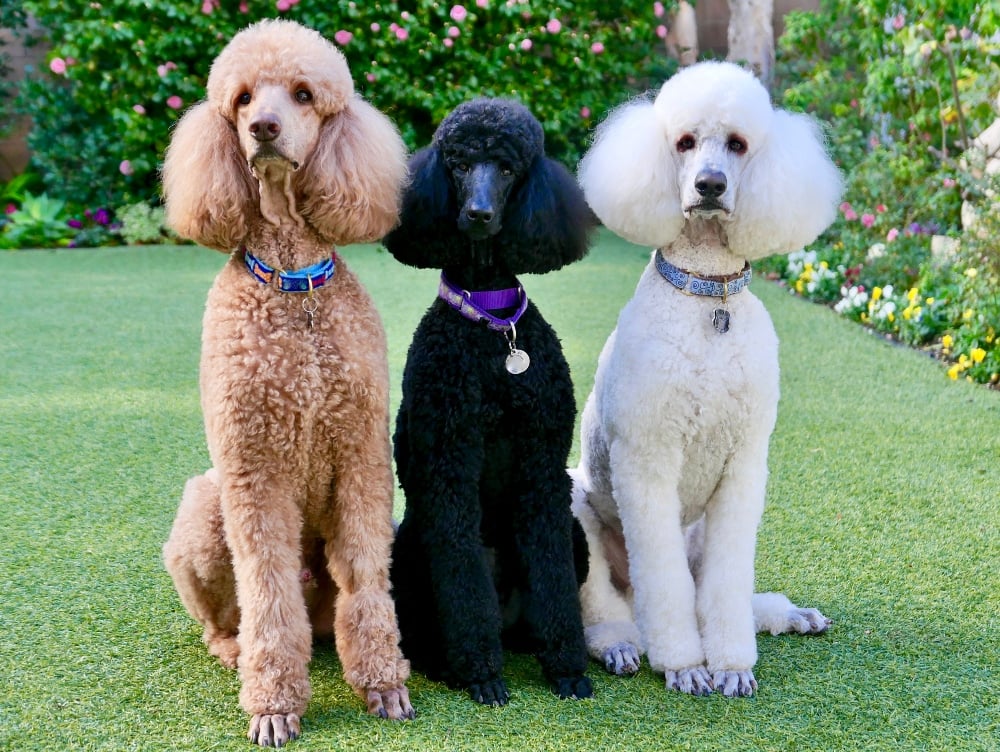
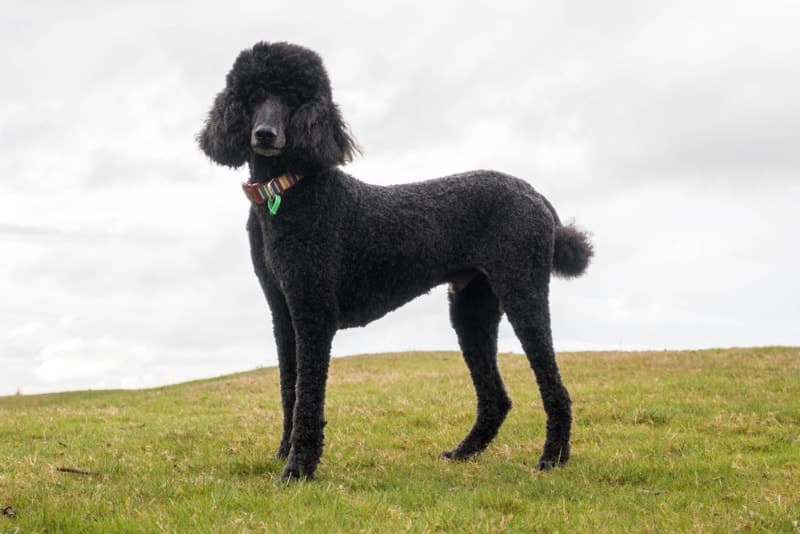
The Standard Poodle is a dog of elegant, harmonious, and proportional build. He gives the impression of being intelligent, alert, and active. His gait is light and springy. It is the largest of the four Poodle varieties.
Head and Muzzle
The Poodle has a refined, rectilinear head that is proportional to the body. The skull is slightly convex. The stop (the transition from forehead to muzzle) is slight but defined, not sharp. The muzzle is long, straight, and not snipey. The lips are dry and tight-fitting. The bite is scissor-like. The eyes are almond-shaped and set slightly obliquely. Eye colour is dark - from black to dark brown or dark amber, depending on the coat colour. The ears are long, flat, hang close to the cheeks, and are covered in dense, wavy hair.
Body and Tail
The neck is strong, slightly arched, and of medium length. The back is short and level. The loin is muscular and strong. The chest is deep and moderately wide. The abdomen is tucked up. The tail is set high. It was once commonly docked, but this is now banned in many countries, and a natural tail is the norm. The dog carries it gaily, angled slightly away from the body.
Coat and Colours of the Standard Poodle
The coat is the breed's main distinguishing feature. It has no undercoat and is considered hypoallergenic as it barely sheds (dead hairs get trapped in the curls rather than falling out). There are two coat types:
- Curly coat: Very dense, springy, fine, and woolly. It forms even curls.
- Corded coat: Also dense and fine, but it forms characteristic cords of uniform length (at least 20 cm). This type is rarer and requires specific care.
The breed standard recognises only solid (self-coloured) coats. These include: black, white, brown (a deep, warm shade), silver (grey), apricot, and red. Other colours, such as phantom, harlequin, or parti-coloured (spotted), are not recognised by the FCI standard but do exist.
Besides the Standard Poodle, there are three other FCI-recognised size varieties, which differ only in height: the Medium Poodle (35–45 cm), the Miniature Poodle (28–35 cm), and the Toy Poodle (up to 28 cm).
Interesting Facts About the Standard Poodle
- France's National Dog. Despite its German roots, France is credited with developing the breed into what it is today, and in 1936 it was officially recognised as the national dog.
- Truffle Hunters. Thanks to their keen nose and trainability, Poodles (especially smaller ones) were used for centuries to hunt for expensive truffles.
- Circus Stars. Their intelligence and desire to please made them ideal performers. They were stars of travelling circuses all over Europe.
- War Dogs. During the World Wars, Poodles served in the military, delivering messages, locating wounded soldiers, and even guarding installations.
- The Point of Show Clips. As mentioned, the elaborate clips had a practical purpose. "Pompons" on the legs and tail protected the joints and tail tip from the cold, while the shaved portions made swimming easier.
- A Favourite of Celebrities. Poodles were beloved by many famous figures, including Elvis Presley, Marilyn Monroe, Winston Churchill, and Grace Kelly.