


As the cold sets in, we instinctively dress warmer and, let’s be honest, check the fridge more often for something hearty. This ancient survival mechanism works perfectly: the body demands fuel for heat. Looking at your pet curled up by the radiator or shivering on a walk, every owner wonders: is he hungry? Should I put a bit more food in the bowl to protect my four-legged friend from the frost?
The answer to this question isn’t as straightforward as it might seem. Simply increasing the portion size is the easiest way to obesity, not health. To understand an animal’s true needs in winter, you have to consider many factors: from coat type to the temperature in your flat. Find out more on Tvaryny.
The Physiology of Cold: Where Do the Calories Go?
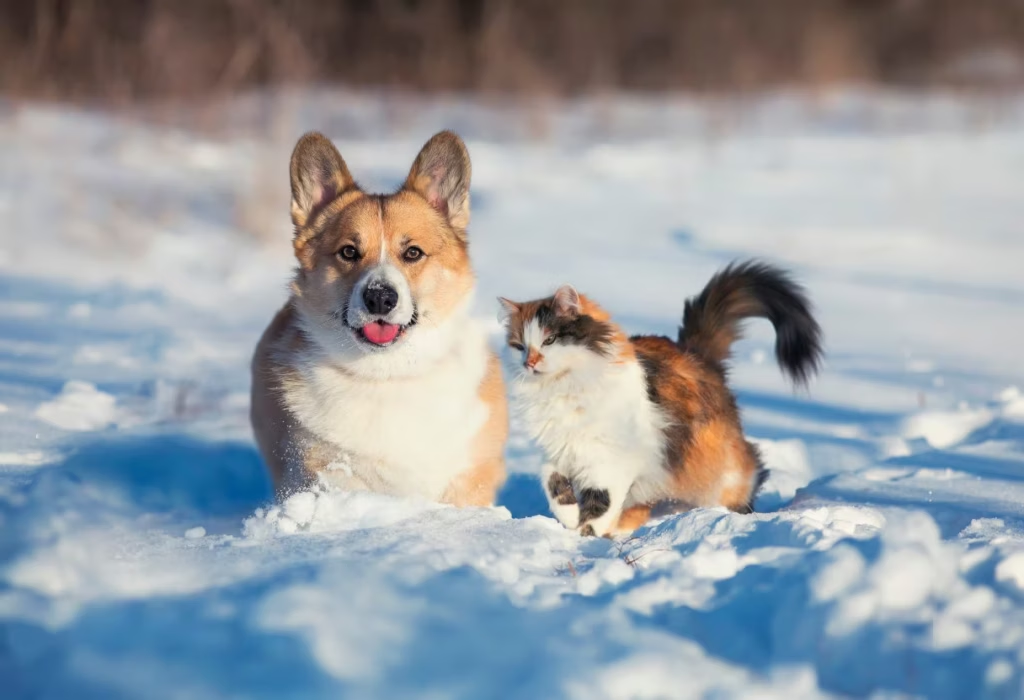
Before running for the measuring cup, let’s understand the mechanics. Mammals (which include both cats and dogs) have a concept of basal metabolism – the energy needed to maintain vital functions at rest. One of the most important functions is thermoregulation.
When the ambient temperature drops below a certain critical point (which is different for every breed), the organism switches on the “heater”. The body starts burning calories not for movement, but exclusively to produce heat. This process is called thermogenesis. The conclusion might seem obvious: cold = need more food. But here lies the main trap.
Important rule: The need for extra energy arises only when the animal is spending resources on heating. If your dog walks for 15 minutes and spends the rest of the time snoring on the sofa under a blanket, his energy expenditure in winter might even decrease due to reduced activity.
Indoor Pets vs Outdoor Dwellers
This is the main dividing line in forming a winter diet. The approach to feeding a Husky living in a kennel and a Chihuahua that walks exclusively in your arms or in a warm jumpsuit differs radically.
1. Residents of kennels and outdoor shelters
For dogs living permanently outside, winter is a serious test. They really do need more calories. Depending on the air temperature, energy needs can increase by:
- 10-15% at temperatures around 0°C;
- 20-30% when the temperature drops to -10°C;
- Up to 50% and more in extreme frost (below -20°C).
But “more food” doesn’t just mean increasing the volume of the meal. A dog’s stomach isn’t bottomless. If you give a double portion of low-quality food, it simply won’t be digested. It is necessary to increase the caloric density of the diet, not just its volume. This is done by increasing the proportion of fats and animal proteins.
2. Flat-dwelling “sofa” experts
Here the situation is the opposite. In winter, daylight hours shorten, the weather turns bad, and walks become shorter. Owners don’t want to freeze, and often neither do the dogs (especially short-haired ones). As a result:
- The animal moves less.
- The temperature in the flat remains comfortable (+20-22°C).
- Energy expenditure on thermoregulation is absent.
If you start feeding your pet more in this mode “because it’s winter outside”, by spring you will have an obese animal. For indoor dogs and cats, the winter ration often needs to be reduced or left unchanged, but the quality composition should be reviewed.
Winter Diet for Dogs: Key Strategies
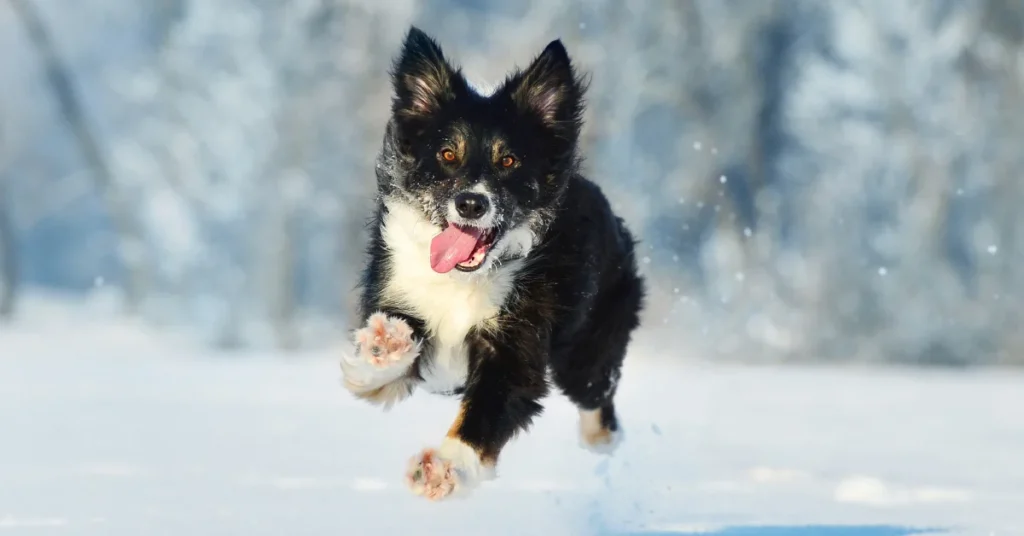
Feeding dogs in winter requires attention to detail. Here are the main points worth noting to keep your dog active and heathy.
Proteins and fats
Fat is the most concentrated source of energy. For active dogs and those spending a lot of time outdoors, switching to food with a higher fat content (for example, for working dogs) is justified. Protein is necessary for maintaining muscle mass and renewing the coat, which becomes thicker in winter.
Food temperature
This is critically important for animals on a natural diet. Never give a dog food from the fridge, and certainly not frozen. The body spends precious energy warming the food in the stomach, which could be used to warm the body. Food should be warm (about 35-38°C). This also enhances its aroma, which is important if the animal has a reduced appetite.
Water balance: The hidden threat
There is a myth that animals drink less in winter, or that a dog can “eat snow”. This is a dangerous misconception.
- Snow is not water. Eating snow leads to cooling of the throat, gastritis, and energy expenditure to turn ice into water. Furthermore, city snow contains grit and toxins.
- Dehydration. Dry frosty air outside and over-dried air in flats (due to central heating) quickly draw moisture from the body.
Ensure that the water in the bowl is always fresh and at room temperature. For kennel dogs, warm water needs to be poured several times a day so it doesn’t have time to freeze, or use heated bowls.
Cats in Winter: Features of “Sleep Mode”

Most house cats don’t go outside, so their main winter problem is boredom and food availability. Cats are prone to so-called “emotional overeating”. When it’s dark and dreary outside, the cat goes to the bowl.
The main task of a cat owner in winter is not to overfeed. If you see the cat has become less active, try using interactive feeders. This will force the cat to “hunt” for food, expend energy, and eat slower.
For stray cats or those you feed near the block of flats entrance, the rules are the same as for kennel dogs: food must be high-calorie, warm, and not freeze in 5 minutes. Dry food is better here because it doesn’t turn into ice, but definitely ensure there is warm water.
Vitamins and Supplements: What is Really Needed?
Besides calories, winter brings skin and coat problems. Central heating makes the air in the flat critically dry. This leads to dry skin, dandruff, brittle fur, and increased shedding (which can last all winter).
| Supplement | What it’s for | Sources |
|---|---|---|
| Omega-3 and Omega-6 | Moisturising skin from within, coat shine, protecting paw pads from cracks. | Fish oil, salmon oil, special complexes. |
| Biotin (Vitamin B7) | Strengthening coat structure, preventing skin inflammation. | Liver, egg yolk, brewer’s yeast. |
| Vitamins A and E | Supporting immunity and regeneration of mucous membranes. | Carrots (with fats), liver, vegetable oils. |
However, don’t rush to buy every jar in sight. If your pet eats high-quality super-premium or holistic dry food, most necessary substances are already there. Hypervitaminosis (excess vitamins) can be more dangerous than a deficiency. Always consult a vet before introducing supplements.
Checklist: Are You Feeding Your Animal Correctly in Winter?
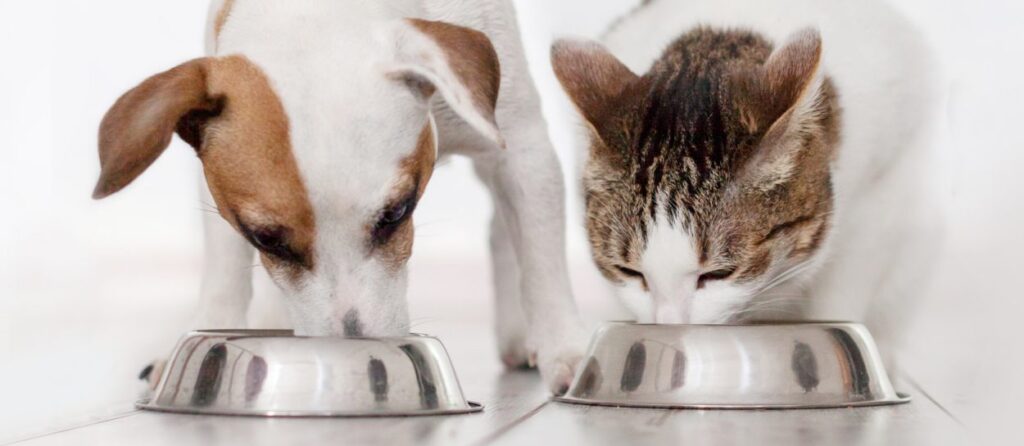
To make sure you are doing everything right, go through this short list. If you answer “Yes” to most points, your pet is in safe hands.
- I assess the animal’s body condition once every 2 weeks (I feel the ribs: they should be felt with light pressure but not stick out).
- I adjust the portion depending on activity, not just the temperature outside.
- Water is always available to my pet and isn’t cold.
- I wash paws after every walk and apply protective wax (or give Omega-3 for skin elasticity).
- I don’t give food from the table (especially fatty leftovers from holiday meals), knowing this is a blow to the pancreas.
Conclusions: Individual Approach is the Key to Success
A winter diet for animals isn’t just about “pouring more”. It is a delicate balance between conserving heat and avoiding excess weight. There is no universal formula: an active Jack Russell racing through snowdrifts needs enhanced nutrition, while a phlegmatic Bulldog dragged outside by force must definitly stay on the old diet.
Watch your friend. If the coat has become dull and the animal lethargic, perhaps it lacks energy or vitamins. But if the sides have started to round out, it’s time to reduce the calorie count. Remember that your care is measured not by the quantity of food, but by its quality and your attention to the needs of the little organism.