

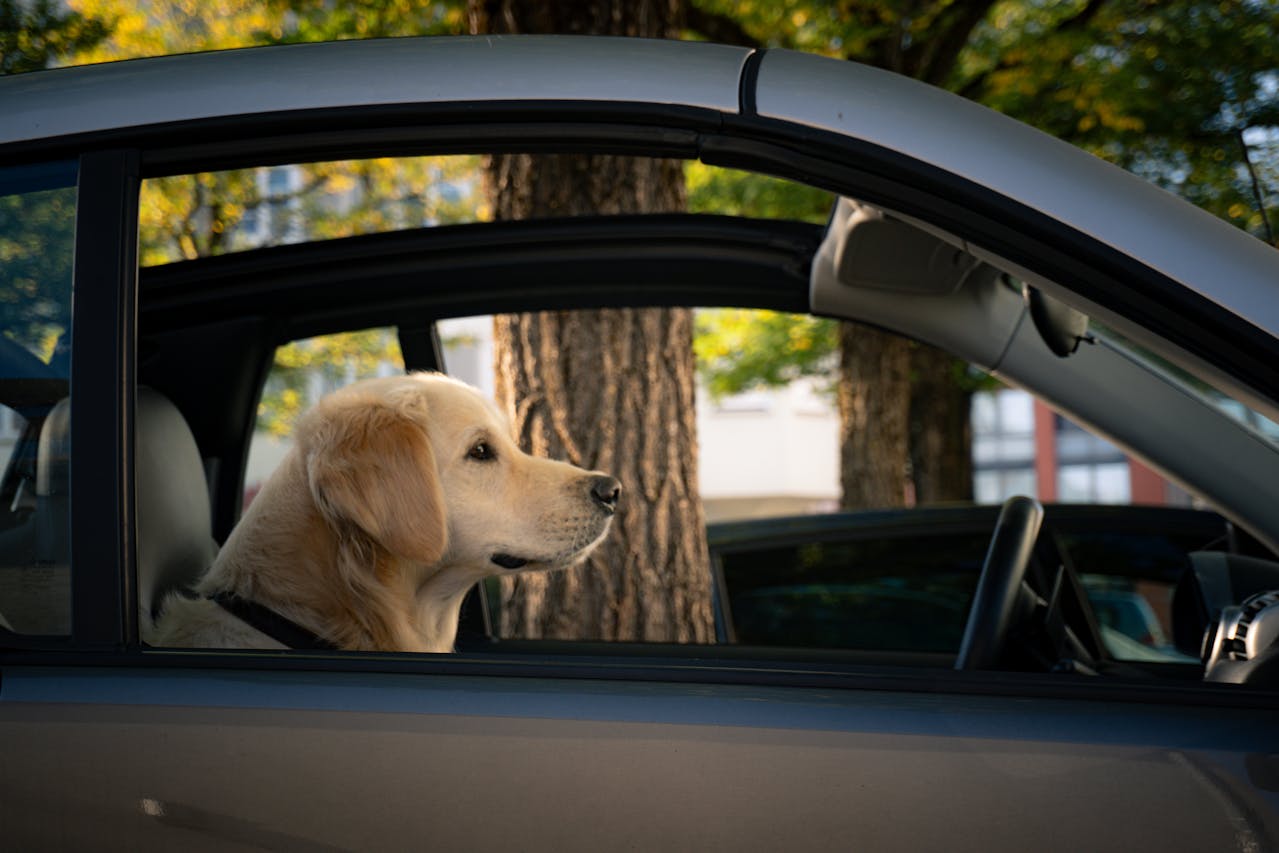
Summer, sun, holidays or just a regular shopping trip. It seems like the perfect time to take your four-legged friend with you. You park near the supermarket, look at the dog sleeping on the back seat and think: “I’ll only be 5 minutes, I’ll buy some water and be right back. I’ll leave the window open a crack, he’ll be fine”. This thought is one of the most dangerous mistakes a pet owner can make. The statistics are relentles: every year thousands of dogs die from heatstroke in parked cars, and most of their owners loved their animals, but simply underestimated the laws of physics. Read more about this on Tvaryny.
The Physics of the Trap: Why a Car Turns into an Oven
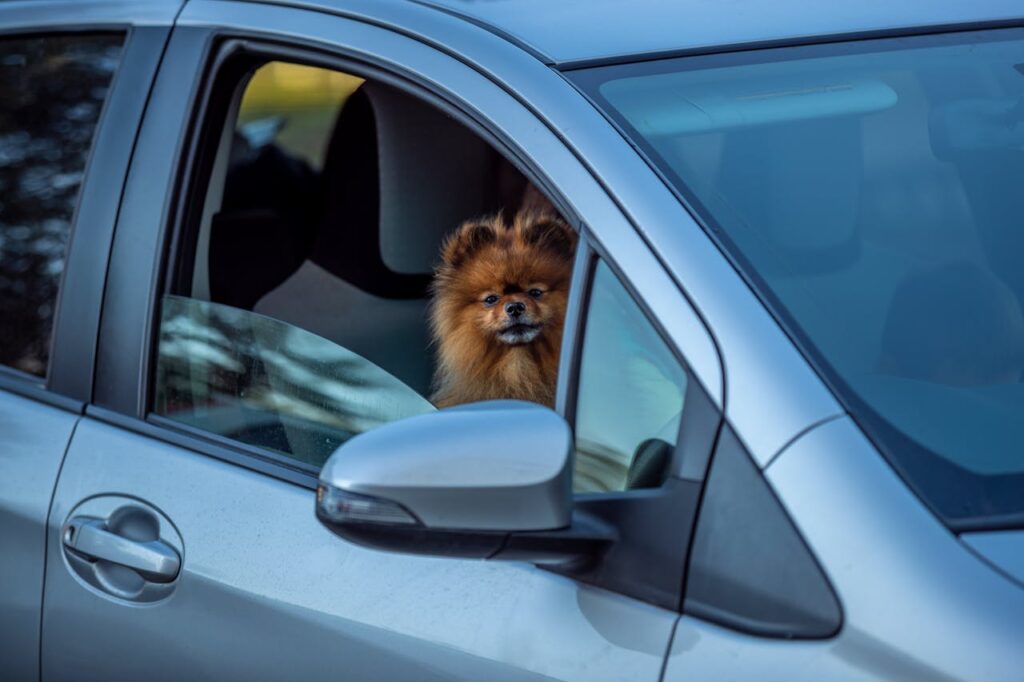
A car works like a greenhouse. Solar rays (short-wave radiation) pass through the glass and heat up the dashboard, seats, and interior trim. These heated objects begin to radiate heat (long-wave infrared radiation), which cannot escape back out through the glass. As a result, the temperature inside rises exponentially.
Many drivers judge by the air temperature outside. “It’s only +22°C out, that’s quite cool”, they think. But this is a false sense of security. Studies show that even at a comfortable external temperature, the car cabin heats up to critical levels within a matter of minutes.
| Time spent in the car in the sun | Outside temperature +21°C | Outside temperature +30°C |
|---|---|---|
| 10 minutes | +32°C | +40°C |
| 20 minutes | +38°C | +48°C |
| 30 minutes | +40°C | +52°C |
| 60 minutes | +46°C | +62°C |
Important to remember: Dark vehicle colours and dark interiors accelerate heating, but light-coloured cars are not a magic cure. The difference in heating time between a black and a white car is only a few minutes.
Dog Physiology: Why It’s Harder for Them Than Us
Humans have a powerful thermoregulation system – we sweat with our whole body. When sweat evaporates, the skin cools down. In dogs, this mechanism works completely differently and is much less effective.
- Limited sweating: Dogs only have sweat glands on the pads of their paws. This is absolutely insufficient to cool the entire body in hot conditions.
- Panting: A dog’s main method of cooling is rapid breathing with the tongue sticking out. The evaporation of saliva from the tongue and airways removes heat. But this method works only when the surrounding air is cooler than the animal’s body temperature.
- Temperature limit: A dog’s normal body temperature is 38-39°C. If it rises to 41°C, irreversible processes of protein breakdown, organ failure, and brain swelling begin.
When the cabin temperature reaches 40-50°C, the dog inhales hot air. Instead of cooling down, it heats itself from the inside even more. The cycle closes.
Myths That Kill
Owners often justify their actions with myths that have nothing to do with reality. Let’s debunk the most popular ones.
Myth 1: “I left the window open a crack”
Research shows that a gap in the window, even 5-7 cm wide, has practically no effect on the rate at which the cabin heats up. Air exchange through such a gap is minimal and cannot compensate for the greenhouse effect. The temperature will drop by a maximum of 1-2 degrees, which will not save the animal.
Myth 2: “I parked in the shade”
Shadows move. What was a shady spot at 12:00 can become an inferno under direct sun at 12:15. Furthermore, even in the shade, when the air temperature is high, the cabin heats up due to a lack of ventilation (stuffiness).
Myth 3: “My dog is used to the heat”
No living creature can “get used” to a temperature that exceeds the threshold for blood protein coagulation. This is especially true for long-haired breeds. By the way, there are many disputes regarding fur. You can read more about how to care for coats in summer, who needs a haircut, and for whom it is strictly contraindicated, in our separate material. Improper grooming can only worsen thermoregulation.
High Risk Groups
Although heatstroke is a threat to all dogs, some categories are in the deadly risk zone after just 3-5 minutes in a scorching car:
- Brachycephalic breeds: Pugs, Bulldogs, Pekingese, Boxers. Due to their short snouts, their airways are shortened, making cooling via breathing extremely inefficient.
- Overweight animals: Fat acts as an insulator, keeping heat inside the body.
- Puppies and senior dogs: Their thermoregulation mechanisms are either not yet formed or are already failing.
- Dogs with heart conditions: The strain on the cardiovascular system increases manifold during overheating.
Symptoms of Heatstroke: How to Recognise the Danger
If you return to your car or see a stranger’s animal in distress, it is important to assess its condition immediately. Symptoms develop from mild to critical very quickly.
- Initial stage: The dog breathes very heavily and loudly, the tongue is sticking out far, there is a lot of saliva (hypersalivation), the animal is restless, whining, and trying to find a cool spot.
- Middle stage: The gums and tongue become bright red or even blue. The saliva becomes thick and sticky. The animal may become disoriented and wobble.
- Critical stage: Vomiting, diarrhoea (sometimes with blood), seizures, loss of consciousness, coma.
Emergency Aid: Step-by-Step Instructions
Time is measured in seconds. Your actions must be clear. The main rule is to cool down gradually! Sudden cooling (for example, ice water) will cause a vascular spasm, which will only worsen heat loss.
Step 1: Remove from the heat
Immediately move the animal to the shade or into an air-conditioned room (but not directly under the flow of cold air).
Step 2: Cooling with water
Wet the fur with cool (not cold!) water. Pay special attention to the pads of the paws, the belly, the armpits, and the area under the tail. You can place wet towels on these zones, but change them often so they don’t heat up from the body.
Step 3: Hydration
Offer water frequently, but in small portions. Do not force water into the mouth if the dog cannot swallow – it may choke.
Step 4: To the vet
Even if the dog feels better, a visit to the clinic is mandatory. Heatstroke can have delayed consequences: kidney failure or blood clotting disorders can manifest several hours later. The animal’s body is severly exhausted after such stress. Special supplements may be needed for recovery. Read more about immune support and spring vitamin deficiency in our other articles, as these tips are also relevant for the rehabilitation period.
What to Do If You See a Stranger’s Dog in a Locked Car?
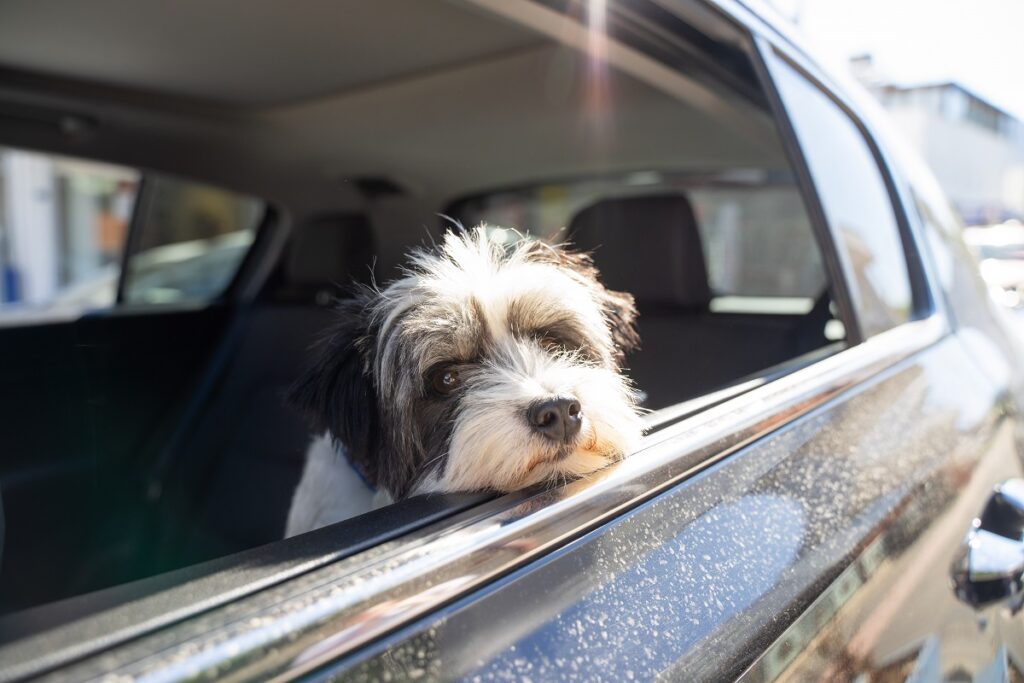
This is an ethical and legal dilemma for many. On the one hand – private property, on the other – the life of a living being.
- Assess the situation: Does the dog show signs of heatstroke (see above)? If the dog is alert and barking, the air conditioning might be running (this is often inaudible in electric cars).
- Find the owner: If the car is near a shop, take a photo of the registration plate, run inside and ask security to make an announcement over the tannoy. This is the quickest way.
- Police: If the owner does not return within 5-10 minutes and the animal is unwell – call the police on 999. In the UK, causing unnecessary suffering to an animal is an offence under the Animal Welfare Act 2006. Leaving an animal in danger falls under this category.
- Radical action: If you see that the animal is dying (seizures, loss of consciousness), and the police are not yet there – the decision to smash the window remains on your conscience. Legally, this is “criminal damage”, but there is a concept of “lawful excuse”. It is crucial to have witnesses and video evidence of the animal’s condition before you do this, to prove that you were saving a life and not just committing vandalism.
Alternatives to Waiting in the Car
When planning a trip, always have a plan “B”. If you know you’ll have to go somewhere where dogs aren’t allowed – leave your pet at home. This is a sign of love, not indifference.
If the trip is shared, use a “drive-thru” service or travel with a passenger who can walk the dog in the shade near the car while you run your errands. Modern technology also helps: for example, “Dog Mode” in Tesla cars maintains a comfortable temperature and displays a message for passers-by on the screen: “My owner will be back soon. The temperature inside is +20”.
FAQ: Frequently Asked Questions
Can I leave my dog in the car if the air conditioning is on?
It is safer, but risks remain. The engine could stall, or the air conditioning could fail. If you leave the animal with the engine running, ensure you have a spare key to lock the car.
What temperature is critical for a dog?
A body temperature above 41°C is critical. An air temperature in the cabin above 25-28°C is already uncomfortable for prolonged stays without air movement.
Do cooling mats help?
Yes, they work, but they have a limited duration. In a scorching cabin, the mat will heat up in 20-30 minutes and stop functioning.
Conclusions
Leaving an animal in a car is always a risk. There are no “safe 5 minutes” in 30-degree heat. A car turns into a death trap faster than you can choose bread in the supermarket. Be responsible. It is better for your dog to be bored at home in the cool than to suffer from overheating in a car park. Look after your pets, because their lives are entirely in your hands.