

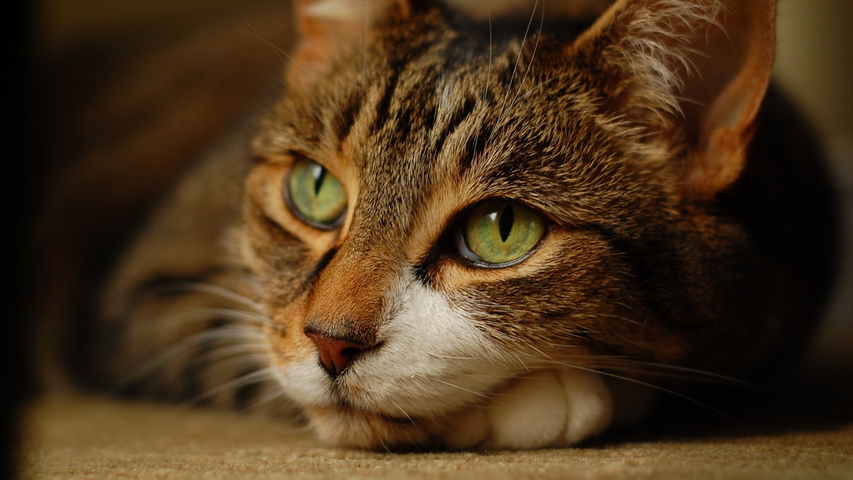
Cat eyes have always been viewed as something truly magical. In ancient times, they were compared to precious gemstones, and their ability to see in the dark sparked countless legends about their connection to the spirit world. However, beyond the incredible spectrum of colours, nature and selective breeding have gifted us with breeds whose gaze feels entirely otherworldly thanks to their unique eye shapes. Learn more on Tvaryny.
Why is cat eye shape so diverse?
In the wild, eye shape is usually driven by functionality. Large, round eyes help gather more light for nocturnal hunting, while a narrower slit can protect against dust or harsh sunlight. In the world of domestic pets, however, selective breeding has taken the lead. By stabilising natural mutations, breeders have created cat breeds with unusual eye shapes that now dominate shows and social media feeds.
The main types of eye shapes identified by felinologists include:
- Round (reminiscent of owls or anime characters);
- Almond-shaped (the classic “Oriental” look);
- Lemon-shaped (wide in the centre and tapering at the corners);
- Slanted (an Eastern type with a characteristic tilt).
Genetics and colour: How shape affects perception
Eye shape often correlates with colour in breed standards. For instance, in British Shorthairs, the eyes shouldn’t just be round; they must be a deep copper or orange. This creates a “heavy” gaze that emphasizes the breed’s sturdy build. In contrast, the Russian Blue features wide almond-shaped eyes in a striking vivid green, adding a sense of aristocratic elegance.
Exotics and Persians: The magic of the perfect circle
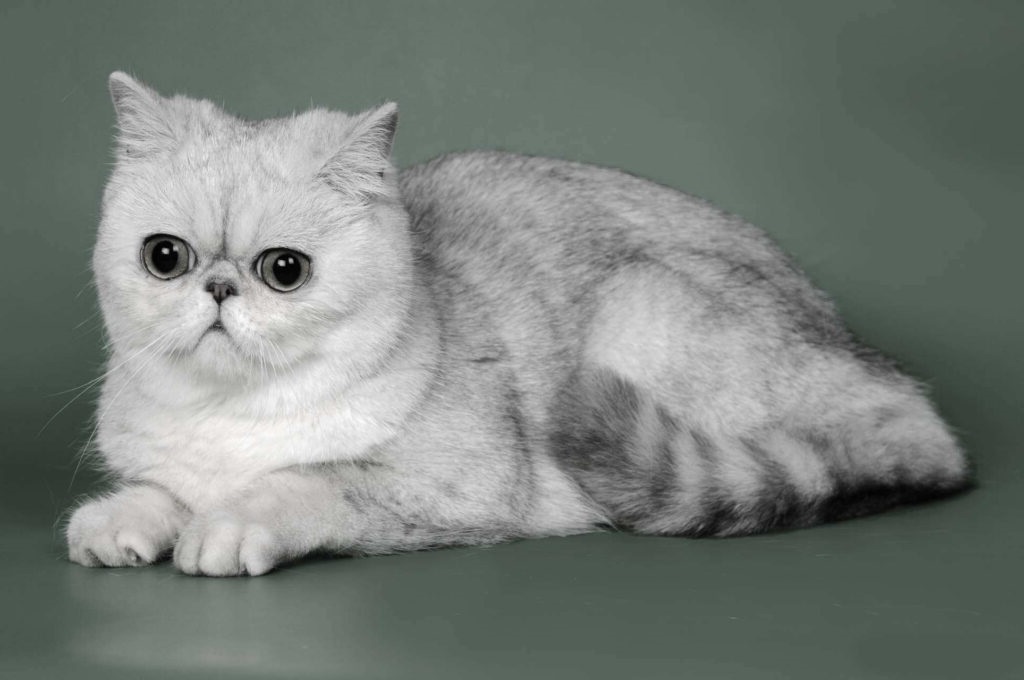
If you are looking for a cat with a wide-open, “surprised” expression, the Exotic Shorthair and Persian breeds are the clear leaders. Their eyes are massive, perfectly round, and set quite far apart. This gives the face a sweet, almost kitten-like appearance.
The genetics of these breeds are closely tied to their skull structure. Due to their brachycephalic (flat) face, the eye sockets are shallower, making the eyes appear even larger. However, this beauty comes with a catch: these cats are prone to excessive tearing. This is a vital consideration when choosing a pet, much like the unique traits of cats with unusual ear shapes: American Curl and Scottish Fold, which also require specific care.
Oriental cats: Eastern slant and intelligence
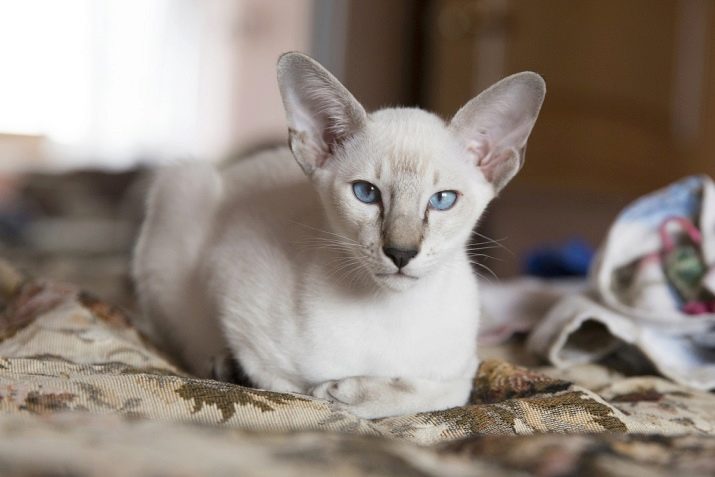
The total opposite of the round-eyed Persian is the Oriental Shorthair. Its gaze is the definition of grace and mystery. Oriental eyes are almond-shaped and slant towards the nose. This gives the impression that the cat is constantly observing you with deep, analytical interest.
Interestingly, according to standards, Oriental eyes must be bright green (except for white-coated cats). Combined with their large ears, they look like creatures from another planet. This eye type is actually less prone to inflammation because the eye’s natural drainage system works more efficiently than in flat-faced breeds.
Sphynxes: The lemon-shaped mystery
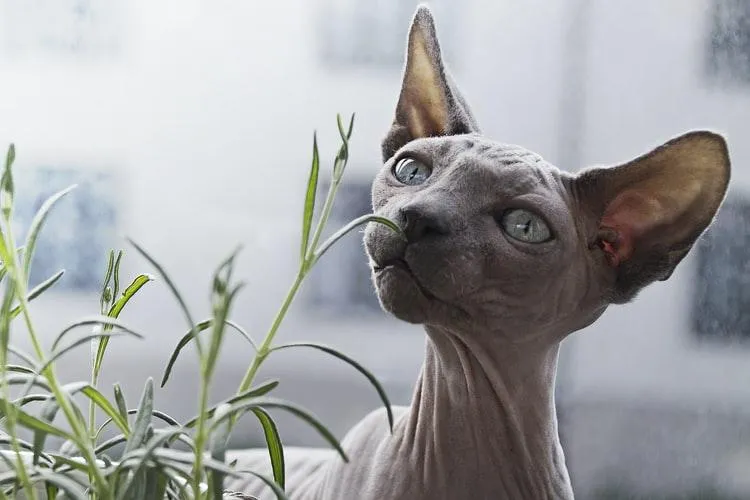
Hairless cats, such as the Canadian or Don Sphynx, have what felinologists call lemon-shaped eyes. They are large, wide in the middle, and taper at both ends. Without eyelashes or eyebrows, the Sphynx’s gaze feels incredibly intense and “exposed”.
It is important to understand that the lack of lashes makes Sphynx eyes vulnerable to dust. Owners need to perform daily cleaning routines. If you are drawn to such distinctive visual traits, you might also find interest in spotted predators: Bengal cat and Ocicat.
Rare gems: The Japanese Bobtail and Korat
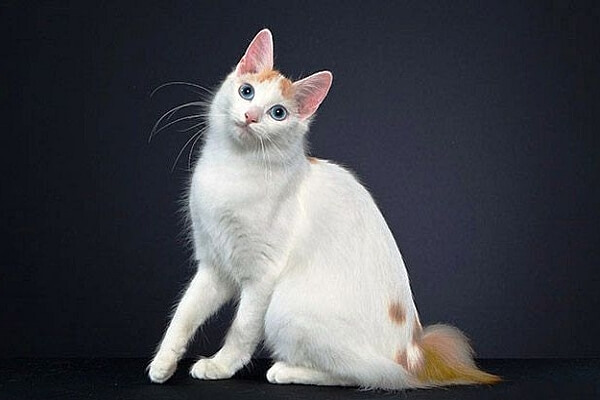
The Japanese Bobtail has a unique facial structure where the eyes appear slightly too large for the head. They have a long oval shape and are set at an angle found in no other breed. Paired with their short pom-pom tails, these cats look like living Maneki-neko figurines.
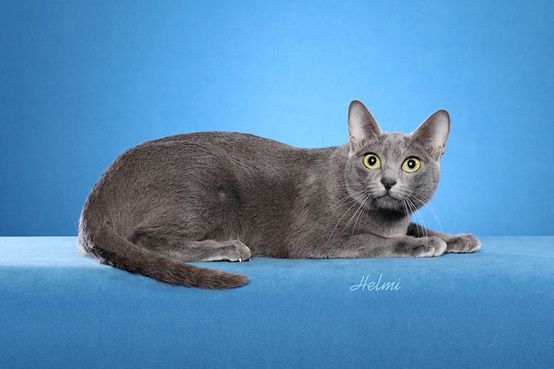
The Korat is another breed where the eyes are a signature feature. They aren’t just large; they contribute to a “heart-shaped” face and are notably prominent. Interestingly, the final colour and shape of a Korat’s eyes only fully develop by age 2 to 4, so kittens can look quite different.
Caring for exotic eyes
When you choose a cat with an unusual eye shape, you are signing up for extra beauty rituals. While some breeds need minimal intervention, others rely on your help daily. Here are the core maintenance tips:
- Regular rinsing: For breeds with large, round eyes (Persians, Exotics), use only specialized alcohol-free lotions.
- Monitor discharge: If you notice tears changing colour to brown or green, it’s time to see a vet. Specialist eye consultations in the UK usually start from around £150-£250 depending on the clinic.
- Mechanical protection: Large eyes are more easily injured during play or by brushing against household plants.
Sometimes improper care can lead to chronic issues, so understanding your pet’s anatomy will help you avoid unnecessary trips to the clinic.
Checklist: Are you ready for an exotic-eyed cat?
Ask yourself these questions before buying:
- Are you willing to spend 5-10 minutes every day on eye hygiene?
- Is there a veterinary ophthalmologist in your area (crucial for brachycephalic breeds)?
- Do you understand that unusual shapes often mean higher sensitivity to light and dust?
Conclusion
Cat breeds with unusual eye shapes are true masterpieces of nature and breeding effort. From the deep almond eyes of Orientals to the cosmic spheres of Exotics – there is a gaze for everyone to fall in love with. Remember that behind the unusual appearance is a living being that needs your love and attentive care. Choose with your heart, but use the knowledge that will keep your “alien” friend happy and healthy.
The world of feline beauty is endless, and every detail – from the tips of the ears to the tip of the tail – deserves individual attention. Follow our updates to learn even more fasinating facts about the animal kingdom.