

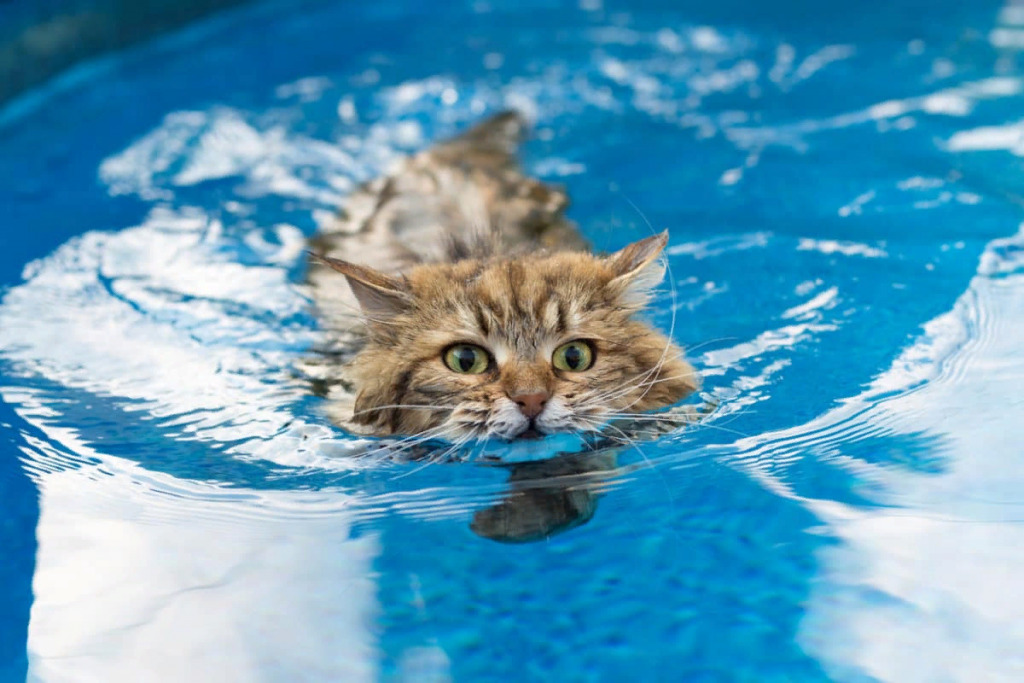
There is an age-old stereotype that cats and water are like oil and vinegar – they just don’t mix. Most owners are accustomed to seeing their fluffy companions flee in terror from the slightest splash or indignantly shake their paws after accidentally stepping in a puddle. However, the world of felinology is far more diverse and interesting than it first appears. Nature has dictated that some members of the feline world don’t just tolerate water but genuinely enjoy it. Find out more at Tvaryny.
Why do most cats fear water while others don’t?
Before looking at specific breeds, it’s worth understanding the evolutionary background. Most domestic cats descend from the African wildcat (Felis silvestris lybica), which lived in the arid regions of the Middle East. In their genetic code, water is associated with danger: predators (such as crocodiles) could be hiding in it, and wet fur disrupted thermoregulation, leaving the animal vulnerable to the night’s chill or the day’s heat.
However, the evolution of certain breeds took a different path. Cats developing in island regions, near large lakes or rivers, were forced to adapt. For them, water became a source of food (fishing) and a way to cool down. It is these “aboriginal” genes that manifest in the modern breeds we call water-lovers.
Turkish Van: The Born Swimmer
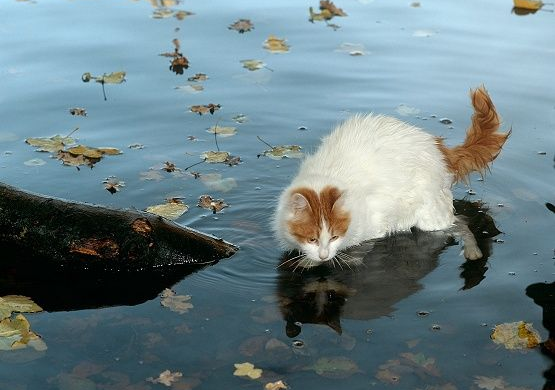
If there is a king among swimming cats, it is undoubtedly the Turkish Van. This ancient breed formed naturally in the Lake Van region of Turkey. Historically, these animals dived into the water to catch fish neccessary for survival.
The uniqueness of Vans lies in their coat structure. It resembles cashmere and lacks the dense undercoat that usually soaks up water like a sponge in other cats. Thanks to this, the Turkish Van’s fur has water-repellent properties and dries incredibly quickly after bathing. Owners often joke that the hardest part isn’t getting the cat into the bath, but getting it out. They can swim for hours, play with a stream of water, or even “help” their owners wash the dishes.
Bengal Cat: Wild Blood Calls to the Water
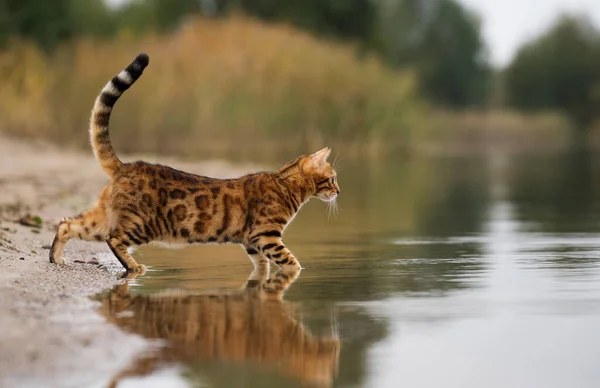
Bengal cats are the result of crossing a domestic cat with a wild Asian leopard cat. The latter often live near bodies of water in the wild and don’t hesitate to swim to hide their scent from larger predators or hunt prey. This instinct has been preserved in their domesticated descendants.
Bengals are known for their high energy and intelligence. For them, water is primarily entertainment. They love to pat the water surface with a paw to create splashes, drop their toys into the water bowl, or even join their owner in the shower. If you plan to get a Bengal, be prepared for the fact that a closed bathroom door will be taken as a personal insult.
Maine Coon: The Giant with a Seafaring Past
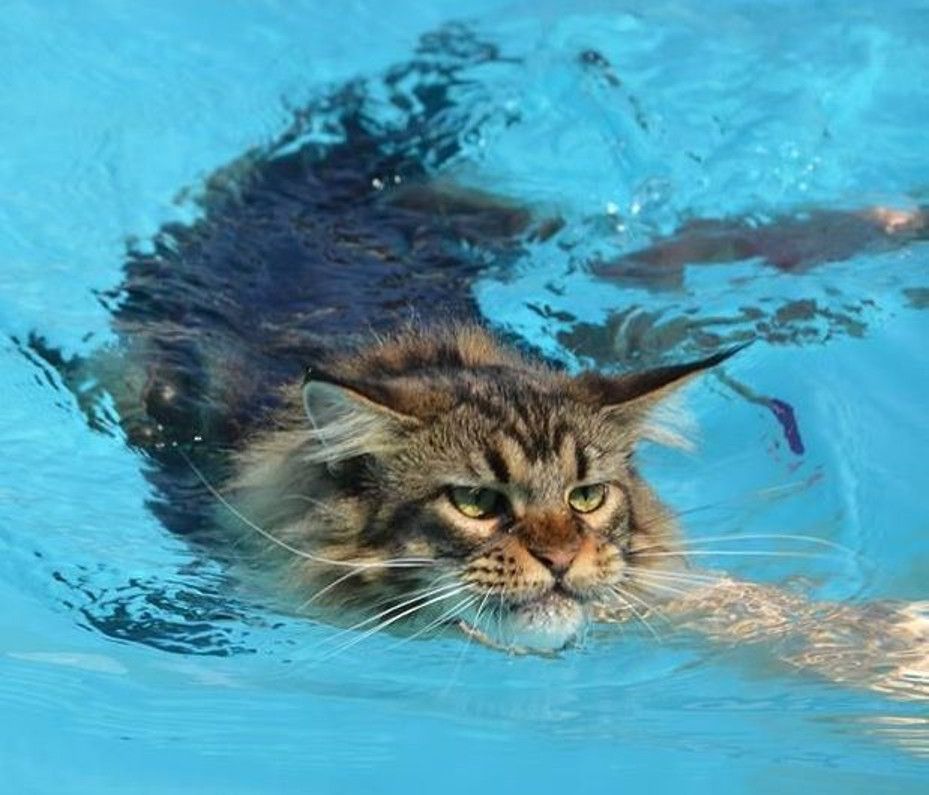
Maine Coons are not only one of the largest domestic cat breeds but also one of the most adapted to harsh conditions. Legend has it that the ancestors of Maine Coons were ship cats travelling with Vikings or early seafarers. Although this is just a theory, their physical build is perfectly suited to a damp climate.
Their thick, dense coat with water-repellent guard hairs offers excellent protection against getting wet. Maine Coons often display interesting behaviour near their water bowl: before drinking, they “dig” at the water with a paw. Ethologists believe this is an instinctive action – in the wild, they cleared the surface of a puddle of leaves and debris this way before drinking. Bathing a Maine Coon usually goes smoothly, as these gentle giants are confident and rarely panic over trifles.
Abyssinian Cat: Curiosity Above All Else
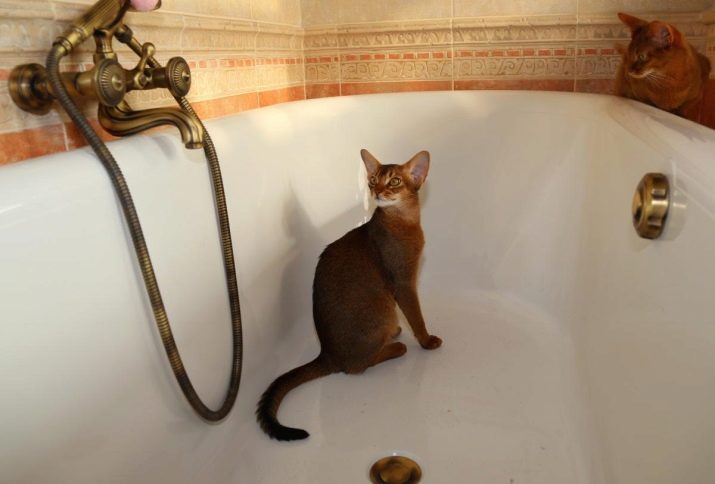
Abyssinians are cat-explorers. Their energy knows no bounds, and water is just another object to study. Unlike Turkish Vans, who might swim with purpose, Abyssinian cats perceive water as an element of play. A dripping tap can occupy an Abyssinian’s attention for a whole hour.
This breed was brought to Europe from the coastal regions of the Indian Ocean, which may also explain their tolerance for moisture. Owners often notice that Abyssinians learn to open taps themselves to drink running water or simply to wet their paws.
Other Breeds Inclined to Water Activities
- Norwegian Forest Cat: Like Maine Coons, these cats possess a double coat that allows almost no moisture to reach the skin. In their natural habitat, they often caught fish in the lakes and streams of Norway.
- Sphynx: The situation here is slightly different. Sphynxes have no fur, so water doesn’t weigh them down or cause the discomfort of wet fur. Moreover, due to their metabolism and skin oil production, Sphynxes need regular bathing. Getting used to this from kittenhood, they often start to enjoy warm baths.
- Turkish Angora: A close relative of the Van, who also doesn’t mind a swim if the opportunity arises.
How to Accustom a Cat to Water?
If your cat doesn’t belong to the listed breeds but you want to reduce their fear of bathing, act gradually. Never force the animal into the water. Start with a game: place floating toys or ping-pong balls in a shallow basin of water. A predator’s natural curiosity might overcome their fear. Reward the cat with treats for any contact with water. Remember that for many cats, the sound of water rushing under high pressure is more frightening than the water itself, so fill the bath in advance.
Practical Tips: Caring for a Water-Loving Cat
If you are lucky enough to own a cat that loves water, that’s wonderful, but it places a certain responsibility on you. Water procedures must be safe and beneficial. Here are a few key points to bear in mind.
Safety in the Bathroom
Always check the water temeprature. What feels warm to your hand might be too hot for a cat’s delicate skin (especially a Sphynx). The optimal temperature is 38-39 degrees Celsius. Also, never fill the bath completely if the cat is not an experienced swimmer. The water level should reach the animal’s belly so it feels support under its paws. Use rubber mats on the bottom of the bath to prevent slipping – this will reduce stress and the risk of injury.
Ear Hygiene – A Critical Moment
The greatest danger for cats that like to dive or splash actively is water getting into their ears. The structure of the feline ear canal makes it difficult for water to drain out on its own. This creates an ideal environment for bacterial growth and the development of otitis. After every bath, make sure to blot the ears with a cotton pad (not a cotton bud!) to remove excess moisture. If you notice the cat shaking its head or scratching its ear after a bath – that is a reason to visit the vet.
Coat Care After Bathing
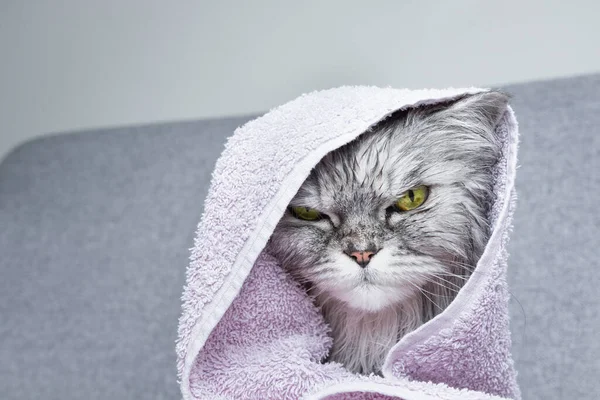
Even if your Turkish Van dries quickly, do not allow the cat to sit in a draught with wet fur. This is a direct path to a cold or even pneumonia. After water activities, wrap your pet in a large, warm towel. Using a hairdryer is only acceptable if the cat is not afraid of the noise and you use a warm (not hot) air setting.
Water Quality and Chemicals
Pay attention to the water your cat comes into contact with. Swimming pool water often contains chlorine and other chemicals that can cause severe skin irritation or poisoning if the cat licks its fur. If your pet has accidentally had a swim in a pool, they must be rinsed with clean running water. The same applies to fans of salt baths – do not allow the cat near water with dissolved bath salts, essential oils, or foam that is not designed for animals. Such substances can be toxic.
Conclusion
Cats are amazing creatures that never tire of shattering stereotypes. From majestic Maine Coons to elegant Turkish Vans, many breeds show us that a love for water is entirely natural for those whose ancestors survived thanks to fishing. If you are looking for a cat with whom you can share a love for water fun, now you know who to look out for.
The main thing is to remember that every animal is an individual. Even among “water-loving” breeds, there are exceptions who prefer dry land. Respect your pet’s wishes, ensure their safety, and then your time together will bring only joy and positive emotions. And if your cat does decide to become the captain of the domestic bathtub – just prepare plenty of towels!