

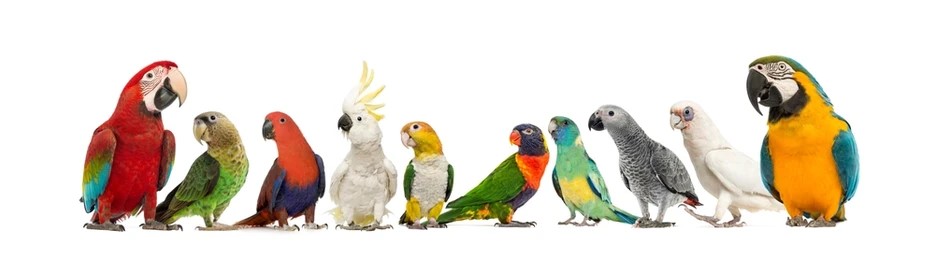
The phrase “bird brain” has long ceased to be an insult in the scientific world. Especially when it comes to parrots. These birds demonstrate cognitive abilities comparable to the development level of a 3-5-year-old child. They don’t just mimic sounds; they understand context, solve complex logical puzzles, use tools, and even feel empathy. However, high intelligence isn’t just about funny internet videos – it’s a huge responsibility for the owner. A clever bird requires constant mental stimulation; otherwise, it will turn into a flat-destroyer or fall into depression. If you are planning to get a feathered friend and are looking for a true intelectual, this article will help you make an informed choice. Learn more on Tvaryny.
Intelligence criteria: what makes a parrot “smart”?
Before jumping into the ranking, it is important to understand what we are evaluating. The ability to speak is just the tip of the iceberg. Ornithologists and zoopsychologists identify several components of avian intelligence:
- Communication skills: The ability not just to memorise words, but to use them in the correct context to express desires.
- Problem Solving: The knack for opening complex locks, retrieving food from puzzles, and using makeshift tools.
- Emotional intelligence: The capacity to recognise the owner’s mood, feel jealousy, sadness, or empathy.
- Memory: Parrots can remember people and events for years.
It is the combination of these factors that allows us to determine which parrots are the smartest and how to interact with them.
Top 7 smartest parrots: from giants to tiny tots
This ranking is based on research into cognitive abilities and owner experiences. It is worth remembering that every bird is an individual, but species traits play a decisive role.
1. African Grey (Jako) – The Einstein in feathers
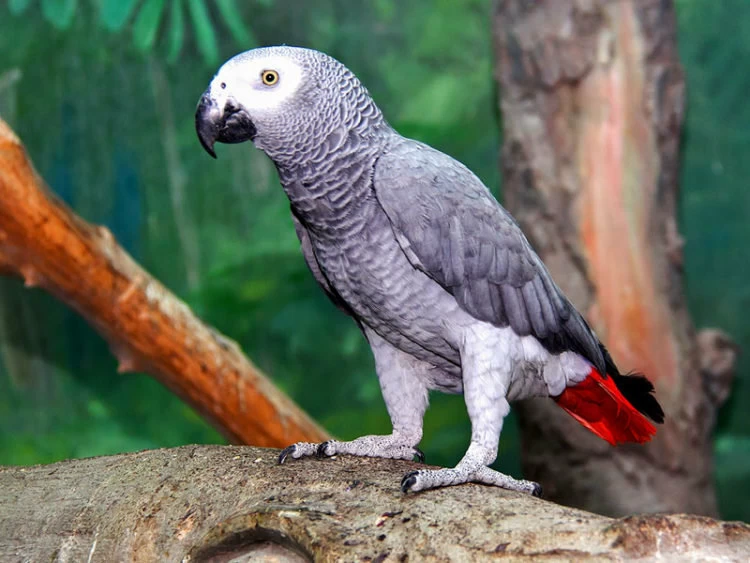
The undisputed leader of any intelligence ranking. African Greys became famous worldwide thanks to the research of Dr Irene Pepperberg and her protégé, Alex. This parrot didn’t just know the names of objects; he distinguished colours, shapes, materials, and even understood the concept of zero.
Intelligence features: Greys are capable of analysing situations. If you teach one the phrase “want nut”, it won’t say it when it wants water. They are very sensitive to intonation and the emotional state of the owner. These are thinker-birds that can watch you for hours, studying your behaviour to use that knowledge later (sometimes against you).
Important to know: The high intelligence of the African Grey has a downside. They are prone to neurosis and self-plucking if they get bored. They need a partner for communication, not just an owner.
2. Macaw – The emotional giant
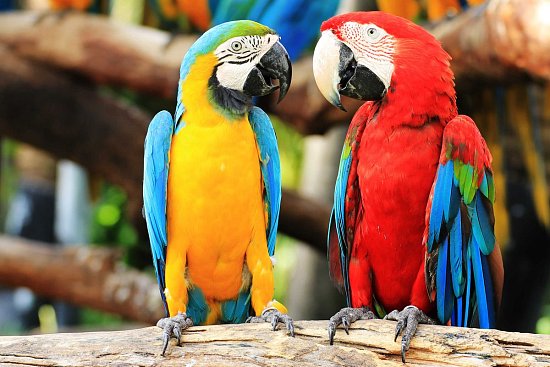
If the African Grey is the scientist, the Macaw is the extroverted artist with the soul of a three-year-old child. The largest parrots in the world possess incredible social intelligence. In the wild, they live in complex social groups, so at home, they perceive the family as their flock.
Macaws are highly trainable, but their “party piece” is manipulation. They quickly understand how to get your attention: through screaming, dancing, or tenderness. They might not have the vocabulary of a Grey, but they understand situational humour and can laugh at exactly the right moment.
3. Cockatoo – The mechanic and engineer
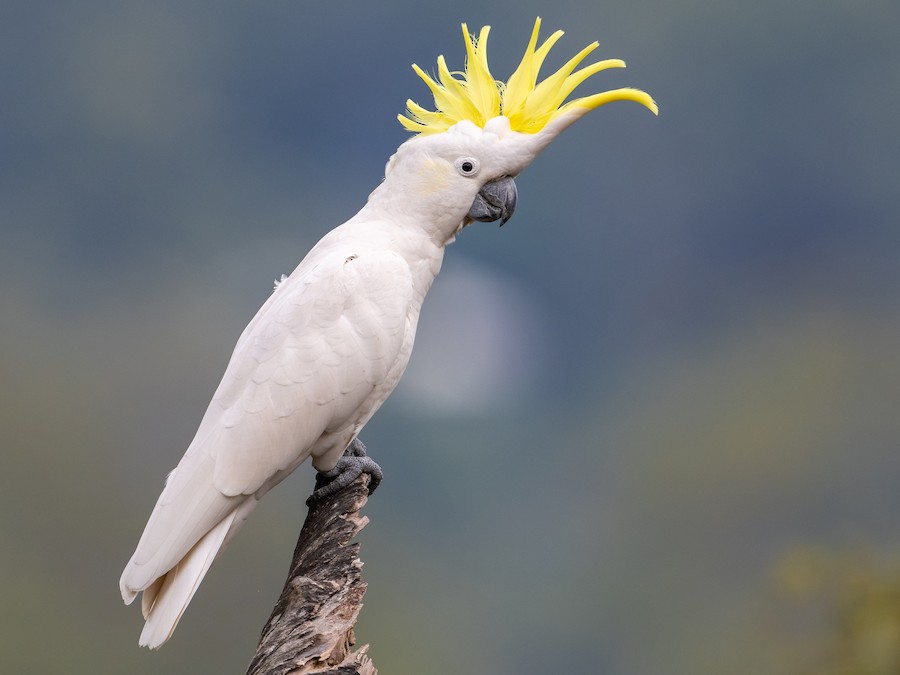
Cockatoos are recognised escape artists. Research has shown that Goffin’s cockatoos are capable of opening complex locks that require a sequence of 5-7 actions (pull the pin, unscrew the bolt, slide the latch, etc.). They don’t do this by trial and error, but methodically.
Aside from engineering skills, cockatoos have an incredible sense of rhythm. They are the only animals that can independently create a musical beat by tapping a stick on a hollow tree and dance to music, changing their moves depending on the tempo of the song.
4. Amazon Parrot – The singer and orator
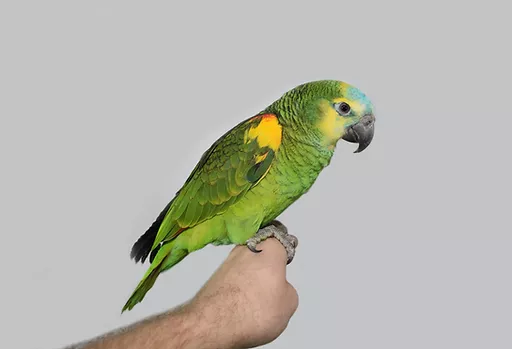
Among all parrot species, Amazons often become the best talkers after African Greys. Their pronunciation is often clearer, and their voices louder. Amazons have a superb memory for songs. They can remember entire verses of opera arias or advertising jingles.
Their intelligence manifests in social interaction. Amazons can be very stubborn and will “test the strength” of the owner’s authority. These are birds with character that demand a firm hand and clear rules of upbringing.
5. Eclectus – The calm thinker
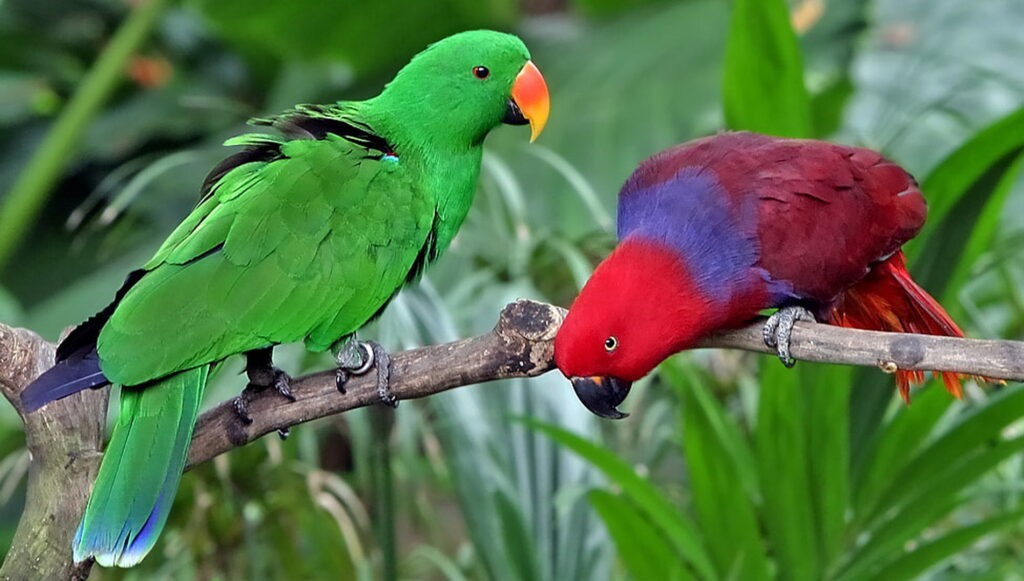
Eclectus parrots differ from other species with their phlegmatic temperament, but this doesn’t mean a lack of brains. On the contrary, they are very observant. They won’t shout about their knowledge but will quietly study the family’s daily routine and adapt to it. Their language learning ability is very high, and they often copy female or children’s voices due to the softness of their timbre.
6. Quaker Parrot (Monk Parakeet) – The little genius
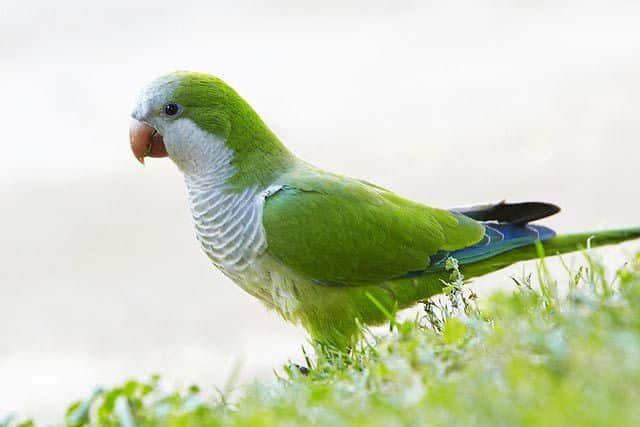
Don’t let the size fool you. The Quaker is arguably the smartest parrot among the medium-sized species. They build huge communal nests (veritable blocks of flats), wich requires serious engineering skills. At home, they learn to speak and perform tricks quickly. They are often called the “budget African Grey”, although such a name is slightly offensive to these self-sufficient birds.
7. Budgerigar (Budgie) – The underrated intellectual
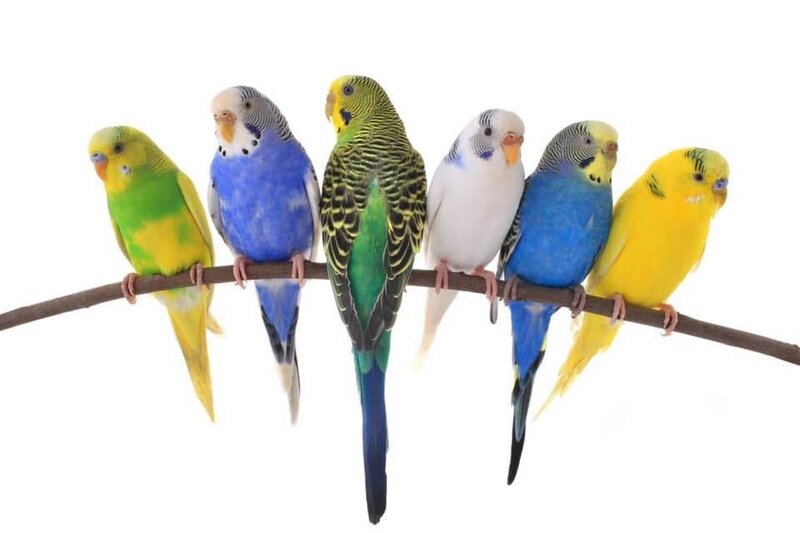
Yes, the ordinary “budgie” has deservedly made it onto this list. The world record for the number of learned words (over 1700!) belonged to a budgie named Puck. They learn extremely quickly if you engage with them. The problem is that due to their low cost, they are often perceived as “living toys” and their development is neglected.
Comparison table: Species and their superpowers
| Parrot Species | Speech Level | Trick Ability | Attention Required | Special Talent |
|---|---|---|---|---|
| African Grey | Very High | High | Maximum | Conscious dialogue |
| Macaw | Medium/High | Very High | Very High | Strength tricks and manipulation |
| Cockatoo | Medium | Very High | Maximum | Mechanics and dancing |
| Amazon | High | Medium | High | Singing (Vocals) |
| Eclectus | Very High | High | High | Speech clarity and calmness |
| Quaker (Monk) | High | High | Medium | Construction and engineering |
| Budgie | High (but unclear) | Medium | Low/Medium | Memorisation speed |
The flip side: why is a smart parrot difficult?
Many people dream of their parrot talking and solving puzzles, but are not prepared for the consequences. High intelligence is inextricably linked to a complex psyche.
- Boredom is the main enemy. If you leave a smart parrot (African Grey or Cockatoo) in a cage all day without toys, it will start screaming, breaking the cage, or plucking its own feathers. They need foraging (searching for food) and new impressions daily.
- Dominance. A clever bird will quickly understand the hierarchy in the family. If you show weakness, the parrot may start “bossing” you about, biting and demanding attention by screaming.
- Long-term memory for grudges. If you offend an intellectual bird (for example, grab it roughly), it can remember this for months and refuse to make contact. Restoring trust will be extremely difficult.
- Destructive activity. An inquisitive mind requires research. Parrots dismantle keyboards, remove skirting boards, and bite through wires not out of malice, but because they are interested in “how it works”.
How to develop a parrot’s intelligence: practical tips
To ensure your feathered friend is happy and fulfils its potential, simply buying a mirror is not enough. Here is an effective development strategy:
Foraging
In nature, parrots spend 70% of their time searching for food. At home, we often just pour food into a bowl, depriving the bird of a purpose in life. Use puzzle feeders, wrap nuts in paper, hide pieces of fruit in pine cones or special balls. The bird must “work” to eat.
Clicker Training
This is a training method based on positive reinforcement. It is ideal for parrots. Using a clicker (a device that makes a clicking sound) and treats, you can teach the bird to distinguish colours, fetch objects, and wave its wings on command. This is not circus training, but a common language between you and your pet.
Socialisation and Novelty
Constantly change the toys in the cage (rotate them). Introduce the bird to new objects and safe house plants. Talk to it like a proper conversation partner, commenting on your actions: “Now we are going to eat”, “I am turning on the light”. This is how African Greys learn to understand context, rather than just memorising sounds.
Frequently Asked Questions (FAQ)
Is it true that males are smarter than females?
No, there is no scientific evidence for this. However, in some species (for example, Budgies or Cockatiels), males are indeed more prone to mimicking speech due to mating behaviour quirks. But in terms of solving logical problems, females are not inferior.
At what age should parrot training begin?
From the very first days in the house. A young brain is the most plastic. However, even an adult bird from a shelter can be taught new tricks, although it will take more time and patience.
Does a parrot understand what it is saying?
It depends on the species and the training method. Budgies often just reproduce sounds. But African Greys, Amazons, and Macaws can associate a word with an object or action. If a parrot says “Want apple”, and you give it a nut and it throws it away – that is proof of understanding.
Conclusions: which one to choose?
Choosing a parrot is a lifestyle choice for the next 15-50 years (that is how long large species live). If you are ready to give your pet 3-4 hours of pure attention every day, tolerate noise, and solve complex behavioural puzzles – feel free to choose an African Grey or a Cockatoo. You will get a friend who will replace a conversational partner.
If your schedule is tighter, but you want a smart bird, pay attention to the Quaker Parrot, a Cockatiel, or even a pair of Budgies. They are also surprisingly quick-witted, but forgive more upbringing mistakes and tolerate your absence during the working day more comfortably.
Remember: the smartest parrot is the one you spend time with. Even a “common” Lovebird can surprise you with miracles of intelligence if you invest your love and time in it. Before buying a bird, be sure to consult an ornithologist or talk to owners of the chosen species so that reality justifies your expectations.