


When we hear the word “hamster”, we often picture a fluffy little ball running happily in a wheel with its cheek pouches stuffed with seeds. It is one of the most popular pets in the world, especially as a first pet for a child. However, behind this cute exterior lies a living creature with complex needs, character, and instincts. Unfortunately, hamsters often fall victim to stereotypes about being “low-maintenance” animals that can be kept in a tiny cage and fed table scraps. In reality, keeping a hamster is a serious task requiring preparation, financial investment, and daily attention. In this article, we will bust the myths and create a complete guide to help your little friend live a long and happy life. Learn more on Tvaryny.
1. Choosing a Breed: Which One Suits You?
Before rushing to the pet shop, it is worth deciding exactly which little fluffball will become part of your family. There are several popular species, and caring for them has its own nuances.
Syrian Hamster

These are the “classic” large hamsters. They grow to 13-15 cm and come in various colours (from golden to black) and fur types (short-haired, long-haired “Angora”).
- Character: Generally calmer, easier to tame, ideal for beginners.
- Feature: Strict loners! Keeping two Syrian hamsters in one cage is categorically forbidden – it will lead to fights and even death.
Djungarian Hamster (Winter White/Dwarf)

Small grey fluffballs with a characteristic dark stripe on the back. They are very active, fast, and curious.
- Character: Can be more independent, sometimes “nippy” if not handled from a young age.
- Feature: Prone to diabetes, so their diet must be stricter (minimum sugar and fruit).
Roborovski Hamster

The smallest and fastest. This is more of an observation pet than an animal for handling. They are so agile that holding them in your palms is almost impossible. Suitable for experienced owners who want to create a beautiful natural terrarium and observe the life of a colony.
2. Living Space: Cage or Tank?
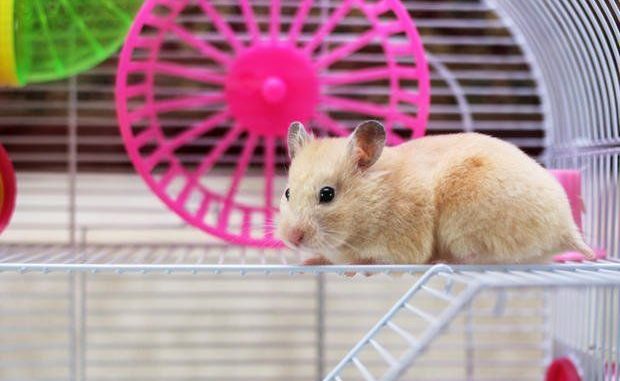
The biggest mistake novices make is buying a small colourful cage with loads of plastic tubes. Remember: hamsters are runners. In the wild, they cover miles every night.
Gold standard for accomodation size: Minimum 50×30 cm floor space for dwarf species, but preferably 60×40 cm or more. For Syrians – minimum 60×40 cm, ideally 80×50 cm. Height is not as important as floor area, as hamsters are not squirrels; they have poor depth perception and can injure themselves if they fall.
| Housing Type | Pros | Cons |
|---|---|---|
| Wire Cage | Good ventilation, easy to attach water bottles and toys. | Bedding falls out, risk of drafts, hamster may chew bars (bad for teeth). |
| Duna (Plastic Tank) | Clean surroundings, protection from drafts, safety. | Poorer ventilation (need to monitor humidity), plastic can fog up. |
| Aquarium/Vivarium | Excellent view, allows for a thick layer of bedding for burrowing. | Heavy to clean, expensive, requires a mesh lid for ventilation. |
By the way, if you are choosing between different furry friends and thinking about a larger animal, you might be interested in the happy bunny and 7 golden rules for keeping a pet rabbit, as their care differs significantly from hamsters.
3. Interior Design: What Goes Inside?
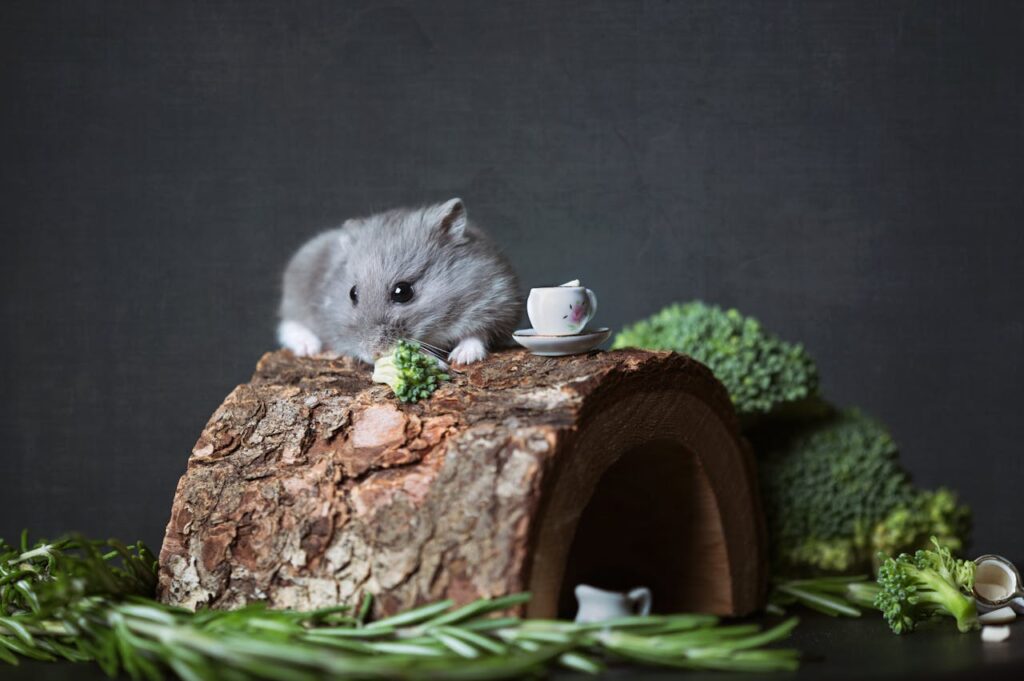
An empty cage is a prison. For the animal to be happy, it needs “furnishing”.
Running Wheel
This is the most crucial piece of gym equipment. It must be solid (no rungs or mesh, to avoid broken legs) and of an appropriate diameter.
- For dwarf hamsters: diameter from 16-18 cm.
- For Syrian hamsters: diameter from 25-28 cm.
If the wheel is too small, the animal has to arch its back, which leads to serious spinal problems in the future.
House and Hideouts
A hamster needs a place where it feels safe. It is best to choose wooden houses without a bottom. Why no bottom? Because hamsters often do their business where they sleep. A house without a floor allows you to easily clean soiled bedding without disturbing the animal’s hoard too much.
Bedding
Forget about newspapers or cotton wool! Cotton wool is deadly: it can cut off circulation to a limb or block the intestines if swallowed. The best options are:
- Aspen or hardwood shavings: (not pine or cedar! Conifers release phenols harmful to breathing).
- Corn cob bedding: holds odour well, safe.
- Paper-based bedding: soft, hypoallergenic, ideal for digging tunnels.
4. Gourmet Menu: What to Feed a Hamster?

A healthy diet isn’t just a grain mix from the shop. Although high-quality dry food is the basis of the diet (approx. 1 tablespoon per day), the menu needs variety. Remember that rodents have a very fast metabolism, so food quality instantly affects their condition.
| Category | Allowed (and neccessary) | Strictly Forbidden |
|---|---|---|
| Grains | Wheat, oats, buckwheat, corn, millet, flax seeds. | Pasta (raw or cooked), sweet muesli, fresh bread. |
| Veg & Greens | Cucumber, courgette, carrot (limited for dwarfs), broccoli, dill, parsley. | Potato, onion, garlic, cabbage (causes bloating), sorrel. |
| Protein (2-3 times a week) | Boiled chicken breast (no salt), boiled egg, low-fat cottage cheese, dried insects (mealworms). | Sausages, processed meats, fatty meat, milk, sour cream, cheese (too fatty and salty). |
| Fruit/Berries | Apple, pear, strawberry (as a treat, rarely). | Citrus (oranges, tangerines), kiwi, exotic fruit, cherry/apricot stones. |
Important: water in the bottle must always be fresh. Change it daily, even if the bottle is full. Use filtered or bottled water, not boiled (low minerals) or straight from the tap.
5. Hygiene and Health: How to Care?
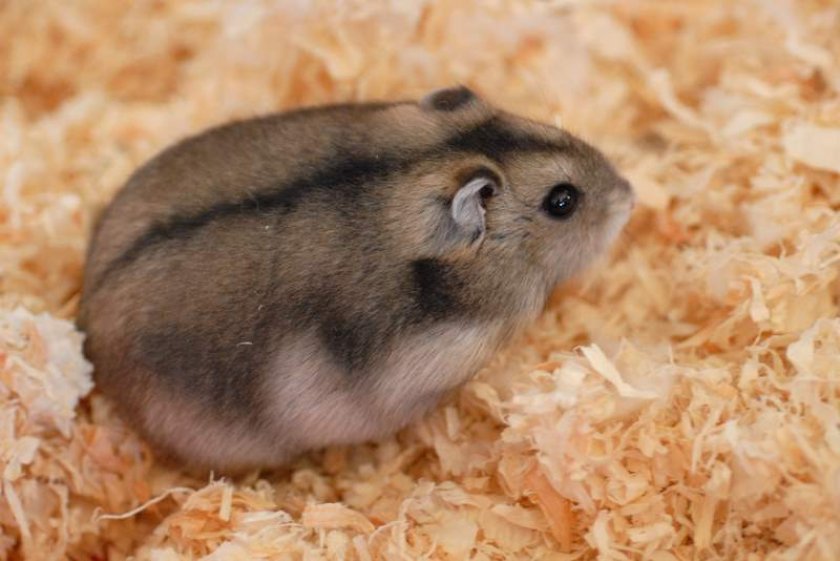
Hamsters are very tidy animals. You must not bathe them in water! This causes severe stress, washes away the protective oil layer from their fur, and can lead to colds, which are often fatal for such little ones. For hygiene, place a container with special chinchilla sand in the cage. The hamster will happily “bathe” in it, cleaning its coat.
Speaking of sand baths, if you want to dive deeper into rodent hygiene, check out our chinchilla from A to Z complete care guide, which details these procedures.
Cleaning the Cage
Do not do a deep clean too often, so as not to stress the animal by removing its familiar scent.
- Daily: remove fresh food scraps so they don’t spoil, wash the water bottle and food bowl.
- Every 2-3 days: clean the “toilet corner” (hamsters usually pick one corner for this business).
- Every 10-14 days: partial bedding change. Leave some old clean shavings and mix them with the new ones to preserve the familiar smell.
6. Taming and Bonding
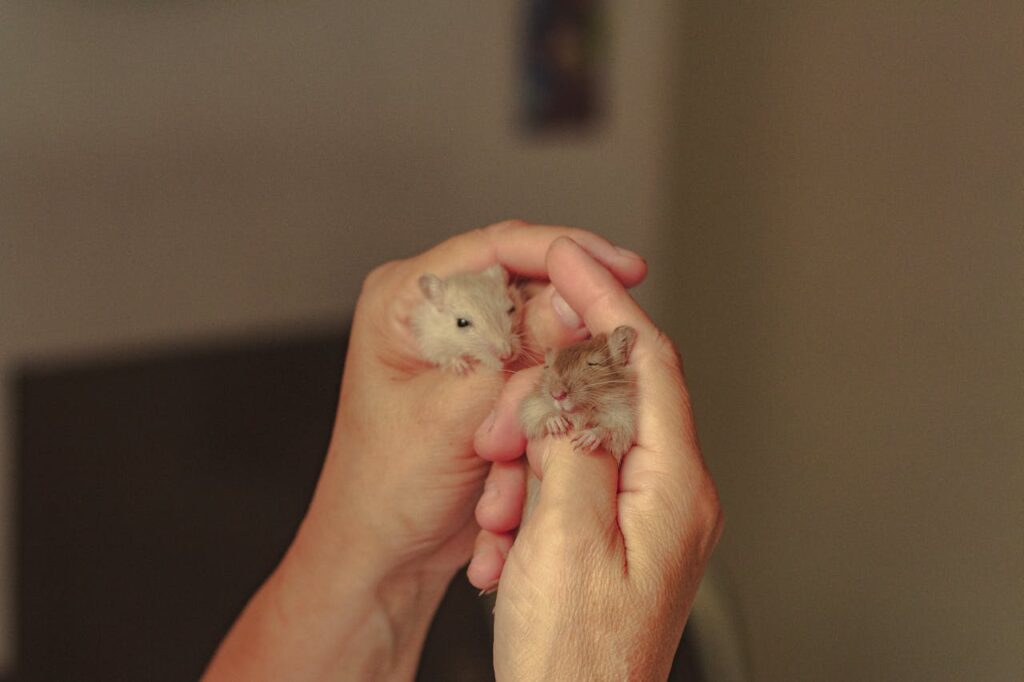
A hamster is not a dog; it won’t run joyfully to you when called on the very first day. Caring for a hamster includes a socialisation stage. After moving in, give the animal 2-3 days of peace to adapt. Do not shove your hands into the cage or try to catch it.
Taming Algorithm:
- Start talking to your pet in a quiet, calm voice while sitting near the cage.
- Offer a treat (a sunflower seed) through the bars or on your palm at the cage entrance.
- When the hamster stops being afraid and starts taking food, try placing the treat on your open palm so it has to climb onto it.
- Never grab a hamster from above – this mimics a predator attack (bird) and triggers a defensive reaction (biting).
Conclusion
A hamster is a wonderful little friend that can bring a lot of joy. But it requires respect for its needs. A spacious cage, the right wheel, a balanced diet, and no forced interaction – that is the recipe for happiness for your pet. Remember that a hamster’s lifespan is only 2-3 years, and it is in your power to make this time as comfortable as possible for it.
Responsible attitudes towards the smallest creatures shape the culture of care for all animals. May your little housemate always be healthy!