

You’ve treated your beloved pet with the best flea drops. Victory, it seemed! But a week or two later, you notice your cat or dog scratching again, and small, dark insects are once more scurrying through their fur. Sound familiar? You are not alone. It’s an exhausting battle that makes you doubt the effectiveness of modern remedies. But the problem isn’t the drops or the collars. The issue is that you are only fighting the visible part of the enemy. The secret to defeat is hidden in the parasite’s biology, and the key to victory lies in understanding the complete flea life cycle. Read more about this over at Tvaryny.
Imagine an iceberg. What you see above the water is only 5% of its total mass. The remaining 95% is concealed beneath the surface. It’s exactly the same story with fleas. The adult fleas jumping on your pet are merely the tip of the iceberg. The main threat – the eggs, larvae, and pupae – is hidden in your home: in carpets, floor cracks, under furniture, and in the animal’s bed.
Why Do Fleas Keep Coming Back? The Secret Lies in Their Life Cycle
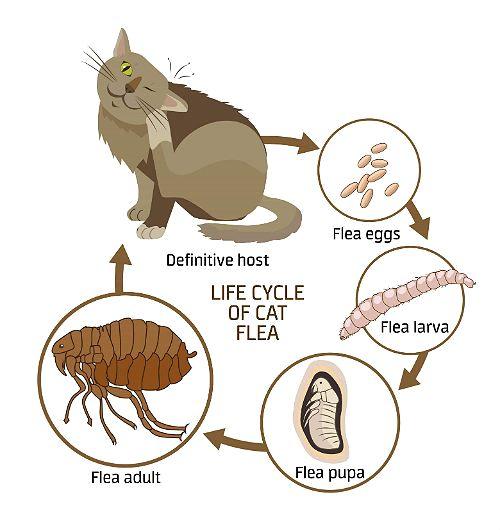
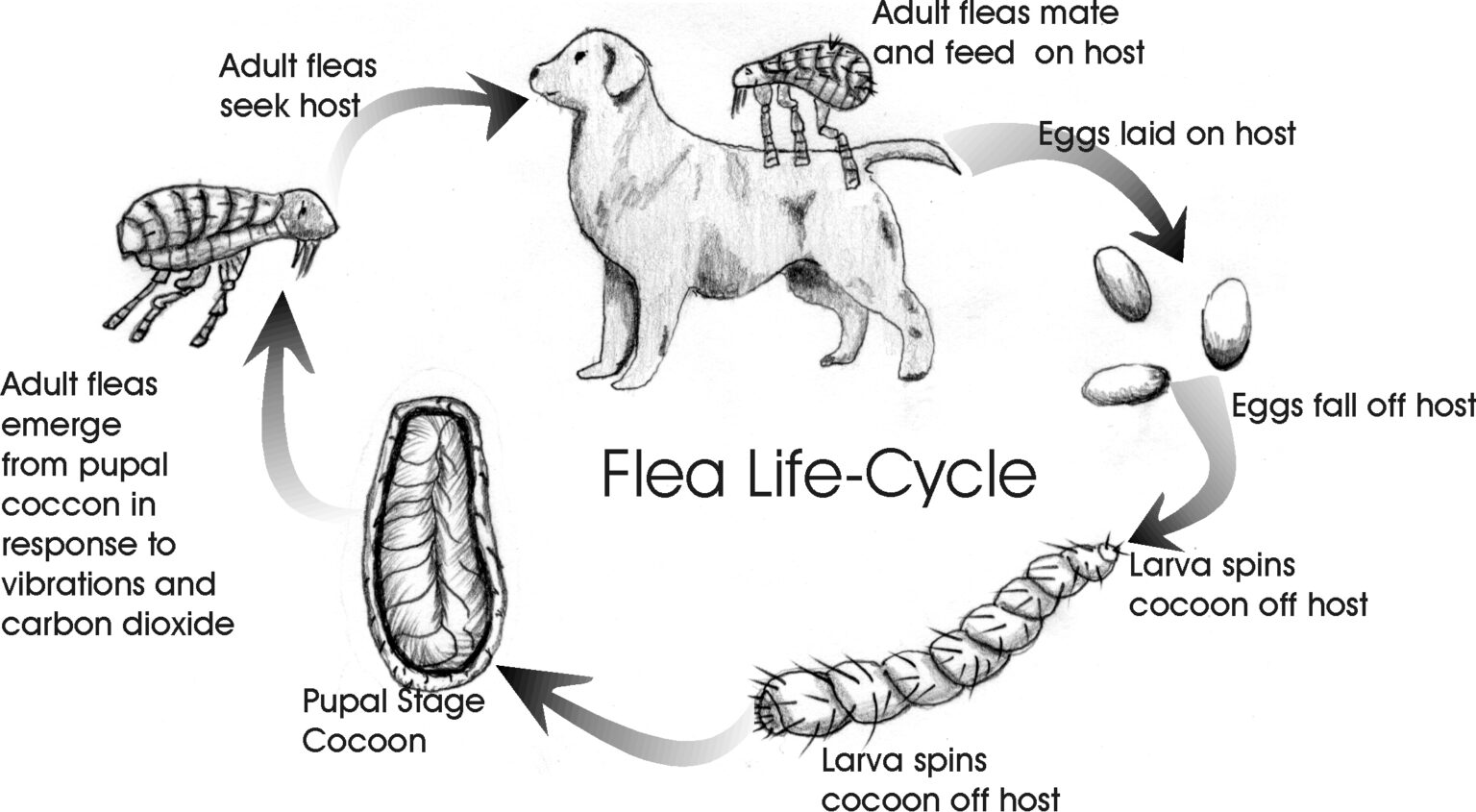
To develop an effective strategy, you need to know your enemy inside out. The flea life cycle consists of four stages. Ignoring even one of them is a recipe for disaster. Let’s break down each stage in detail.
Stage 1: The Egg (Approximately 50% of the Population)
It all starts with the adult female flea living on your pet. Once she’s had a blood meal, she begins laying eggs – up to 50 a day! These eggs are not sticky. They are microscopic, oval, and smooth, resembling tiny pearls. As your pet moves around, sleeps on the sofa, or plays on the carpet, these eggs simply sprinkle out of their fur and spread throughout the house. They fall into the carpet pile, furniture upholstery, floor crevices, and, of course, the pet’s bedding. These are the “incubators” of the future parasite army, simply waiting for their time. Under favourable conditions (warmth and humidity), larvae hatch from the eggs in just 2-10 days.
Stage 2: The Larva (Approximately 35% of the Population)
The flea larva is a small, whitish, several-millimetre-long maggot. It’s blind and panics when exposed to light, so immediately after hatching, it strives to burrow as deeply as possible: into the base of carpet fibres, under skirting boards, deep inside soft furniture. Larvae feed on organic debris, primarily “flea dirt” – which is essentially dried adult flea faeces, composed of undigested blood. This “dirt” also falls from your pet’s fur along with the eggs, providing food for the next generation. The larval stage lasts from 5 to 18 days; during this time, it moults several times and prepares for the next phase.
Stage 3: The Pupa (Approximately 10% of the Population) – The Most Dangerous Phase
This is the most resilient and problematic stage in the flea life cycle. The larva spins a sticky, silky cocoon around itself and transforms into a pupa. This cocoon is instantly camouflaged, picking up dust, dirt, and carpet fibres, making it virtually invisible. And here’s the crucial point: the cocoon shell is extremely tough and nearly invulnerable to most insecticides you use for treating the premises. Inside this “armoured vault,” the flea can remain for weeks, months, or sometimes even up to a year, waiting for the perfect moment to emerge.
What signals it? Vibrations (footsteps), the potential host’s body heat, and an increase in carbon dioxide concentration (breathing). As soon as you or your pet walk past, the “sleeping” flea instantly emerges from the cocoon and leaps onto the nearest warm target.
Stage 4: The Adult Flea (Just 5% of the Population)
This is the flea you can see. Its sole purpose is to find a host, drink blood, and begin reproducing. Without blood, it can only survive for a few days. But once on an animal, it starts feeding within minutes, and mating and laying eggs within 24-48 hours, restarting the flea life cycle again and again. This is why killing all the adult fleas on your animal today has no effect whatsoever on the thousands of eggs, larvae, and, most importantly, the protected pupae waiting their turn in your home.
The Strategy for Total Victory: Three Steps to a Flea-Free Home
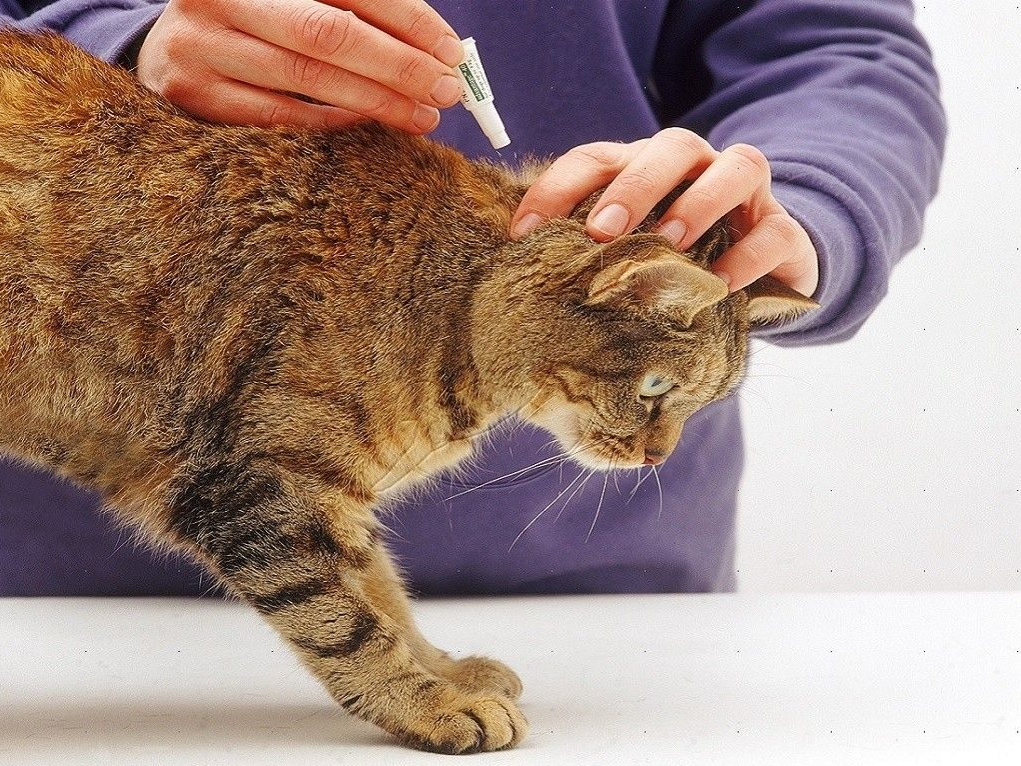
Now that you understand the full picture, it’s clear that the fight must be comprehensive. A one-off treatment of your pet is like bailing water from a leaky boat without plugging the hole. Here is a reliable three-step plan.
Step 1: Immediately Treat ALL Animals in the Home
The first strike must be aimed at the “egg production factory” – the adult fleas on your pets. It’s vital to treat absolutely all animals on the same day, even if you think your second cat or guinea pig doesn’t have fleas. Use quality veterinary products: spot-on drops, tablets, or special collars. Choose a product that not only kills adult fleas but also disrupts their development (for example, by containing insect growth regulators – IGRs). This prevents new eggs from developing. Be sure to consult your vet to choose the safest and most effective product for your specific animal.
Step 2: Wage Total War on the Environment (Your Home)
This is the most crucial and laborious stage, targeting those same 95% of the population. Your goal is to maximise the destruction of eggs and larvae, and stimulate the fleas to emerge from their pupae.
- The vacuum cleaner is your best friend. Thoroughly vacuum everything: carpets, soft furnishings, floors (especially crevices and skirting boards), pet beds, and areas under furniture. The vibration from the vacuum cleaner stimulates fleas to emerge from their cocoons, allowing you to immediately suck them up. After cleaning, the vacuum bag must be immediately sealed in an airtight bag and thrown away outside the home.
- The big wash. Wash everything possible at the highest temperature (60°C and above): pet bedding, blankets, throws, your own bedding, soft toys. Hot water is guaranteed to destroy all flea development stages.
- Special treatment products. Use aerosols or sprays for treating rooms for fleas. Choose those that contain not only an insecticide (to kill larvae and adults) but also an insect growth regulator (IGR), which sterilises eggs and prevents larvae from turning into pupae. Carefully treat carpets, furniture, skirting boards, and your pet’s favourite resting places. Animals and people must not be in the room during treatment; follow the instructions.
Step 3: Breaking the Cycle: Regularity and Patience
The biggest mistake is stopping after the first treatment. Remember the resilient pupae. Over the next few weeks (and sometimes months), new young fleas will emerge from them. This doesn’t mean your treatment failed! It means you are in the final stage of the battle. Your actions:
- Continue treating the animal regularly. Strictly adhere to the schedule indicated in the product instructions (usually every 4 weeks for drops or 1-3 months for tablets). Your animal must be a “trap” for newborn fleas. Upon emerging from the cocoon, the flea will jump onto the treated animal and die before it can lay new eggs.
- Keep on vacuuming. For the next 2-3 weeks, vacuum at least every other day. This will continue to stimulate the fleas to emerge from the cocoons and remove them.
Popular Flea Myths It’s Time to Stop Believing
Myth 1: Fleas only live on animals.
Reality: As we’ve established, only the adult population (5%) lives on animals. The main “nest” – 95% of eggs, larvae, and pupae – is in your home.
Myth 2: Fleas are inactive in winter.
Reality: Outside, they do indeed die in freezing temperatures. But your warm home with central heating creates ideal, year-round holiday conditions for them to breed.
Myth 3: If an animal doesn’t go outside, it can’t have fleas.
Reality: You can bring flea eggs or pupae home on your shoes or clothing. Fleas can also enter a flat from neighbours’ animals via the stairwell or from the basement.
Summary: Your Key to Success
Fighting fleas is not a sprint, it’s a marathon. The secret to total victory lies not in finding one “magic” cure, but in a systematic and comprehensive approach. By understanding the flea life cycle, you stop fighting a losing battle and start dealing targeted blows to all stages of the parasite’s development.
Remember the simple formula: Treat the Animal + Treat the House + Repeat Regulaly. Yes, this requires effort and patience, but only this approach guarantees that your home and your beloved pets will be free of these persistent pests forever. And you can finally breathe a sigh of relief.