not recognized by the FCI (Caribbean landrace) · Aruba (Kingdom of the Netherlands)
Aruba Dog (Aruban Cunucu Dog)
The sunny island dog of Aruba — hardy, clever and surprisingly friendly: devoted, agile, sociable and undemanding. The Aruba dog (Aruban Cunucu) is an ancient Caribbean pariah landrace, a descendant of the Iberian Podencos; a healthy, athletic country dog, gentle with people, children and even strangers.
Apartment · with caveatsKidsCats · with caveatsOther dogsBeginners
The Aruba Dog or Aruban Cunucu Dog is a rare breed descended from pariah dogs that have lived near human settlements on sunny islands for ages. Aruba Dogs, or as they are known in their homeland - Cunucu, have island origins and a genealogy that hasn't been fully clarified. Despite this, they have become beloved companions for thousands of owners, espcially among tourists who simply cannot resist their gaze. These are hardworking dogs with lively behavior, a sharp mind, and a love for children, requiring very little grooming. Learn more on Tvaryny.
Aruba Dog (Aruban Cunucu Dog): A brief breed overview
Aruba Dog (Aruban Cunucu Dog): A brief breed overview · 7
Characteristic
Data
Origin
Aruba (Kingdom of the Netherlands)
Group
Pariah Dog / Sighthound (not FCI recognized)
Life Span
12–15 years (some sources say 10–12, but they live longer with good care)
Height at withers
14–20 inches (medium size)
Weight
33–55 lbs
Coat type
Short, smooth, no undercoat
Purpose
Companion, small game hunting, territory guarding
What the Aruba Dog looks like: Anatomy of survival
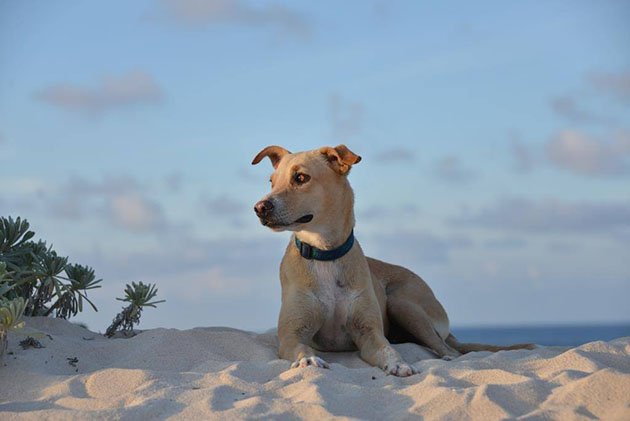
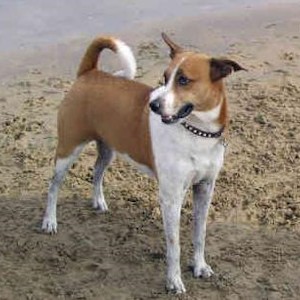
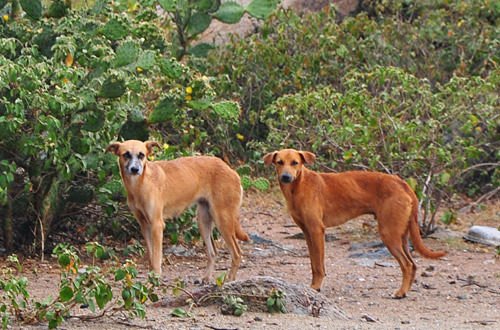
A breed that emerged on its own possesses a functional rather than decorative appearance. The Aruban country dog can display a wide variety of colors, as a standard as such did not exist for a long time. The short and smooth coat can be any color: from red and white to black-and-tan or brindle.
Head: Wedge-shaped, with a flat forehead. The muzzle is elongated, which allows for efficient cooling of inhaled air.
Ears: This is the breed's trademark. They can be semi-pricked or fully pricked, but always very expressive and mobile. They often "fold" to the side, giving the dog a comical look ("rose ears").
Body: A characteristic feature of the physique is the combination of strength and the grace of a greyhound. A deep chest (for large lung capacity) and a tucked-up belly (for speed).
Paws: Strong, with thick pads, adapted for running on the scorching stones and coral rocks of Aruba.
Tail: Long, often curved like a saber, helping to balance during sharp turns while chasing prey.
Interestingly, representatives of the breed can swim and dive, which means their coat is covered with a special protective oil. This adds shine and protects the four-legged helper from getting soaked and from the scorching sun. Outwardly, they somewhat resemble the Carolina Dog (American Dingo), which is also an aboriginal breed of the New World.
Interesting facts about Aruba Dogs
"Aruba Flight Volunteers": There is a whole movement of volunteer tourists who, returning from vacations in Aruba to the USA or Europe, escort crates with puppies to hand them over to new families.
Unsurpassed jumpers: The Cunucu is capable of jumping over a fence 6 feet high from a standing start, without a running start.
Mood detector: Owners note that these dogs are extremely sensitive to a person's emotional state and often act as therapy dogs.
Diversity: Since this is a landrace (natural population), puppies with different types of ears and coats can appear in a single litter.
History of the breed and the name Cunucu
The history of this breed is closely interwoven with the history of the colonization of the Caribbean. The homeland of Aruban dogs is the Antilles, specifically the island of Aruba. The word "Cunucu" itself in the local Papiamento language means "countryside" or "the boondocks." So, effectively, it translates to "country dog."
Experts believe that the Aruba Dog is a direct descendant of the Portuguese Podengo, brought to the islands by European traders and colonists in the 16th and 17th centuries. On the island, these dogs mixed with local pariah dogs and, possibly, dogs left behind by the indigenous Arawak people. As a result of natural selection, which is very harsh on an island with a hot climate and rocky landscape, a unique type of dog was formed.
Local dogs bred spontaneously with breeds brought from the mainland. Thus, Holland and its colonies gained four-legged shepherds, guards, and helpers who were happy to retrieve - even from water. Many people confuse them and think it is just an ordinary mixed breed, but this is an established aboriginal group with distinct traits.
Due to their typical appearance, Aruba Dogs have not yet gained broad international recognition from major kennel clubs (FCI). However, the breed's independence is actively proven by the International Progressive Dog Breeder's Alliance in America. Meanwhile, the Aruban peasant dog remains a little-known pet in Europe, although their popularity is growing rapidly in the USA and the Netherlands thanks to tourists who bring home rescued puppies.
Character: Temperament and behavior
Aruban country dogs are a mix of independence and boundless devotion. They bond strongly with their owners and become constant companions in children's games. A certain pride in their character does not stop them from being obedient and dutiful helpers, provided you find the right approach.
Family relations: This is a one-owner or one-family dog. They treat strangers with caution, but without unnecessary aggression. They are more likely to bark, warning of a guest's arrival, than to launch an attack.
Other animals: Such a pet coexists peacefully with cats and rodents if raised with them. But remember their instincts! Outdoors, the Aruba Dog can be engaged in hunting lizards (iguanas) and small game. The prey drive is very strong in them.
Intraspecific aggression: Aruba Dogs of the same sex may conflict with each other until the owner intervenes. Hierarchy is important to them.
These loyal guardians are not characterized by pathological malice; they are hardy and hardworking. The Aruban country dog is a good choice for active people, but novices should be prepared for their high energy levels. A clever and quick-witted dog strives to please people, but will not perform commands just for the sake of "work."
Training and socialization of the Aruba Dog
Street roots give the Aruba Dog an independent spirit, and good intelligence gives them the ability to manipulate the owner. Representatives of this breed do not seek to dominate humans aggressively, but to obey, they need to be convinced of the owner's authority and fairness. Similar to the Andalusian Ratonero, they are quick-witted but can be stubborn if bored.
Key tips for upbringing:
Early socialization: This is critically important. The puppy needs to be introduced to different people, sounds, cars, and other dogs. Without this, the Aruba Dog may grow up fearful.
Positive reinforcement: You should behave calmly with an Aruba Dog, avoiding roughness and physical punishment. The dog enjoys training when praised for success and treated to treats. Harshness will only lead to the dog shutting down.
Active games: Their lively temperament is conducive to conducting lessons in the form of a game. Lure coursing (chasing a mechanical lure) or agility are ideal sports for this breed.
In general, these "Dutch Caribbeans" are easy to train at a domestic level. They quickly learn the commands "sit," "place," and "come," but the "heel" command may require more time due to their desire to explore the world.
Pros and cons of the breed
Advantages (Pros)
Disadvantages (Cons)
Robust health and genetics without hereditary defects
High need for physical activity
Short coat that does not require trimming
May "hunt" neighbors' chickens or small animals
High intelligence and learning ability
Tendency to escape (can jump high fences)
Devotion to family
Can be shy or fearful without socialization
Tolerates heat well
Tolerates severe cold poorly without clothing
Care and hygiene: Minimum effort
Coat: The short coat of the Aruban country dog sheds two or three times a year, although in apartment conditions, moderate year-round shedding may be observed. During the active phase, it needs to be brushed out using a rubber mitt or a brush with natural bristles to get rid of loose hairs. Perhaps they won't bother owners too much, as this breed happily lives in a doghouse (in the warm season) or on its own rug.
Water procedures: Regular care is the key to an attractive appearance. Once every two months, the Aruba Dog can be bathed. If you do this too often, the fishermen's favorite helper will lose the protective fatty layer on the coat, which will lead to dry skin and dandruff.
Ears and claws: Their large ears are cleaned 2–4 times a month using a soft cloth or cotton pads with a special lotion. Claws are trimmed if the dog does not wear them down naturally on asphalt or hard ground. Long claws can change the dog's gait and harm the joints.
Nutrition
Nutrition: Key recommendations
Health and risks
Health and typical diseases: The power of natural selection
Frequently Asked Questions (FAQ) · 3
Is the Aruba Dog suitable for an apartment? Yes, if you provide sufficient exercise (at least 2 hours of active walking per day). At home, they behave calmly and are quite "compact."
Do they bark a lot? They are not "yappers." They bark mainly for a reason - when someone approaches the door or during very active play.
How do they tolerate the cold? Poorly. These are tropical dogs with no undercoat. In our climate, they need a warm winter coat and shorter walks during severe frosts.
FAQ
Is the Aruba dog a breed?
It is an ancient landrace (a natural type), not a man-made breed: the island pariah dogs of Aruba probably descend from Iberian Podencos and sighthounds brought by the Portuguese as far back as the 16th century.
What is the Aruban Cunucu's temperament?
Surprisingly friendly: it is devoted, sociable and gentle with people, including children and even strangers, while being clever and easy to train.
Is this dog healthy?
Health is generally robust, but no breed-wide list of hereditary diseases has been compiled — “not described” means “not studied”, not “not there”.