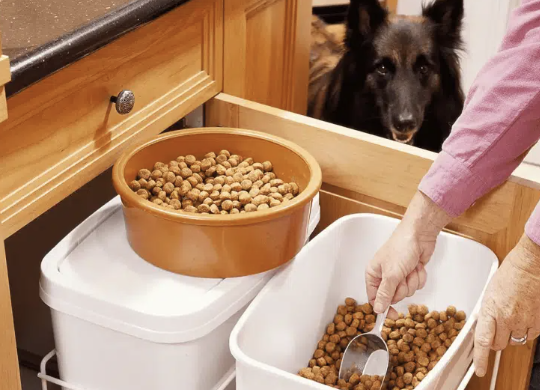
Hey team! Tie your running shoes a little tighter, grab your clicker and favorite treats, and let's have a serious talk about the fuel for our four-legged rockets. When you're standing at the start of an agility course, and your dog is vibrating with impatience to tear up the track, the last thing you want to worry about is whether they'll gas out on the weave poles because of the wrong bowl of kibble this morning. We are all looking for the perfect balance. We want our dogs to be lean, muscular, and charged up to a hundred percent. Reading through articles on the tvaryny.com portal, I constantly see heated debates around trends in canine menus. Today, we're going to break down the biggest one. Grain-free diets are a massive hit in the dog-owning community. Pet store shelves are practically groaning under the weight of beautiful bags featuring wild wolves on the labels. Marketers are screaming from every banner that grains are absolute evil. They claim it slows down your champion. But is that realy true? Let's take off our rose-colored glasses and dissect this topic like real pros.
The marketing myth of the wild wolf in your living room
The pet food industry made a brilliant and highly profitable move. They sold us on the idea that our sweet Jack Russell - the one who sleeps on an orthopedic pillow and is terrified of the vacuum cleaner - is actually a ruthless predator. Apparently, he exclusively needs wild boar meat and not a single drop of rice. This concept sounds cool and edgy. It resonates with our desire to give our partner a "natural" diet. But harsh biology tells us a completely different story. Over millennia of living alongside humans, the canine digestive system has heavily evolved. Genomic studies show that modern dogs have significantly more copies of the AMY2B gene. This gene is responsible for producing amylase - the enzyme needed to break down starch. In other words, your Border Collie is genetically wired to digest carbohydrates much better than their forest-dwelling ancestor. Grain itself isn't a toxic enemy. It's simply an effective energy source. And in sports, energy translates to speed on the course. It means the height of a jump over a hurdle and lightning-fast reactions to your commands.
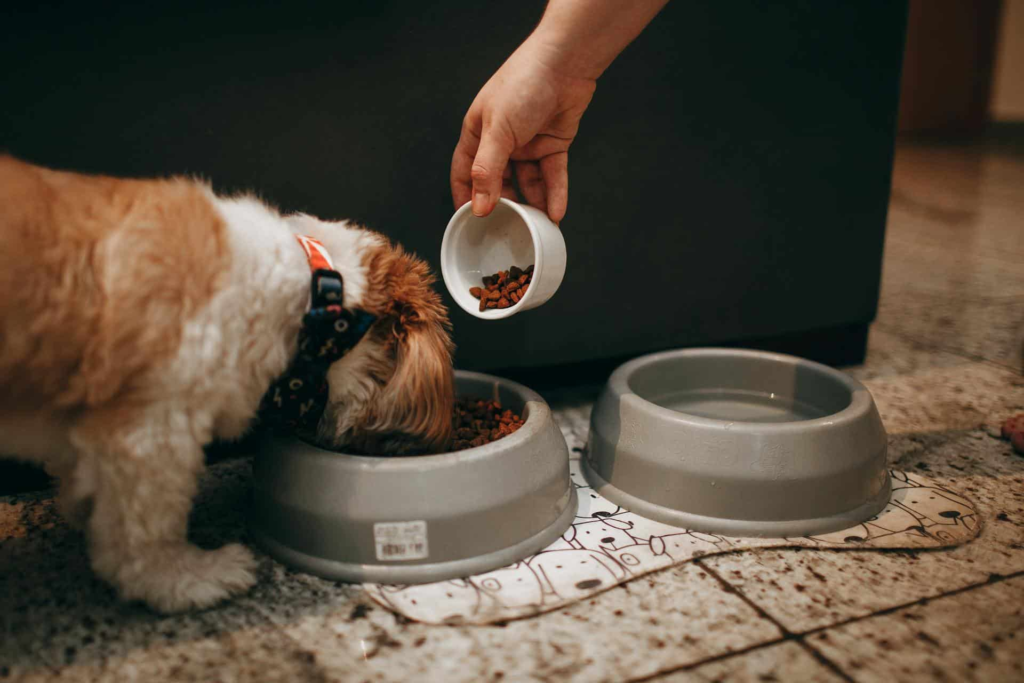
What's actually hiding in that grain-free bag?
Let's be realists. Technologically, dry kibble can't be made entirely of meat. To form that convenient little crunch you pour into the bowl before your morning run, a binding agent is absolutely necessary - namely, starch. If a manufacturer proudly removes rice, oats, or corn, they have to replace it with something else. Enter legumes (peas, lentils, chickpeas) and potatoes or sweet potatoes en masse. You're buying grain-free food, but it is absolutely not carb-free! The carbohydrate content can be exactly the same, and sometimes even higher. Swapping one carb for another isn't always a win for the body. Legumes contain phytic acid, which is a well-known antinutrient. It can bind to valuable minerals in the digestive tract and block their absorption. For an active dog whose joints and ligaments are constantly under intense stress during sharp turns or A-frame climbs, a calcium or zinc deficiency is a direct path to injury. Proper nutrition is key to avoiding arthritis and joint problems in dogs, so you must know the symptoms, treatment, and support options. Instead of driving, high-energy training sessions, you'll end up with long months of boring rehab.
Grain-free does not mean low-carb or biologically appropriate. It's just a technical substitution. It means that instead of high-quality oats, your dog gets a massive dose of peas or potatoes. And for working dogs, this energy source functions completely differently.
Trainer's notebook: notes on the margins
Grain allergies: a real threat or a blown-up myth?
On the training field, I hear it all the time: "We switched to grain-free because he's allergic to chicken and rice." Hold up, team! Let's separate the wheat from the chaff. Food allergies in dogs are real, and they are definitly a pain. But do you know what triggers them 90% of the time? Animal protein! Chicken, beef, and dairy are the main culprits. Allergies to gluten or specific grains are extremely rare in dogs (the glaring exception being Irish Setters with their genetic intolerance). If your partner is constantly scratching, has red ears, or deals with GI issues after a forest marathon, don't rush to blindly clear the shelves of grain-free kibble. The problem might not be the grain at all. Sometimes these reactions manifest as severe skin issues, so understanding hot spots in dogs, their causes, and treatment methods is far more useful than guessing diets. Modern science offers awesome tools. A simple DNA test can help you clearly understand your athlete's genetic predispositions to certain diseases or ingredient sensitivities. It's like telemetry in professional motorsports - it gives you precise data to tune your champion's engine.
Dilated Cardiomyopathy (DCM): an alarm bell from cardiologists
Now let's move on to the serious stuff. The stuff that made a lot of leading vets and sports kinesiologists sit up and pay attention. A few years ago, the FDA issued an official warning about a potential link between grain-free diets (especially those based on peas, lentils, and potatoes) and the development of DCM - a very dangerous heart condition. This is a state where the heart muscle stretches, weakens, and can't pump blood normally. For a dog working at a high heart rate during flyball or coursing, a weak heart is a death sentence. Researchers strongly suspect the root of the problem lies in a taurine deficiency. Legumes might physically interfere with its synthesis or absorption in the dog's body. And while the final conclusions of these studies haven't been fully drawn, I wouldn't risk my partner's main motor. If your dog absolutely has to be on a grain-free diet for strict medical reasons due to specific GI tract issues, you'll need to constantly monitor their heart and trace mineral levels. In tricky situations like this, properly selected vitamins and supplements become critical to compensate for what the body lacks from its daily kibble.
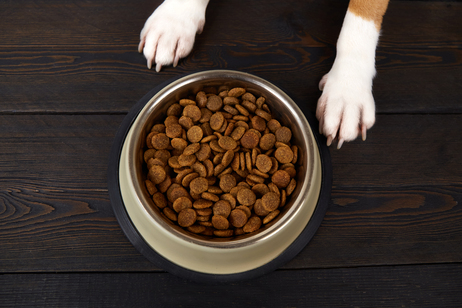
The energy of grains: the right carbs for explosive power
A little sports physiology to help understand the process. When your dog clears a jump, their muscles use ATP (adenosine triphosphate). For short, explosive movements, the body instantly grabs energy from creatine phosphate and muscle glycogen. If muscle glycogen is low, the dog quickly loses that "explosiveness". They get sluggish and start knocking down poles on the course. I often see dogs totally gas out in the second half of an intense training session simply because of poor fuel. High-quality grain components ensure optimal glycogen loading in the muscles. They act like a massive, reliable energy bank that the dog can steadily draw from throughout an intense workout. Of course, not all grains are created equal. Cheap corn and feed wheat are often used by mass-market brands just as cheap bulk fillers. But there are awesome, complex carbohydrates that work like a long-lasting battery. They release energy gradually, without causing sharp blood sugar spikes.
- Brown rice: An excellent source of stable, long-lasting energy. It's easily digested, doesn't overload the stomach before activity, and is great for sensitive dogs.
- Oats: A true superfood. Rich in fiber, supports gut health, and does a killer job keeping glucose levels steady during long hikes.
- Barley: Has a very low glycemic index. It provides the smooth, slow-burn energy that's so essential for endurance runners and search-and-rescue dogs during multi-hour shifts.
- Sorghum: A fantastic gluten-free grain packed with powerful antioxidants. Perfect for dogs with sensitive digestion who need serious stamina.
The diet battle: Grain-inclusive vs. Grain-free
To help you navigate this quickly and make the right call before your next pet store run, I've put together the key differences in a handy table. Analyze this data without emotion. Be sure to factor in your dog's actual daily workload.
| Analysis Parameter | Grain-Inclusive Diets (with quality complex grains) | Grain-Free Diets |
|---|---|---|
| Primary carb source | Oats, brown rice, pearl barley, sorghum | Peas, red lentils, chickpeas, potatoes, sweet potatoes |
| Energy stability under load | Very high, perfect for long marathons and multi-hour training | Highly dependent on the ingredient; potatoes cause quick spikes and sharp crashes |
| DCM risk (heart disease) | No direct link found in current research | Potentially elevated (FDA investigation into legumes is ongoing) |
| Impact on digestion | Brilliantly supports microflora thanks to high-quality soft fiber | Can cause severe flatulence due to a heavy load of legumes |
| Price/quality ratio | A much more balanced and fair price for the actual ingredients | Often heavily inflated simply because of aggressive brand marketing |
Performance comparison of different diet types for active dogs
How to pick a kibble to make your dog "fly" on the course? The checklist
Stop blindly falling for the pretty pictures of forests and wild wolves on the packaging. We are our dogs' trainers, managers, and strict nutritionists. When you pick up a bag of food, turn off your emotions and turn on your cold, analytical brain. Here is my personal algorithm for checking the fuel before I dump it into my champion's bowl.
- Look for meat in the first spot. Ingredients are always listed by weight before cooking. The top two or three spots should be a specific meat or a high-quality dehydrated protein (like "dehydrated turkey meat", not a vague "poultry" or "animal by-products").
- Scan the carbs under a microscope. If the food is grain-free, look closely at how many legumes are in there. If peas, lentils, and chickpeas are sneakily sitting at spots 3, 4, and 5, that means their combined weight could easily exceed the weight of the meat! This is known as "ingredient splitting" - a favorite trick of marketers.
- Judge the fats ruthlessly. Fat is the primary and most vital energy source for a dog during prolonged aerobic exercise. Look for named animal fats (like high-quality chicken fat or salmon oil) with a clear, specific source.
- Monitor their poop. Excuse the bluntness on the training field, but your dog's poop is the absolute best, most honest indicator of food quality. It should be small, firmly formed, and easy to pick up with a bag. If your dog is dropping massive volumes several times a day, that expensive food just isn't being absorbed. It's passing straight through and running on empty.
- Test their drive. Switched your dog to a new fuel? Closely monitor their energy levels after a month. Do they recover faster after an exhausting run? Is their coat looking dull? Do they still have that spark in their eyes before the start?
The final whistle
So, what's the final score on our board? Grain-free food isn't absolute evil, but it's far from the magical panacea that creative marketers paint it to be. For 90% of perfectly healthy, active dogs that train hard and regularly, chase a puller toy until they drop, or conquer steep mountain peaks alongside you, quality grains in their diet are a massive plus, not a minus. It means stable energy, robust gut health, and maximum safety for their heart. The golden rule of sports is this: don't fix what isn't broken. If your dog is in phenomenal shape on a kibble containing brown rice or oats, has a shining coat, steel muscles, and endless drive - get that intrusive grain-free advertising out of your head. Focus instead on building your training process, learning complex new tricks, and sharing bright emotions together. Because the absolute best supplement to any diet, even the most expensive one, is the miles logged side-by-side with their favorite owner. And now, close your browser tab, grab the leash, and head outside! The perfect day for new activities and achievements is waiting for you out there. Go drill that tough turn on the course, throw the frisbee a few times, or just hit the woods for a powerful trail run. Your four-legged athlete is already waiting for their dose of adrenaline!