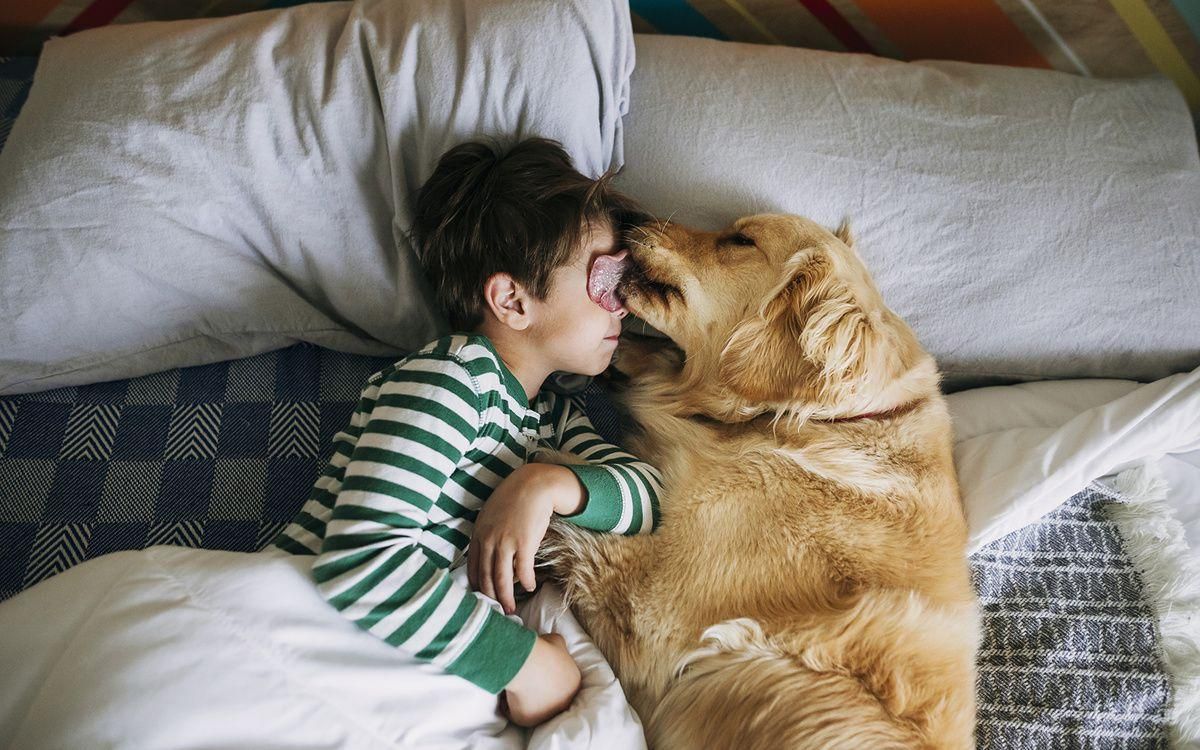
Every other child dreams of having their own dog. Imagination paints idyllic pictures: a toddler sleeping peacefully with their arms around a fluffy friend, or a grade-schooler happily racing a dog. Parents, watching this, often look for the mythical "nanny dog" - an animal that will stoically tolerate any childish antics, protect against danger, and ideally, require little care. However, reality is somewhat more complex than scenes from family movies. Choosing a four-legged friend for a family with kids is an equation with many unknowns, where the child's age, temperament, and the family's lifestyle play a decisive role. Find out more at Tvaryny.
The "Nanny Dog" Myth: What Parents Need to Know First
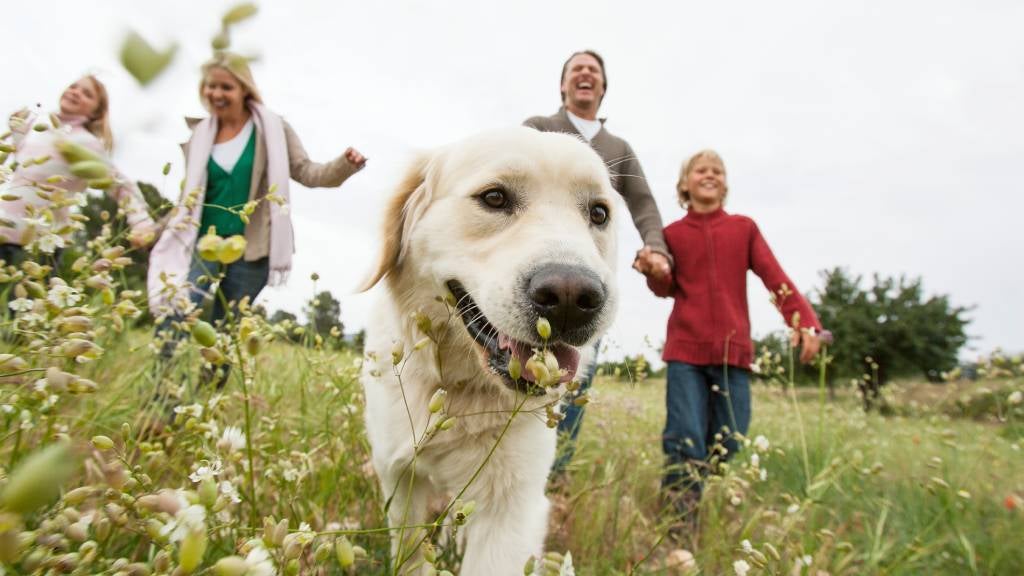
The term "nanny dog" was historically often attributed to Staffordshire Bull Terriers in England in the early 20th century, but today cynologists are unanimous: born nannies among dogs do not exist. No dog, regardless of breed, should perform the function of a babysitter. A dog is an animal with its own instincts, limits of patience, and needs.
When we talk about breeds that "get along with kids," we mean dogs with a high threshold for excitability (they are hard to annoy), a lack of fear-based aggression, a low prey drive regarding "running prey" (crucial for active kids' games), and high social orientation. The ideal family dog is not one that allows anything to be done to it, but one that knows how to walk away from a conflict in time and signal reconciliation.
Age Compatibility: Matching the Breed to the Child's Age
A child's needs and behavior change every few years. What suits a teenager might be dangerous for an infant. Let's break down the best options for each age group.
Children Aged 0–5: Safety and a "Bulletproof" Psyche
This is the most difficult period. Toddlers do not control their motor skills: they might inadvertently pull an ear, step on a paw, or fall onto the dog. A dog for this age shouldn't be too miniature (risk of injury to the animal itself) or too active/bouncy (risk of knocking the child off their feet).
Requirements for the dog:
- Size: Medium or large (but calm). Small dogs (Chihuahuas, Toy Terriers) often feel threatened by the unpredictable movements of toddlers and might snap to defend themselves.
- Temperament: Phlegmatic or sanguine. Maximum tolerance to touch.
- Coat: Preferably one that doesn't require complex grooming, since young parents are short on time as it is.
Children Aged 6–12: Play Partners
The golden time for getting a dog. The child already understands the word "no," can participate in simple care elements (pouring water, brushing), and needs an active friend for games outside. Here, energetic breeds that are ready to chase a ball for hours enter the stage.
Teenagers (13+ Years): Emotional Support and Responsibility
For teenagers, a dog often becomes not just a pet, but a therapist. At this age, you can get breeds that require intellectual stimulation and serious training. A teenager is fully capable of working independently with a dog trainer.
Top Dog Breeds for Families with Kids: A Detailed Overview
Let's look at breeds that have statistically and practically proven their suitability for life in large families.
1. Golden Retriever and Labrador Retriever: Classics of the Genre
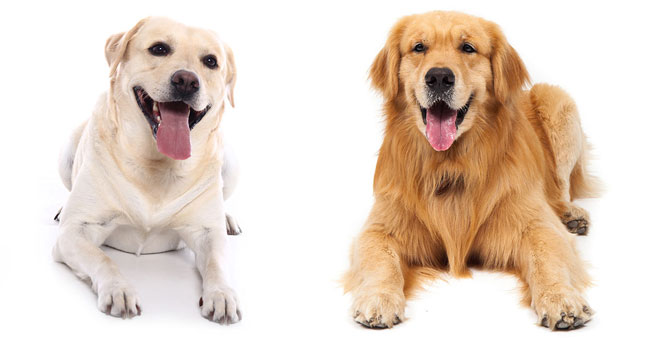
These two breeds constantly top family dog rankings. And not without reason. They possess a unique trait - the desire to please humans ("will to please"). Aggression in Retrievers is considered a serious breed defect.
Why they fit: They are sturdy (will withstand the hugs of a three-year-old), playful (ideal for grade-schoolers), and very affectionate. They are unlikely to bite, even if a child accidentally hurts them - they'd rather just walk away.
However, there are differences between them. Labradors are often more direct and energetic at a young age, while Goldens can be somewhat softer and more sensitive. You can learn more about the difference between these giants of kindness in our article on the golden classic Labrador Retriever vs Golden Retriever, where we break down all the nuances.
2. Beagle: The Restless Engine

If your family dislikes sitting still, the Beagle is your choice. This is a compact but sturdy hound that never gets tired of playing. They have absolutely no aggression towards people. They are pack dogs, so they perceive the family (and kids) as their "gang."
Nuances: Beagles are a nose on legs. If they catch an interesting scent, they might "switch off" their hearing. Therefore, walks should only be on a leash or in a fenced area. They can also be vocal, which is worth considering if there is a baby who is a light sleeper in the house.
3. Poodle and Bichon Frise: Intelligence and Hypoallergenic Qualities
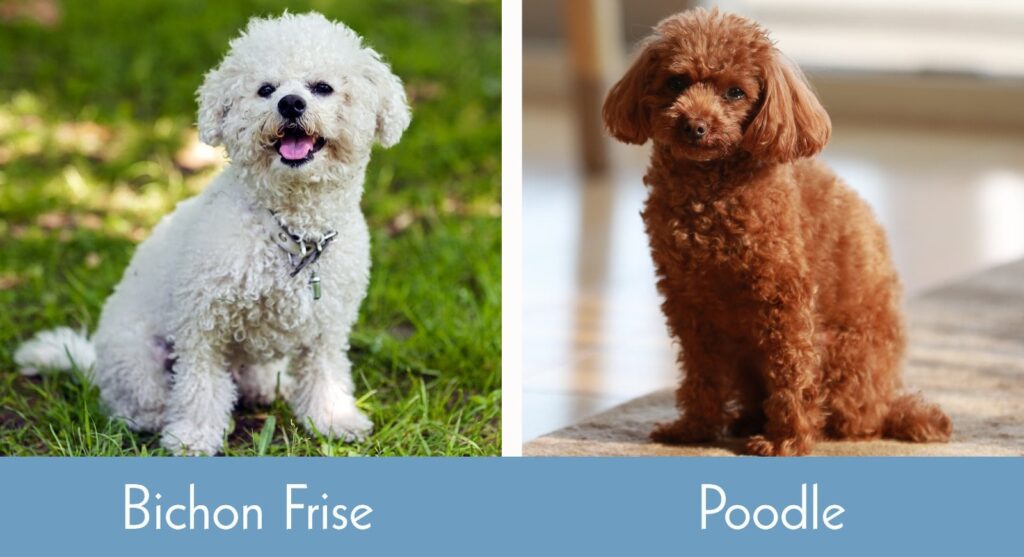
Many parents refuse to get a dog due to fear of allergies or a reluctance to see fur on kids' clothes. Here, breeds with hair instead of fur come to the rescue. Poodles are not just decorative dogs; they are some of the smartest dogs in the world (2nd place for intelligence). They easily learn circus tricks, which delights children.
The Bichon Frise is a white cloud of positivity. They are less inclined to choose "one master" and love all family members equally. If you are hesitating between these curly beauties, we recommend checking out our comparison of popular hypoallergenic breeds Poodle vs Bichon Frise to understand which one fits better into your apartment.
4. Collie and Sheltie: Fluffy "Shepherds" of Children
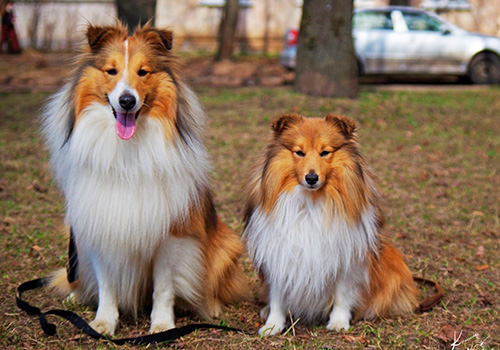
Rough Collies really do have a strong protective instinct. They often try to "herd" children, not letting them run too far, which can play into parents' hands on a walk. The Sheltie (Shetland Sheepdog) is a scaled-down copy of the Collie, which is excellent for an apartment.
Important: These breeds are very "chatty." They express emotions through barking, whining, and grumbling.
5. Cavalier King Charles Spaniel: Royal Comfort

If you are looking for a dog that will happily lie on the couch with a child for half the day while they read a book or watch cartoons - this is the "Cavalier." They are extremely gentle, absolutely non-aggressive, and adapt to the owner's rhythm of life. This is one of the best breeds for introverted, quiet children.
Dogs to Be Cautious With
There are no bad breeds, only breeds that require specific handling which is difficult to ensure in the chaos of life with children. These include:
- Guard breeds (Caucasian Shepherd, Alabai): They might perceive the loud games of strange children as an attack on "their" child and resort to defense.
- Huskies and Malamutes: Very independent, strong, and hyperactive. They often play too roughly for small kids.
- Miniature breeds (Toy Terriers, Mini Yorkies): Due to fragile bones, they often suffer from children's hugs, which leads to injury to the dog or self-defense bites.
Psychological Benefits: Why Do Kids Need a Dog?
Scientific research confirms: children who grow up with dogs have stronger immunity and a lower risk of developing allergies in adulthood (if there is no acute reaction from childhood). But the main benefit is psychological.
| Development Area | How the Dog Helps |
|---|---|
| Empathy | The child learns to understand the emotions of a creature that does not speak with words. This develops emotional intelligence. |
| Responsibility | Even the simple task of "pouring water into the bowl" teaches care for others. |
| Confidence | The unconditional love of a dog, who doesn't criticize for bad grades or a broken cup, creates a security base for the child's psyche. |
| Physical Development | Dog owners spend on average 60 minutes more outside than other people. |
Safety Rules: The Bible for Responsible Parents
Even the kindest Golden Retriever in the world has teeth. Most incidents happen not because of dog aggression, but because of a child's misunderstanding of the animal's signals. To avoid tragedy, remember the rule of three "NOs":
- NEVER leave a child under 7 alone with a dog. Not even for a minute. This is an axiom.
- NEVER allow a child to disturb a dog when it is eating or sleeping. These are basic instincts of resoure protection and vulnerability.
- NEVER allow a child to hug a strange dog around the neck. For dogs, this is a gesture of dominance or threat.
Signs of Dog Discomfort
Teach the child (and learn yourself) to see when the dog is asking: "Please leave me alone." Before growling or biting, a dog shows a multitude of "silent" signals:
- Licking the nose (when there is no food nearby).
- Yawning (when the dog isn't sleepy).
- Turning the head away from the child.
- Showing the whites of the eyes ("whale eye").
- Flattening the ears.
If you see these signs - stop the game immediately and let the dog go to its spot. By the way, the dog's spot (bed, crate) must be its inviolable fortress, where the child is strictly forbidden to enter.
Puppy or Adult Dog?
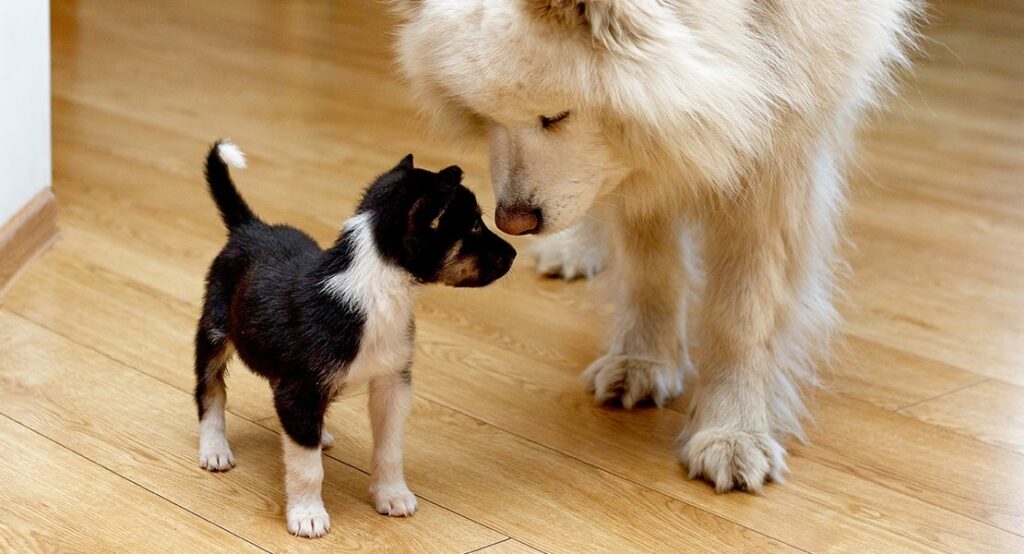
This is the eternal dilemma. A puppy is a "blank slate," you can bring it up to suit yourself. But a puppy is also needle-sharp milk teeth that will bite children's heels, puddles on the carpet, and torn toys. Are you ready to have, essentially, another infant in the house?
An adult dog (for example, a former show dog or a vetted animal from a shelter that lived in foster care with a family with kids) is a character already formed. You immediately see the temprament, activity level, and attitude towards little ones. This is often a better option for working parents who don't have time for potty training every 2 hours.
Checklist: Is Your Family Ready for a Dog?
Before driving to the breeder, give honest answers to these questions:
- Do you have 2–3 hours of free time daily specifically for the dog (not counting time for the child)?
- Does EVERY family member agree to getting a pet? (A dog "for the kid" that dad or mom doesn't want is a path to conflict).
- Do you have a financial cushion for veterinary emergencies?
- Who will walk the dog when the kid is sick, has lost interest, or gone to camp? (Spoiler: it will be you).
Conclusion
A dog can become the best gift of childhood, teaching how to love, forgive, and care. But this is possible only provided that the choice of breed is based not on fashion or looks, but on a sober calculation of character compatibility. Do not look for the ideal "nanny" - look for a full-fledged family member whom you will love no less than your own children.
"We give dogs our spare time, space, and surplus love. In return, dogs give us everything they have. It's the best deal man has ever made."