

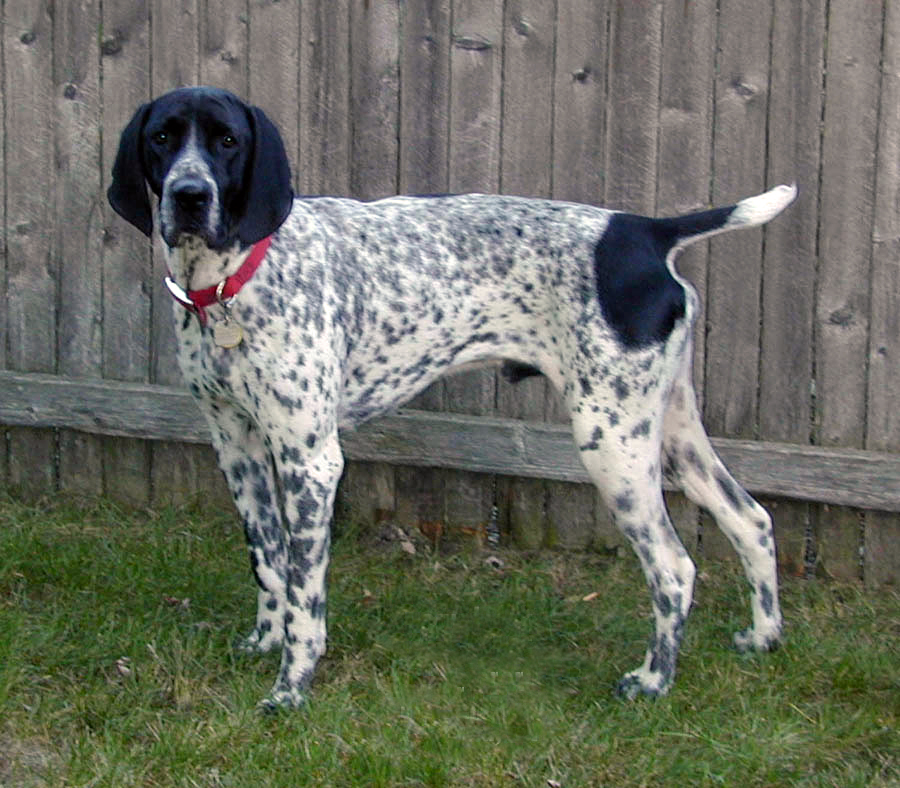
| Height | 53–63 cm |
| Weight | 22–28 kg |
| Lifespan | 12–14 years |
| FCI group | 7 · pointing dogs |
| Origin | France (Auvergne) |
Exact ratings
Common health issues
Nutrition
The Auvergne Pointer (Braque d’Auvergne) is an elegant, muscular, and aristocratic hunting dog with a history stretching back centuries. Bred in the mountainous Auvergne region of France, this four-legged hunter embodies endurance, intelligence, and incredible loyalty. Its unique “blue” coat and expressive eyes captivate everyone. However, the Auvergne Pointer is not just a beautiful dog, but also a reliable companion who, with the right upbringing, will become a full-fledged member of your family. Read more about the specifics of this amazing breed on Tvaryny.
These dogs were originally bred for hunting game birds in challenging conditions, which demanded not only speed and a keen sense of smell, but also cleverness and the ability to work closely with humans. Today, whilst retaining their hunting instincts, the Auvergne Pointer is increasingly finding its place as a cherished family pet, showering its owners with endless love and positive emotions.
Key Characteristics of the Auvergne Pointer Breed
| Parameter | Characteristic |
| Origin | France, Auvergne region |
| FCI Classification | Group 7 (Pointing Dogs), Section 1.1 (Continental Pointing Dogs, Braque Type) |
| Year of Recognition | 1955 |
| Lifespan | 12-14 years |
| Height at Withers | Males: 57-63 cm; Females: 53-59 cm |
| Weight | 22-28 kg |
| Temperament | Intelligent, gentle, loyal, energetic, obedient |
| Coat | Short, glossy, not too fine |
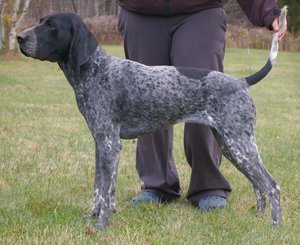
| Colour | Black with white ticking or roan (charbonné) |
| Use | Hunting feathered game, companion dog |
History of the Breed’s Origin
The history of the Auvergne Pointer, like many ancient European breeds, is shrouded in mystery and legend. The breed’s name directly points to its geographical roots – the historic Auvergne region in central France, known for its volcanic landscapes and harsh conditions. It was here, amidst the mountains and valleys, that this hardy and talented hunting dog was shaped.
One of the most popular theories suggests that Auvergne Pointers are descendants of ancient French pointing dogs, which were crossbred with dogs brought to France by the Knights of the Order of Malta during the Middle Ages. These dogs likely shared common ancestors with other pointers and braques, explaining some similarities in appearance and working qualities. However, isolation in the mountainous Auvergne region fostered the development of unique traits characteristic specifically of this breed.
For centuries, the breed developed almost exclusively within its native region. Selection was carried out by local hunters who valued dogs not for their appearance, but for their working qualities: a keen sense of smell, endurance, the ability to work on rugged terrain, and most importantly – a close bond with humans. Dogs that did not meet these requirements were simply not allowed to breed.
The two World Wars dealt a severe blow to the population of Auvergne Pointers. Many dogs perished, and systematic breeding was practically halted. By the mid-20th century, the breed was on the brink of extinction. Its revival began thanks to the efforts of enthusiasts and members of the “Réunion des Amateurs de Braque d’Auvergne” club, founded in 1913. They carefully selected surviving representatives of the breed to restore its numbers and preserve its unique qualities. Official recognition by the Fédération Cynologique Internationale (FCI) in 1955 marked a significant step in the preservation and popularisation of the Auvergne Pointer outside France.
Standard and Appearance of the Auvergne Pointer
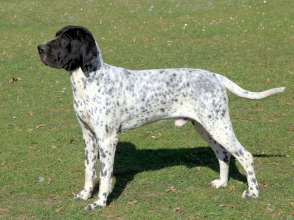
The Auvergne Pointer is a dog of robust, yet not heavy, build with harmonious proportions that attest to its strength and stamina. Its appearance combines elegance and functionality, typical of continental pointing breeds.
- Head: Fairly long, proportionate to the body. The cranial part is oval, the stop (transition from forehead to muzzle) is not too pronounced. The muzzle is straight, almost the same length as the skull.
- Eyes: Large, oval, dark amber in colour. The expression is lively, intelligent, and gentle.
- Ears: Set low, at or slightly below the eye line. They are soft, slightly curled inwards, with rounded tips. When stretched forward, they should reach the tip of the nose.
- Body: Rectangular in shape, with well-developed musculature. The back is straight and strong, the withers well-defined. The chest is deep and broad, reaching the level of the elbows.
- Tail: Set fairly high. Traditionally, it was docked to half or two-thirds of its length. In countries where docking is prohibited, the tail remains its natural length, carried horizontally by the dog.
- Coat and Colour: The coat is short, glossy, and lies close to the body. The most characteristic feature of the breed is its colouration. The standard permits two variations: “charbonné” (charcoal) – black patches on a grey roan background, creating a blueish tint effect, and black and white with ticking. The head is always black, preferably with a white blaze on the muzzle.
Character and Temperament of the Breed
The character of the Auvergne Pointer is a harmonious blend of hunting passion and gentle affection for the family. This is a dog with a balanced psyche, who perfectly understands the difference between working in the field and living at home. He is extremely people-oriented and eager to please his owner, which makes him an excellent student.
At home, the Auvergne Pointer behaves calmly and affectionately. He forms strong bonds with all family members and gets along well with children, showing patience and gentleness towards them. This dog dislikes solitude and finds long absences from his owners difficult. If left alone for extended periods, he can suffer from anxiety, which sometimes manifests as destructive behavior.
With other animals, especially other dogs, Auvergne Pointers usually get along well, especially if they have grown up together. However, it’s important not to forget their strong hunting instinct. Small household pets, such as rodents, birds, or even cats, might be perceived by them as potential prey. Therefore, early socialisation and control are critically important.
When hunting, the Auvergne Pointer transforms. He becomes focused, energetic, and incredibly resilient. His working style is a methodical search and a reliable point. Unlike some other pointing breeds, he is not prone to straying far from the hunter, consistently maintaining contact. This trait makes him similar to other versatile hunting dogs, such as the Russo-European Laika, who are also valued for their close cooperation with humans.
Pros and Cons of the Auvergne Pointer Breed
| Pros | Cons |
|---|---|
| High intelligence and easy to train. The dog quickly learns commands and aims to please. | Requires a high level of physical exercise. Not suitable for inactive people. |
| Loyal and gentle nature. A wonderful companion and family member. | Strong hunting instinct. Needs secure fencing and control during walks. |
| Gets along well with children and other dogs. | Dislikes solitude. Can develop anxiety if left alone for too long. |
| Robust health and low maintenance. Health is generally robust, but no breed-wide list of hereditary diseases has been compiled — “not described” means “not studied”, not “not there”. | Can be stubborn. Requires consistent and patient training. |
| Minimal coat care. Doesn’t require frequent grooming. | Prone to ear infections. Needs regular inspection and cleaning of ears. |
Care and Maintenance
The Auvergne Pointer is a relatively undemanding dog, but for a happy and healthy life, certain rules must be followed. Its care can be divided into several key aspects.
Grooming and Coat Care
The short coat of the Auvergne Pointer doesn’t require complex care. It’s sufficient to brush it once a week with a rubber brush or glove to remove dead hairs and maintain a healthy sheen. Shedding is moderate, intensifying seasonally in spring and autumn. Bathe the dog only when necessary, using a mild dog shampoo to avoid damaging the skin’s natural protective layer.
Particular attention should be paid to the ears. Their pendulous shape hinders the ventilation of the ear canal, creating favourable conditions for the development of bacteria and fungi. It is necessary to regularly, at least once a week, inspect the ears for redness, dirt, or unpleasant odour and gently clean them with a special lotion. It’s also important to regularly trim their nails and maintain good oral hygiene.
Physical Exertion and Activity
This is a very energetic breed, created for movement. The Auvergne Pointer needs at least 1.5-2 hours of active walks daily. These cannot be slow lead walks around the house. The dog needs the opportunity to run freely, explore the territory, and expend its energy. Ideal activities include long walks in the woods or fields, running alongside a bicycle, or swimming.
Insufficient physical activity can lead to behavioural problems: the dog may become nervous, disobedient, and might start to destroy things at home. Other hunting breeds, such as the Norwegian Elkhound Grey, have similar activity requirements, so future owners should realistically assess their capabilities.
Living Conditions
The Auvergne Pointer will feel best in a private house with a large, securely fenced yard where he can roam freely throughout the day. However, provided with sufficient physical exercise, he can adapt to apartment living. The main thing is to provide him with daily long and active walks. This is not a dog that can be left alone all day.
Training and Education
Auvergne Pointers are intelligent and quick-witted dogs, which makes their training process quite easy and enjoyable. They naturally strive to please their owner, which is a huge plus. However, like many hunting breeds, they can exhibit a certain independence and stubbornness. Therefore, for successful education, consistency, patience, and positive reinforcement are essential.
Harsh methods, shouting, and physical punishment are absolutely unacceptable. Auvergne Pointers have a sensitive nature, and such an approach can permanently undermine the dog’s trust in its owner. The method of positive reinforcement works best: praise, treats, and play for correctly executed commands. Training sessions should be short, interesting, and varied so that the dog does not lose interset.
Early socialisation is extremely important. A puppy needs to be introduced to different people, animals, sounds, and situations. This will help to raise a confident and well-balanced dog that will not display fear or aggression in unfamiliar circumstances.
Health and Typical Breed Illnesses
Feeding Recommendations
Interesting Facts about the Auvergne Pointer
- The “Blue” Dog: The breed earned its nickname “Blue Auvergne Pointer” (Bleu d’Auvergne) due to its unique coat colouration, where black ticking on a white background creates the visual effect of a blue-grey hue.
- A Versatile Breed: While the Auvergne Pointer specialises in game birds, in its homeland of France, it is also successfully used for hunting hares and even wild boars, demonstrating its courage and versatility.
- Almost Extinct: After World War II, the breed was so few in number that to revive it, literally individual representatives had to be sought out in remote villages of the Auvergne region.
- Not for Shows, but for Hunting: For many centuries, selection was carried out exclusively based on working qualities. Minimum attention was paid to conformation; the main thing was how well the dog performed in the field. This approach helped to preserve the breed’s robust helth.
- Rare Outside France: Despite all its advantages, the Auvergne Pointer remains a relatively rare breed outside its homeland. This makes it an exclusive choice for true connoisseurs. A similar situation applies to other French pointing dogs, such as the Bourbonnais Pointer, or Italian ones, like the Bracco Italiano.
Frequently Asked Questions about the Breed (FAQ)
Is the Auvergne Pointer suitable for apartment living? Yes, but only if the owner is prepared to provide the dog with daily long (at least 2 hours) and intense physical exercise. Without this, the dog will suffer and may become destructive.
How does the Auvergne Pointer get along with children? Very well. They are patient and gentle dogs who usually make excellent companions for children. However, any interaction between a dog and a small child should be supervised by adults.
Can an Auvergne Pointer be kept with a cat? Possibly, if they grew up together from a young age. However, its strong hunting instinct can become a problem. Introductions to a cat should be gradual and controlled.
Do they shed a lot? Shedding is moderate, intensifying twice a year. Regular brushing helps to keep this process under control, and there will not be as much fur in the house.
Is the Auvergne Pointer difficult to train? No, they are intelligent and eager to please, which makes them quite easy to train. However, they require a consistent trainer with a firm but fair temperament. Harshness and cruelty are unacceptable.
Video about the Breed
- Affectionate, calm, good with children
- Clever, obedient, works closely with its person
- A hardy pointing hunter
- A striking "blue" colour
- A high energy level — not for a flat
- Needs scent work or hunting
- Attached, cannot bear being alone
- Drop ears are prone to infections
| Saint-Germain Pointer | French Pointer (Pyrenean) | Pointer | |
|---|---|---|---|
| Height | 54–62 cm | 47–58 cm | 58–70 cm |
| Energy | 4.5 | 4.5 | 4.5 |
| Apartment | 2 | 2 | 2.5 |
| Beginners | 3.5 | 3.5 | 3 |
Why is the Braque d'Auvergne's colour called "blue"?
Is the Braque d'Auvergne good for a family?
What was the Braque d'Auvergne bred for?
FCI Standard No. 180 · Société Centrale Canine
For apartments · For kids · For beginners · Active · Smartest · Hypoallergenic · All rankings →