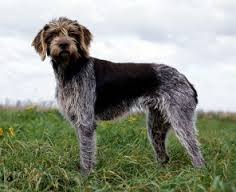
The Czech "moustache" of field, forest and water — a versatile pointer with a beard: sensitive, hardy, devoted and level-headed. The Czech Wirehaired Pointer (Český fousek) is one of the oldest continental pointing breeds, an all-round worker with a brilliant nose; keen in the field yet surprisingly calm and gentle at home, good with children and other animals.
Apartment · not suitableKidsCats · with caveatsOther dogsBeginners · with caveats
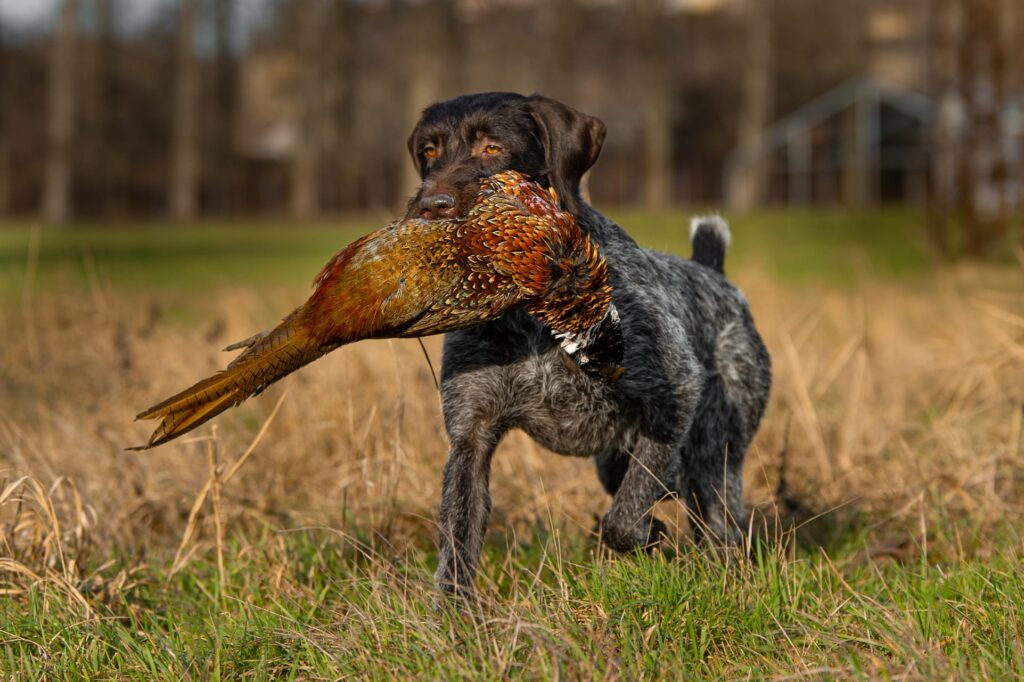
The Cesky Fousek (Bohemian Wirehaired Pointing Griffon) is a unique and ancient hunting breed with deep roots in Czech history. Today, it remains highly popular in its homeland, as well as in Slovakia, thanks to its outstanding working abilities. The Cesky Fousek, affectionately known as the "Czech-bearded dog", is a true all-rounder, perfectly suited for hunting in the field, forest, and water. It possesses an incredible sense of smell, endurance, and tirelessness when pursuing game. At the same time, this dog is remarkably calm around other pets, loyal to children, and forms a deep bond with its owner, becoming a fully-fledged member of the family. We will discuss all aspects of this amazing breed in more detail later on Tvaryny.
Cesky Fousek: A Brief Breed Overview
Cesky Fousek: A Brief Breed Overview · 9
Characteristic
Description
Origin
Czech Republic
Original Name
Český Fousek
Year of FCI Recognition
1963 (Standard No. 245)
FCI Group
Group 7 (Pointers), Section 1.3 (Continental Pointers, "Griffon" type)
Life Expectancy
12–15 years
Height at withers
Males: 60–66 cm Females: 58–62 cm
Weight
Males: 28–34 kg Females: 22–28 kg
Temperament
Devoted, intelligent, easy to train, energetic, excellent hunter
Use
Versatile hunting dog, companion dog
Related and Similar Wirehaired Breeds
The Cesky Fousek belongs to a large family of European wirehaired pointing dogs. If you like this type of dog, you might also be interested in its "relatives". They all share a similar temperament and purpose but differ in the details of their appearance and origin. For example, the German Wirehaired Pointer, one of the most popular wirehaired breeds in the world, was used in the breed's restoration. Another well-known breed is the Wirehaired Pointing Griffon (Korthals Griffon), which hails from France. It's also worth looking at the elegant Spinone Italiano, known for its gentle nature, and the Wirehaired Vizsla, which combines pointing qualities with a distinctive wiry coat.
Interesting Facts About the Cesky Fousek
This breed has a rich history filled with many interesting moments.
The name "Fousek" comes from the Czech word "fousy", which means "whiskers" or "beard", a direct reference to the breed's most distinctive feature.
The Cesky Fousek is depicted on Czech postage stamps, highlighting its status as a national treasure.
During the breed's revival, breeders were so strict that they kept a detailed studbook, tracking every single puppy and its working abilities. This practice is largely maintained to this day.
It is one of the few breeds whose standard requires working trials for breeding approval. A dog without hunting diplomas cannot be considered a full-fledged representative of the breed.
Although they love water, their coat dries surprisingly quickly, allowing them to stay warm even after a long duck hunt in cold weather.
History and Origin of the Breed
The history of the Cesky Fousek is a story of endurance spanning centuries. It is one of the oldest continental pointing breeds. The first records of dogs resembling the modern Fousek date back to 1348, in letters from Charles IV, King of Bohemia and Holy Roman Emperor. He gifted these "Bohemian water dogs" (Canis Bohemicus) to Margrave Ludwig of Brandenburg for hunting waterfowl. These dogs were famed for their harsh coats and exceptional hunting abilities.
For centuries, these dogs were indispensable helpers for Czech hunters. They were valued for their versatility - their ability to work in the field, forest, and on water. However, like many European breeds, the Cesky Fousek was on the brink of extinction by the early 20th century. The First World War dealt a devastating blow to the population. By the 1920s, the breed was practically lost.
The breed's revival is credited to a group of enthusiasts led by František Horský. They founded the "Český Fousek" club in Prague with the aim of restoring their national pride. They meticulously searched for the few remaining purebred individuals. To restore and improve working qualities, it was necessary to crossbreed with other wirehaired breeds. Notably, German Wirehaired Pointers and German Stichelhaars were used. This step not only saved the breed but also improved its working abilities and conformation. Seven main breed lines were established, and modern breeding of the Cesky Fousek still requires strict adherence to the compatibility of these lines to preserve genetic health and working characteristics.
Official recognition by the Fédération Cynologique Internationale (FCI) came in 1963. Today, the Cesky Fousek is not just a hunting dog but also a national symbol of the Czech Republic, a living monument to the country's canine history.
What Does the Cesky Fousek Look Like: Breed Standard
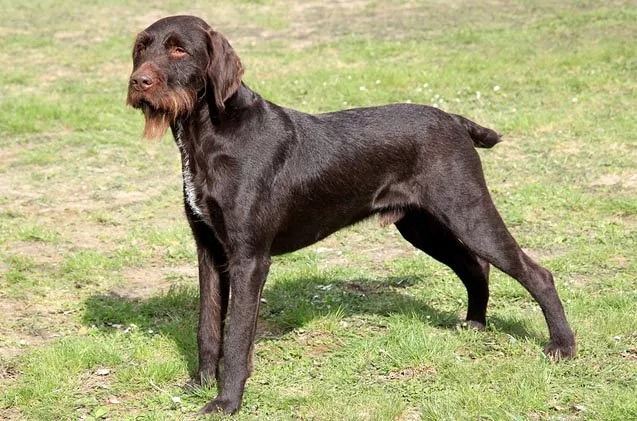
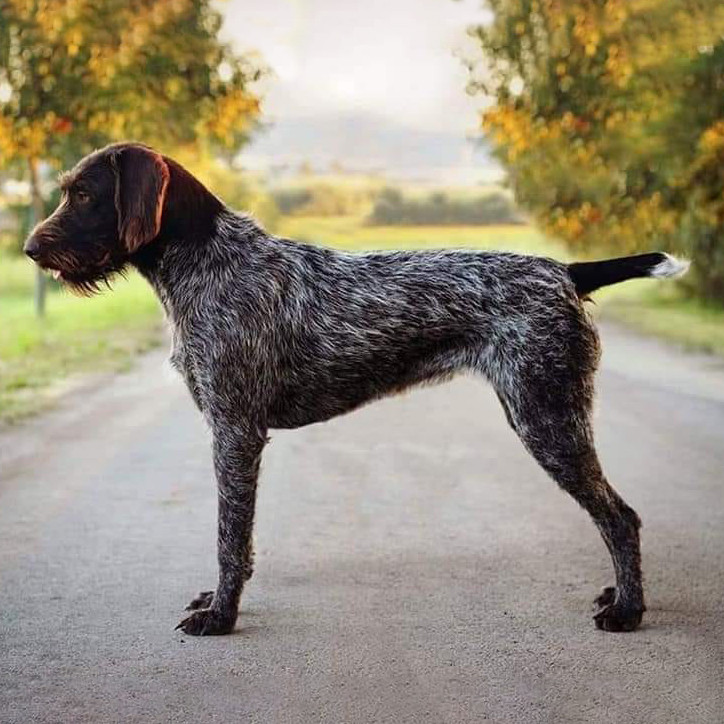
The Cesky Fousek is a medium-sized dog of noble appearance, with a sturdy build and a distinctive "wiry" coat. Its appearance reveals it as a hardy and tireless worker.
Head and Muzzle
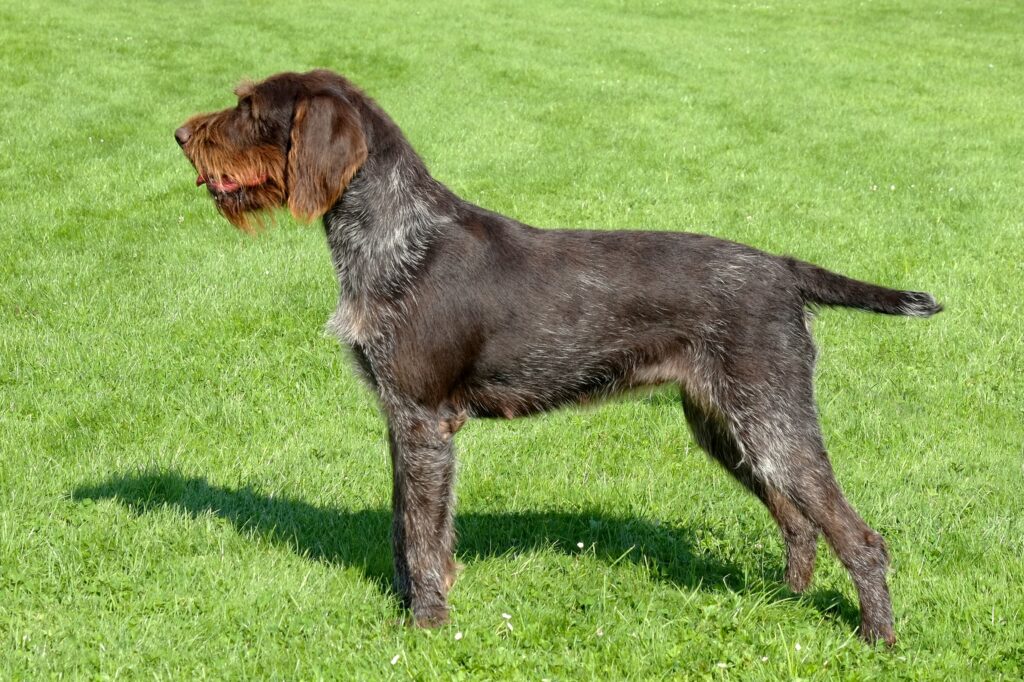
The Fousek's head is dry, rather narrow and long, set high on the neck. The forehead is moderately broad and slightly convex. The stop (transition from forehead to muzzle) is gentle but clearly visible. The muzzle is slightly longer than the skull and gradually tapers towards the nose. The nose is broad with open nostrils, usually dark brown. The lips are close-fitting and dry. The most characteristic feature is the "furnishings" on the muzzle: soft whiskers, a thick beard, and bushy eyebrows, giving the dog a serious yet wise expression.
Eyes and Ears
The eyes are almond-shaped, deep-set, with a kind and intelligent expression. The colour ranges from amber to deep chestnut. The gaze is direct and penetrating. The ears are set high, broad at the base, and taper towards the tip. They are drop-ears, fitting closely to the cheeks, with slightly rounded ends.
Body and Tail
The dog has a strong, but not overly massive, frame. The neck is of medium length, muscular, dry, and slightly arched. The withers are well-pronounced. The back is short, straight, and strong. The loin is short, broad, and muscular. The croup is moderately sloping. The chest is oval-shaped, deep, and reaches the elbows. The belly is moderately tucked up. The tail is a continuation of the topline, carried horizontally or slightly higher. By hunting tradition in countries where it is permitted, the tail is docked to 3/5 of its length. In countries with a ban on docking, the tail remains its natural length.
Coat and Colour
The coat is a key feature of the breed. It is perfectly adapted to protect the dog in all weather and on any terrain. The coat consists of three types of hair:
Undercoat: Soft and dense, about 1.5 cm long. In summer, it almost completely disappears, helping the dog tolerate heat.
Guard hair: Straight, harsh, and wiry, 3–4 cm long. It lies close to the body.
Topcoat (bristles): The longest (5–7 cm) and harshest hairs, especially prominent on the chest, back, and shoulders.
On the lower cheeks and lips, the hair forms the characteristic "beard". The eyebrows are dense, with the hair growing upwards.
The most common colours are:
Dark roan: With or without brown patches. This is the most typical colour.
Brown with ticking: (marbled, "pepper-and-salt") on the chest and lower limbs.
Solid brown: With no markings.
White markings on the chest and limbs are permissible. Fouseks are often seen with a brown head and matching patches on the body.
Character: Temperament and Behaviour
The Cesky Fousek is not just a working machine but also an incredibly devoted companion. Its character is a balance of hunting drive and family affection. They will accompany their owner wherever they go, whether on a long hike in the mountains or just a trip to the shop. These dogs are usually very obedient and are distinguished by their exceptional intelligence. They navigate difficult terrain well, are quick-witted, and capable of making independent decisions during a hunt.
They are known for their cheerful disposition and are very attentive and patient with children, making them excellent family dogs. The Fousek forms a strong bond with its "pack" and strives to be involved in all family activities. They do not tolerate loneliness well and are not suited for living in a kennel or on a chain. They need constant human contact.
The breed's strong hunting instinct, surprisingly, does not conflict with living in a flat alongside other pets, especially if the dog grew up with them. Early socialisation helps them to calmly accept cats and other animals. However, outside, small wildlife (squirrels, birds) will always be the object of their keen attention. They are reserved but not aggressive towards strangers, making them decent watchdogs who will always announce the arrival of guests.
Training and Socialisation
The Cesky Fousek is a very intelligent dog that is eager to please its owner. This makes the training process quite easy and enjoyable. They learn commands quickly and respond well to positive reinforcement (treats, praise).
Calm, consistent, and firm training - is the key to success. Harshness or physical punishment can make this sensitive dog withdrawn and fearful. It's important to establish rules from a young age and be the "pack" leader.
Early socialisation is critically important. The puppy needs to be introduced to different people, sounds, places, and other animals to grow into a confident and balanced dog. If the dog is intended for hunting, its working abilities should be honed with special training on feathered game, blood tracking, and retrieving from water. Regular physical training will not only provide an outlet for hunting energy but also contribute to the dog's well-being. Sessions should be held once or twice a day, focusing on running activities and mental challenges.
Pros and Cons of the Breed
Pros and Cons of the Breed · 6
Pros
Cons
Excelent hunter - an all-rounder for any game and terrain.
Very high activity requirements - not suitable for sedentary people.
High intelligence and easy to train.
Needs a lot of attention - does not tolerate loneliness well.
Devotion to family, excellent with children.
Prone to ear infections - requires regular care.
Good health and stamina.
Requires hand-stripping - coat care is more complex than for smooth-coated breeds.
Minimal shedding (with proper care).
Strong hunting instinct - may chase small animals outdoors.
Calm temperament around other pets (with proper socialisation).
Not suited for kennel living.
How to Care for a Cesky Fousek
Although the Cesky Fousek is a born hunter, it can be successfully kept in a flat or a house. The main condition is satisfying its need for activity.
Exercise and Activity
This is an extremely energetic breed. Simple walks on a lead around the block will be categorically insufficient. A Cesky Fousek needs long, active walks with the opportunity to run freely off-lead (in a safe area) for at least 1–2 hours a day. They make excellent companions for jogging, hiking, or cycling. Ideally, the dog should have the chance to swim - they adore water. An insufficient level of physical activity can lead to destructive behaviour, barking, and health problems.
Grooming
The Fousek's harsh coat doesn't require complex grooming but does need regular attention. It sheds very little if cared for propperly. The coat of the Cesky Fousek is thicker than that of the German Wirehaired Pointer, and its dense undercoat disappears completely in summer.
Brushing: It's enough to brush the dog 1–2 times a week with a special brush or "Furminator" to remove dead undercoat and dirt.
Hand-stripping: Like most wirehaired breeds, the Fousek needs manual hand-stripping (plucking dead guard hairs) 2–3 times a year. This helps maintain the correct coat structure and its protective properties. Clipping a Fousek is not recommended, as it makes the coat soft and ruins it.
Bathing: Bathe the dog only as necessary. Their coat has self-cleaning properties.
Ear care: This is the most crucial aspect. Regularly inspect and clean the ears, especially after hunting or swimming, to prevent otitis.
Nutrition
Feeding: Key Recommendations
Health and risks
Health: Common Conditions and Prevention
Frequently Asked Questions (FAQ) · 5
Does the Cesky Fousek shed a lot?
No, with proper care (regular brushing and hand-stripping 2–3 times a year), shedding is minimal. Their coat doesn't fall out on its own; dead hairs must be removed mechanically. This makes them a decent choice for people sensitive to fur (but they are not hypoallergenic).
Can a Cesky Fousek live in a flat?
Yes, but only if the owner is prepared to dedicate 2–3 hours a day to active walks. Without sufficient physical and mental stimulation, the dog will be unhappy and may start destroying things in the flat. The ideal option is a house with a well-fenced garden.
Are they aggressive towards other dogs?
Usually, no. With proper early socialisation, they get along well with other dogs. They are self-confident and not prone to baseless conflicts, but a male can stand up for himself if provoked.
Can I get a Fousek if I'm not a hunter?
Yes, but you must be prepared to replace hunting with other activities. This could be active hiking, running, canicross, bikejoring, or dog sports like agility or flyball. This dog needs a "job" for its mind and body.
How much does a Cesky Fousek puppy cost?
This is a relatively rare breed outside the Czech Republic and Slovakia. The cost of a puppy from a responsible breeder who tests the parents for health and working abilities can be quite high. It's important to look for reputation rather than just price.
Video About the Breed
FAQ
Why is the Český fousek called the "moustache"?
Because of its characteristic wiry coat with a pronounced "moustache" and "beard" on the muzzle (fousek comes from the Czech for "moustache"); it is a typical trait of the griffon-type pointers.
How old is this breed?
One of the oldest continental pointers: dogs resembling the fousek ("Bohemian water dogs") are mentioned as early as the 1348 letters of King Charles IV of Bohemia.
Is the fousek suitable for a flat?
Poorly — it is an energetic working pointer that needs space, scent work and serious exertion; at home, though, it is surprisingly calm and gentle.