

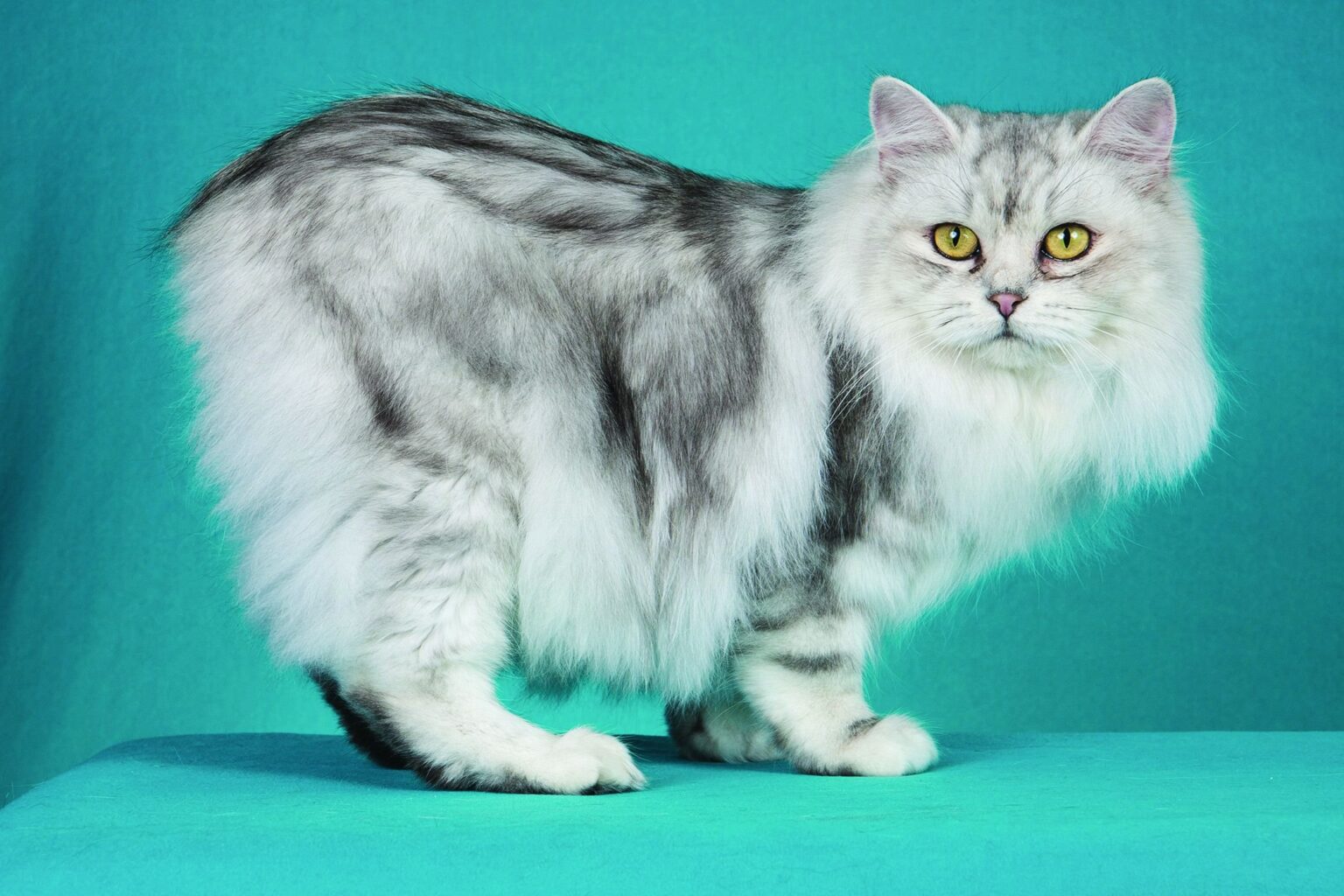
| Weight | 3.5–5.5 kg |
| Lifespan | 12–15 years |
| Coat | semi-long, dense |
| Recognition | TICA · CFA · WCF |
| Origin | Isle of Man / Canada |
Exact ratings
Common health issues
Nutrition
The Cymric, also known as the Longhaired Manx, is a breed of exceptionally affectionate and devoted pets who simply cannot imagine life without human companionship. These agile cats, with their plush coats and often tailless appearance, combine playfulness, hunting instincts, and a wonderfully peaceable nature. A Cymric can be a marvellous friend for children and is always welcoming to guests. If you dedicate enough time to grooming their luxurious coat and to consistent training, you will have an obedient, smart, and loving companion. You can find out more about the unique characteristics, care, and temperament of this breed on Tvaryny.
The Cymric: A Brief Breed Overview

| Original Name | Cymric (Longhaired Manx) |
| Origin | Canada (based on cats from the Isle of Man) |
| Time of Origin | 1960s |
| FIFe Recognition | Not recognised |
| Recognition by Other Organisations | CFA, TICA, ACFA, CCA |
| Size | Medium |
| Weight | 3.5–6 kg (males usually heavier) |
| Lifespan | 8–14 years (can be shorter due to genetic issues) |
| Coat Type | Semi-long, double (thick undercoat) |
| Colours | Various (except colourpoint, lilac, chocolate) |
| Character | Affectionate, playful, intelligent, devoted, calm |
| Grooming | Requires regular grooming (2–3 times a week) |
| Activity Level | Moderate |
| Shedding | Seasonal, moderate/high |
| Suitable For | Families with children, single people, individuals prepared to give attention |
History and Origin of the Cymric Breed
The history of the Cymric is inextricably linked with its shorthaired ancestor – the Manx, a cat originating from the Isle of Man, located in the Irish Sea between Great Britain and Ireland. A characteristic feature of the Manx is a natural mutation leading to a shortened or completely absent tail. This mutation likely arose spontaneously in the island’s domestic cat population several centuries ago and became established due to isolation.
Longhaired kittens occasionally appeared in litters of shorthaired Manx cats, as the gene for long hair is recessive. For many years, such kittens were considered undesirable and were not used in the breeding of purebred Manx. The situation changed in the 1960s in Canada, when breeders Alayne Held and Blair Wright took an interest in the longhaired Manx variations and began to breed them purposefully. The name “Cymric” comes from “Cymru,” the Welsh word for Wales. Although the breed has no direct connection to Wales, the name was chosen for its Celtic sound, similar to “Manx.”
The path to official recognition was not straightforward. The Canadian Cat Association (CCA) recognised the Cymric as a distinct breed in the 1970s. The Cat Fanciers’ Association (CFA) initially registered them as Longhaired Manx but granted them separate breed status under the name Cymric in 1994. Other major organisations, such as The International Cat Association (TICA), also recognise the Cymric, often as a longhaired variety of the Manx. However, the largest European federation, FIFe, does not recognise either the Manx or the Cymric due to ethical concerns related to the genetic mutation that causes taillessness and potential health problems.
The Cymric’s Appearance: A Detailed Description
The Cymric is a medium-sized cat with a sturdy, compact build and well-developed musculature. Its body has a characteristic roundness, especially in the hindquarters. One of its most distinctive features is its powerful hind legs, which are noticeably longer than the front legs. This gives them a characteristic “rabbit-like” hop or gait and allows them to jump high. The back forms a smooth arch from the shoulders to the rump.
- Head: Large, rounded, with broad cheekbones and a strong chin. The muzzle is of medium length, with a slight dip at the bridge of the nose.
- Eyes: Large, round, and expressive. Eye colour usually complements the coat colour.
- Ears: Medium-sized, set wide apart, slightly rounded at the tips, and broad at the base. They may have small tufts.
- Coat: The main difference between the Cymric and the Manx is its luxurious double coat of medium length. It consists of a soft, thick undercoat and longer, dense, silky guard hairs. The fur forms a distinct “ruff” around the neck and “breeches” on the hind legs. The coat feels springy and dense. In texture, it can resemble the coat of some other breeds with a dense undercoat, such as the Nebelung, although it is longer.
- Colours: Breed standards permit a wide range of colours and patterns, including solid (white, black, red, cream), tortoiseshell, smoke, silver, tabby (mackerel, spotted, classic), and bicolor. Only colours indicative of hybridisation are not allowed: chocolate, lilac, Himalayan (colourpoint), and their combinations with white.
- Tail: This is the most variable feature of the Cymric (as with the Manx). There are several tail types:
- Rumpy: Complete absence of a tail, often with a small dimple where it would have begun. This is the ideal type for shows.
- Rumpy-riser: Presence of 1-3 tail vertebrae under the fur, which rise slightly when petted.
- Stumpy: A short, vestigial tail composed of a few (usually up to 5-7) fused or rudimentary vertebrae.
- Tailed or Longy: A tail of almost normal or normal length. Such cats are not eligible for shows as Cymrics but are extremely important for breeding programmes to maintain the breed’s health.
The Cymric’s Character: Temperament and Behaviour of a Tailless Companion
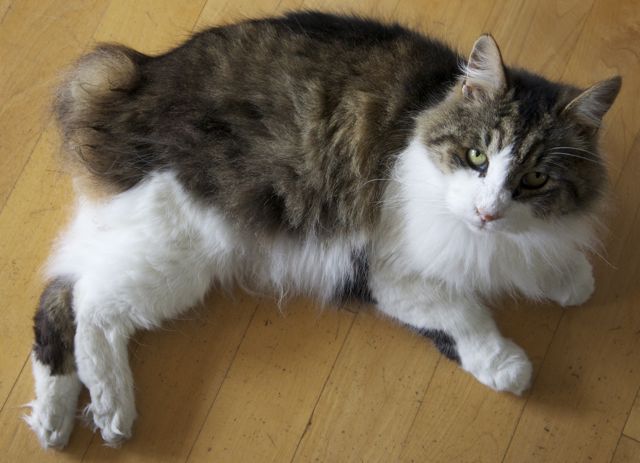
Cymrics are known for their gentle, playful, and very devoted character. They are often described as “dog-like” cats due to their attachment to their owners and their desire to be involved in all family affairs. They are intelligent, inquisitive, and quite easy to train.
Key character traits of the Cymric:
- People-oriented: The Cymric adores the company of its people and suffers from prolonged loneliness. It will follow you around, sit beside you when you are relaxing, and joyfully greet you at the door. This need for attention makes them excellent companions for people who spend a lot of time at home.
- Playfulness: Despite their sturdy build, Cymrics remain playful throughout their lives. They enjoy interactive games, can learn to fetch toys, and will happily chase a laser pointer or a feather wand. Their powerful hind legs allow them to make impressive jumps. Their activity and playfulness are somewhat reminiscent of energetic breeds like the Japanese Bobtail, though Cymrics are generally calmer.
- Intelligence: These are clever cats that quickly learn to open doors, cupboards, and solve simple puzzles to get treats. Their intelligence can be used to teach them various tricks using positive reinforcement.
- Friendliness: Cymrics usually get along well with children (provided the child treats the animal respectfully) and other pets, including dogs, if introductions are made correctly and gradually. They may initially be wary of strangers but quickly warm up.
- Hunting instincts: Like their ancestors from the Isle of Man, Cymrics have retained strong hunting instincts. They can be proficient hunters of rodents if given the opportunity, a trait shared with other robust, natural-looking breeds such as the Pixiebob. At home, this instinct can be satisfied with toys that mimic prey.
- Vocalisation: They are generally quite quiet cats. They have a soft, pleasant voice and tend to meow mainly when they want to draw attention to their needs (food, play, affection).
It’s important to remember that Cymrics are very sensitive to their owners’ moods and can be offended by unfair punishment or harshness. They respond best to affection, patience, and positive training methods.
Cymric Health: Genetic Risks and Prevention
Caring for Your Cymric: Grooming and Upkeep
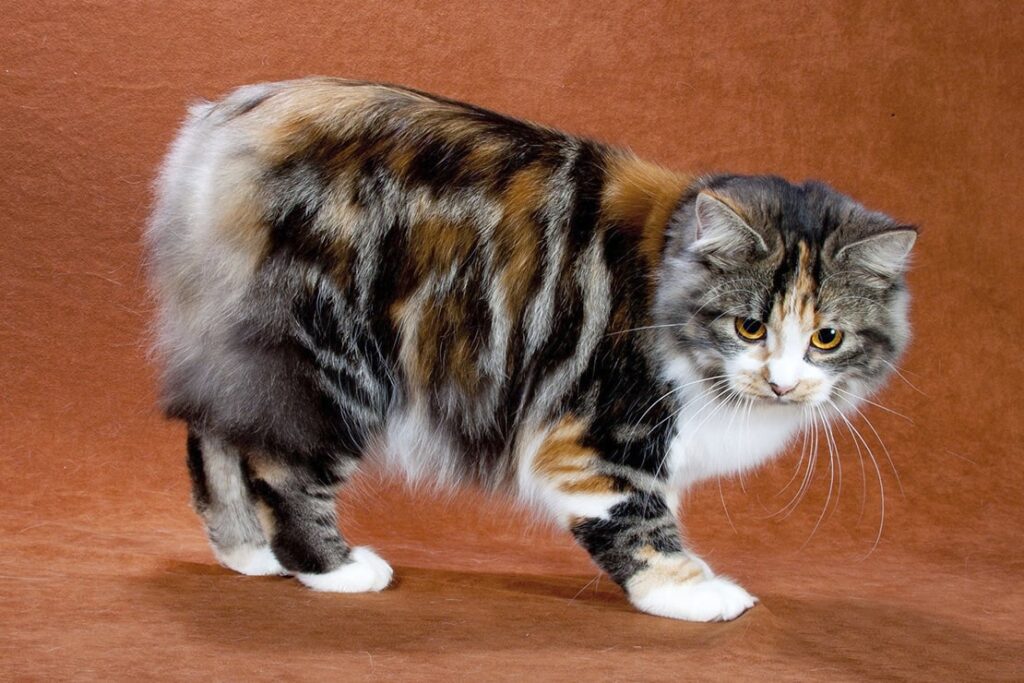
Caring for a Cymric requires regularity, especially concerning its luxurious coat. Although they are quite adaptable, certain aspects of care are key to their health and comfort.
Grooming:
- Combing: The Cymric’s thick double coat, not unlike that of other breeds with substantial undercoats such as the Selkirk Rex, needs regular combing (2-3 times a week) to prevent matting and remove dead hairs. During seasonal moulting (spring and autumn), combing should be more frequent, possibly daily. It’s best to use a metal comb with varying tooth spacing and a deshedding tool or slicker brush to remove the undercoat. Pay special attention to the “ruff” and “breeches,” where the fur is longest and thickest.
- Bathing: Bathe your Cymric only when necessary, if the coat is heavily soiled or greasy. Use a special shampoo for longhaired cats. After bathing, it is important to dry the coat thoroughly with a towel and a hairdryer (on a low heat setting), combing it during the drying process to avoid tangles.
- Eye and Ear Care: Regularly inspect the eyes and ears. Wipe the eyes with a clean, damp cloth or cotton pad (a separate one for each eye) as needed. Clean the ears with a special cat ear cleaning lotion if you notice any build-up of dirt or wax. Do not use cotton buds deep in the ear canal.
- Claw Trimming: Trim the tips of the claws every 2-4 weeks using special cat nail clippers. This will help protect furniture and prevent ingrown claws.
- Dental Care: Regular brushing with a special cat toothbrush and toothpaste will help prevent plaque and tartar build-up, as well as the development of gum disease.
Upkeep:
- Space and Activity: Cymrics do not require a huge amount of space, but they do need an area for play and activity. Provide them with toys, scratching posts (vertical and horizontal), and, if possible, multi-level cat trees for climbing and jumping.
- Litter Tray: The litter tray should be sufficiently large and always clean. Some Cymrics with Manx Syndrome may have problems with bladder or bowel control, so a tray with low sides or the use of special pads may be necessary. It is important to maintain hygiene in the area under the tail for such cats.
- Safety: As Cymrics are inquisitive and enjoy jumping, ensure your home is safe for them (hide wires, toxic substances, install screens on windows).
Training and Socialising Your Cymric
Cymrics are intelligent and quick-witted cats that are usually responsive to training and education if the correct methods are used. Their natural obedience and people-oriented nature make the training process enjoyable.
- Positive Reinforcement: Cymrics respond best to methods based on encouragement – praise, affection, favourite treats. Never use physical punishment or shouting, as these cats are very sensitive and can become timid or resentful.
- Teaching Commands: Thanks to their intelligence, Cymrics can learn simple commands (“come,” “sit”) and even to fetch toys. Short, regular training sessions (5-10 minutes) will be most effective.
- Litter Tray and Scratching Post Training: This usually presents no problems, as Cymrics are naturally clean. It is important to show the kitten where the litter tray and scratching post are and to encourage their use.
- Socialisation: It is very important to start socialising your Cymric from an early age. Introduce the kitten to different people, sounds, situations, and other animals (if present in the home) gradually and under supervision. A well-socialised Cymric will grow into a confident, calm, and friendly cat.
- Utilising Hunting Instincts: Encourage their natural need to hunt with interactive wand toys, balls, and laser pointers (always end the game with the “capture” of a physical toy). This will help keep them in good physical and mental shape.
Feeding Your Cymric: Key Dietary Recommendations
Pros and Cons of the Cymric Breed
| Pros | Cons |
|---|---|
| Exceptionally affectionate and devoted character | Potential serious health problems (Manx Syndrome) |
| Intelligent and learns easily | Requires regular grooming (combing 2–3 times a week) |
| Gets along well with children and other animals | Suffers from loneliness, needs a lot of attention |
| Playful and active companion | Prone to weight gain |
| Unique appearance (especially tailless varieties) | High cost of kittens from responsible breeders |
| Usually a quiet, not overly “talkative” cat | Possible mobility and digestive issues in some individuals |
Interesting Facts About the Cymric
- “Welsh” name with Canadian roots: Although “Cymric” means “Welsh,” the breed was developed in Canada. The name was chosen to emphasise the Celtic origins of the breed’s ancestors – the Manx cats from the Isle of Man.
- Natural mutation: The taillessness of Cymrics and Manx cats is the result of a natural dominant gene mutation (M).
- “Rabbit-like” hop: Due to their longer hind legs, Cymrics often move with a characteristic hop, reminiscent of a rabbit’s movement.
- Master jumpers: Their powerful hind limbs allow them to jump to surprising heights.
- Variety of tails: Not all Cymrics are born completely tailless. Variations range from complete absence of a tail (rumpy) to an almost normal length (tailed/longy).
- Quiet hunters: They have retained the strong hunting instincts of their ancestors and can be effective mousers.
- Longhaired Manx: In some feline organisations, the Cymric is still registered not as a separate breed but as a longhaired variety of the Manx.
Frequently Asked Questions About the Cymric Breed (FAQ)
Are all Cymrics born without a tail?
No, not all. Due to the breed’s genetic peculiarities, Cymric kittens can be born with varying tail lengths: from complete absence (rumpy) to a short stump (stumpy) or even an almost normal-length tail (tailed/longy). Fully tailless cats (rumpy) meet the show standard, but other variations are important for healthy breeding.
Are Cymrics suitable for families with children?
Yes, Cymrics are usually very patient and gentle with children, especially if the child is taught to respect the animal and handle it carefully. Their playful nature makes them excellent playmates.
How much grooming does a Cymric’s coat require?
Their thick double coat needs regular care. It is recommended to comb the cat 2-3 times a week, and daily during moulting seasons, to prevent matting and reduce the amount of fur in the home.
What is Manx Syndrome, and how common is it?
Manx Syndrome is a complex of congenital abnormalities (spine, nervous system, intestines) linked to the taillessness gene. It can affect Cymrics and Manx cats, particularly fully tailless individuals. The frequency of occurrence depends on breeding practices. Responsible breeders minimise the risk by avoiding mating two tailless cats. It is important to discuss the risks with the breeder before purchasing a kitten.
How long do Cymric cats live?
The average lifespan of a Cymric is 8-14 years. Unfortunately, due to potential problems associated with Manx Syndrome, some individuals may have a shorter lifespan. However, healthy Cymrics can live longer with proper care.
Do Cymrics shed a lot?
Yes, like most longhaired cats with a double coat, Cymrics do shed, especially seasonally in spring and autumn. Regular combing helps to control this process.
Can a Cymric be left alone for long periods?
Cymrics are very people-oriented and do not tolerate loneliness well. They require companionship and attention. If you spend a lot of time away from home, this breed may not be the best choice, or you might consider getting a companion for your pet.
- Extremely gentle and devoted
- Peaceable, good with children and guests
- Playful, agile, with a hunting talent
- Adaptable, sociable with animals
- Cannot bear solitude
- The “tailless” gene — a risk of spinal disease (Manx syndrome)
- The lavish coat needs regular brushing
- Only a responsible breeder matters
| Manx (short-haired) | American Bobtail | Norwegian Forest Cat | |
|---|---|---|---|
| Weight | 3.5–5.5 kg | 3–7 kg | 4–9 kg |
| Energy | 3.5 | 3.5 | 3.5 |
| Apartment | 4.5 | 4.5 | 4.5 |
| Beginners | 4 | 4 | 4 |
Why is the Cymric sometimes tailless?
Is the Cymric healthy?
Is the Cymric good for a family?
TICA / CFA / WCF standards (Cymric)
For apartments · For kids · For beginners · Most affectionate · Quietest · Hypoallergenic · All rankings →