

| Weight | 3–5 kg |
| Lifespan | 12–15 years |
| Coat | curly (rex), low-shedding |
| Recognition | TICA · CFA · WCF |
| Origin | USA (Oregon) |
Exact ratings
Common health issues
Nutrition
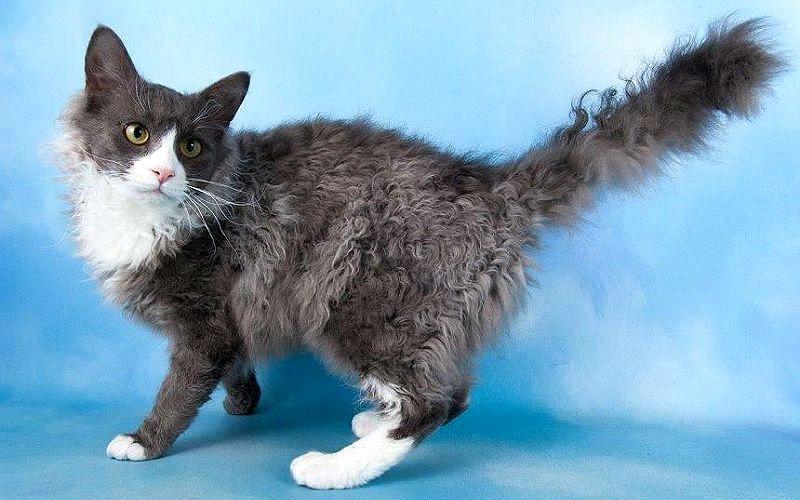
The LaPerm is a unique breed of affectionate family cats, distinguished by its unusual curly coat. This remarkable feature doesn’t always appear in kittens right after birth; sometimes it even disappears completely during the first moult in adult cats, only to grow back later in the form of springy curls. Such a pet can be a great addition for those in smaller homes or families with children who are prepared to give their curly friend plenty of attention, much like the gentle Nebelung cat also appreciates. Read more about the specific care and upkeep of this breed on Tvaryny. Generally, the LaPerm is considered a healthy breed and doesn’t cause its owners excessive trouble with coat care, apart from a_moulting_ periods. Constant attention, play, and a quality diet are the main needs of this friendly and sociable animal.
LaPerm: A Brief Breed Overview
| Characteristic | Description |
| Origin | United States of America (Oregon) |
| Year of Origin | 1982 (first kitten), TICA recognition – 1995 (registration status), 2002 (championship status) |
| Type | Rex (curly coat) |
| Weight | Males: 4–6 kg (approx. 8.8–13.2 lbs), Females: 3–5 kg (approx. 6.6–11 lbs) |
| Lifespan | 12–15 years, sometimes longer |
| Temperament | Affectionate, inquisitive, playful, people-oriented, intelligent |
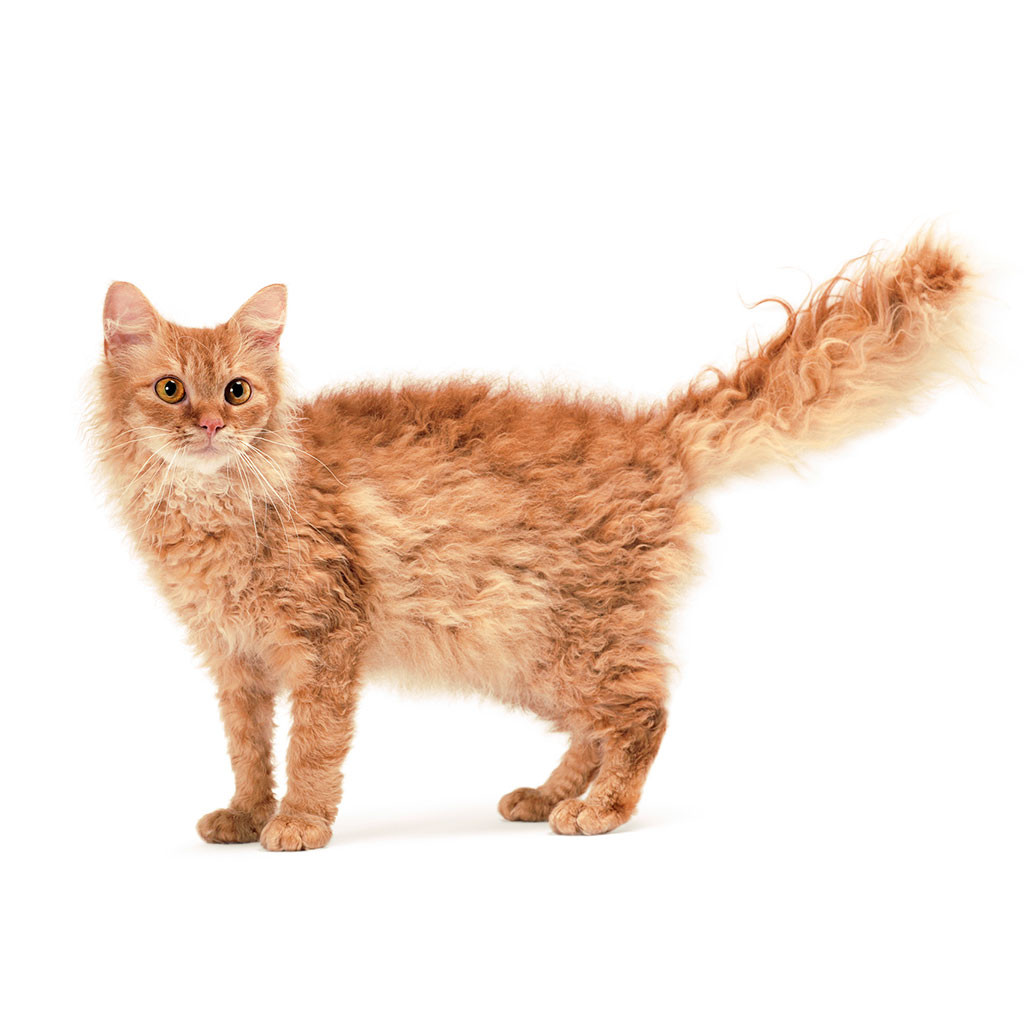
| Coat | Short or long, curly or wavy, soft texture |
| Colours | All possible colours and patterns are permitted |
| Size | Medium |
| Activity Level | Medium or high |
| Need for Attention | High |
| Moulting | Seasonal, sometimes a complete “shedding out” occurs |
| Compatibility with Children | Very good |
| Compatibility with Other Animals | Good, especially with proper socialisation |
Detailed History of the LaPerm’s Origin
The history of the LaPerm breed is a captivating tale of an accidental genetic mutation that gifted the world these charming curly-coated cats. It all began in 1982 on Linda and Richard Koehl’s farm in Dallas, Oregon, USA. An ordinary shorthaired tabby cat named Speedy gave birth to a litter of kittens, among which was one truly unique individual – it was born practically bald, with large ears and a skin pattern reminiscent of a classic tabby.
Linda was initially concerned about the kitten’s condition but decided to give it a chance. About six weeks later, the kitten (which turned out to be a female) began to grow a soft, wavy, and curly coat. She was named Curly due to her unusual appearance. Curly grew into an affectionate and healthy cat with a unique look.
At first, Linda Koehl wasn’t particularly interested in breeding cats with such a coat; she considered it merely an interesting quirk. However, Curly, like her mother, was a free-roaming hunter on the farm and started having her own kittens. Many of them inherited her curly coat. Linda noticed that this trait was passed on consistently, and the dominant gene responsible for the curliness (designated Lp) was present in both shorthaired and longhaired offspring.
Over time, curly cats became quite common on the Koehls’ farm. It was then that Linda decided to show them at exhibitions and start a dedicated breeding programme. The name “LaPerm” originated from a combination of the French article “La” (meaning “the”) and the word “perm” (as in a chemical permanent wave), referring to the characteristic curly coat. This also reflects the traditions of the Chinook Native American tribe, who lived in the region where the breed originated and used French words in their language.
The breed gained recognition from leading feline organisations: TICA (The International Cat Association) granted LaPerm registration status in 1995, and full championship status in February 2002. The CFA (Cat Fanciers’ Association) recognised the breed in 2008. Today, LaPerms are known and loved in many countries around the world, although they still remain a relatively rare breed.
What Does a LaPerm Look Like: A Detailed Description of Appearance
The LaPerm is a medium-sized cat with an elegant yet muscular build, indicative of its farm-cat origins. Its most distinctive feature is its coat – unique in texture and appearance.
- Head: A modified wedge shape with soft contours. The muzzle is moderately broad, with rounded whisker pads, giving a gentle expression. The nose is straight and of medium length.
- Ears: Medium to large, broad at the base, and slightly flared outwards. “Lynx tips” (tufts of hair on the ear tips) are desirable, especially in longhaired individuals, as are “ear muffs” (furnishings) inside the ear.
- Eyes: Expressive, almond-shaped, quite large, and set slightly slanted. Eye colour is independent of coat colour and can be anything from gold and copper to green and blue.
- Body: Medium-sized, elegant, but with well-developed musculature. It should not be too cobby or too fine-boned. The backline is straight.
- Legs and Paws: Legs are of medium length, proportionate to the body. Hind legs may be slightly longer than the front. Paws are rounded and compact.
- Tail: Long, tapering to the tip. In longhaired LaPerms, the tail is plumed, resembling a fluffy plume with distinct curls. In shorthaired ones, it is covered with short, wavy fur, sometimes resembling a bottle brush.
The Unique Coat of the LaPerm
The coat is the breed’s hallmark. It can be of two types:
- Shorthaired LaPerm (SH): The coat is springy, wavy or curly, and stands away from the body slightly. The texture can range from soft to somewhat harsher. Curls are most pronounced on the belly, neck, and at the base of the ears.
- Longhaired LaPerm (LH): The coat has looser and more buoyant curls or waves. It is light, airy, and not prone to severe matting. The fullest curls are usually on the “ruff” around the neck and on the tail. The texture is soft but not overly silky.
An important characteristic is that LaPerm kittens can be born with a straight coat, a curly coat, or even be almost bald (like Curly). Often, kittens born with fur may go through a “moulting” phase at a few weeks or months old, completely losing their coat, which then regrows curly. This process can be repeated several times in young cats.
The breed standard allows for all genetically possible colours and patterns, including tabby, solid, bicolor, colourpoint, and others. This makes each LaPerm unique in its own way.
| Characteristic | Shorthaired LaPerm (SH) | Longhaired LaPerm (LH) |
|---|---|---|
| Coat Length | Short | Medium-long to long |
| Texture | Springy, can be slightly harsher | Soft, light, airy |
| Curl Type | Waves or tight curls, closer to the body | Looser waves and spiral curls |
| Undercoat | Minimal | Light, not dense |
| Tail | Wavy, may resemble a bottle brush | Plush, curly “plume” |
| Ruff | Less pronounced | Often has a full, curly ruff |
| Tendency to Mat | Low | Low, but requires occasional combing |
The LaPerm’s Character: An Affectionate Companion and Inquisitive Explorer
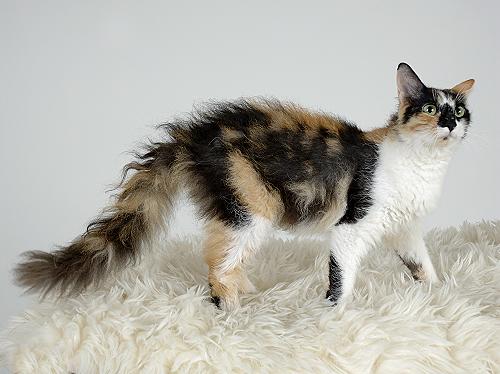
The LaPerm is not just a cat with an unusual appearance; it is a true companion with a big heart. They are known for their exceptionally affectionate and people-oriented nature. These cats adore being the centre of attention, participating in all household activities, and spending time with their owners.
- Attachment: LaPerms form strong bonds with their families. They often choose one “favourite” human whom they will follow around, but they share their love with all family members.
- Inquisitiveness: These are very intelligent and curious creatures. They need to know everything, explore everything. Be prepared for your LaPerm to “help” you work on the computer, read a book, or prepare food. Their curiosity makes them similar to some other active breeds, such as the playful Cymric cat.
- Playfulness: LaPerms retain their playfulness throughout their lives. They love interactive games with people, hunting toy mice, or chasing laser dots. Ensure they have enough toys and opportunities for physical activity.
- Intelligence: These cats are quick learners. They can be taught various tricks, to fetch toys, and even to walk on a lead. They respond well to positive reinforcement.
- Voice: LaPerms are not overly talkative, but they will certainly let you know their needs or desire to communicate with a quiet, pleasant purr or meow.
- Sociability: They have a strong need for companionship and do not tolerate prolonged loneliness well. If you are often away from home for long periods, a LaPerm may become sad and even stressed. This breed is excellent for families with children, as they are patient and gentle. They also get along well with other cats and friendly dogs, especially if socialised from a young age.
Thanks to their gentle and inquisitive nature, LaPerms are often described as the “clowns” of the cat world. They love to climb onto their owner’s shoulder, rub faces, and give “kisses.” Their adaptability allows them to feel comfortable in both a large house and a city flat, provided they receive enough attention and stimulation.
Health and Lifespan of the LaPerm
Specifics of LaPerm Care
Caring for a LaPerm is not overly complicated but has its specifics, mainly related to their unique coat and high need for attention.
LaPerm Coat Care
Despite its curly texture, the LaPerm’s coat is not prone to severe matting or tangles, especially in the shorthaired variety. However, regular grooming will help keep it in the best condition:
- Combing: Longhaired LaPerms are recommended to be combed 1-2 times a week with a wide-toothed comb or a special brush for curly coats to remove dead hairs and prevent potential matting. Shorthaired ones only need combing once a week or less. Avoid brushing too often or too vigorously to not destroy the natural curl structure.
- Bathing: Bathe LaPerms only when necessary, using a mild cat shampoo. After bathing, gently pat the coat dry with a towel and let it air dry. Do not use a hairdryer, as hot air can damage the curls.
- Moulting: LaPerms moult seasonally, like most cats. However, they can experience a unique phenomenon – a complete or partial “shedding out”, where the cat loses a significant portion of its coat, sometimes to the point of being almost bald. This can happen at a young age, in females after giving birth, or sometimes seasonally. Don’t be alarmed; the coat usually grows back quickly, often becoming even curlier. More frequent combing may be needed during periods of intense moulting.
Other Aspects of Care
- Ear Care: Regularly check the ears for dirt, wax, or signs of infection (redness, unpleasant odour). Clean them as needed with a special ear lotion and cotton pads.
- Eye Care: Periodically inspect the eyes. Small discharges in the corners of the eyes can be gently removed with a soft, damp cloth or wipe.
- Nail Trimming: Trim their claws every 2-3 weeks using special nail clippers to prevent ingrowth and damage to furniture.
- Dental Care: It’s important to care for oral hygiene. Regular brushing with a special cat toothbrush and toothpaste will help prevent plaque and tartar buildup.
- Environment: Although LaPerms adapt well to living in a flat, they need space for play and activity. Provide them with a scratching post (preferably vertical), toys, and, if possible, access to high places (shelves, cat trees), as they love to observe everything from above.
Feeding Your LaPerm: Diet Recommendations
Training and Rearing Your LaPerm
LaPerms are intelligent and clever cats that respond quite well to rearing and even training if the right approach is taken. Their natural inquisitiveness and people-oriented nature make the learning process enjoyable for both the cat and the owner. A similar intelligence is demonstrated by Pixie-Bob cats, known for their trainability.
- Positive Reinforcement: The best training method for LaPerms is positive reinforcement. Use treats, praise, and affection to encourage desired behaviour. They quickly understand what earns them a reward.
- Playful Approach: Turn training into a game. LaPerms love to play, so short training sessions in a game format will be most effective. Utilise their natural curiosity.
- No Punishment: Avoid any form of punishment, shouting, or rough handling. This can frighten the cat, destroy trust, and lead to the opposite effect – the cat may become timid or start avoiding you. If you need to correct undesirable behaviour (e.g., scratching furniture), offer an alternative (a scratching post) and redirect their attention.
- Teaching Commands: LaPerms are quite capable of learning simple commands like “sit,” “come,” “give paw,” or learning to fetch toys. Clicker training can be very effective for this breed.
- Socialisation: It’s important to socialise LaPerm kittens from an early age, introducing them to different people, sounds, and, if possible, other animals (if present in the home). This will help them grow into confident and sociable cats.
- House Training: Litter tray and scratching post training usually doesn’t pose problems for LaPerms, as they are clean and intelligent. The main thing is to show the kitten where its toilet and scratching area are and to encourage correct use.
Remember that every cat is an individual. Be patient, consistent, and use your LaPerm’s natural intelligence and desire to please to achieve the best results in their upbringing.
Pros and Cons of the LaPerm Breed
| Pros | Cons |
|---|---|
| Unique curly coat: Exotic and attractive appearance. | High need for attention: Does not tolerate prolonged loneliness well, can become sad. |
| Extremely affectionate nature: Very people-oriented, loves cuddles and physical contact. | Periodic heavy moulting: Possible complete or partial “shedding out,” which can look unusual. |
| High intelligence: Easy to train, clever. | Prone to overeating: Requires portion control to avoid obesity. |
| Playfulness: Remains active and playful throughout life. | Relative rarity: Finding a kitten can be more difficult and expensive than with more common breeds. |
| Gets along well with children and other animals: Excellent choice for families. | Inquisitiveness can lead to mischief: Needs supervision or a safe environment. |
| Generally good health: No known specific breed diseases. | Requires regular, though not complicated, coat care (especially longhaired). |
| Quiet voice: Not among the overly “talkative” cats. | |
| Adaptability: Can live in a flat or a house. |
Interesting Facts About LaPerms
- Rex Mutation: The gene responsible for the LaPerm’s curly coat (Lp) is dominant. This distinguishes them from many other Rex breeds (e.g., Devon Rex, the Cornish Rex cat, and the charming Selkirk Rex cat), where the gene for curliness is recessive.
- Variety of Curls: Even within the same litter, LaPerm kittens can have varying degrees of curliness – from a slight wave to tight ringlets. Coat texture can also vary.
- Born Bald: Some LaPerm kittens are born completely bald, like the first representative of the breed, Curly. The coat begins to grow within the first few weeks of life.
- “Perm Effect”: The name “LaPerm” literally means “the one with a perm,” aptly describing the coat’s appearance.
- American Roots: The breed originated naturally on a farm in Oregon, USA, without intentional crossbreeding with other Rex breeds.
- Hypoallergenic? Myth! LaPerms are not a hypoallergenic breed. Allergies are caused by the Fel d 1 protein found in saliva, skin, and sebaceous glands, not the fur itself.
- Therapy Cats: Due to their affectionate and calm nature, LaPerms are sometimes used as therapy cats in care homes for the elderly and rehabilitation centres.
Frequently Asked Questions About the LaPerm Breed (FAQ)
Do LaPerms shed a lot?
LaPerms shed, like most cats, primarily seasonally. However, they can have a specific moult where they lose a significant portion of their coat (“shedding out”), which then regrows. Generally, their coat doesn’t fall out as intensely as some other breeds.
Are LaPerms suitable for people with allergies?
No, LaPerms are not a hypoallergenic breed. They produce the Fel d 1 protein that causes allergies, just like every other cat. Each person’s reaction is individual.
Does the LaPerm’s coat require complicated grooming?
No, grooming is relatively simple. The coat is not prone to severe matting. Occasional combing (more often for longhaired varieties), especially during moulting, is sufficient. The main thing is not to comb too frequently, to preserve the curls.
Can LaPerms be kept in a flat?
Yes, LaPerms adapt well to living in a flat, provided they are given enough attention, toys, climbing spaces, and a scratching post.
How do LaPerms get on with children and other animals?
They are usually very patient and gentle with children. They also get along well with other cats and dogs, especially if they grew up together or were properly socialised.
How long do LaPerm cats live?
The average lifespan is 12-15 years, but many live longer with good care.
Are LaPerm cats noisy?
No, they usually have a quiet, pleasant voice and are not excessively “talkative.” They use their voice to get attention or communicate but are not prone to meowing without reason.
Conclusion
The LaPerm cat is a real treasure for those seeking not just a pet, but a devoted, affectionate, and cheerful friend. Their unique curly coat attracts attention, but it’s their wonderful character that wins hearts. Intelligent, inquisitive, and boundlessly loving, LaPerms make excellent companions for families with children, single people, or couples prepared to give them their attention and care. Despite some grooming specifics related to their coat and their need for companionship, keeping a LaPerm brings immense pleasure and positive emotions.
- Gentle, sensitive, good with children and animals
- The curly coat hardly sheds
- Quiet, ideal for a flat
- Clever, active and curious
- Needs attention and company
- The curly coat needs occasional brushing
- Active — not a “couch” cat, loves to play
- Rare outside the USA
| Devon Rex | Cornish Rex | Selkirk Rex | |
|---|---|---|---|
| Weight | 2.5–4.5 kg | 2.5–4.5 kg | 4.5–7 kg |
| Energy | 4.5 | 4.5 | 3.5 |
| Apartment | 5 | 5 | 5 |
| Beginners | 4 | 3.5 | 4.5 |
Why do the LaPerm's curls appear and disappear?
Is the LaPerm suited to a flat and a novice?
Is the LaPerm hypoallergenic?
TICA / CFA / WCF standards (LaPerm)
For apartments · For kids · For beginners · Most affectionate · Quietest · Hypoallergenic · All rankings →