

| Height | 38–41 cm |
| Weight | 5–10 kg |
| Lifespan | 14–16 years |
| FCI group | 3 · terriers |
| Origin | United Kingdom |
Exact ratings
Common health issues
Nutrition
The Manchester Terrier, also known as the “Gentleman’s Terrier,” is an elegant, clever, and fiercely loyal companion. This breed combines the playfulness of a terrier with an aristocratic reserve, making it a fantastic choice for active families and single people alike. They are great with children, especially if the kids are willing to give them attention and join in their games. By welcoming a Manchester into your home, you’ll gain not just a faithful friend, but also an untiring partner for adventures. However, behind its refined exterior lies a rich history and a unique character, and you can find out more about this on Tvaryny.
These dogs are true family favourites and, with proper socialisation, get along well with other pets. However, it’s worth remembering their origins: the instinct to hunt small rodents is in their blood. These amazing dogs were specifically created for the skilled hunting of rats, combining speed, courage, and a sharp intellect.
The Manchester Terrier’s History: From Rat Catcher to Gentleman
The Manchester Terrier’s history is inextricably linked with the Industrial Revolution in 19th-century England. Industrial cities, particularly Manchester, suffered from terrible sanitation and, as a result, an infestation of rats. These rodents didn’t just destroy food supplies, they also carried dangerous diseases, posing a serious threat to public health.
At the time, cruel pastimes were the norm, and one of the popular “sports” among the working class was rat-baiting (rat-pit). Dogs were released into a special arena filled with rats, and the winner was the dog that killed the most rodents in the shortest time. This required a dog that was small but incredibly fast, agile, and with a fearless character.
A key figure in the breed’s creation is considered to be John Hulme, an enthusiast from Manchester. He decided to improve the existing Black and Tan Terrier, which was a well-known rat catcher but, in Hulme’s opinion, lacked speed. To achieve this, he crossed it with a Whippet — a small coursing hound known for its incredible speed and elegant build. The result exceeded all expectations. The resulting dogs, which began to be called Manchester Terriers, inherited the tenacity and hunting fervour of the terrier, and the speed, flexibility, and refined body lines of the whippet.
Later, when these bloody sports were banned, the breed didn’t lose its popularity. Its elegant appearance and lively intelligence caught the attention of the upper classes, and the Manchester Terrier transformed from a working rat catcher into a sophisticated companion, earning the nickname “the Gentleman’s Terrier.” The breed faced difficult times during the World Wars, when its population dramatically decreased, but thanks to the efforts of dedicated enthusiasts, it was successfully revived.
What the Manchester Terrier Looks Like: Standard and Appearance
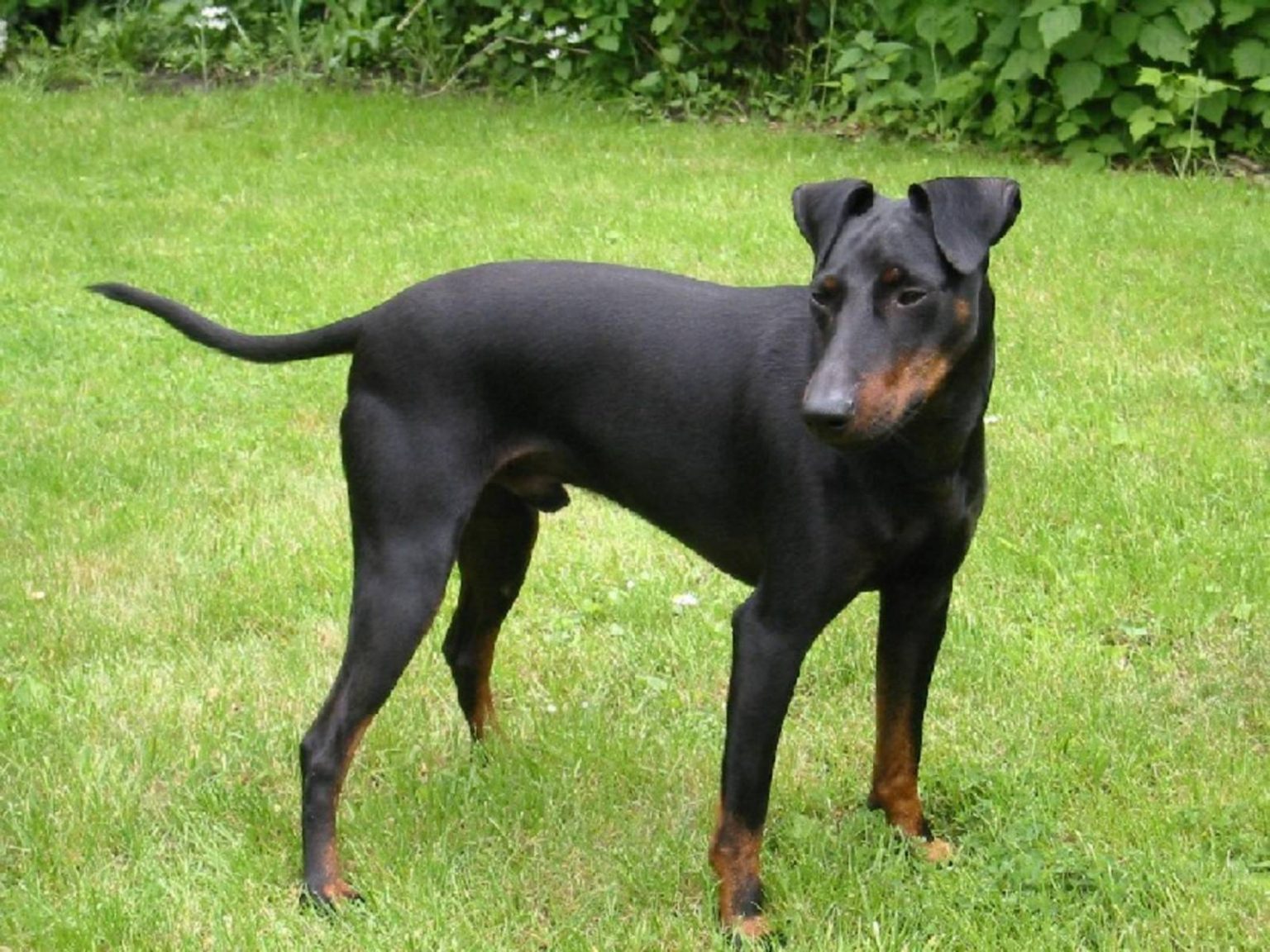
The Manchester Terrier is the epitome of elegance and athleticism. It has a strong, compact, yet graceful body structure that speaks to its speed and agility. This is a smooth-coated dog with clear, clean lines and an expressive gaze.
| Characteristic | Description according to FCI Standard No. 71 |
|---|---|
| General Appearance | A compact, elegant, strong dog with good substance. |
| Head and Skull | Long, narrow, wedge-shaped, without pronounced cheek muscles. Skull is flat. |
| Muzzle | Well filled under the eyes, tapering to the nose. Lips are tight. |
| Eyes | Relatively small, dark, almond-shaped, brilliant. Not protruding. |
| Ears | Small, V-shaped, set high on the skull, dropping forward and lying close to the head above the eyes. |
| Neck | Fairly long, gracefully arched, widening towards the shoulders. Without dewlap. |
| Body | Short, with well-sprung ribs. The back is slightly arched behind the loins. The underline is gracefully tucked up. |
| Tail | Short, thick at the base, tapering to a point. The dog carries it no higher than the backline. |
| Limbs | Forelegs – straight, positioned under the body. Hindlegs – strong, muscular, with well-angulated stifle joints. Feet are small, semi-catlike. |
| Coat | Short, smooth, dense, and glossy. |
| Colour | Black with rich mahogany tan markings. Clear demarcation between black and tan is essential. |
Two Sizes: Standard and Toy Manchester
It’s important to distinguish between the two size variations of the breed. The Standard Manchester Terrier has a height at the withers of 38-41 cm. However, there is also a miniature version, which is classified differently in various countries. In the USA, it is known as the Toy Manchester Terrier and is considered a variety of the same breed. In the UK and countries that follow its classification, this miniature dog is designated as a separate breed — the English Toy Terrier (Black and Tan). Despite the difference in size, both varieties share the same temperament and characteristic traits.
Character and Temperament of the Manchester Terrier
The Manchester Terrier is a dog with a vibrant personality. Its character is a unique combination of traits inherited from its terrier and sighthound ancestors.
- A Devoted and Sensitive Companion. Manchesters become very attached to their family and often choose one “main” owner. They don’t cope well with solitude and may suffer from separation anxiety if left alone for long periods. This makes them ideal companions for people who spend a lot of time at home.
- A Typical Terrier. Don’t be fooled by its elegant appearance! At heart, this is a true terrier — brave, inquisitive, sometimes stubborn, and with a high energy level. Its hunting instinct is very strong, so it’s best to keep it on a lead in un-fenced areas during walks. It will chase anything that moves quickly, whether it’s a squirrel, a cat, or a plastic bag blowing in the wind. This trait makes it similar to other energetic terriers, such as the Parson Russell Terrier.
- High Intelligence. These are very clever dogs who quickly learn new commands. However, their minds require constant stimulation. A bored Manchester can become destructive: chewing furniture, barking, or digging holes in the garden.
- An Excellent Watchdog. The Manchester Terrier is always on alert. It has a keen sense of hearing and a sharp bark, which it will certainly use to notify you of guests or any suspicious sounds. That said, it’s not prone to unnecessary barking.
- Attitude Towards Children and Animals. With proper socialisation, Manchesters get along well with school-aged children who know how to behave with a dog. They can live with other dogs, especially if they grew up together. However, coexistence with small pets (hamsters, rats, rabbits) is highly undesirable due to their powerful hunting instinct.
Pros and Cons of the Manchester Terrier Breed
Before getting such a dog, it’s important to weigh all the “for” and “against” arguments. The Manchester Terrier is not for everyone, and an honest assessment of its characteristics will help avoid disappointment in the future.
| ✅ Advantages (Pros) | ❌ Disadvantages (Cons) |
|---|---|
| Elegant Appearance: Refined and aristocratic look. | High Activity Needs: Requires daily long walks and exercise. |
| High Intelligence: Learns easily, capable of complex commands. | Strong Hunting Instinct: Dangerous for small animals, may run off during a walk. |
| Family Devotion: Very attached to owners, becomes a faithful friend. | Prone to Separation Anxiety: Does not handle being alone well. |
| Minimal Coat Care: Does not require complex grooming. | Stubbornness: Like all terriers, can be independent and persistent. |
| Good Health: Considered a relatively healthy breed. | Sensitive to Cold: Short coat provides little protection from frost, needs clothing. |
| Excellent Watchdog: Always warns of danger with a sharp bark. | Prone to Barking: Can be quite “vocal” if not trained. |
Care and Upkeep of the Manchester Terrier
Grooming and Hygiene
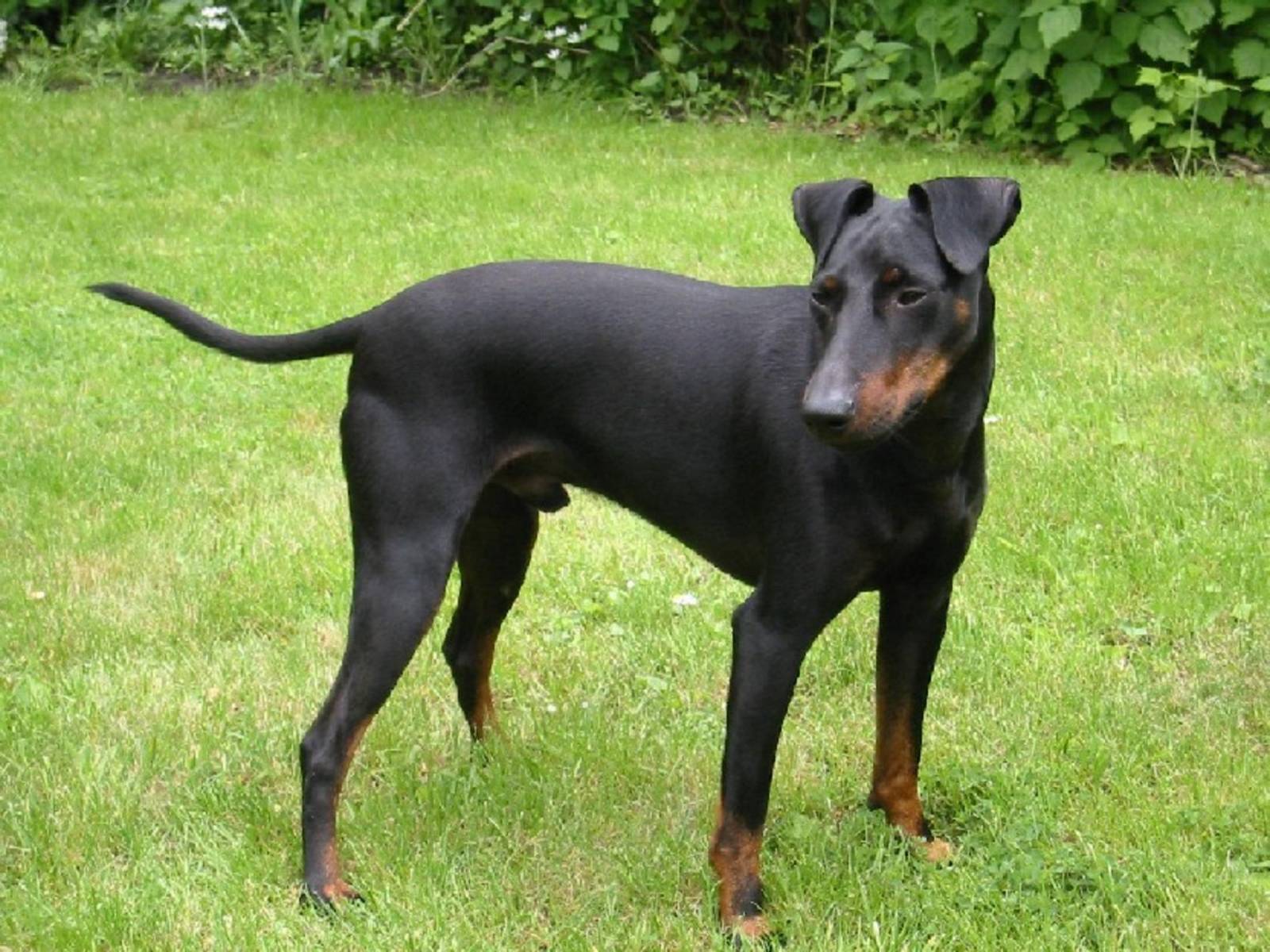
Caring for a Manchester Terrier is very simple. Its short, smooth coat does not require trimming or stripping. It is sufficient to wipe it once a week with a damp cloth or a special rubber glove to remove dead hair and maintain its shine. They shed minimally.
Regular hygiene procedures are important:
- Nails: Clip them every 2-3 weeks to avoid walking problems.
- Teeth: Brush their teeth 2-3 times a week with a special dog toothpaste to prevent tartar buildup.
- Ears: Regularly check the ears for dirt and signs of infection. Clean them as needed with a cotton pad soaked in a special lotion.
Physical Exercise and Activity
This is a very energetic breed. A Manchester Terrier needs at least 60 minutes of active exercise every day. A simple walk on a lead won’t satisfy him. This dog needs to run, and to run fast. The ideal option is to play games with a ball or a frisbee in a fenced area where he can safely expend his energy. His speed and enthusiasm make him an excellent candidate for canine sports like agility, flyball, or coursing.
Living Conditions
The Manchester Terrier is an ideal dog for apartment living, provided it gets enough exercise. At home, he is calm and quiet, loving to spend time on the sofa next to his owner. However, due to its short coat and lack of an undercoat, he is very sensitive to cold. In cold weather, he definitely needs a warm jumpsuit or jumper for walks.
Training and Raising a Manchester Terrier
Training a Manchester is both a pleasure and a challenge. Its keen mind allows it to pick up commands quickly, but its terrier stubbornness requires consistency and patience from the owner. The foundation of successful learning is positive reinforcement: praise, treats, and games work much better than harshness and punishment.
Early socialisation is critically important. From a young age, a puppy needs to be introduced to various people, sounds, places, and other dogs. This will help them grow into a confident and well-balanced dog. Training classes not only provide discipline but also satisfy their need for mental and physical activity. Many owners note that Manchesters achieve great success in obedience and agility competitions.
Nutrition: What to Feed a Manchester Terrier
Health and Common Ailments of the Manchester Terrier
Interesting Facts About the Manchester Terrier
- The Champion Rat Catcher. There’s a legend about a Manchester Terrier named Billy, who in 1825 allegedly killed 100 rats in an incredible 5 minutes and 30 seconds.
- “The Gentleman’s Terrier.” The breed earned this nickname during the Victorian era when it became popular as an elegant companion among wealthy city dwellers.
- An Almost Extinct Breed. After World War II, only 11 purebred Manchester Terriers remained in the UK. The breed was saved only through the efforts of dedicated enthusiasts.
- Not a Fan of Water. Most Manchester Terriers aren’t big fans of swimming. They’d rather run along the shore than get in the water.
- A One-Person Dog. Although a Manchester loves its entire family, it tends to choose one person as the object of its primary love and devotion.
Frequently Asked Questions About the Breed (FAQ)
Is the Manchester Terrier suitable for a family with children?
Yes, but they are best suited for families with older children who know how to behave with a dog. Due to their high energy and small size, they can accidentally get hurt during rough games with very young children. Early socialisation is important.
Does the Manchester Terrier bark a lot?
They are good watchdogs and will bark to warn of strangers or unusual sounds. However, they are not prone to constant, pointless barking. Proper training and sufficient exercise help to control this trait.
Can a Manchester Terrier be kept in an apartment?
Yes, this is an ideal breed for an apartment. They are clean, don’t take up much space, and are calm indoors. The main condition is providing them with daily active exercise where the dog can burn off its energy.
Does the Manchester Terrier shed much and is it hypoallergenic?
Their shedding is minimal, which is a big plus for keeping a clean home. However, they are not hypoallergenic, as allergies are caused not so much by the hair, but by skin particles (dander) and saliva, which are present in all dogs.
Is the Manchester Terrier’s coat difficult to care for?
No, the care is extremely simple. A weekly brush with a rubber mitt and occasional wiping with a damp cloth are enough. No trimming or stripping is needed. This low-maintenance coat makes it similar to other smooth-coated terriers, such as the Irish Terrier, although the latter has a wiry coat that requires a different approach.
Video about the breed
- Clean, barely sheds
- Clever and devoted
- Compact, long-lived
- Elegant smooth coat
- Strong hunting instinct
- Cold-sensitive (short coat)
- Can be reserved with strangers
- Needs exercise and activity
| German Pinscher | Miniature Pinscher | Whippet | |
|---|---|---|---|
| Height | 43–51 cm | 25–30 cm | 44–51 cm |
| Energy | 4.5 | 4 | 4.5 |
| Apartment | 3 | 4 | 3 |
| Beginners | 3 | 3 | 3.5 |
Does the Manchester Terrier shed much?
What does the Manchester Terrier suffer from?
Is the Manchester Terrier good for a flat?
FCI Standard No. 71 · The Kennel Club
For apartments · For kids · For beginners · Active · Smartest · Hypoallergenic · All rankings →