

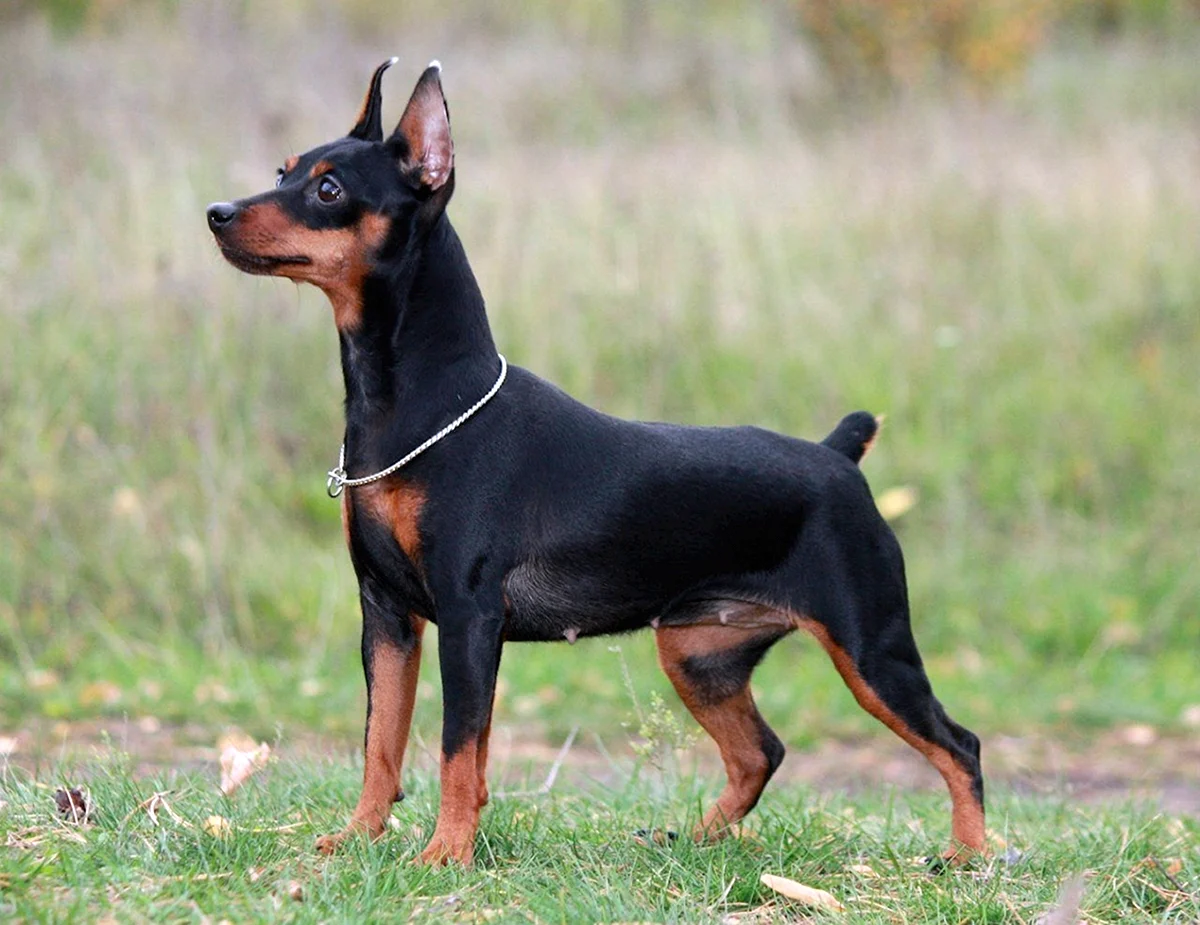
| Height | 25–30 cm |
| Weight | 4–6 kg |
| Lifespan | 13–16 years |
| FCI group | 2 · pinschers |
| Origin | Germany |
Exact ratings
Common health issues
Nutrition
The Miniature Pinscher (Zwergpinscher) is not just a dog; it is a bundle of pure energy wrapped in an elegant body. They were originally bred to hunt rats in the large cities of medieval Germany, though later people began to use them as vigilant watchdogs. Today, the Miniature Pinscher is one of the most popular breeds in the world, often referred to as the “King of Toys”. Read more about this at Tvaryny.
Miniature Pinscher: a detailed overview of breed characteristics
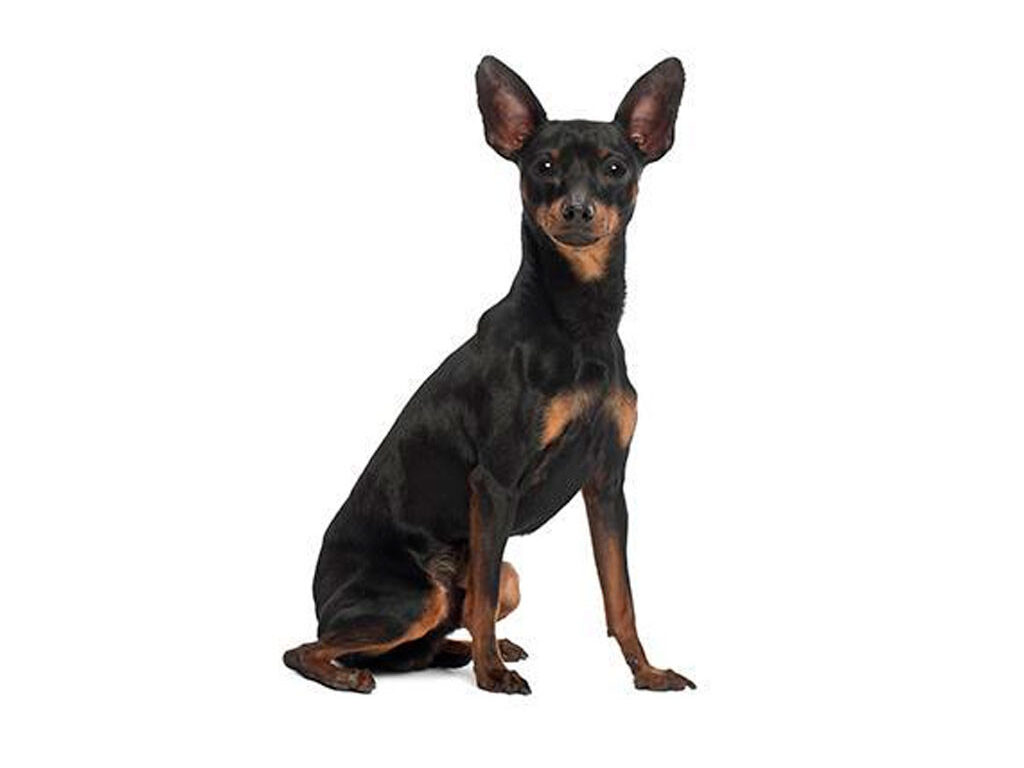
| Country of Origin | Germany |
| Year of Official Recognition | 1895 (founding of the Pinscher Club) |
| Life Expectancy | 13-16 years |
| Height at Withers | 25-30 cm (FCI standard) |
| Weight | 4-6 kg |
| FCI Group | Group 2 (Pinschers and Schnauzers, Molossoid breeds) |
| Coat Type | Short, smooth, no undercoat |
History of the Miniature Pinscher: from stables to palaces
The Miniature Pinscher is a dog with very ancient roots, and the history of its origin is shrouded in the mist of centuries. Contrary to popular belief, it is not a “mini-Dobermann”. In fact, it is quite the opposite: Mr Dobermann, the creator of the breed that bears his name, admired pinschers so much that he decided to breed a large dog that looked like them. Therefore, the Miniature Pinscher is the older brother of the Dobermann, not a scaled-down copy.
The ancestors of these dogs have been known since the early Middle Ages in Germany and Scandinavia. At that time, cities and villages were teeming with rats and mice, which undoubtedley brought people much misery, disease, and trouble. Dogs resembling the modern Miniature Pinscher served as effective ratters. They were valued for their quick reactions and ruthlessness towards rodents. They were also employed to guard stables and stagecoaches. Their small size allowed them to consume less food, but their loud voice served as an excellent alarm system.
Targeted breeding of the Miniature Pinscher as a separate show breed began in the second half of the 19th century. The breed first appeared in society at an exhibition in Stuttgart in 1863. The dog attracted immediate interest because, despite its small size, it managed to retain the best working qualities and anatomy of its larger ancestors – the German Pinscher is their direct forefather.
By 1895, the Pinscher-Schnauzer Club was founded, giving a powerful boost to the development of the standard. Since the beginning of the 20th century, this breed has definitly become an urban and “sofa” dog, although its hunting instincts have not disappeared. Residents of metropolises were conquered by the aristocratic and proud appearance of this small dog. Today, the Miniature Pinscher is one of the most popular miniature dogs in the world, especially in the USA and Europe.
Exterior and standards: what the ideal Miniature Pinscher looks like
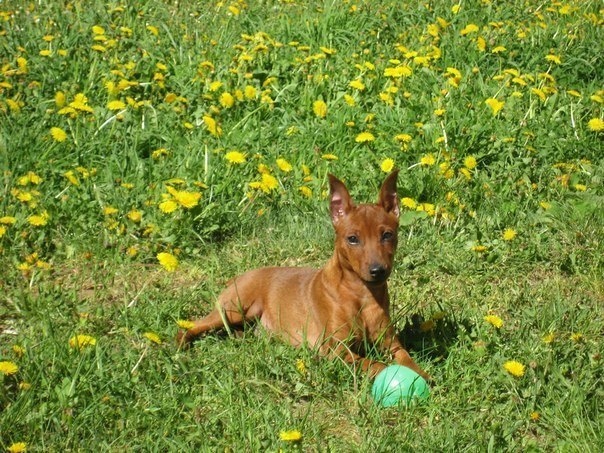
The Miniature Pinscher is an absolute copy of the German Pinscher, reduced to 25-30 cm. It is an elegant dog of square format with smooth hair, where the height at the withers is approximately equal to the length of the body. The musculature is defined and clearly visible under the thin skin.
Head and Muzzle
The head is wedge-shaped with a strong skull and a flat forehead, without wrinkles (although when the dog is alert, folds may appear on the forehead). The transition from forehead to muzzle (stop) is distinct but not abrupt. The nasal bridge is straight, and the nose is always black, regardless of colour. The lips are dry, fitting tightly to the teeth, and are also black. The bite should be scissor-like, with a full set of strong white teeth.
Eyes and Ears
The eyes are medium-sized, oval, dark in colour with tight black eyelids, giving the gaze expression and intelligence. The ears are set high and can be erect or folded (V-shaped). Previously, ears were often cropped, but now this is banned in many European countries (including the UK), so natural ears are becoming the norm.
Body and Limbs
The neck is of medium length, graceful, nobly curved, blending into a clearly defined set of withers. The back is short, strong, and straight, sloping slightly towards the croup. The chest is moderately broad, oval in shape, reaching the elbows. The belly is moderately tucked up, forming an elegant underline.
Special attention should be paid to movement. The Miniature Pinscher moves in a trot. Its run is harmonious, confident, and powerful. A characteristic feature is the so-called “hackney gait” (movement similar to a carriage horse) – the dog lifts its front legs high, bending them at the wrist. This looks very striking and graceful.
Coat and Colour
The coat is smooth, close-fitting, short, and thick; it should be shiny and silky, without bald patches. Officially, two types of colour are recognised:
- Solid Red: from light brown to rich dark red (stag red).
- Black and Tan: lacquer-black hair with red or brown markings. The markings must be clearly defined and located above the eyes, on the throat, on the pasterns, on the feet, on the inside of the hind legs and under the tail base, as well as two identical triangles on the chest.
Character: a little Napoleon
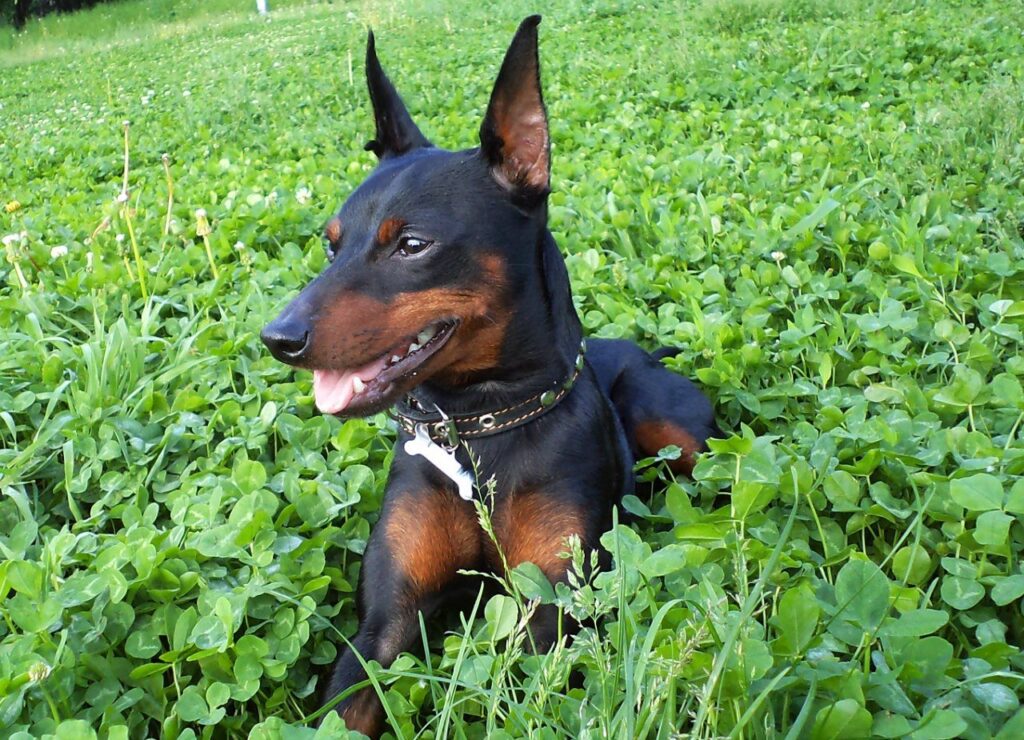
Miniature Pinschers are absolute leaders by nature. This is a classic example of “big dog syndrome in a small body”. Because of this, they often have disagreements with other dogs. If you are walking in the park, your little one might not hesitate to “have a go” at an Alsatian if he thinks it looked at him without due respect.
Representatives of this breed are distinguished by incredible mobility; they are wilful and restless. They have a strong character and are very cunning and observant. Miniature Pinschers are devoted to humans; they agree to follow the owner’s will, but only if they respect them and consider them the undeniable leader. If the owner treats a Miniature Pinscher too softly, this little ratter will instantly try to take the reins into his own paws and become a domestic tyrant.
It is worth noting that this breed is often confused with other small terriers. For example, in appearance, it may resemble the Manchester Terrier, but their temperaments differ. The Pinscher is more impulsive and “explosive”.
These dogs are self-sufficient and independent. However, with proper upbringing, the Miniature Pinscher develops an excellent character – after all, this dog is fearless, self-confident, and never intimidated by difficulties. They get along well with children if the children understand that the dog is not a toy. But it is better not to leave them alone with small animals (hamsters, rats) – the hunter’s instinct can trigger instantly.
Health: typical diseases and weak points
Care and maintenance: important nuances
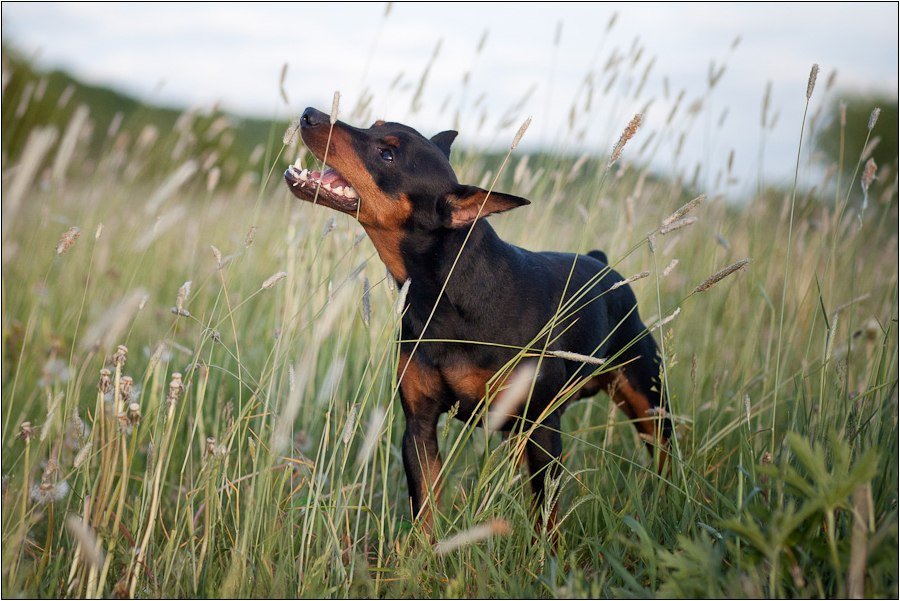
The Miniature Pinscher is ideal for living in a city flat. It takes up little space, and its coat does not shed heavily or leave tumbleweeds of fur around the house. These dogs also adapt reasonably well to a private house, but they categorically cannot live outside in a kennel! This is strictly an indoor dog.
Clothing and Walks
In winter, representatives of this breed suffer greatly from frost and snow. They have no undercoat, and their fat layer is minimal. To prevent the little one from getting sick, be sure to dress your pet in a warm fleece or padded jumper. Special boots will also not go amiss, as the grit and salt used on roads can irritate their delicate paw pads.
Hygiene
- Coat: Coat care is minimal. “Min Pins” do not need clipping, just wiping down once a week with a special mitt or brush to remove dead hairs and improve blood circulation.
- Bathing: Frequent bathing is not recommended as it dries out the skin. Do this only when heavily soiled, using shampoos for short-haired dogs. After a walk, it is sufficient to wash the paws and wipe the tummy with a damp towel.
- Teeth: Tartar builds up quickly in small breeds. Teeth need to be brushed 2-3 times a week with specialist dog toothpaste.
- Claws: Due to their light weight, claws do not always wear down naturally on asphalt. They need to be trimmed with clippers every 2 weeks. If you can hear clicking on the floor – it’s time to trim.
Training and upbringing: who controls whom?
For training a Miniature Pinscher, especially if this is your first dog, it is recommended to use the services of a professional dog trainer. This is not a breed that raises itself “naturally”. The Miniature Pinscher is not a shepherd dog like the Bouvier des Ardennes, which is oriented towards constant eye contact with humans. The Pinscher is more independent.
Since these dogs are dominant by nature, they require firm but fair upbringing. If given too much freedom, they will undoubtedly take advantage of it. “Little Prince Syndrome” develops very quickly: the dog starts growling near the bowl, refuses to let you on the sofa, and nips at hands.
Key rules for training a Miniature Pinscher:
- Early Socialisation: Introduce the puppy to other dogs, people, and traffic noise from the first days after quarantine.
- Consistency: If “no” means no today, it means no tomorrow, and even when you are in a good mood.
- Positive Reinforcement: This breed reacts badly to drilling and physical punishment. They will do much more for treats and toys.
- Bark Control: Teach the “Quiet” command from childhood, otherwise your neighbours will detest you.
Interestingly, the guarding instinct arises naturally in them around 4-6 months. There is no need to specially “provoke” a Miniature Pinscher against people; this can make its psyche unstable. Miniature Pinschers are successful in sports such as agility, freestyle (dog dancing), and coursing.
Nutrition: energy in every bite
Pros and Cons of the Breed
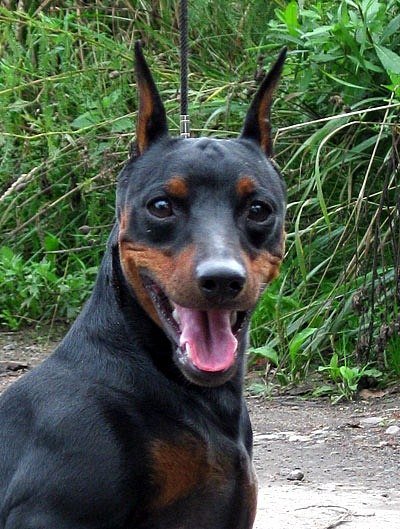
Before getting this active tot, it is worth weighing all the pros and cons, because this is not a toy, but a serious dog in a small body.
| Advantages (Pros) | Disadvantages (Cons) |
|---|---|
| Compact size, ideal for flats. | Tendency towards excessive barking. |
| Robust health and longevity. | Does not tolerate cold (needs clothes). |
| Almost no shedding and no “doggy” smell. | Stubbornness and tendency to dominate. |
| Excellent guarding qualities (alarm). | High energy level, requires activity. |
| High intelligence and trainability. | Can be aggressive towards other dogs. |
Interesting facts about the breed
- In Germany until the early 20th century, the Miniature Pinscher and Miniature Schnauzer were considered the same breed. Smooth-haired puppies were called Pinschers, and wire-haired ones were Schnauzers, and they could be born in the same litter.
- Thanks to its gait, the Miniature Pinscher is often called the “poor man’s pony”.
- This is one of the few breeds that stands in a show stance by default without the help of a handler (so-called “free stacking”).
- Despite their size, they can jump to a height exceeding their own height by 5-7 times.
Frequently Asked Questions (FAQ)
Do Miniature Pinschers bark a lot?
Yes, they are vocal dogs. They warn about anything suspicious. Without training, this can become a problem.
Are they suitable for families with small children?
Only if the children are over 7-8 years old and know how to behave with animals. The “Min Pin” will not tolerate roughness and may retaliate. For toddlers, this dog is too fragile and reactive.
Can a Miniature Pinscher be trained to use a puppy pad?
Yes, it is possible, as with other small breeds. But full walks are necessary for them to burn off energy, otherwise the flat will be destroyed.
Video about the breed
- Compact, striking
- Lively and fearless
- Barely sheds
- A good "doorbell"
- Fragile — easily injured
- Vocal, barks a lot
- A strong character — needs training
- Feels the cold — needs clothing
| Miniature Schnauzer | Chihuahua | Russian Toy | |
|---|---|---|---|
| Height | 30–35 cm | 15–23 cm | 20–28 cm |
| Energy | 3.5 | 3 | 3 |
| Apartment | 4.5 | 5 | 5 |
| Beginners | 4 | 3 | 3.5 |
Is the Miniature Pinscher good with small children?
Why is the Miniature Pinscher called the "King of Toys"?
Does the Miniature Pinscher feel the cold?
FCI Standard No. 185 · The Kennel Club
For apartments · For kids · For beginners · Active · Smartest · Hypoallergenic · All rankings →