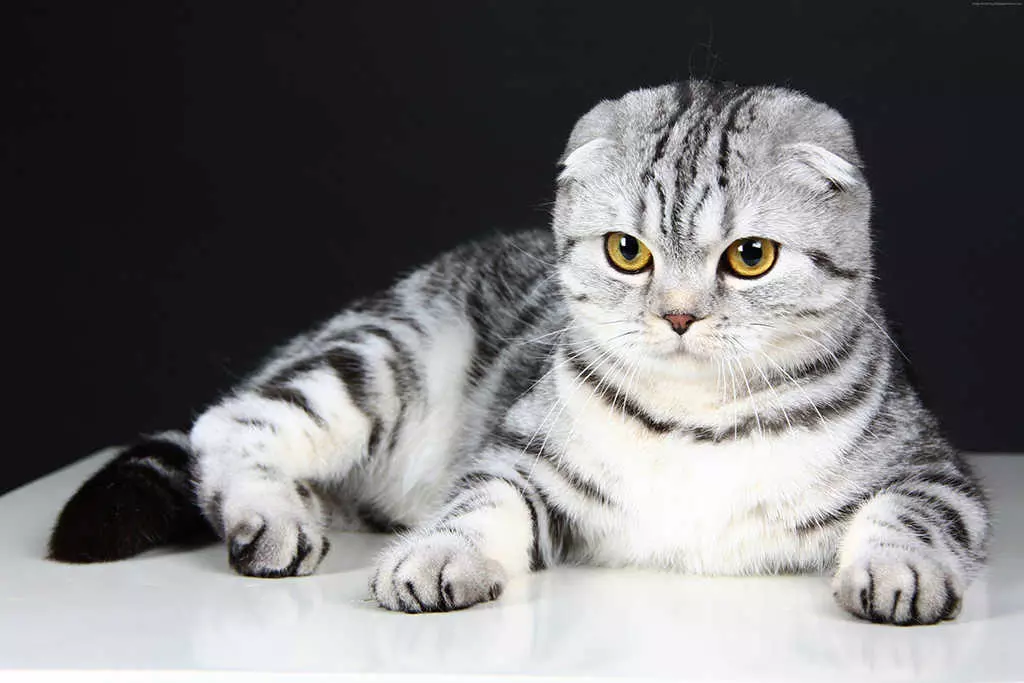
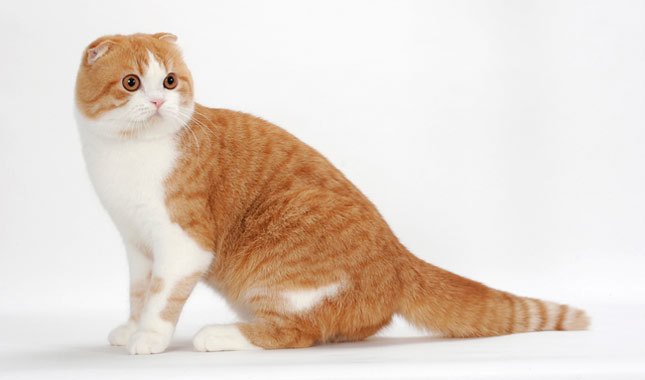
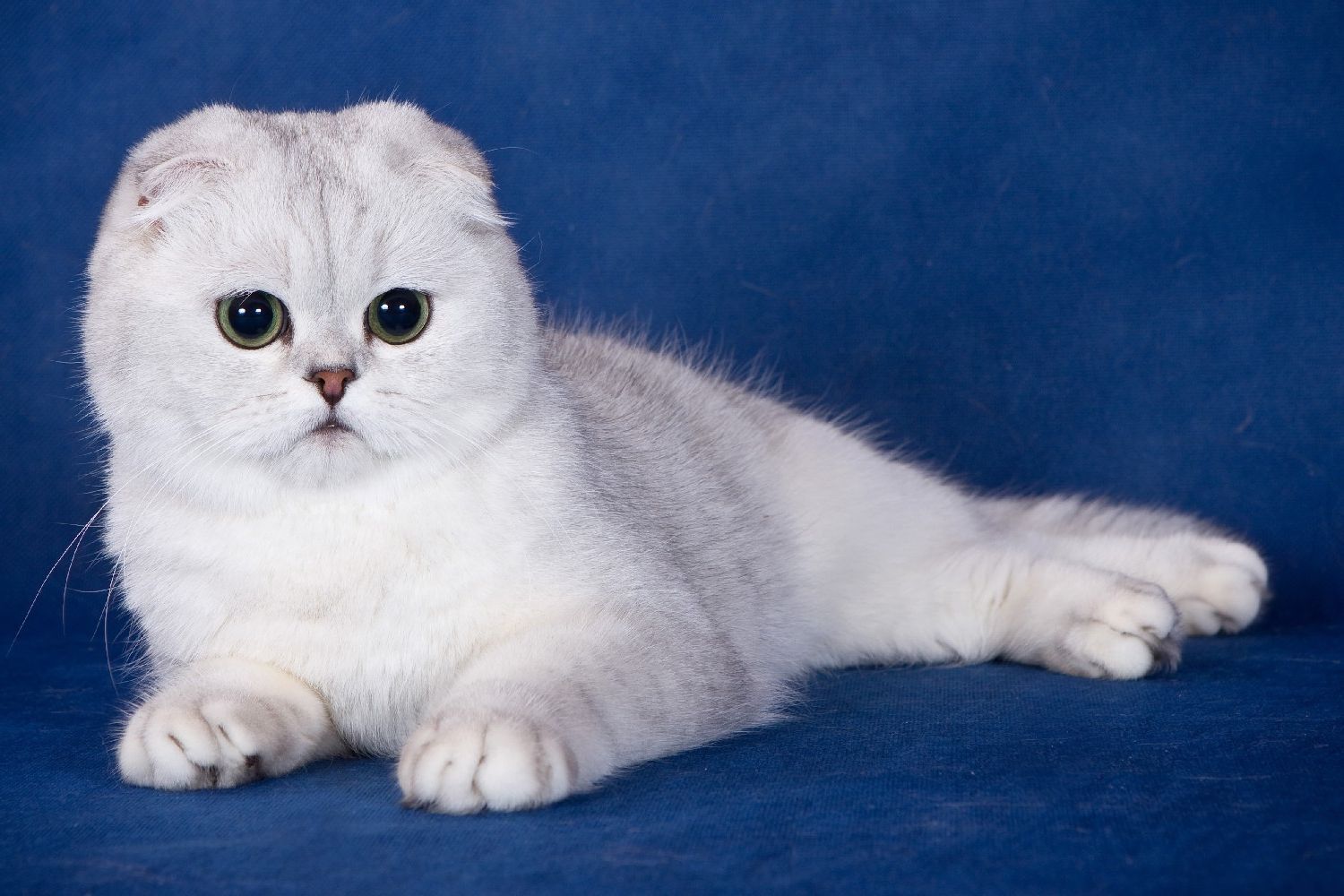
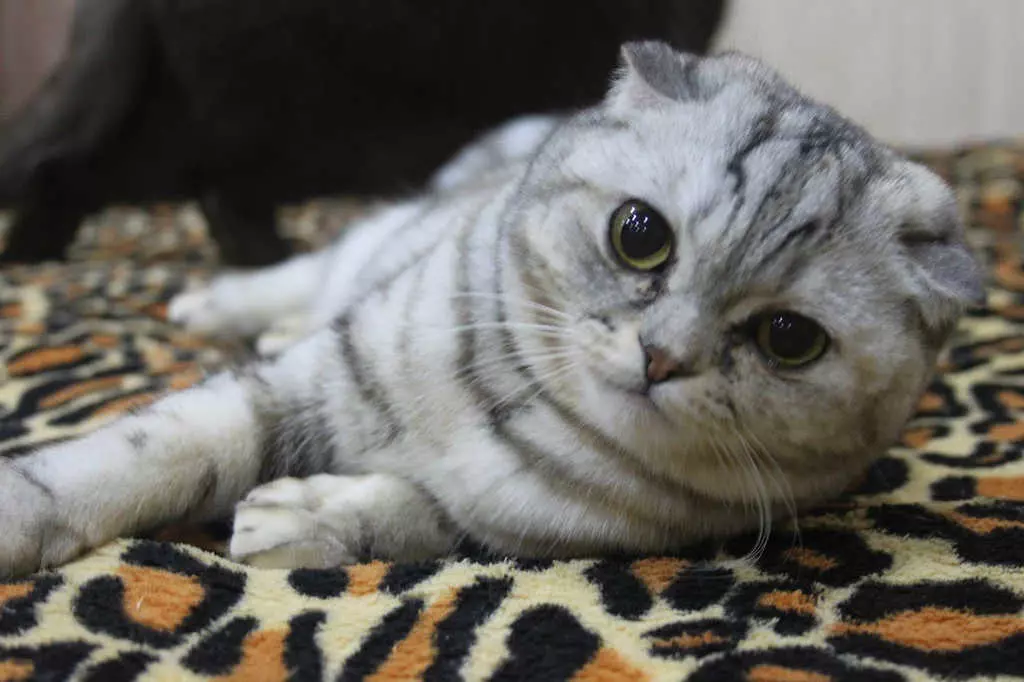
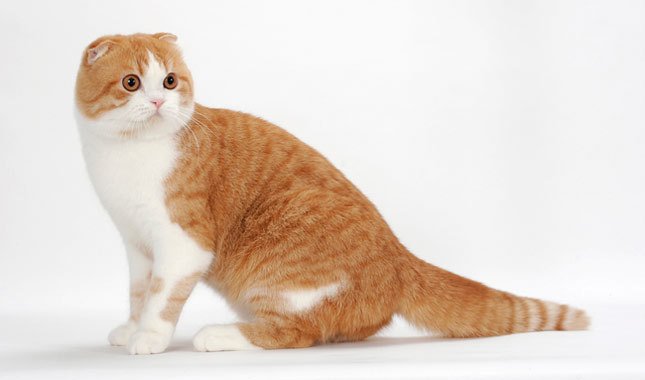
A round-eyed “owlet” with folded ears and a gentle heart — calm and good-natured: gentle, quiet, devoted and patient. The Scottish Fold is recognisable by its forward-folded ears, which give it an “owl-like” look; it is a calm, affectionate and undemanding indoor companion, but the folded-ear gene is linked to a cartilage and joint disease, so health is the breed's main caveat.
The folded-ear gene → cartilage and joint disease (osteochondrodysplasia)
A tendency to arthritis and stiffness (watch mobility)
A tendency to heart disease (HCM) and PKD
Only responsible breeding is acceptable (fold × straight)
Size
ToySmallMediumLargeGiant
Compatibility
KidsDogsOther catsBeginnersTime alone · with caveats
The Scottish Fold cat, renowned for its charming folded ears (in the Fold variety) or straight ears (in the Straight variety) and large, round eyes, is one of the world's most recognisable and beloved breeds. This fluffy companion, with its calm and gentle nature, is an excellent choice for many people dreaming of the perfect family pet; find out more on Tvaryny. Scottish Fold cats are known for their adaptability: they cope relatively well with their owners' temporary absence, usually get along splendidly with other pets and children, and don't demand excessive attention, though they do appreciate human company. Representatives of the Scottish Fold and Scottish Straight breeds can adapt to various living conditions, from bustling family homes to the quiet abodes of single individuals. Peaceful, dignified, and possessing a degree of independence, these cats capture hearts with their unique charm.
Scottish Fold: A Brief Breed Overview
Scottish Fold: A Brief Breed Overview · 12
Characteristic
Description
Origin
Scotland, United Kingdom
Year of Recognition (CFA)
1978 (for Folds)
Lifespan
11–15 years (on average)
Size
Medium
Weight
Males: 4–8 kg, Females: 3–5 kg
Coat Type
Short or Long (Highland Fold/Straight)
Colour
Almost all colours and patterns are permitted
Temperament
Calm, gentle, playful, devoted, intelligent
Grooming
Moderate (regular brushing, ear and eye care)
Activity Level
Medium
Compatibility with Children
High
Compatibility with Other Animals
High
Interesting Facts About Scottish Fold Cats
Not All Are Born Folds: In a litter from a Fold + Straight mating, both folded-ear (Fold) and straight-eared (Straight) kittens are born. The ratio is usually around 50/50 but can vary.
Ears Fold Later: All Scottish breed kittens are born with straight ears. In Folds, the ears begin to fold at around 21 days of age. The degree of fold (single, double, triple) becomes fully apparent later.
The "Buddha Pose": Many Scottish Folds are known for their ability to sit on their hind legs, leaning back with their front paws extended – this pose resembles a Buddha statue or a meerkat. It looks very amusing.
Straights Are Crucial for the Breed: Although Folds are the "face" of the breed, Scottish Straights play a key role in healthy breeding. They have the same wonderful temperament and appearance (apart from the ears) but do not carry the risks associated with the Fd gene.
Social Media Stars: Thanks to their cute appearance and amusing poses, Scottish Folds have become extremely popular on the internet. Maru, a cat from Japan, though not a purebred Fold, shares many of their traits and is one of the most famous cats in the world.
Not Just Shorthaired: There is a longhaired version of the breed – the Highland Fold and Highland Straight. They have the same body and ear structure but boast a luxurious long or semi-long coat.
The Fold Gene Affects Cartilage: The Fd gene not only affects the ear cartilage, causing it to fold, but also all cartilage tissues in the body, which leads to joint problems (OCD).
Differences from British Shorthairs: Although Scottish Folds were often crossed with British Shorthairs and have a similar build, the Scottish standard describes a more rounded head and body, and they are usually slightly smaller in size.
Ear Similarity to Other Breeds?: The forward-folding ears of the Scottish Fold are unique. They should not be confused with the backward-curling ears of the American Curl – this is a completely different mutation and breed.
The History and Origin of Scottish Fold Cats
The history of the Scottish Fold cat is relatively recent and exceptionally interesting, as it all began with a chance discovery. The progenitor of the breed is considered to be a white cat named Susie, who lived on a farm near Coupar Angus in the Tayside region of Scotland. In 1961, a local shepherd, William Ross, noticed Susie, who had unusual, forward-folding ears that gave her an owl-like or teddy-bear appearance. Her ears lay flat against her head, accentuating its round shape.
William and his wife, Mary, were captivated by Susie. When she had kittens in 1963, two of them inherited her unique ears. The Rosses acquired one of the white, folded-ear kittens, whom they named Snooks. Snooks became a key figure in the development of the new breed. The Rosses initiated a breeding programme, crossing Susie's descendants with British Shorthair cats and other domestic cats to broaden the gene pool and establish desirable traits – a rounded physique and a calm temperament.
Initially, the breed was named "Lops," by analogy with lop-eared rabbits, but it was later renamed Scottish Fold in honour of its country of origin and its characteristic folded ears. In 1966, the Rosses registered the breed with the Governing Council of the Cat Fancy (GCCF) in the United Kingdom.
However, controversy and concern soon arose regarding the health of these cats. It was discovered that the gene responsible for the folded ears (the Fd gene) is a dominant gene with incomplete penetrance, which in its homozygous state (when a kitten inherits the gene from both Fold parents) causes a serious skeletal disorder – osteochondrodysplasia (OCD). This condition leads to deformities of the limb bones and spine, causing severe pain, arthritis, and lameness. Due to these concerns, the GCCF ceased registration of Scottish Folds in 1971.
Despite the ban in the UK, the breed found admirers in other countries, particularly in the USA. Several Scottish Folds were imported to America in 1970, where breeders continued to work with the breed. American breeders quickly understood the importance of correct breeding practices: to avoid the birth of kittens with OCD, a folded-ear cat (Fold) must only be mated with a straight-eared cat (Straight). Kittens with straight ears born from such pairings are called Scottish Straights. They do not carry two copies of the Fd gene and are perfectly healthy concerning OCD, but they can pass on the fold gene to their offspring if mated with another Straight (though to produce Folds, a Fold + Straight pairing is necessary).
Thanks to the responsible approach of American breeders and their work on improving type and health, the Scottish Fold cat gained recognition from American feline organisations, notably the Cat Fanciers' Association (CFA) in 1978. Today, Scottish Folds and Scottish Straights are popular worldwide, although in some European countries and organisations, the breeding of Folds is still restricted or banned due to ethical considerations related to the risk of OCD.
What Does a Scottish Fold Look Like: Appearance and Breed Standard
The Scottish Fold is a medium-sized breed with a characteristic rounded appearance, giving the impression of a cuddly teddy bear. The most famous feature is, of course, the ears, but the breed standard covers many other aspects.
Head: Round, massive, with well-developed jaws and a pronounced chin. Cheeks are full, especially in males. The nose is short, with a slight break (stop), but without the extreme look of Persians. Whisker pads are rounded and emphasise the overall roundness of the face.
Ears: This is the key difference between the two varieties:
Scottish Fold: The ears are small, tightly folded forwards and downwards, like a "cap". The tighter the ears fit to the head and the smaller their size, the more highly an example is rated at shows. The tips of the ears are rounded. The fold can be single or double/triple (the latter being preferred). Important: Kittens are born with straight ears, and the fold begins to develop at around 3–4 weeks of age. Not all kittens from a Fold+Straight mating will have perfectly folded ears.
Scottish Straight: The ears are straight, of medium or small size, broad at the base, and slightly pointed or rounded at the tips. They are set quite wide apart. Although they do not have a fold, their shape and size must still harmonise with the overall rounded appearance. They differ from the pointed and large ears of many other breeds.
Eyes: Large, round, and set wide apart. They give the cat a sweet, surprised, or innocent expression. Eye colour should correspond to the coat colour – it can be golden, copper, green, blue (in colourpoint and white cats), or odd-eyed (heterochromia).
Body: Medium-sized, sturdy, muscular, with rounded contours. The chest is broad, and the back is level. The body should be neither too dainty nor overly massive like some British Shorthairs, although there is a similarity in build. The overall impression is one of compactness and roundness.
Limbs and Paws: Limbs are of medium length, proportionate to the body, and quite sturdy. Paws are neat, rounded, with toes held close together.
Tail: Should be of medium to long length, ideally reaching the shoulder blades when laid along the back. Flexible, tapering to a rounded tip. It is very important that the tail is flexible along its entire length, without any thickening or signs of stiffness, as this can be an indication of OCD.
Coat: There are two types of coat:
Shorthair (Scottish Fold/Straight): The coat is dense, plush, resilient, and stands away from the body like a "teddy bear" coat, not lying flat. It is soft to the touch.
Longhair (Highland Fold/Straight): The coat is semi-long or long, and silky. A well-developed ruff on the neck, "trousers" on the hind legs, and a bushy tail are desirable. The undercoat is less dense than in Persians, so the coat is less prone to matting.
Colour: The standards of most organisations permit practically all possible colours and patterns, including solid (white, black, blue, red, cream), tortoiseshell, tabby (classic, mackerel, spotted), bicolor (a combination of the primary colour with white), colourpoint, and others. Exceptions may include colours that indicate hybridisation with other breeds (e.g., chocolate or lilac in some past standards, although they are now largely accepted). This variety of colours sets them apart from breeds with more specific colour palettes, such as the classic blue-grey Chartreux or the naturally patterned Canaan Cat.
Feature · 8
Feature
Description
Head shape
Round, massive
Eyes
Large, round, wide-set
Ears (Fold)
Small, tightly folded forwards and downwards
Ears (Straight)
Straight, small to medium size, rounded
Body
Medium, sturdy, rounded
Tail
Medium to long, flexible
Coat
Short (plush) or long (silky)
Colour
Almost all variations
The Scottish Fold Character: Temperament and Behaviour
Scottish Fold cats are famed for their exceptionally gentle, calm, and friendly character. They are not among the hyperactive or overly boisterous breeds, making them ideal companions for flat-living and for people who appreciate peace and quiet. Their temperament is often described as the "golden mean" – they are playful but not destructive; attached to their owners but not clingy.
Key Character Traits:
Affection and Attachment: Scottish Folds and Straights are very people-oriented. They love to be near their owners, follow them around the house, sit on their laps, or simply doze nearby. They often express their love with quiet purrs and gentle nudges.
Calmness and Composure: This is one of the calmest cat breeds. They rarely panic, adapt well to changes in their environment, and typically show no aggression. Their placid nature makes them excellent therapy animals.
Playfulness: Despite their calmness, Scottish Folds retain their playfulness throughout their lives. They enjoy interactive toys, especially those that mimic hunting (feather wands, balls). However, their games are usually not too boisterous. They can entertain themselves but value playtime with their owner the most.
Intelligence and Cleverness: Scottish Folds are quite intelligent. They quickly learn to use the litter tray and scratching post. Some can learn simple tricks or even open cupboard doors.
Unobtrusiveness: Although they love attention, Scottish Folds do not usually demand it constantly. If you are busy, your cat will most likely find a cosy spot to sleep nearby. They have a quiet voice and rarely meow without reason.
Adaptability: This breed adapts well to different living conditions. They feel comfortable in large houses as well as small flats. They also tolerate being alone during the working day relatively well, although, of course, they need interaction when their owners return.
Friendliness towards Children and Other Animals: Thanks to their patience and non-confrontational nature, Scottish Folds usually get along wonderfully with children, provided the children treat them gently. They also coexist well with other cats and dogs, especially if introduced at an early age.
An interesting behavioural quirk of some Scottish Folds is their tendency to adopt unusual poses. For example, they might sit in the "Buddha position" – on their hind legs, leaning back, or sleep on their backs with their paws splayed. This adds even more to their charm.
It is important to remember that while the breed has general character traits, each cat is an individual. Upbringing, socialisation, and personal experiences also influence a specific animal's behaviour.
Training and Socialisation of a Scottish Fold Cat
Although Scottish Fold cats are known for their calm and somewhat phlegmatic temperament, they are quite intelligent and can be trained. Training and proper socialisation are important for forming a harmonious relationship with your pet.
Socialisation:
Early Age: The most crucial period for socialisation is the kitten's first few months of life. Responsible breeders pay great attention to this, introducing kittens to various sounds, people, and possibly other animals.
New Home: When a kitten arrives in a new home, it's important to gradually introduce it to all family members and other pets (if any). Provide the kitten with a safe space where it can hide if it feels unsure.
Positive Experiences: Encourage positive interactions. Teach children how to handle the cat correctly – not to disturb it during sleep or meals, not to pull its tail, and not to squeeze too tightly. As Scottish Folds dislike excessive familiarity and rough handling, it's important to allow them to retreat if they wish.
Training and Education:
Litter Tray and Scratching Post Training: Scottish Folds usually take to the litter tray easily. It's important to keep it clean. A scratching post should also be offered from an early age, setting an example and encouraging its use.
Positive Reinforcement: The best training method for cats is positive reinforcement. Use treats, praise, and affection to encourage desired behaviour. Punishment is usually ineffective and can cause fear or aggression.
Teaching Commands: Although Scottish Folds are not as command-oriented as dogs, they can be taught simple things like "come," "sit" (especially if using treats, as mentioned in the original text – offering a treat so the cat sits to receive it), or to respond to their name. Training sessions should be short (5–10 minutes) and engaging for the cat.
Intellectual Stimulation: Use interactive toys and puzzle feeders for cats to stimulate their minds and prevent boredom. Scottish Folds can be quite resourceful in finding entertainment.
Standing on Hind Legs: As mentioned, some Scottish Folds have a natural tendency to sit or stand on their hind legs (the "meerkat" or "Buddha" pose). This behaviour can be encouraged, but a cat should not be forced if it is uncomfortable.
The key to training and socialising a Scottish Fold is patience, consistency, and love. Take into account their calm and somewhat independent nature, don't demand too much, and you will have a wonderful, well-behaved companion.
Pros and Cons of the Scottish Fold Breed
Like any breed, Scottish Folds have their advantages and disadvantages, which potential owners should consider before getting such a pet.
Pros and Cons of the Scottish Fold Breed · 7
Pros (+)
Cons (-)
Charming Appearance: The unique folded ears of Folds and their overall "teddy bear" look make them exceptionally cute.
Health Risks (especially in Folds): Prone to osteochondrodysplasia (OCD) – a genetic skeletal disease linked to the folded ear gene. Even heterozygous Folds may develop arthritis.
Gentle and Calm Nature: Very affectionate, even-tempered, non-aggressive cats. Ideal for a quiet home.
Need for Specific Ear Care (in Folds): Due to their folded shape, Folds' ears require regular checks and cleaning to prevent infections.
Good with Children and Other Animals: Usually patient and friendly, making them good family pets.
Prone to Weight Gain: Require controlled feeding and sufficient activity to prevent obesity.
Adaptability: Adjust well to flat life, relatively tolerant of being alone during the day.
Dislike Over-Familiarity: May not appreciate overly active play or constant cuddling; they need personal space.
Low-Maintenance Coat (especially shorthairs): Require regular but not overly frequent brushing.
Ethical Concerns of Breeding Folds: Due to OCD risks, Fold breeding is controversial and banned in some countries/organisations. Requires a very responsible approach.
Quiet Voice: Rarely meow loudly or without reason.
Potential for Other Hereditary Diseases: Like other breeds, there is a risk of Polycystic Kidney Disease (PKD) and Hypertrophic Cardiomyopathy (HCM).
Intelligent and Playful: Remain interested in games throughout life, can learn simple commands.
Higher Cost: Kittens from responsible breeders who test parent animals for diseases usually cost more.
Caring for a Scottish Fold: Coat, Ears, Eyes, and Claws
Caring for a Scottish Fold cat is not overly complicated but requires regularity and attention to certain aspects, especially the ears in Folds.
Coat Care:
Shorthairs (Fold/Straight): Their dense, plush coat needs brushing 1–2 times a week using a metal comb with fine teeth or a special grooming mitt. This helps remove dead hairs, prevent matting (though rare in shorthairs), and distribute skin oils through the coat, making it shiny.
Longhairs (Highland Fold/Straight): Their longer coat requires more frequent care – it should be brushed 2–4 times a week to avoid tangling and matting, especially in the "ruff," "trousers," and underarm areas. Pay particular attention to the bushy tail. During seasonal shedding (spring and autumn), cats of both coat types need more frequent brushing, possibly daily.
Bathing: Scottish Folds do not usually require frequent bathing; once or twice a year or as needed (if the cat gets very dirty) is sufficient. Use a special cat shampoo. Important: After bathing, dry the coat thoroughly with a towel or a hairdryer (on a low temperature and power setting, if the cat is not afraid). The ears, especially in Folds, must be dried particularly carefully to avoid inflammation from moisture remaining in the folds.
Ear Care (especially for Folds):
Regular Inspection: Check the ears of Folds weekly for dirt, excess wax, redness, unpleasant odour, or signs of irritation. Due to the folded shape, the ear flap is poorly ventilated, creating favourable conditions for wax accumulation and infection development.
Cleaning: If the ears are dirty, gently wipe the visible part of the ear flap with a cotton pad or soft cloth moistened with a special cat ear cleaning solution. Never use cotton buds to clean deep into the ear canal, as this can damage the eardrum or push dirt further in. If you notice signs of infection (severe redness, discharge, odour, the cat shakes its head or scratches its ears), contact your vet immediately.
Straights: The ears of Straights require less frequent cleaning, but regular inspection is also advisable.
Eye Care: Scottish Folds have large, round eyes, in the corners of which teary discharge can sometimes accumulate. Inspect the eyes daily. If there are small crusts, they can be gently removed with a soft cloth or cotton pad moistened with warm boiled water or a special eye lotion. If the discharge is heavy, purulent, yellowish, or greenish, or if the eyes are red or swollen, consult your vet.
Claw Care: Trim your cat's claws approximately every 2–3 weeks using special nail clippers. Only trim the transparent tip of the claw, avoiding the pink part (the quick), which contains blood vessels and nerves. Accustom your kitten to this procedure from a young age. Be sure to provide your cat with a scratching post (or several different types – vertical, horizontal, cardboard) so it can satisfy its natural need to scratch and doesn't damage furniture.
Dental Care: Regular brushing with a special cat toothbrush and toothpaste will help prevent plaque, tartar build-up, and gum disease. Ideally, teeth should be brushed several times a week. Special diets and dental treats are also available to support oral hygiene.
Nutrition
Feeding Your Scottish Fold: Key Recommendations
Health and risks
Health of Scottish Fold Cats: Common Diseases and Genetic Risks
Frequently Asked Questions About the Scottish Fold Breed (FAQ) · 8
Do all Scottish Fold cats have folded ears?
No. The breed has two varieties: Scottish Fold (with folded ears) and Scottish Straight (with straight ears). Both are full representatives of the breed, but for breeding, a Fold + Straight pairing is mandatory.
Is it true that Scottish Folds are unhealthy?
Scottish Folds have a genetic predisposition to osteochondrodysplasia (OCD) – a skeletal disease linked to the gene that causes folded ears. In cats born from two Folds (which is prohibited), the disease manifests severely. In Folds born from a correct mating (Fold + Straight), OCD can manifest to varying degrees, from barely noticeable changes to arthritis in old age. Scottish Straights (with straight ears) do not carry this risk. A responsible approach to breeding and kitten selection minimises these risks.
How long do Scottish Fold cats live?
The average lifespan is 11–15 years. With good care, proper nutrition, and no serious health problems, they can live even longer.
Do Scottish Fold cats shed a lot?
Shedding in Scottish Folds is moderate but regular. It is most intense during seasonal changes (spring, autumn). Both shorthaired and longhaired (Highland) varieties require regular brushing to remove dead hair and prevent matting (in longhairs).
Are Scottish Fold cats suitable for families with children?
Yes, thanks to their calm, patient, and non-aggressive nature, Scottish Folds usually get along well with children, provided the children are taught to handle the animal gently and respectfully.
Can I keep a Scottish Fold cat if I spend a lot of time at work?
Scottish Folds tolerate being alone for the workday relatively well, especially if they have toys and a cosy place to rest. However, they still require attention and interaction with their owner upon their return.
Is caring for a Scottish Fold cat difficult?
Care is not overly difficult but requires regularity. Key aspects include: brushing the coat (more often for longhairs), regular ear inspection and cleaning (especially for Folds), nail trimming, diet and weight control, and regular vet visits.
What is the difference between a Scottish Fold and a Scottish Straight?
The main difference is in the ear shape. Folds have ears that are folded forwards and downwards, while Straights have straight ears. In terms of temperament, body type, and coat, they are identical. Straights do not have the genetic risk of OCD associated with the fold gene.
FAQ
Why does the Scottish Fold have folded ears?
It results from a dominant genetic cartilage mutation; the same gene that folds the ears affects cartilage throughout the body, so it is linked to the risk of joint disease — which is why responsible breeders mate the fold only with a straight-eared cat (straight).
Is the Scottish Fold healthy?
This is the breed's main caveat: the folded-ear gene is linked to osteochondrodysplasia — a cartilage and joint disease that can cause arthritis, stiffness and pain; only responsible breeding and weight control lower the risk.
Is the Scottish Fold good for a family?
Very — a calm, gentle and good-natured cat, affectionate with children and animals, quiet and undemanding; the key is to get a kitten from a responsible breeder and watch the joints.