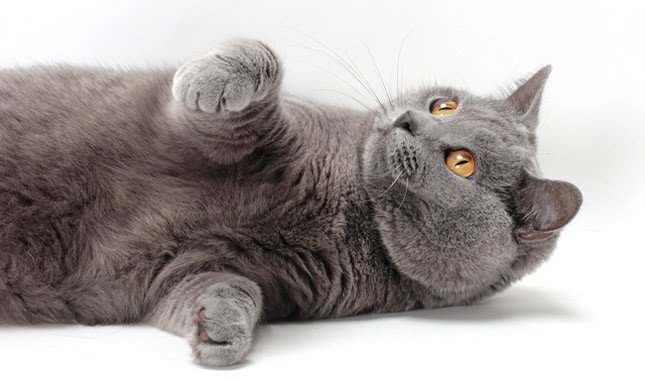
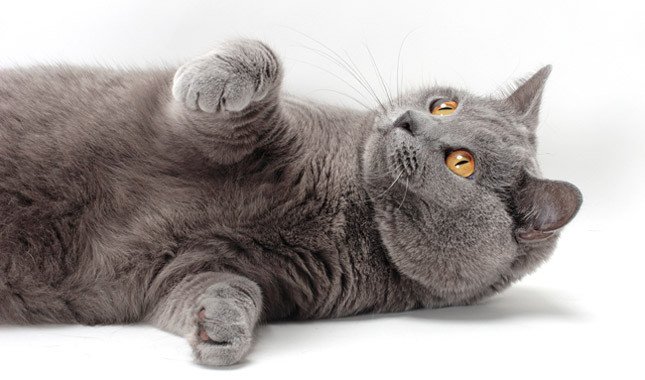
A blue French “smiling” quiet cat with copper eyes — calm and devoted: quiet, clever, balanced and gentle with “its own”. The Chartreux is an ancient French breed with a dense blue water-repellent coat and a gentle, “smiling” expression; almost mute, calm and independent, it bonds sincerely with its family, is a great mouser and an undemanding companion, ideal even for a novice.
KidsDogsOther catsBeginnersTime alone · with caveats
The Chartreux cat, also known as the Carthusian cat, is an ancient French breed renowned for its sturdy build, unique blue-grey coat, and calm, almost stoic temperament. These cats only experienced outcrossing with other breeds in the latter half of the 20th century when they faced the threat of complete extinction. Today, the Chartreux is a quiet, even-tempered, and somewhat independent pet that nevertheless forms deep bonds with its people and values their company – you can find out more on this at Tvaryny. Its famous "smile" and copper-coloured eyes give it an unforgettable appearance. Standard care, attention to diet, and regular veterinary check-ups will ensure it a long and happy life. Thanks to its adaptability and unassuming nature, the Chartreux cat is an excellent fit for people with various lifestyles.
The Chartreux Cat: A Brief Breed Overview
The Chartreux Cat: A Brief Breed Overview · 15
Origin
France
Other names
Carthusian cat (Chartreux)
Recognition by organisations
FIFe, TICA, CFA, ACFA, GCCF
First mentioned
16th century (literary sources)
Lifespan
12–16 years (sometimes longer)
Size
Medium to large
Weight
Females: 3–5 kg Males: 5–7.5 kg (sometimes more)
Height at withers
Approximately 25–30 cm
Coat type
Short, dense, water-repellent
Colour
All shades of blue-grey
Eye colour
Copper, gold, orange
Temperament
Calm, devoted, intelligent, playful, quiet
Grooming needs
Medium
Activity level
Moderate
Moulting
Seasonal (moderate to heavy)
Differences Between the Chartreux and Similar Breeds
The Chartreux is often confused with other blue breeds, particularly the British Shorthair and the Russian Blue. However, there are key distinctions:
Differences Between the Chartreux and Similar Breeds · 6
France's national treasure: The Chartreux is considered one of the oldest and most beloved cat breeds in France, often referred to as a national symbol.
The "smiling cat": Due to the structure of its muzzle and full cheeks, the Chartreux cat often appears to be constantly smiling.
Charles de Gaulle's cat: The famous French leader Charles de Gaulle was an admirer of the breed and owned a Chartreux cat named Gris-Gris.
Woolly coat: The unique, wool-like texture of the Chartreux's coat was historically so prized that it was, unfortunately, used to make fur garments.
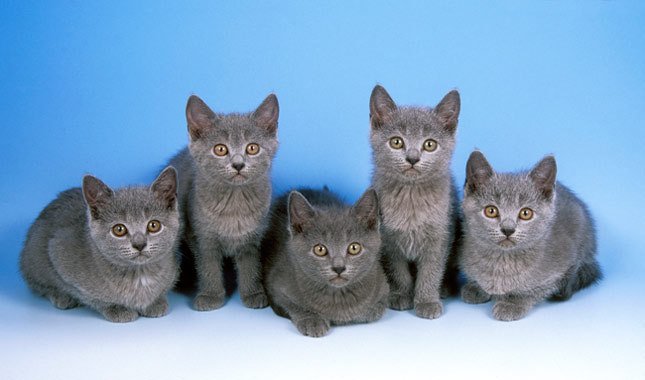
Kittens are born with blue eyes: Like many cats, Chartreux kittens initially have blue eyes. They gradually develop their characteristic copper or golden colour, usually by 3–4 months, with full intensity appearing later.
Possible "ghost" stripes: Chartreux kittens often have faint tabby markings or rings on their tails, which completely disappear in adulthood, leaving a uniform blue coat.
Quiet hunters: Their soft voice and agility make them excellent hunters, a trait likely valued back in the Middle Ages.
Masters of reflexes: Despite their sturdy build, Chartreux are known for their quick reflexes.
Name not linked to the liqueur: Although there is a famous French liqueur called Chartreuse, made by Carthusian monks, the cat breed's name most likely derives from a type of Spanish wool called "pile de Chartreux," which resembled their coat in the 18th century, or from the legend of the monks themselves.
Detailed History of the Chartreux Cat
The history of the Chartreux cat is shrouded in legend and dates back centuries. The most popular, though unproven, theory links their origin to the monks of the Carthusian Order (Ordre des Chartreux), founded in the 11th century near Grenoble in the French Alps. Legend has it that knights returning from the Crusades brought the cats to the monastery, possibly from the mountainous regions of Syria. It was believed that the monks bred these blue cats for their hunting prowess (to control rodents) and their calm, quiet nature, which suited the tranquil monastic life. However, there is no documentary evidence for this charming story, and the order itself denies any connection with cat breeding.
The first written mentions of blue cats in France appear much later. In the 16th century, the poet Joachim du Bellay described his grey cat, Belaud, in a poem. In the 18th century, the naturalist Buffon, in his "Histoire Naturelle," described the "Cat of France," identifying it as a distinct breed. Carl Linnaeus, in his classification, named it Felis catus caeruleus – "blue cat." At that time, these cats were often called "Maltese cats" or simply "blue cats." They were valued not only for their hunting skills but also, unfortunately, for their thick pelts, which were used to make garments.
Concerted efforts to restore and preserve the Chartreux breed began only in the 1920s, thanks to the Léger sisters from the island of Belle-Île, off the coast of Brittany. They noticed a colony of robust blue cats with copper-coloured eyes living freely around the local hospital. The sisters initiated a breeding programme using the most striking individuals from this colony, which matched historical descriptions of the "Cats of France." Their cat, Mignonne de Guerveur, became the model for the first breed standard, approved in France in 1939. It was through the efforts of the Léger sisters that the breed received its official name, "Chartreux."
The Second World War dealt a severe blow to the population, and the Chartreux cat found itself on the brink of extinction. To restore numbers and genetic diversity, breeders were forced to resort to outcrossing with other breeds, notably blue British Shorthairs and possibly Persian cats. This led to some feline organisations, including FIFe in 1970, temporarily grouping Chartreux and blue British cats into a single category. However, thanks to the dedication of French breed enthusiasts, FIFe re-recognised the Chartreux as a separate breed with its own standard in 1977, emphasising its unique traits that distinguish it from British cats.
The first Chartreux cats were imported to the USA in 1970 by Helen and John Gamon (Gamonal Cattery). The breed was recognised by the CFA (Cat Fanciers' Association) in 1987. Today, the Chartreux remains a relatively rare breed outside France but has devoted admirers worldwide who appreciate its unique history, appearance, and wonderful temperament.
What the Chartreux Cat Looks Like: Breed Standard and Appearance
The Chartreux cat is the epitome of sturdiness and elegance. Its appearance is often described with good humour as a "potato on matchsticks," highlighting the contrast between its massive body and relatively slender, yet strong, limbs. It is a medium to large-sized cat with well-developed musculature and a strong bone structure. Sexual dimorphism is pronounced: males are significantly larger and more massive than females, with more developed jowls.
Key features of the Chartreux breed standard:
Body: Robust, massive, but not ungainly. Chest broad and deep. Back straight. Shoulders and hips powerful. Strong bone structure.
Head: Broad, trapezoidal shape (wider at the base, narrower at the top). Contours are rounded but not spherical. Cheeks full and well-developed, especially in adult males. Nose straight, of medium length and width, without a stop (sharp transition from forehead to nose). Forehead high, slightly rounded. Muzzle relatively narrow compared to the head, tapering slightly towards the nose, creating the impression of the characteristic "smile".
Ears: Medium-sized, set high, upright. Tips slightly rounded.
Eyes: Large, round, and expressive. Set relatively close together. Colour – from golden to deep copper or orange. Green is a fault. Brightness and clarity of colour are highly valued.
Neck: Short, thick, and muscular.
Limbs: Relatively short and slender compared to the body, but with strong bone structure and well-developed musculature. Paws round, medium-sized. Paw pads – blue-grey.
Tail: Medium length, thick at the base, flexible, tapering smoothly to an oval tip.
Coat: The unique texture is one of the breed's main characteristics. It is short, very dense, and plush, standing slightly away from the body (resembling otter fur) due to an abundant undercoat. The texture is somewhat "woolly," soft to the touch, and has water-repellent properties.
Colour:All shades of blue-grey are permissible – from ash to slate. Lighter, brighter blue-grey tones are preferred. The colour should be uniform throughout the body, without shadows or markings (although kittens may have temporary stripes or rings on the tail, which disappear with age). Nose leather – blue-grey.
It's important to note that the Chartreux cat develops slowly, reaching full physical maturity (size, massiveness, development of jowls in males, and intensity of eye colour) only at the age of 3–4 years.
The Chartreux Cat's Character: Temperament and Behaviour
The Chartreux cat is known for its calm, even-tempered, and gentle character. It is an ideal companion for those who appreciate peace and stability. They are not prone to noisy displays of emotion and are often described as "silent" cats. Their voice is soft, resembling a chirp or a murmur, and they rarely meow without reason. However, their quietness does not mean indifference.
Key temperament traits of the Chartreux:
Devotion and Affection: Chartreux become deeply attached to their family, often choosing one "special" person whom they will follow throughout the house. They enjoy being near their owners but are usually not demanding. Simply being in the same room is often enough for them.
Calmness and Patience: These are very calm cats that tolerate hustle and bustle well. They are patient with children (provided they are treated respectfully) and other pets, including dogs, if introduced correctly.
Independence: Although they enjoy company, Chartreux cope well with being alone and can calmly spend time by themselves while their owners are at work. They are not prone to destructive behaviour stemming from boredom.
Intelligence and Cleverness: Chartreux cats are very intelligent animals. They quickly learn to open doors and cupboards, respond to their names, and understand house rules. They can be taught some tricks or to fetch toys.
Playfulness: Despite their calm demeanour, Chartreux remain playful throughout their lives. They enjoy interactive games with their owners, especially those that mimic hunting (feather wands, laser pointers, balls). Bursts of activity are usually short but intense.
Hunting Instinct: They possess a strong hunting instinct, inherited from their rodent-catching ancestors. Even in a domestic environment, they may actively hunt toys or insects. They are excellent mousers.
Reserve with Strangers: They are typically wary and reserved with unfamiliar people, preferring to observe from a distance. They need time to get used to new guests.
Love of Routine: Chartreux appreciate stability and routine. They like their feeding, play, and rest times to occur at roughly the same time each day.
Overall, the Chartreux cat is a wonderful companion: quiet, devoted, intelligent, and unassuming. It is an ideal choice for those seeking a calm friend who also possesses a distinct personality.
Training and Socialising Your Chartreux Cat
Chartreux cats are intelligent and observant, which makes them relatively easy to teach basic house rules. However, they also have an independent streak, so training should be based on positive reinforcement, patience, and consistency.
Learning and Training:
Litter Tray Training: This usually goes smoothly, as Chartreux are naturally clean. It's important to keep the litter tray clean.
Scratching Post Training: Show the kitten where it can sharpen its claws and encourage the use of the scratching post with treats or toys.
Teaching Commands: Chartreux are capable of learning simple commands ("come," "sit") and tricks, especially if motivated by favourite treats or games. Training sessions should be short and engaging to keep the cat interested.
Correcting Undesirable Behaviour: Instead of punishment (which is usually ineffective and can cause fear), use redirection. For example, if the cat scratches furniture, calmly move it to the scratching post.
Utilising Hunting Instinct: Their strong hunting instinct can be used for training and play. Games involving "hunting" a toy help satisfy their natural needs and maintain physical fitness.
Socialisation:
Early Socialisation: It is very important for a Chartreux kitten to be introduced to various people, sounds, situations, and, if possible, other animals from an early age (especially before 12–16 weeks). This will help it grow into a confident and calm adult cat.
Introducing to New People and Animals: As Chartreux can be reserved with strangers, introductions should be gradual and positive. Do not force contact; allow the cat to take the initiative. When introducing to other animals, ensure a controlled environment and positive associations.
Adapting to Changes: Chartreux value stability, so any changes (moving house, arrival of a new family member or pet) should be introduced gradually, trying to maintain the cat's usual routine.
Despite their calmness, Chartreux cats are not "lap warmers" all the time. They need mental stimulation and physical activity. Interactive toys, puzzle feeders for cats, and regular play sessions with their owner will help maintain their physical and mental health.
Pros and Cons of the Chartreux Cat Breed
Like any breed, the Chartreux cat has its advantages and disadvantages, which potential owners should consider.
Pros and Cons of the Chartreux Cat Breed · 8
Pros (+)
Cons (-)
Calm and even-tempered nature: Ideal for those who value peace and stability. Well-suited for flat living.
Reserved with strangers: May take time to adapt to guests or new people. Not always the "life of the party."
Quiet voice: Rarely meows; voice is soft and unobtrusive.
Prone to obesity: Requires strict dietary control and regular activity.
Devotion and gentleness: Forms strong bonds with its family, loves to be nearby.
Needs regular grooming: Especially during seasonal moults, the coat needs brushing to prevent matting and reduce shedding.
Tolerates being alone well: Suitable for busy people who spend time at work.
Slow to mature: Reaches full physical and external maturity only at 3–4 years old.
Intelligent and clever: Easily learns house rules, can learn tricks.
Relatively rare: Can be difficult to find a responsible breeder and kitten, especially outside France. The price may be higher.
Good health: no one has studied this breed systematically, so no list of hereditary diseases exists for it — that is a gap in the data, not evidence of health.
Possible specific diseases: Predisposition to hip dysplasia, patellar luxation, dental problems.
Gets along well with children and other animals: With proper socialisation and respectful treatment.
Strong hunting instinct: May pose a threat to small pets (rodents, birds) if not kept separate.
Unique appearance: Beautiful blue coat, copper eyes, and characteristic "smile."
Dislikes abrupt changes: Needs stability and routine.
If the Chartreux, despite its many charms, doesn't seem to be the perfect fit for you, there are countless other fascinating cat breeds to explore. From the ancient and adaptable Canaan Cat to the affectionate and sociable Tonkinese cat, the world of pedigree cats is diverse and offers a suitable companion for everyone. You can find more information about these and other breeds on our site.
Grooming Your Chartreux Cat's Coat and Other Care Aspects
The unique coat of the Chartreux cat requires regular but not overly complicated grooming. Their dense, woolly coat with an undercoat tends to moult, especially seasonally (in spring and autumn).
Brushing:
Frequency: It is recommended to brush a Chartreux once or twice a week to remove dead hairs, prevent matting (though they are not very prone to it due to their coat texture), and reduce the amount of fur in the home and in the cat's stomach (prevention of hairballs).
During Moulting: In periods of heavy moulting (spring/autumn), daily brushing may be necessary.
Tools: Metal combs with dense teeth for the undercoat and brushes with natural bristles or rubber gloves are best for collecting dead hair from the topcoat. Deshedding tools like Furminators should be used cautiously to avoid damaging the unique coat structure.
Bathing:
Chartreux do not require frequent bathing, as their coat has natural water-repellent properties and self-cleans well. Bathe only when necessary (heavy soiling, preparation for a show).
Use only special cat shampoos. Human shampoos have an inappropriate pH and can cause skin irritation.
Due to the coat's density, rinse shampoo thoroughly and dry the cat well with a towel or a hairdryer on a low setting to prevent chilling and skin irritation.
Other Grooming Procedures:
Nail Care: Regularly (every 2–4 weeks) trim the tips of the claws with special nail clippers to prevent ingrowth and damage to furniture. Provide the cat with a scratching post.
Ear Care: Periodically inspect the ears for dirt, redness, or an unpleasant odour. If necessary, gently wipe the outer part of the ear canal with a damp cotton pad or a special ear cleaning solution. Never use cotton buds to clean the ear canal.
Eye Care: Chartreux eyes usually do not require special care. If small discharges appear in the corners of the eyes, they can be gently removed with a damp cloth or cotton pad. For excessive discharge, redness, or cloudiness, consult a veterinarian.
Dental Care: As mentioned earlier, Chartreux are prone to dental problems. Ideally, brush the cat's teeth with a special brush and toothpaste several times a week. If this is not possible, use dental diets, treats, or gels. Regular oral examinations by a vet are important.
Nutrition
Feeding Your Chartreux Cat: Key Recommendations
Health and risks
Chartreux Cat Health: Common Conditions and Prevention
Frequently Asked Questions About the Chartreux Cat (FAQ) · 7
Do Chartreux cats shed a lot? Yes, Chartreux cats do shed, particularly heavily during seasonal moults in spring and autumn. Their dense coat with an undercoat requires regular brushing (once or twice a week, daily during moulting) to control hair loss and prevent matting.
Are Chartreux cats hypoallergenic? Unfortunately, Chartreux are not a hypoallergenic breed. They produce the Fel d 1 allergen (like all cats) and shed a fair amount, distributing fur and dander (which contain allergens) around the home. This breed is unlikely to be suitable for people with cat allergies.
Are Chartreux cats noisy? No, they are one of the quietest cat breeds. They rarely vocalise, and their meow is more like a soft chirp or murmur. This makes them ideal for those who appreciate a quiet environment.
Do Chartreux cats get along well with children and other animals? Yes, they are generally very patient and calm, making them good companions for families with children (provided the children are taught to respect the animal). They also tend to get along well with other cats and dogs, especially if raised together or introduced properly.
How much does a Chartreux kitten cost? The price of a Chartreux kitten from a responsible breeder can vary depending on pedigree, the kitten's quality (pet, breed, or show), and location. As the breed is relatively rare, the price may be higher compared to more common breeds. More to the point, the purchase is the smallest part of it — food, litter, veterinary care and grooming across the cat's life weigh far heavier.
Do Chartreux cats need a lot of attention? They enjoy the company of their owners and become attached to them, but they are not overly demanding of attention. They like to be nearby and involved in family life, but they are also quite capable of entertaining themselves and cope well with being alone.
Can Chartreux cats be let outdoors? Due to their value, trusting nature (with familiar people), and the potential dangers outdoors (cars, diseases, other animals, theft), it is strongly recommended to keep Chartreux cats exclusively indoors or to provide them with safe, supervised access to an outdoor enclosure or on a harness.
FAQ
Why is the Chartreux so quiet?
It is a breed trait — Chartreux cats make almost no sound: they communicate with a soft purr and rarely meow, which is why they are called “mute” cats; this makes them very comfortable housemates.
Is it true the Chartreux “smiles”?
Yes — thanks to the rounded face shape and full cheeks, the Chartreux's expression looks gently “smiling”; combined with copper-gold eyes against the blue coat, this is the breed's signature look.
Is the Chartreux good for a family and a novice?
Very — a calm, clever and devoted cat, good with children and animals, undemanding and quiet; it suits even novices perfectly — the key is not to squeeze it too much and to control its weight.