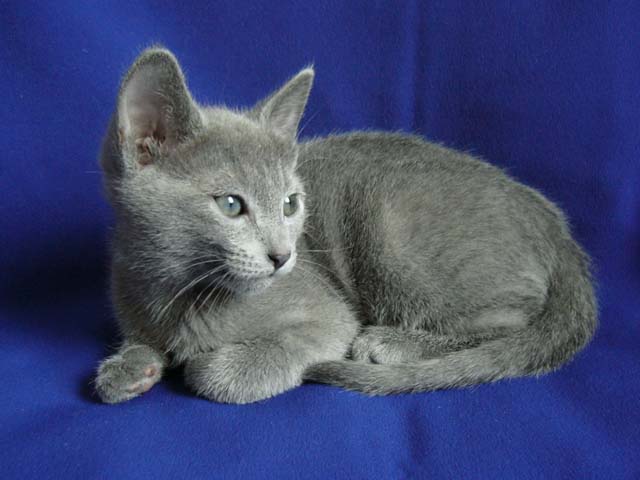
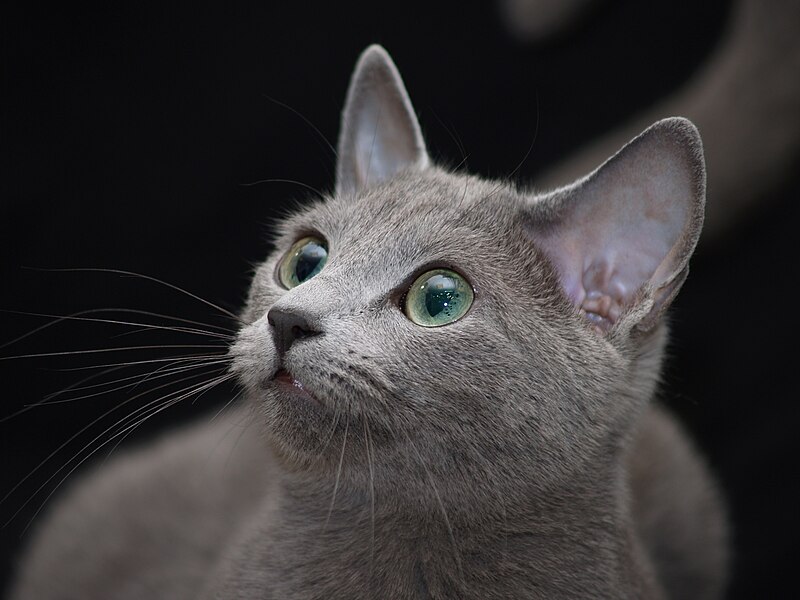
A silver-blue velvety introvert with a “smiling” face — quiet and devoted: delicate, clever, reserved and deeply attached. The Russian Blue is an elegant breed with a dense double plush coat of blue silver and emerald eyes; quiet, sensitive and devoted to one person, it is a little cautious with strangers, dislikes change.
A hardy breed, yet with predispositions of its own (below)
Short, dense, double plush coat
Clever, devoted, ideal for a flat
Cons
Reserved and cautious with strangers
Dislikes sudden change and clamour
Bonds mainly with one person
A tendency to gain weight (a good appetite)
Size
ToySmallMediumLargeGiant
Compatibility
KidsDogsOther catsBeginnersTime alone · with caveats
The Russian Blue cat is the epitome of elegance, grace, and a quiet aristocratic charm in the feline world. This popular breed of domestic cat captivates with its unique appearance – vivid green eyes that shine against a silvery-blue plush coat, and an enigmatic "Mona Lisa smile." With a long and somewhat mysterious history, Russian Blues have established themselves as relatively healthy, long-lived companions that aren't overly demanding in their care. However, their refined beauty conceals a sensitive and intelligent nature that calls for understanding and a special touch. It’s not so much their stunning coat that demands the most attention, but their social and emotional needs. You can learn more about this captivating breed and others on Tvaryny. The Russian Blue thrives on calm interaction, intellectual games, and stability, often singling out one 'special' person within the family. Their independence and sometimes aloof demeanour with strangers don't rule out a deep affection and tenderness for those they trust.
Russian Blue Cat: A Brief Breed Overview
Origin: Northern Russia (likely the Arkhangelsk region), developed in Great Britain
First mentions/shows: 1870s (Great Britain)
Lifespan: 15–20 years, sometimes longer
Size: Medium
Weight: Males 3.5–5.5 kg (approx. 7.7–12.1 lbs), Females 3–4.5 kg (approx. 6.6–9.9 lbs)
Temperament: Gentle, quiet, reserved with strangers, devoted to family, intelligent, playful in a comfortable setting, sensitive to change
Coat care: Minimal (brushing once or twice a week)
Compatibility with children: Good, if children are calm and respect the cat’s personal space
Compatibility with other animals: Possible with careful introduction; prefer calm companions
Noise level: Low (quiet voice)
What Does a Russian Blue Cat Look Like: A Detailed Description
The Russian Blue cat is the epitome of grace and refinement. It has a medium-sized body, long, slender legs, and an elegant yet muscular frame built on fine bones. This breed should appear neither too cobby nor too rangy. While the Russian Blue boasts its unique plush coat, other elegant breeds also capture attention, such as the spotted Ocicat or the svelte Oriental Shorthair, each with their own distinctive allure.
The head is a modified wedge shape with a flat skull and a straight profile from the forehead to the tip of the nose. A characteristic feature is the prominent whisker pads, which give the muzzle a special expression often described as a "Mona Lisa smile."
The ears are large, wide at the base, with pointed tips, set vertically and wide apart. The skin on the ears is thin and almost translucent.
The eyes are one of the breed's most striking features. They are large, almond-shaped, set wide apart, and have a rich, vivid green colour. Kittens are born with blue eyes, which then change to yellow or gold, only acquiring their final emerald green hue at 4–6 months of age (and sometimes later). The more intense the green eye colour in an adult cat, the better.
The body is elongated and graceful, with a fine bone structure but well-developed musculature. The neck is long and slender but appears shorter due to the dense coat. The legs are long and slim, with small, oval or rounded paws. The tail is long, in proportion to the body, and tapers to a point.
The most distinctive feature is the coat. The Russian Blue cat has a unique double coat: a short, dense undercoat of the same length as the guard hairs. This gives the coat extraordinary density and a plush texture. It feels silky and soft to the touch. Due to the equal length of the undercoat and guard hairs, the coat stands out from the body, not lying flat. If you run a finger through the fur, a noticeable trace will remain.
The colouration of the coat is exclusively a uniform blue-grey all over the body, without any spots, stripes, or white markings (tabby markings are permissible in kittens but should disappear with age). The ideal shade is a medium blue. The tips of the guard hairs have a silver tipping (decolourised tips), which gives the coat a characteristic shimmering lustre, as if dusted with silver. The paw pads should be lavender or pinkish-lilac, and the nose leather charcoal grey.
Key Standard Parameters of the Russian Blue Cat (CFA/TICA)
Key Standard Parameters of the Russian Blue Cat (CFA/TICA) · 10
Unique double coat: The undercoat and guard hairs are of equal length, creating a dense plush feel and making the coat stand out from the body.
Emerald green eyes: Kittens are born with blue eyes, which later turn yellow, and only then develop their intense green colour.
"Mona Lisa smile": A slight upturn at the corners of the mouth and prominent whisker pads give the muzzle a characteristic, seemingly smiling expression.
Quiet voice: Known for their very soft and gentle voice, which they use infrequently.
Legends of royal origins: Unconfirmed legends suggest that Russian Blue cats were favourites of Russian Tsars.
Natural breed: It is believed that the breed developed naturally in the harsh conditions of northern Russia.
“Hypoallergenic” is a myth: The main cat allergen, Fel d 1, is produced by every cat without exception: it is made in the salivary and sebaceous glands, so it is present in saliva, on the skin and in the coat. How much allergen a cat produces varies far more from one individual animal to another than from breed to breed.
Long-haired relative: The Nebelung breed is essentially a long-haired version of the Russian Blue, which emerged in the USA in the 1980s.
The Enigmatic History of the Russian Blue Cat
The history of the Russian Blue cat is shrouded in legends and sparse facts, making it all the more intriguing. It's believed to be a natural breed, meaning it developed without direct human intervention, with its roots tracing back to the northern regions of Russia, particularly the port city of Arkhangelsk on the White Sea. Legends tell of these elegant blue cats being favourites of Russian Tsars and nobility, prized for their beauty and gentle nature. Their dense double coat, which protected them from the harsh northern winters, became one of the breed's hallmarks.
The documented history of the breed begins in the second half of the 19th century, when British sailors trading with Arkhangelsk brought these unusual blue cats to Great Britain. They were first shown at the Crystal Palace in London in 1875 under the name "Archangel Cat". Initially, they were exhibited in the same class as all other blue shorthair cats, predominantly British Blues. However, breeders noted significant differences: Russian cats were more graceful, had a different head shape, and a unique coat texture.
Thanks to the efforts of enthusiasts, notably the British breeder Mrs. Carew-Cox, the breed was granted its own show class in 1912 and officially named "Foreign Blue." The name was later changed to "Russian Blue" to emphasise its likely origin.
Two World Wars dealt a devastating blow to the Russian Blue population in Europe, pushing the breed to the brink of extinction. After the Second World War, very few purebred individuals remained. To save the breed, breeders in Great Britain and Scandinavia resorted to outcrossing – breeding with other breeds. In Great Britain, blue British Shorthairs and Siamese cats (blue point) were used. Crossing with Siamese temporarily altered the breed type, making it more Siamese-like, but later selective breeding aimed to return to the original type.
Scandinavian breeders primarily used Siamese cats and local blue domestic cats. American breeders, importing cats from both British and Scandinavian lines, also developed the breed. This led to the formation of three main types of Russian Blue cats, which differ slightly in appearance:
British type: Sturdier bone structure, very dense coat, ears set vertically.
Scandinavian (European) type: More elegant, darker colouration, ears set wider apart.
American type: The most elegant, lighter colouration, ears set wider apart, often considered the most "show-worthy."
Despite these minor variations, all modern Russian Blue cats conform to a single breed standard and retain their key characteristics: a unique coat, bright green eyes, and a gentle nature. Today, it is a recognised and beloved breed worldwide.
The Russian Blue Cat's Character: Temperament and Behaviour
The Russian Blue cat possesses a gentle, calm, and somewhat reserved nature. These are intelligent and sensitive creatures who value stability and harmony in the home. They are not known for being loud or overly demanding cats.
Key Character Traits of the Russian Blue:
Reserved with strangers: This is one of the breed's most well-known traits. Russian Blues are typically shy and cautious around people they don't know. They might hide when guests arrive and need time to get used to new faces. Don't expect them to be instantly friendly with everyone.
Deeply attached to their family: Despite their reserve with outsiders, Russian Blues form a very strong bond with their family, or even with one chosen person. They are loyal, loving, and enjoy the quiet company of their people. They might follow their owner around the house, sit nearby (though not always on a lap), and greet them at the door.
Quiet and unobtrusive: They have a very soft, gentle voice, which they use infrequently. They won't loudly demand attention or food. Their presence in the home is more often felt than heard.
Sensitive to mood and routine: These cats are very sensitive to their owners' emotional state and to changes in their daily routine. Loud noises, arguments, furniture rearrangements, or changes in feeding schedules can cause them stress. They thrive in a calm, predictable atmosphere.
Intelligent and observant: Russian Blues are clever and observant cats. They quickly learn house rules and can even be taught a few tricks using gentle, positive reinforcement methods. They enjoy exploring their surroundings and watching what's going on.
Playful: Although they appear calm, Russian Blues have a playful side, especially when young. They love interactive games with their owner, particularly those that mimic hunting (feather wands, laser pointers). Many of them enjoy a game of fetch, bringing back toys. They need regular play sessions to stay physically and mentally stimulated.
Independent: While devoted to their owners, they also value their alone time and don't always require active attention. They can happily entertain themselves by watching birds from a window or napping in a cosy spot.
The Russian Blue cat is an ideal choice for individuals who appreciate peace, stability, and are looking for a gentle, loyal, yet unobtrusive companion. They are well-suited to living in a flat. Their temperament is somewhat reminiscent of other blue breeds, like the Korat, although Korats are generally more demanding of attention.
Training and Socialisation of a Russian Blue Cat
Training a Russian Blue cat requires patience, gentleness, and an understanding of its sensitive nature. They are intelligent and capable of learning, but their natural reserve and independence mean that forceful methods or pressure will be counterproductive.
Key Aspects of Training and Socialisation:
Positive reinforcement: This is the only effective method for Russian Blues. Use treats (bearing in mind their tendency to obesity – choose low-calorie options or use part of their daily food allowance), praise in a soft voice, and affection as rewards for desired behaviour.
Early and careful socialisation: Due to their natural shyness, socialisation is important but must be done gently. Introduce kittens to new people, sounds, and situations gradually, in a positive manner, without overwhelming them. Allow the cat to decide when to approach a stranger. Never force contact.
Teaching commands: They can learn to come when called, sit on command, or play fetch. Training sessions should be short and engaging. Clicker training can be effective.
Accustoming to routine: They quickly get used to an established daily routine (feeding, play, sleep). Teaching house rules (e.g., using a scratching post instead of furniture) is usually easy if a suitable alternative is provided and its use is encouraged.
Mental stimulation: To satisfy their intellect, use interactive toys, puzzle feeders for cats, and teach them new tricks. This will help prevent boredom and keep them active.
The most important thing is to build a relationship based on trust and respect for your Russian Blue cat's individuality.
Pros and Cons of the Russian Blue Cat Breed
The Russian Blue cat is a charming breed, but like any other, it has its advantages and potential drawbacks that prospective owners should consider.
Pros and Cons of the Russian Blue Cat Breed · 7
Pros (+)
Cons (-)
Elegant appearance: Unique silvery-blue plush coat and vivid green eyes.
Reserved and shy: Can be very wary of strangers and need time to adapt. Not suitable for those who want a highly sociable cat with everyone.
Gentle and devoted nature: Become very attached to their family, affectionate in their familiar circle.
Sensitive to change: Do not cope well with changes in routine, loud noises, or stressful situations. Need a calm environment.
Quiet and unobtrusive: Have a soft voice and use it rarely. Will not excessively demand attention.
High tendency towards obesity: Require strict dietary control throughout their lives.
Highly intelligent: Clever, observant, and capable of learning.
Can be selective in their affection: Often choose one 'favourite' person in the family.
Robust health and longevity: no one has studied this breed systematically, so no list of hereditary diseases exists for it — that is a gap in the data, not evidence of health.
Dislike excessive activity and noise: May not be the best choice for very active families with young, boisterous children.
Easy coat care: Does not require complicated grooming.
Require patience during socialisation: Time and a delicate approach are needed for the cat to feel comfortable.
Not hypoallergenic: There is no such thing as a hypoallergenic cat. The main cat allergen, Fel d 1, is produced by every cat without exception: it is made in the salivary and sebaceous glands, so it is present in saliva, on the skin and in the coat.
How to Care for a Russian Blue's Coat and Ensure Hygiene
Caring for the luxurious double coat of a Russian Blue cat is surprisingly straightforward. It is not prone to matting or tangling. However, regular grooming will help keep it in perfect condition and ensure your pet's overall hygiene.
Coat Grooming:
Brushing: Gently brushing the coat once or twice a week with a soft brush or a fine-toothed comb is sufficient. This helps remove dead hairs, stimulates blood circulation, and distributes natural skin oils, maintaining its sheen. During seasonal moulting (spring and autumn), you can brush more frequently to reduce the amount of hair in your home. It’s important not to overdo it, so as not to damage the dense undercoat. Some owners prefer to simply "smooth" the coat with damp hands.
Bathing: Russian Blue cats are very clean and generally do not require frequent bathing. Wash them only when absolutely necessary (heavy soiling, before a show) using a special cat shampoo.
Hygiene Procedures:
Dental care: As mentioned earlier, this is a very important aspect. Accustom your cat to tooth brushing from an early age, using veterinary toothpaste and a brush. Regular brushing (several times a week or daily) is the best prevention for dental problems.
Nail trimming: Trim the tips of the claws every 2–3 weeks using special nail clippers to prevent ingrown claws and damage to furniture.
Ear cleaning: Regularly inspect the ears. If they are clean, no intervention is needed. If there is dirt or wax, gently wipe the visible part of the ear canal with a cotton pad moistened with a special lotion. Never insert anything into the ear canal.
Eyes: A Russian Blue's eyes are usually clean. If necessary, remove any discharge from the corners of the eyes with a clean, damp cloth.
Litter tray: The litter tray must always be clean. Russian Blues are very particular about the cleanliness of their toilet and may refuse to use it if it's dirty. Choose a quality litter and maintain cleanliness.
Environment: Since Russian Blues value peace and stability, it's important to provide them with a quiet resting place where they can hide if they feel stressed or simply want to be alone. They also love heights, so a tall cat tree or access to shelves will be appreciated.
Nutrition
Feeding Your Russian Blue Cat: Key Recommendations
Health and risks
Russian Blue Cat Health: Common Conditions and Prevention
Frequently Asked Questions About the Russian Blue Cat (FAQ) · 7
Are Russian Blue cats hypoallergenic? There is no such thing as a hypoallergenic cat. The main cat allergen, Fel d 1, is produced by every cat without exception: it is made in the salivary and sebaceous glands, so it is present in saliva, on the skin and in the coat. How much allergen a cat produces varies far more from one individual animal to another than from breed to breed. If you have an allergy, spend time with the particular cat you are taking home and make the decision together with an allergist — the breed guarantees nothing.
Do Russian Blue cats enjoy a cuddle? They are very attached to their owners but are not always "lap cats." They are more likely to sit beside you, purr, and enjoy your company. They accept affection gladly, but usually on their own terms and when they choose.
Are Russian Blue cats noisy? No, they are one of the quietest cat breeds. They have a very soft voice and use it infrequently.
Are Russian Blue cats suited to living in a flat? Yes, they adapt wonderfully to living in a flat. They don't need a huge amount of space but do require opportunities for play and vertical climbing (cat trees, shelves).
Do Russian Blue cats get along with other pets? They can live harmoniously with other cats and calm, friendly dogs, especially if introduced gradually and at an early age. However, they value peace, so an overly active or noisy companion might cause them stress. Due to their hunting instincts, small animals (rodents, birds) should be kept separately.
Does their coat require special care? No, caring for their unique double coat is very simple – brushing once or twice a week to remove dead hairs is sufficient.
Can a Russian Blue cat be left alone for long periods? Although they appreciate their alone time, they also form strong bonds with their owners and can miss them if left alone for very long periods regularly. They are happiest in the company of their people or another calm pet. If you spend most of the day away from home, you might consider getting a pair of cats.
FAQ
Is the Russian Blue really better for allergy sufferers?
There is no such thing as a hypoallergenic cat. The main cat allergen, Fel d 1, is produced by every cat without exception: it is made in the salivary and sebaceous glands, so it is present in saliva, on the skin and in the coat. How much allergen a cat produces varies far more from one individual animal to another than from breed to breed. If you have an allergy, spend time with the particular cat you are taking home and make the decision together with an allergist — the breed guarantees nothing.
What is the Russian Blue's character?
A quiet, clever and sensitive introvert: it bonds deeply with one person, is gentle with “its own”, but reserved and cautious with strangers; it dislikes clamour and sudden change, so it values calm and constancy.
How healthy is the Russian Blue?
Very — one of the longest-lived breeds (15–20 years); the main caveat is its good appetite and tendency to gain weight, so portion control is important.