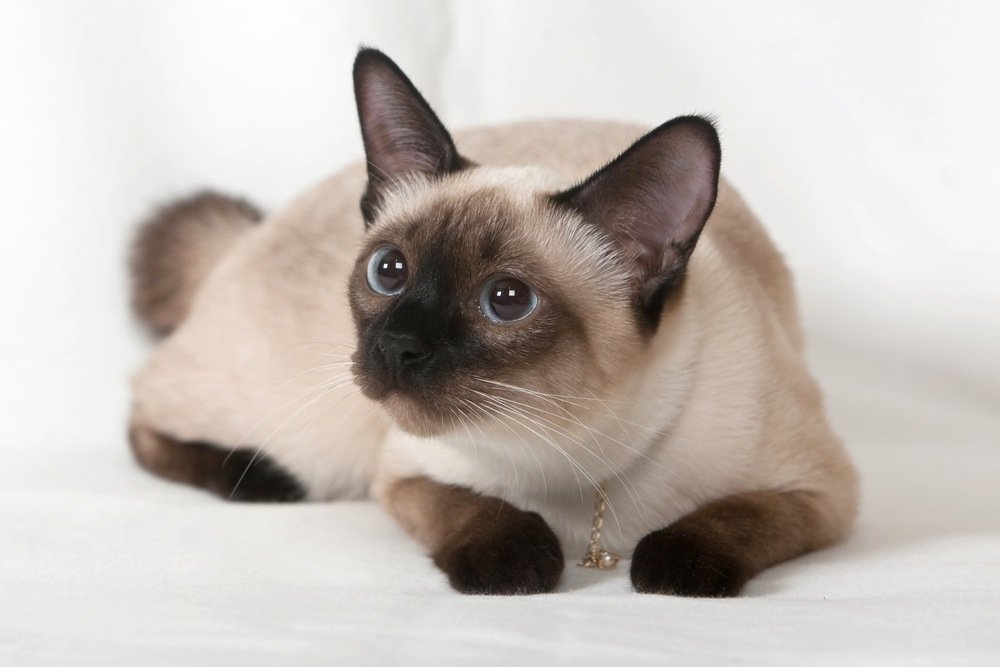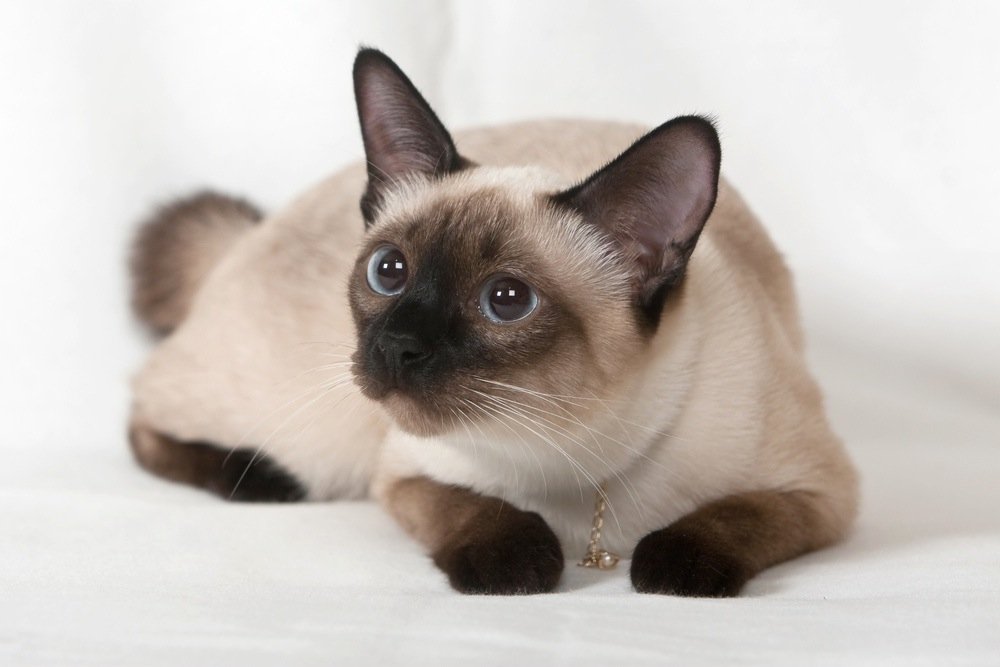
| Weight | 3–5 kg |
| Lifespan | 12–20 years |
| Шерсть | short, fine, close-lying |
| Група | CFA · TICA · WCF · FIFe |
| Origin | Thailand |
Exact ratings
- Liver amyloidosis (hereditary, typical of the breed)
- Progressive retinal atrophy (PRA)
- Hypertrophic cardiomyopathy (HCM)
- Respiratory problems (asthma/bronchitis)
- Dental disease; squint and tail kink (cosmetic)
Quality food for active cats, with weight control. The short coat only needs occasional brushing; the key is plenty of attention, play and company, as it is an extremely people-dependent breed that cannot bear solitude.
The Siamese cat is not just a pet; it’s a personality with centuries of history, a refined appearance, and remarkable intelligence. Originating from ancient Siam (modern-day Thailand), this breed has captured the hearts of cat lovers worldwide with its elegance, grace, and exceptionally sociable, albeit demanding, nature; read more about this on Tvaryny. Siamese cats adore being the centre of attention, actively communicate with their owners using a distinctive voice, and do not tolerate loneliness well. They are known for their strong attachment to one person, a jealous guarding of ‘their’ owner’s attention, and a sharp intellect that can sometimes lead to unexpected mischief. Keeping a Siamese cat requires an understanding of its unique needs, a willingness to dedicate plenty of time to it, and the creation of a loving and respectful atmosphere.
Siamese Cat: A Brief Breed Overview
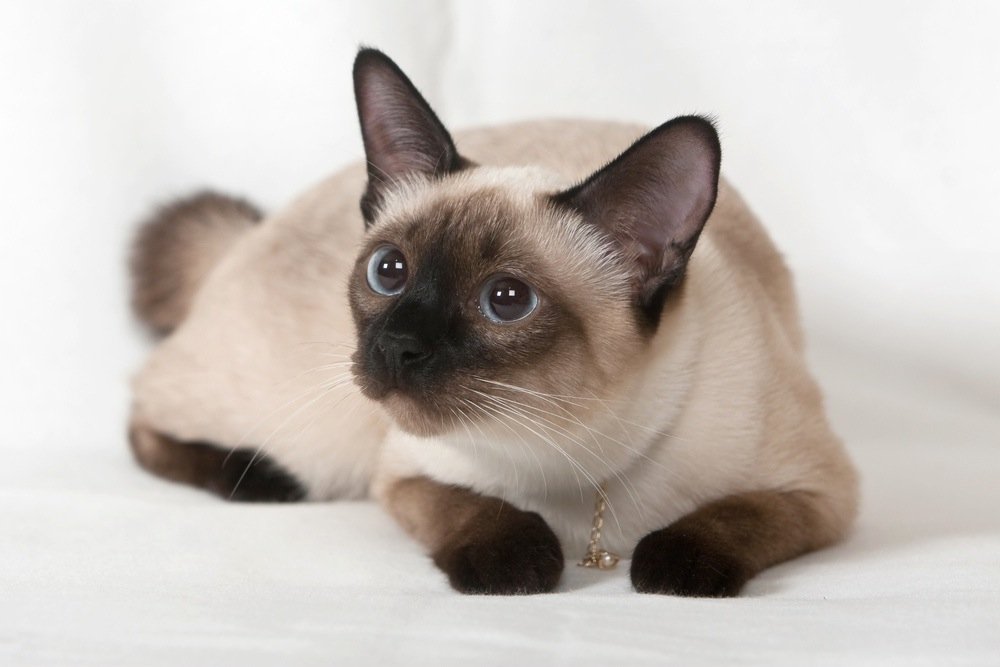
| Characteristic | Details |
| Origin | Thailand (formerly Siam) |
| Breed emergence | Ancient breed, first mentioned in the 14th century |
| Recognition by standards | CFA, TICA, FIFe, WCF, and others |
| Lifespan | 15-20 years, sometimes longer |
| Size | Medium |
| Weight | Males: 4-6 kg, Females: 3-5 kg |
| Height at withers | Around 25-30 cm |
| Coat type | Short, fine, close-lying, no undercoat |
| Colouration | Colourpoint (light body with dark markings on the face, ears, paws, and tail). Recognised colours: seal point, blue point, chocolate point, lilac point, and other variations. |
| Eyes | Almond-shaped, vivid blue, deep and intense in colour |
| Temperament | Active, intelligent, inquisitive, social, ‘chatty’, devoted, demanding, sometimes jealous |
| Care needs | Low (coat), high (attention and interaction) |
| Shedding | Moderate |
| Activity level | High |
| Compatibility with children | Good, provided children treat them gently |
| Compatibility with other animals | Can be challenging, especially with other cats; best introduced from a young age |
History of the Siamese Breed
The history of Siamese cats stretches back through the ages, shrouded in legends and the royal splendour of Ancient Siam. The first written mentions and depictions of cats with the characteristic colourpoint markings appear in the Thai manuscript ‘Tamra Maew’ (‘The Cat-Book Poems’), dating from the Ayutthaya Period (1351-1767). These cats were considered sacred animals, residing in Buddhist temples and the palaces of the royal family. They were highly valued for their unusual appearance – a light body with dark “points” on the extremities, tail, ears, and face – and, of course, for their deep blue eyes, which legends claimed could see souls.
It was believed that Siamese cats accompanied the souls of deceased members of the royal family to the afterlife. When a noble Siamese passed away, one of their cats would be relocated to a temple, where it lived in luxury for the rest of its days, cared for by monks who believed the deceased’s soul had moved into the cat. Exporting these cats from Siam was strictly forbidden under penalty of death, which only added to their aura of mystery and exclusivity.
The situation changed only in the latter half of the 19th century. In 1871, the first Siamese cats were presented at an exhibition at the Crystal Palace in London, where they caused quite a stir with their exotic appearance, though they received mixed reviews – some described them as “unnatural, nightmare cats.” In 1884, the British Consul in Bangkok, Owen Gould, received a pair of cats – Pho and Mia – as a gift from the Siamese king. Their kittens, born in Great Britain, became the foundation for the Western population of Siamese cats.

Over time, the appearance of Siamese cats in Europe and America underwent changes due to selective breeding. Breeders aimed to emphasise the breed’s elegance, which led to the emergence of the modern type of Siamese cat – with a more elongated, slender body, a wedge-shaped head, large ears, and a thin tail. It’s important to note that the Thai cat, or traditional style Siamese, also exists, which has retained the more rounded body and head shapes characteristic of the first imported animals. Today, both types have their admirers, although the official standard of most feline organisations describes the modern, refined type of Siamese cat.
What a Siamese Cat Looks Like: Standard and Appearance
The modern Siamese cat is the epitome of elegance and grace. Its appearance is harmonious and refined, with long, slender lines.
- Body: Medium-sized, long, tubular, and muscular, yet very lithe and elegant. Shoulders and hips continue the lines of the body. The abdomen is tucked up.
- Head: Shaped like a long, tapering wedge that starts at the nose and extends прямо to the tips of the ears, forming a triangle. The profile is straight or with a slight dip. The skull is flat or slightly convex. The muzzle is fine and delicate. The chin is of medium size, forming a vertical line with the tip of the nose.
- Ears: Very large, wide at the base, and pointed at the tips. They appear as a continuation of the wedge lines of the head.
- Eyes: Almond-shaped, medium-sized, set at an angle in line with the wedge of the head. Eye colour is exclusively vivid blue, deep and intense; the deeper and more vivid, the better. Any other eye colour is a disqualifying fault.
- Legs and Paws: Legs are long, slender, and proportionate to the body. Hind legs are slightly longer than the front. Paws are small and oval.
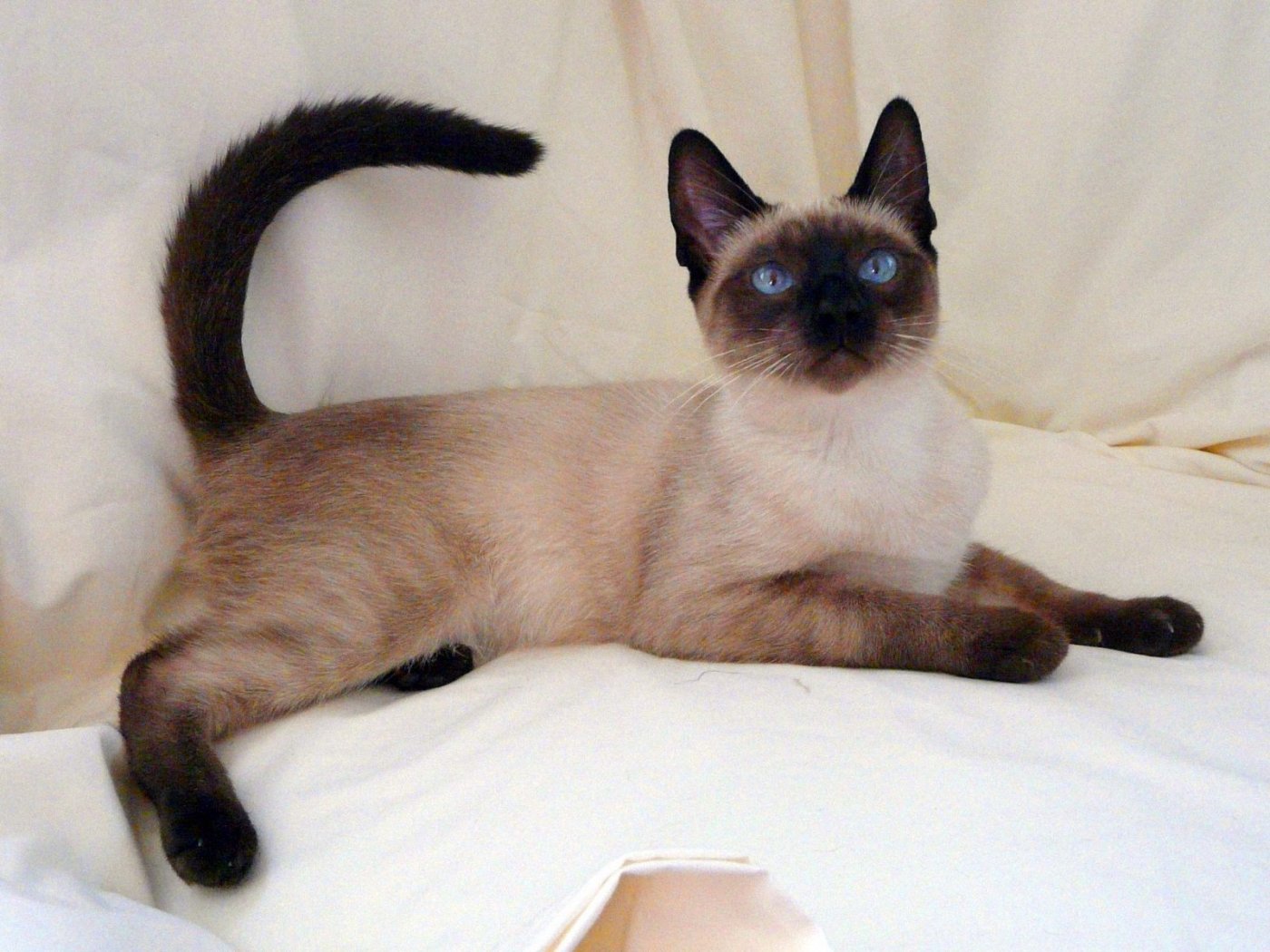
- Tail: Very long, thin at the base, tapering evenly to a pointed tip (whip-like). It should not have any kinks or knots.
- Coat: Very short, fine, glossy, and silky to the touch, lying close to the body. An important feature is the absence of an undercoat, which makes them sensitive to the cold.
- Colouration (Colourpoint): This is a unique breed trait. The main body colour is light (from white to cream or beige), with darker markings (points) located on the cooler parts of the body: face (mask), ears, legs, and tail. The contrast between the body colour and the points should be distinct. Kittens are born completely white, and the points develop gradually over the first few weeks and months of life. Ambient temperature affects the intensity of the colouration: in the cold, the fur darkens. The main recognised point colours are:
- Seal Point: The classic version. Body pale fawn to cream, points deep seal brown.
- Blue Point: Body bluish-white, cool-toned, points slate blue.
- Chocolate Point: Body ivory, points warm milk-chocolate.
- Lilac Point: Body white (magnolia), points frosty grey-pink.
- Other variations: Red point, cream point, tortie point (with a tortoiseshell pattern on the points), and lynx point (with a tabby pattern on the points) also exist, though recognition of these colours may vary between feline organisations.

The Siamese Cat’s Character: Temperament and Behaviour
The character of a Siamese cat is as vibrant and unforgettable as its appearance. This is not a breed that will inconspicuously nap on a windowsill all day. Siamese are extremely social, active, and ‘chatty’ cats that strive to be full members of the family and participate in all affairs.
- Sociability and Need for Attention: Siamese cats are very people-oriented. They become strongly attached to their owners, often choosing one family member as ‘their’ person, to whom they give all their devotion. They do not cope well with loneliness and can suffer from separation anxiety if left alone for long periods. These cats need constant interaction, affection, and play.
- ‘Chattiness’: Siamese are known for their loud and expressive voices. They use a wide range of sounds – from gentle purring to demanding meows resembling a baby’s cry – to communicate with their owners and express their needs and desires. Be prepared for constant ‘conversations’ with your pet.
- Intelligence and Inquisitiveness: These are very clever cats. They learn quickly, easily master tricks, can be taught to walk on a lead, and even open doors or cupboards. Their inquisitiveness knows no bounds, so it’s important to provide them with a safe environment and plenty of mental stimulation (interactive toys, puzzle feeders).
- Activity and Playfulness: Siamese cats remain playful throughout their lives. They need space to run, jump, and play. Provide them with access to cat trees, tunnels, wand toys, and balls. Regular play sessions will help channel their energy constructively.
- Demanding and Wilful Nature: A Siamese always knows what it wants and will persistently try to get it. They can be quite stubborn and demanding. They need an owner who can establish clear boundaries while treating the cat with respect and patience. Siamese cats have long memories for unfair punishment or harshness.
- Jealousy and Relations with Other Animals: Due to their strong attachment to their owner, Siamese cats can be jealous. They don’t always get along well with other cats or dogs, especially if the others arrived in the home later. It’s best to introduce a Siamese to other animals at an early age. They can be dominant and will strive to establish a leading position.
Overall, the Siamese cat is a wonderful companion for people who are prepared to give it a lot of attention, value active communication with their pet, and are looking not just for a beautiful animal, but a true friend with a vibrant personality.
Health of Siamese Cats: Common Diseases and Prevention
Siamese cats are generally considered to be among the longer-lived cat breeds, often reaching 15-20 years or more with proper care. However, like many purebreds, they have a genetic predisposition to certain diseases. It’s important to be aware of these potential problems to detect or prevent themtochy in a timely manner.
| Disease/Problem | Description | Prevention/Action |
|---|---|---|
| Progressive Retinal Atrophy (PRA) | An inherited eye disease leading to gradual vision loss and blindness. | Genetic testing of breeding animals. Regular eye check-ups with a veterinary ophthalmologist. Unfortunately, there is no cure. |
| Asthma and Respiratory Diseases | Siamese can be prone to chronic coughs, asthma, and other respiratory issues. | Avoid allergens (dust, smoke, strong odours), maintain a clean home, control the cat’s weight. Consult a vet if symptoms appear. |
| Hepatic or Renal Amyloidosis | Accumulation of amyloid protein in organs, leading to their failure. Particularly prone to the hepatic form. | Difficult to diagnose and treat. A balanced diet and regular vet check-ups with blood biochemistry are important. |
| Congenital Heart Defects | Such as hypertrophic cardiomyopathy (HCM) or aortic stenosis. | Regular cardiac examinations (echocardiogram), especially before planned surgeries. Genetic testing for HCM (where available). |
| Flat-Chested Kitten Syndrome (FCKS) | A chest deformity that can cause breathing problems. | Usually manifests in the first few weeks of life. Requires special care, sometimes wearing a corset. Responsible breeding. |
| Squint and Tail Kink | Previously considered characteristic breed traits, now viewed as cosmetic defects (sometimes linked to genetic issues). | Do not affect health, but cats with these traits are often not permitted for breeding under many organisation standards. |
| Dental Problems | Prone to gingivitis, periodontitis, and tartar build-up. | Regular home tooth brushing, professional cleaning by a vet, use of special dental care foods or treats. |
| Obsessive-Compulsive Disorders (OCD) | For example, excessive grooming to the point of baldness (psychogenic alopecia) or wool sucking. Often linked to stress or boredom. | Provide a stable, enriched environment, sufficient attention and play activity, reduce stressors. In severe cases, consult a vet or animal behaviourist. |
General prevention includes:
- Regular veterinary check-ups: Annual (or every 6 months for senior cats) examinations, including blood and urine tests, will help detect problems at an early stage.
- Vaccination and deworming: Adherence to vaccination schedules and parasite treatments.
- Balanced nutrition: High-quality food appropriate for the cat’s age and health status.
- Weight control: Excess weight increases the risk of many diseases.
- Psychological comfort: Minimise stress, provide plenty of attention and activity.
Caring for a Siamese Cat: Coat, Hygiene, and Comfort
Caring for a Siamese cat is not overly complicated, especially regarding its coat, but it does require attention to certain aspects of hygiene and ensuring comfortable living conditions.
- Coat Care: The short, silky coat of Siamese cats, which lacks an undercoat, is not prone to matting and requires minimal grooming. Brushing the cat once a week is usually sufficient with a rubber brush or grooming glove to remove dead hairs and stimulate circulation. During moulting periods (usually spring and autumn), this can be done a little more often. Siamese cats only need bathing when necessary, for example, before a show or if heavily soiled, as they are excellent self-groomers.
- Dental Care: Siamese are prone to dental problems, so regular tooth brushing is very important. Ideally, brush their teeth several times a week with a special cat toothpaste and brush. It’s best to accustom them to this procedure from kittenhood. Dry foods and treats that promote dental cleaning, as well as regular vet check-ups, are also beneficial.
- Ear Care: Regularly (once every week or two) inspect the ears for dirt, excess wax, or signs of inflammation (redness, unpleasant odour). Clean the ears only as needed, using a special ear cleaning solution for cats and cotton pads or gauze swabs. Do not use cotton buds, as they can damage the eardrum.
- Eye Care: The almond-shaped eyes of Siamese cats usually do not require special care. Minor clear or brownish discharge in the corners of the eyes is normal and can be gently wiped away with a damp, lint-free cloth or a cotton pad soaked in warm boiled water or a special eye lotion. If discharge is heavy, purulent, or the eyes are red, consult a vet immediately.
- Claw Trimming: Trim the tips of the claws every 2-3 weeks using special cat nail clippers. This will help prevent ingrown claws and protect your furniture.
- Litter Tray: The litter tray must always be clean. Siamese cats are very fastidious and may refuse to use a dirty tray. It’s important to choose a litter that your cat likes.
- Comfort and Safety: As Siamese cats lack an undercoat, they are sensitive to cold and draughts. Ensure your pet has a warm place to sleep, away from windows and doors during cold weather. Also, ensure their safety: Siamese are inquisitive and active, so windows should be fitted with cat-proof screens, and dangerous items and substances should be securely stored away.
Training and Socialisation of a Siamese Cat
High intelligence and a desire to interact with humans make Siamese cats very receptive to training. However, their independent and sometimes stubborn nature requires a special approach.
- Positive Reinforcement: The most effective method for training a Siamese is positive reinforcement. Use treats, praise, and affection to encourage desired behaviour. Never shout at the cat or use physical punishment – this will only frighten the animal, destroy trust, and can provoke aggression or unwanted behaviour. Siamese are very sensitive to their owner’s mood and respond well to a gentle tone.
- Short and Engaging Sessions: Training sessions should be short (5-10 minutes) and perceived by the cat as a game. Repeat commands regularly, but don’t bore the cat. Use toys to make the learning process more exciting.
- What Can Be Taught: Siamese can be taught basic commands (“come,” “sit”), to fetch toys, walk on a lead, and use a litter tray and scratching post. Their intelligence allows them to master more complex tricks as well.
- Socialisation: Early socialisation is very important for Siamese cats, especially if you plan to keep other animals or have children in the home. Introduce the kitten to different people, sounds, and situations in a positive manner. This will help raise a confident and well-balanced cat. Accustom them to being handled, and to ear, teeth, and claw inspections from a young age.
- Addressing Behavioural Problems: If problems arise (e.g., scratching furniture, marking), look for the cause of such behaviour (boredom, stress, medical issues) and try to eliminate it. Offer alternatives (scratching posts, more games), enrich the environment, and seek advice from a vet or animal behaviourist.
Remember that patience, consistency, and respect for your Siamese cat’s individuality are key to successful upbringing and a harmonious relationship.
Feeding a Siamese Cat: Key Recommendations
Proper nutrition is fundamental to the health and longevity of your Siamese pet. Siamese are active cats with a fast metabolism, but they also have a predisposition to certain diseases (e.g., liver issues), which requires a careful approach to diet selection.
- High-Quality Protein: The cornerstone of a Siamese cat’s diet should be high-quality animal protein (meat, poultry, fish). It is essential for maintaining muscle mass and energy. Choose foods where meat ingredients are listed first in the composition.
- Type of Food: You can choose to feed commercial cat foods (dry and wet) or a natural diet.
- Commercial Foods: This is a convenient and balanced option. Choose premium, super-premium, or holistic foods. They contain all the necessary nutrients, vitamins, and minerals in the correct proportions. There are food lines developed specifically for Siamese cats or for active cats. Combining dry and wet food helps maintain water balance and is a preventative measure against urinary tract diseases.
- Natural Diet: If you choose this path, the diet must be carefully balanced by a veterinary nutritionist. It should include lean meat (beef, chicken, turkey), offal (heart, liver – in limited quantities), cultured dairy products (low-fat cottage cheese, kefir – if the cat tolerates them well), vegetables (carrots, courgettes, pumpkin – cooked or raw, grated), and a small amount of grains (rice, buckwheat). Feeding food from the owner’s table is strictly forbidden (salty, smoked, fried, sweet items, bones). With a natural diet, additional vitamin and mineral supplements are necessary.
- Feeding Frequency: Adult cats are usually fed twice a day. Kittens are fed more often – 3-5 times a day, depending on age. It is important to adhere to the recommended feeding amounts indicated on the food packaging or calculated by a vet to avoid overfeeding and obesity.
- Water: The cat must always have access to fresh, clean drinking water. This is especially important when feeding dry food. Many cats prefer running water, so a special drinking fountain can be purchased.
- Special Needs: Consider your cat’s age, activity level, and health status (neutering, chronic diseases) when choosing a diet. Specialised therapeutic diets are prescribed by a vet for certain conditions (e.g., kidney or liver problems, allergies).
- Foods to Avoid: Whole milk (many adult cats are lactose intolerant), raw fish (especially river fish), pork, tubular bones, chocolate, onions, garlic, grapes, and raisins – these products can be harmful or even toxic to cats.
Pros and Cons of the Siamese Breed
Before getting a Siamese cat, it’s important to weigh all the pros and cons to understand if this breed is right for you.
| Pros (+) | Cons (-) |
|---|---|
| High intelligence: Easy to train, clever, capable of problem-solving. | High need for attention: Do not tolerate loneliness well, can suffer from separation anxiety. Not suitable for people who spend a lot of time away from home. |
| Extraordinary devotion: Become strongly attached to their owner, becoming true companions. | ‘Chattiness’: Very vocal, often ‘communicating’ loudly and persistently with their owners. This can be irritating for some people. |
| Activity and playfulness: Always ready for games, bringing life and energy into the home. Remain playful into old age. | Demanding and stubborn: Know exactly what they want and can be very persistent. Require patience and consistent training. |
| Elegant and exotic appearance: Have a unique, aristocratic look that many find appealing. | Jealous nature: They may not get along well with other pets and can be possessive of their owner. This sets them apart from some other breeds, such as the often more placid Birman cat or the sometimes more independent Russian Blue, although every cat is an individual. |
| Easy coat care: Short coat without an undercoat does not require frequent brushing and is not prone to matting. | Prone to certain diseases: Have a genetic predisposition to some illnesses (PRA, amyloidosis, asthma, dental problems). |
| Sociability: Love to be at the centre of events, actively participating in family life. | Sensitivity to cold: Due to the lack of an undercoat, they need warmth and are afraid of draughts. |
| Longevity: With proper care, they often live 15-20 years or more. | Potential behavioural problems: Susceptibility to stress can lead to obsessive-compulsive disorders (excessive grooming, fabric sucking). |
Interesting Facts About Siamese Cats
- Royal Ancestry: Siamese cats were favourites of the Thai royal family and were considered so valuable that their theft was punishable by death.
- Temperature-Sensitive Colouration: The unique colourpoint pattern is due to a temperature-sensitive genetic mutation. The enzyme responsible for producing dark pigment is active only at lower temperatures. Therefore, the warmest parts of the body (the torso) remain light, while cooler areas (extremities, ears, tail, face) darken. Kittens are born white because the temperature in the womb is uniformly high.
- Legend of the Squint and Kinked Tail: An old legend explains the squint and kinked tail often found in early Siamese. According to the tale, Siamese princesses, while bathing, would hang their precious rings on the tails of their guardian cats. To avoid losing the rings, the cats would knot their tails (hence the kink) and watch over the jewellery so intently that their eyes became crossed. In reality, these are genetic traits that modern breeders try to eliminate.
- Siamese in the White House: The first Siamese cat to officially reside in the US White House was a cat named Siam, gifted to President Rutherford B. Hayes by the American Consul in Bangkok in 1878.
- Film Stars: Siamese cats often appear in films and cartoons, typically portrayed as cunning, elegant, but sometimes mischievous characters. The most famous example is the pair Si and Am from Disney’s “Lady and the Tramp” (1955).
- Foundation for other breeds: Siamese cats have been a foundation for developing many other popular breeds, such as the Oriental Shorthair cat (which has the same body type but a fully coloured coat), Balinese (long-haired Siamese), Himalayan (a cross between Siamese and Persian cats), and others.
- Unusual Voice: The voice of a Siamese cat is often compared to a baby’s cry. It is loud, low-pitched, and very expressive.
Frequently Asked Questions About the Breed (FAQ)
Is it true that Siamese cats are aggressive?
This is a common myth. Modern Siamese cats, bred with an emphasis on good temperament, are not inherently aggressive. They can be demanding, jealous, and protective of their territory or owner, but with proper upbringing, socialisation, and fulfilment of their needs for attention and activity, they are loving and devoted companions. Aggression is more often a result of fear, stress, pain, or mishandling by humans.
Are Siamese cats suitable for families with children?
Yes, Siamese cats can get along well with children, especially if they grow up together. It is important to teach children to respect the cat, not to disturb it during sleep or meals, not to pull its tail, and to play gently. Due to their activity and playfulness, Siamese can become excellent companions for older, responsible children. However, their loudness and need for attention might be challenging for families with very young children.
Do Siamese cats shed a lot?
No, shedding in Siamese cats is moderate. As they have a short coat without an undercoat, the amount of hair shed is significantly less than in many other breeds. Regular brushing once a week helps to control this process.
Can a Siamese cat be left alone at home all day?
Siamese cats do not tolerate loneliness well. If you work a full day and no one is at home, a Siamese may become bored, stressed, and develop undesirable behaviours (excessive vocalisation, destructiveness, marking). If you must leave the cat alone, provide it with plenty of toys (including interactive ones), access to a window for observation, and possibly a companion (another cat or a dog with whom it gets along well). Consider getting two Siamese together – they will keep each other entertained.
How much does a Siamese kitten cost?
The price of a Siamese kitten can vary significantly depending on its pedigree, the kitten’s class (pet, breed, show), the reputation of the cattery, and the region. On average, a pet-class kitten (a domestic companion without breeding rights) can cost from several hundred to a thousand dollars (or the equivalent in local currency). Show-class kittens with outstanding breed characteristics cost considerably more. It is important to buy a kitten from a responsible breeder who cares about the health and socialisation of the animals.
Do Siamese cats need special care in winter?
Yes, due to the lack of an undercoat, Siamese are sensitive to cold. In winter, ensure there are no draughts in the house and that the cat has a warm place to sleep (a bed with a blanket, a cat house). Do not allow the cat to spend long periods on a cold balcony or windowsill. If the flat is cool, special cat clothing can be used, though many Siamese dislike it.
What is the difference between a Siamese and a Thai cat?
Although both breeds originate from Thailand and have colourpoint coats and blue eyes, they differ in body and head type. The modern Siamese cat has a very slender, long, elegant body, a wedge-shaped head with large ears, and a long, thin tail. The Thai cat (or traditional/old-style Siamese) has a more robust, rounded body, an “apple-shaped” or modified wedge head with smaller ears, and a medium-length tail. The Thai cat is considered closer to the original cats imported from Siam.
- Very clever and easy to train
- “Dog-like” devoted, follows its owner
- The short coat needs almost no care
- Active, playful, ideal for a flat
- Very talkative and loud
- Cannot bear solitude at all
- Needs plenty of attention, play and company
- A tendency to hereditary diseases (amyloidosis, PRA)
| Oriental Shorthair | Balinese Cat | Thai Cat | |
|---|---|---|---|
| Height | 3–5 kg | 2.5–5 kg | 3–6 kg |
| Energy | 4.5 | 4.5 | 4 |
| Apartment | 5 | 5 | 5 |
| Beginners | 3 | 3.5 | 3.5 |
Why does the Siamese “talk” so much?
Can the Siamese be left alone?
Is the Siamese clever?
CFA / TICA / WCF / FIFe standards (Siamese)