United Kingdom (development) / USA (development as a separate breed)
Havana Brown
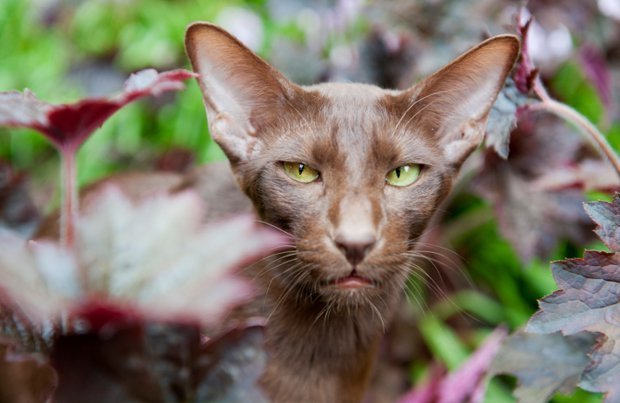
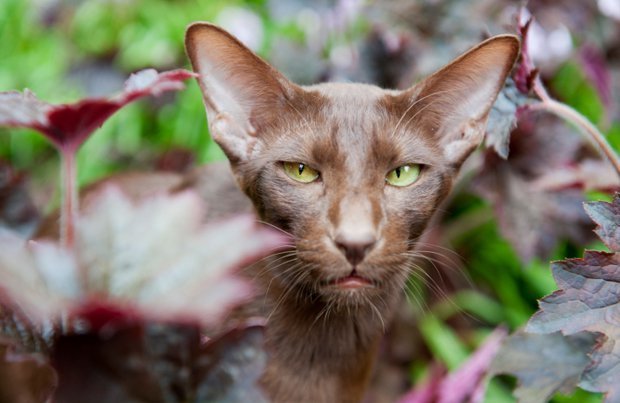
A warm-chocolate elegant with green eyes and a tender soul — clever and people-loving: sociable, “dog-like”, playful and attached. The Havana (Havana Brown) is a rare breed with a unique glossy mahogany-coloured coat and expressive green eyes; extremely people-oriented, it “touches” everything and its owner with a paw, adores company and needs attention.
KidsDogsOther catsBeginnersTime alone · with caveats
The Havana Brown, often simply called the Havana, is a rare and exquisite breed of cat, renowned for its glossy, rich chocolate-brown coat reminiscent of Havana cigars, and its vivid green eyes. But it's not just about stunning looks; the Havana is an exceptionally intelligent, affectionate, and people-orientated companion. You can read more about this fascinating breed on Tvaryny. These cats are known for their playful nature and unique way of using their front paws to explore the world and communicate with their owners. Although the Havana can adapt to various living conditions, it desperately needs attention and interaction, finding solitude hard to bear. Provide it with love, care, and opportunities for activity, and this "chocolate beauty" will become a devoted member of your family.
Havana: A Brief Breed Overview
Havana: A Brief Breed Overview · 11
Characteristic
Description
Origin
United Kingdom (development) / USA (development as a separate breed)
Time of origin / recognition
1950s (development in the UK); 1958 – GCCF recognition as Chestnut Brown Foreign; 1964 – CFA recognition as Havana Brown
A Name Enigma: The exact origin of the name "Havana" is still debated – whether it's in honour of the colour of Havana cigars or Havana rabbits.
"Chocolate Delicacy": The Havana Brown is one of the few breeds where the standard (in the USA) recognises only one primary colour – rich chocolate brown.
The Paw-Tapping Cat: A unique trait of Havanas is their active use of their front paws to investigate objects and communicate with people. They literally "feel out" the world around them.
Two "Havanas": It's important to remember the difference between the Havana Brown (a distinct breed in the USA with a moderate type) and the Havana (a chocolate/lilac Oriental Shorthair colour in Europe with an Oriental type).
Green Eyes Mandatory: Vivid green eyes are an integral part of the breed standard and create a stunning contrast with the warm brown coat.
A Rare Gem: The Havana Brown remains a fairly rare breed, especially outside North America.
History of the Havana Breed's Origin
The history of the Havana Brown is a tale of dedicated efforts by British breeders to recreate the legendary "self-brown" (solid brown) cats. These cats were mentioned as far back as the late 19th century but disappeared from show circles in the early 20th century due to changes in Siamese breed standards.
In the 1950s, a group of British enthusiasts (notably Baroness Miranda von Ullmann of Roofspringer Cattery, Mrs Ann Hargreaves of Laurentide Cattery, and others) decided to re-establish this solid chocolate colour in cats of an Oriental type. They initiated a breeding programme, using:
Siamese cats: As carriers of the chocolate gene (b) and for the desired Oriental type.
Black domestic shorthair cats: To achieve a solid (non-pointed) coat.
Russian Blue cats (likely): To improve type and possibly influence eye colour.
The first registered kitten meeting the objective was born in 1952 at Roofspringer Cattery and was named Elmtower Bronze Idol. It became the foundation for the new breed.
A dispute arose regarding the breed's name. Some proposed "Chestnut Brown Foreign," whilst others favoured "Havana." The name "Havana" likely derives from the rich brown colour of the tobacco in famous Havana cigars, although there's a theory about a resemblance to the Havana rabbit of a similar colour. In 1958, the Governing Council of the Cat Fancy (GCCF) in the United Kingdom recognised the breed as Chestnut Brown Foreign, but in 1970, the name was changed to Havana.
Development in the USA and Standard Discrepancies
In the mid-1950s, the first Havanas were imported to the USA. American breeders were captivated by the breed, but their developmental path diverged somewhat from the British one. This led to the formation of two different standards and, essentially, two different interpretations of the breed:
United Kingdom and FIFe (Europe): The Havana is not considered a separate breed but rather one of the colour variations of the Oriental Shorthair cat (solid chocolate or lilac). These cats retain the slender, graceful build typical of Orientals and Siamese ("Oriental" type).
USA (CFA, TICA): The Havana Brown is recognised as a separate, independent breed with its own unique standard. American breeders focused on preserving and emphasising specific traits, particularly the characteristic head and muzzle shape, as well as the rich, warm brown colour. The standard describes a more moderate, muscular body type (semi-foreign) than that of Orientals. To maintain genetic diversity, limited outcrossing with black or blue domestic shorthairs or certain Orientals/Siamese was permitted, but with an emphasis on returning to the Havana Brown type.
The Cat Fanciers' Association (CFA) recognised the Havana Brown breed in 1964. It's important to understand that when referring to the Havana Brown as a distinct breed, the American standard is usually implied.
What the Havana Looks Like: Appearance Description (US Standard)
The American Havana Brown is a medium-sized cat that impresses with its elegance, muscularity, and, of course, its unique chocolate colouring and expressive green eyes.
Head: Slightly longer than it is wide, tapering to a rounded chin. The most distinctive feature is the muzzle. It is quite long, with well-developed whisker pads and a clear "pinch" or narrowing behind them, giving it an appearance likened to a "corn cob muzzle" or a light bulb fitted onto the muzzle. The profile has a noticeable stop (the transition from forehead to nose).
Ears: Large, wide-set, with rounded tips, tilted slightly forward, creating an alert expression. Covered in short fur.
Eyes: Oval-shaped, medium-sized, set quite wide apart. The colour is a bright, vivid green. The richer the shade, the better.
Body: Medium length, firm and muscular, yet elegant (semi-foreign type). Not as tubular and elongated as Siamese or Orientals, but not cobby either. The chest is well-developed.
Paws: Fairly long and slender, proportionate to the body. Hind legs are slightly longer than front legs. Paw pads are oval and compact. The colour of the paw pads is pinkish-tan.
Tail: Medium length, slender, not thick at the base, tapering slightly to the end. Should not be whip-like.
Coat: Short to medium length, smooth, glossy, lying close to the body.
Colour: A rich, warm brown, reminiscent of milk chocolate or mahogany brown. The colour should be even throughout the body. Kittens may have faint tabby markings ("ghost tabby"), which should disappear with age. Whiskers must also be brown. The nose leather is brown with a rosy flush.
Important: The CFA standard for the Havana Brown only recognises the brown colour. The lilac variant (a frosty grey with a pinkish hue), although genetically occurring, is registered separately or not permitted for championship status under the Havana Brown name.
Slightly longer than wide; characteristic 'corn-cob muzzle'
Long wedge, straight profile
Eyes
Oval, vivid green
Almond-shaped, green
Permitted Colours
Only rich brown (lilac – experimental)
Chocolate and lilac (as part of the Oriental palette)
Havana Character: Temperament and Behaviour
The Havana Brown is a cat brimming with personality. They are known for their extraordinary intelligence, deep affection for people, and playful, inquisitive nature.
People-orientated: These are true "companion cats." They adore being near their owners, following them around the house, and getting involved in all activities. They are often called "Velcro cats" due to their desire for constant contact.
Affectionate and gentle: Havanas love cuddles, hugs, and sitting on laps. They are generous with their purrs and gentle nuzzles.
Intelligent and inquisitive: These are very clever cats that learn quickly. Their curiosity knows no bounds. They are particularly known for their habit of investigating objects with their front paws – they might gently touch new items, reach out a paw to their owner's face to get attention, or even try to "hold" things.
Playfulness: Havanas remain playful throughout their lives. They enjoy interactive games with their owners, chasing toys, and climbing cat trees.
Need for attention: Due to their strong attachment, Havanas find it hard to cope with loneliness. Prolonged absence of their owners can lead to stress, depression, and even health problems. This breed is best suited for people who spend a lot of time at home or are prepared to get a second cat for company.
Vocalisation: Unlike their noisy Siamese ancestors, Havanas have a rather soft, quiet voice. They communicate when necessary, making gentle sounds.
Adaptability and friendliness: They adapt well to living in a flat, provided they receive enough attention and opportunities for play. They usually get along well with children and other pets if properly socialised.
The Havana Brown is an ideal choice for those seeking not just a beautiful cat, but a true friend and family member, ready to give and receive love in abundance.
Training and Socialisation of the Havana
High intelligence and a desire to interact make the Havana Brown an able pupil.
Training and games: They quickly learn commands and tricks, especially if positive reinforcement methods (praise, play, treats) are used. They enjoy interactive toys, puzzle feeders for cats, games of hide-and-seek, or fetch. Lead training is also possible for those who want to safely walk their cat.
Vocal communication: Although Havanas respond to their owner's voice, it's important to remember that, like all cats, they react more to tone of voice and familiar sounds than to the words themselves. Consistency and patience are key.
Socialisation: Early socialisation is important for developing their friendly nature. Introduce kittens to different people, sounds, and other animals (under supervision).
Stimulation: To satisfy their curiosity and intelligence, provide the Havana with a sufficiently stimulating environment with toys, cat trees, and regular interaction.
Training is not just a way to teach a cat rules or tricks, but also a wonderful opportunity to strengthen the bond with your pet.
Pros and Cons of the Havana Breed
Pros and Cons of the Havana Breed · 7
Pros
Cons
Exceptionally affectionate and loyal character.
Very demanding of attention, copes poorly with loneliness.
High intelligence, learns easily.
May suffer from separation anxiety.
Playful and active companion.
Relatively small gene pool (in the USA) — responsible breeding needed.
Unique, elegant appearance: chocolate coat, green eyes, distinctive muzzle.
Sensitivity to cold.
Minimal coat care.
Rare breed — kittens can be hard to find and expensive.
Gets along well with children and other animals.
Prone to developing calcium oxalate stones.
Relatively quiet voice.
Requires regular dental care.
Caring for the Havana's Coat and Other Grooming Aspects
Grooming a Havana Brown doesn't require excessive effort, as their short, smooth coat is quite easy to maintain.
Coat care:Weekly brushing with a soft brush or rubber grooming mitt is sufficient to remove dead hairs and distribute natural skin oils. This helps keep the coat healthy and shiny. After brushing, you can wipe the coat with a piece of chamois leather or silk to enhance its natural lustre – this really works for their texture.
Bathing: Rarely needed, only if heavily soiled.
Dental care: Regular care is very important. Brushing their teeth with a special toothpaste and brush several times a week will help prevent the build-up of plaque and tartar, as well as the development of gingivitis. If the cat eats mostly wet food, dental cleaning becomes even more crucial.
Nail trimming: Trim their claws every 2–3 weeks.
Ear and eye care: Regularly check their ears for dirt or signs of infection. Eyes are usually clean; it's enough to remove natural secretions as needed.
Warmth: Provide the cat with a warm and cosy place to sleep, away from draughts.
Nutrition
Feeding Your Havana: Key Recommendations
Health and risks
Havana Health: Common Diseases and Prevention
Frequently Asked Questions About the Breed (FAQ) · 5
Is the Havana Brown hypoallergenic? No. No cat breed is 100% hypoallergenic. Although the Havana has a short coat, allergies are caused by a protein in saliva and dander, not the fur itself.
How does the Havana Brown differ from the Oriental Shorthair and the York Chocolate cat?
From the Oriental Shorthair: The American Havana Brown has a more moderate body type (semi-foreign versus foreign/oriental), a unique muzzle shape ("corn cob muzzle"), and is recognised only in brown (sometimes lilac) colouring, whereas Oriental Shorthairs have a wedge-shaped head and a vast palette of colours (including chocolate and lilac, which in Europe are called Havana).
From the York Chocolate cat: The York Chocolate cat is a separate, newer breed developed in the USA. They also have chocolate or lilac colouring but typically have longer fur (semi-longhair) and a different body and head type compared to the Havana Brown.
Is the Havana Brown suitable for flat living? Yes, the Havana adapts well to living in a flat, provided it is given enough attention, toys, climbing spaces, and regular interaction with its owner. The main thing is not to leave it alone for long periods.
How vocal are Havana Browns? They enjoy communicating, but their voice is usually quiet and soft, not as loud and piercing as that of Siamese cats.
Is it true that Havanas use their paws more than other cats? Yes, this is one of the breed's characteristic traits. They actively use their front paws to explore objects, play, and even to get their owner's attention by tapping them with a paw.
FAQ
Why does the Havana have such an unusual coat?
It is the breed's signature — an evenly warm-brown (“mahogany”) glossy coat, one of the few all-chocolate coats among cats; combined with the large green eyes, it makes the Havana instantly recognisable.
What is the Havana Brown's character?
An extremely people-oriented, “dog-like” cat: it follows its owner, “touches” objects and people with a paw, loves to be the centre of attention and copes poorly with long solitude.
Is the Havana easy to care for?
Yes — the short glossy coat only needs occasional wiping; the key is to give it attention, play and company, and to watch its water intake (stone prevention).