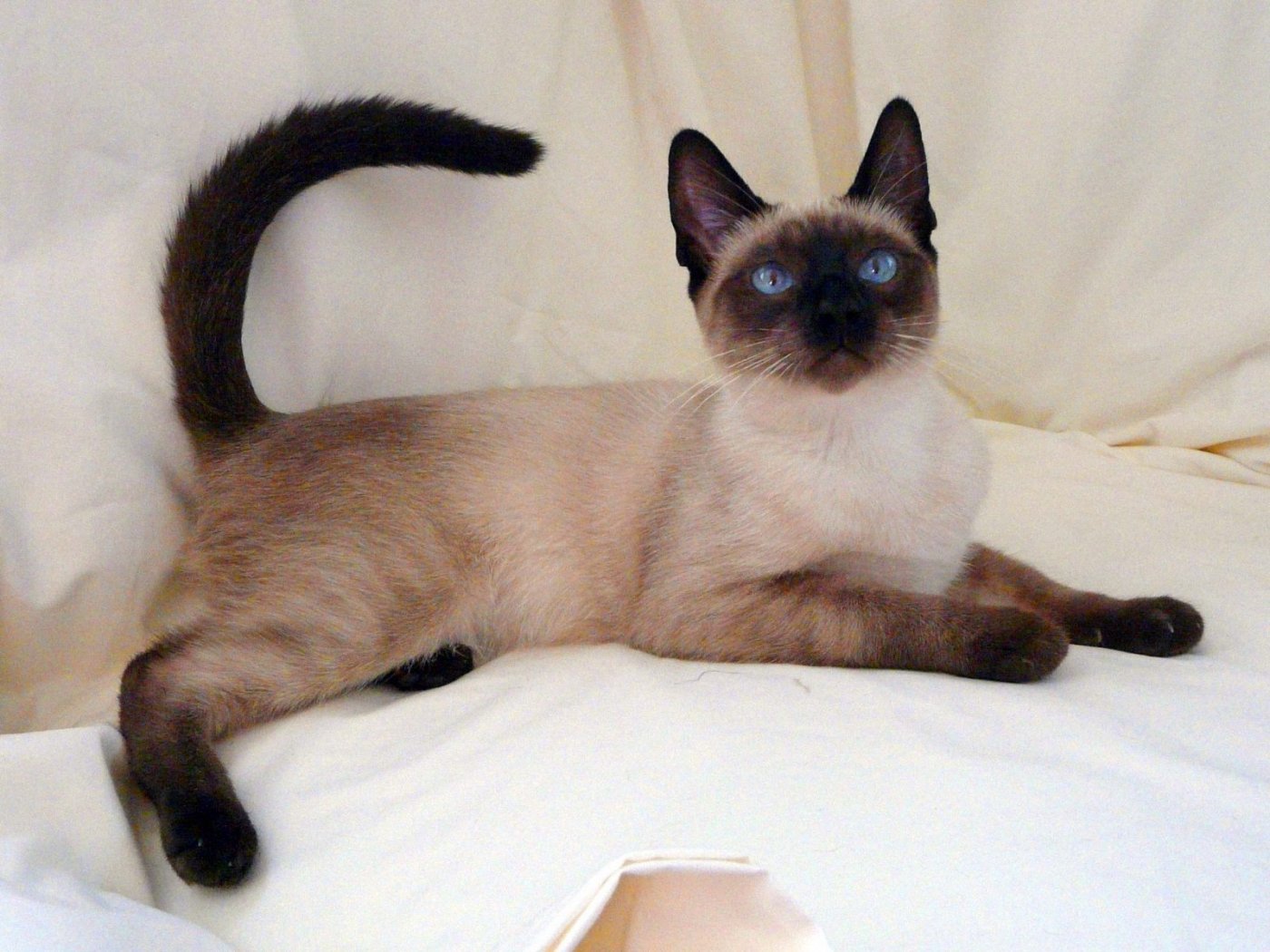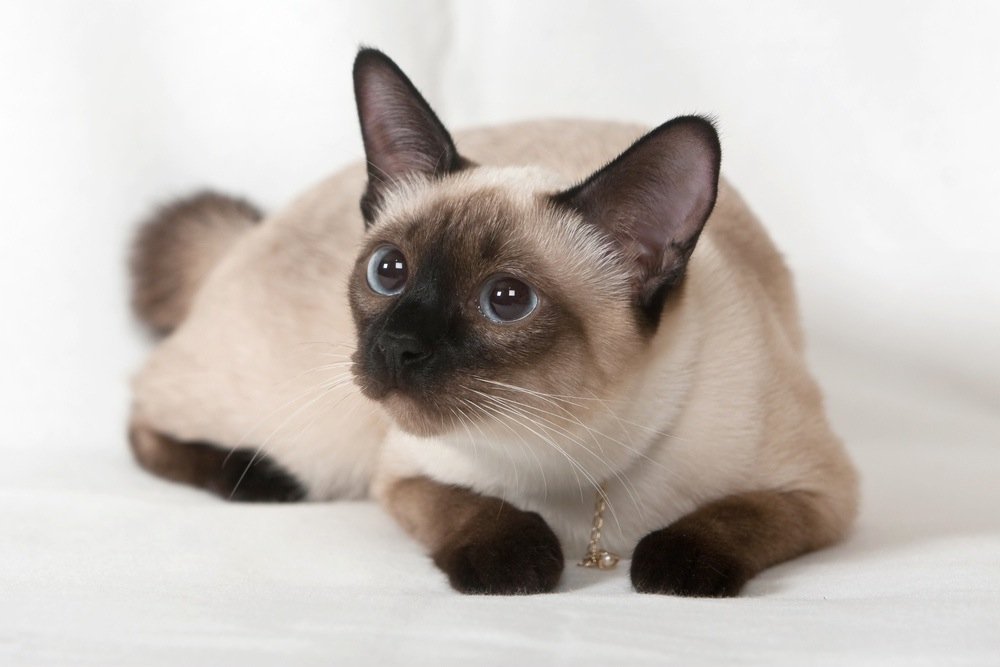
More than just a pet, the Siamese cat is a true personality with a rich, ancient history, a sophisticated look, and a sharp mind. Originating in the kingdom of Siam (modern-day Thailand), this breed has captured the hearts of cat lovers worldwide with its elegance, grace, and an incredibly social—if a bit demanding—nature. Siamese cats thrive on being the center of attention, actively communicating with their humans using their distinctive voice, and they don't handle loneliness well. They're known for their strong bond to a single person, a sometimes-jealous streak over their chosen human's affection, and a cleverness that can lead to some unexpected antics. Bringing a Siamese cat into your life means understanding their unique needs, being ready to dedicate plenty of time, and creating an environment of love and respect. Learn more about them on Tvaryny!
Siamese Cat: A Quick Breed Overview
Siamese Cat: A Quick Breed Overview · 16
| Characteristic | Value |
|---|---|
| Origin | Thailand (formerly Siam) |
| Breed's Genesis | Ancient breed, first mentioned in the 14th century |
| Standard Recognition | CFA, TICA, FIFe, WCF, and others |
| Lifespan | 15–20 years, sometimes longer |
| Size | Medium |
| Weight | Males: 9–13 lbs, Females: 7–11 lbs |
| Height at Shoulder | Around 10–12 inches |
| Coat Type | Short, fine, close-lying, no undercoat |
| Coloring | Colorpoint (light body with dark markings on the face, ears, paws, and tail). Recognized colors: seal point, blue point, chocolate point, lilac point, and other variations. |
| Eyes | Almond-shaped, bright, deep blue |
| Temperament | Active, intelligent, curious, social, "talkative," loyal, demanding, sometimes jealous |
| Grooming Needs | Low (coat), High (attention and companionship) |
| Shedding | Moderate |
| Activity Level | High |
| Compatibility with Children | Good, provided children are gentle |
| Compatibility with Other Animals | Can be challenging, especially with other cats; best introduced young |
Fun Facts About Siamese Cats
- Royal Origins: Siamese cats were favorites of the royal family of Thailand and were considered so valuable that stealing one was punishable by death.
- "Temperature-Sensitive" Coloring: The unique colorpoint coloring is caused by a temperature-related genetic mutation. The enzyme responsible for producing dark pigment is only active at lower temperatures. This is why the warmest parts of the body (the torso) remain light, while the cooler parts (extremities, ears, tail, face) darken. Kittens are born white because the temperature in the womb is uniformly high.
- Legend of the Crossed Eyes and Tail Kinks: An old legend explains the crossed eyes and kinked tails that were once common in Siamese cats. According to the story, Siamese princesses would hang their precious rings on the tails of their guard cats while bathing. To make sure they didn't lose the rings, the cats would tie their tails in a knot (hence the kink) and stare so intently at the jewelry that their eyes became permanently crossed. In reality, these are genetic traits that modern breeders are working to eliminate.
- Siamese in the White House: The first Siamese cat to officially live in the White House was a cat named Siam, given to President Rutherford B. Hayes by the American consul in Bangkok in 1878.
- Movie Stars: Siamese cats often appear in movies and cartoons, typically portrayed as clever, elegant, but sometimes mischievous characters. The most famous example is the pair Si and Am from the 1955 Disney movie "Lady and the Tramp".
- Basis for Other Breeds: Siamese cats were the foundation for many other popular breeds, such as the Oriental Shorthair (which has the same body type but a solid-colored coat), the Balinese (a long-haired Siamese), and the Himalayan (a cross between a Siamese and a Persian cat). For a closer look at these point-colored breeds, you can also explore the Birman and the Russian Blue.
- Unusual Voice: The Siamese cat's voice is often compared to a baby's cry. It is loud, low-pitched, and very expressive.