

| Weight | 3–5 kg |
| Lifespan | 12–15 years |
| Coat | short or semi-long, point with white |
| Recognition | rare (GCCF · regional clubs) |
| Origin | Great Britain |
Exact ratings
Common health issues
Nutrition
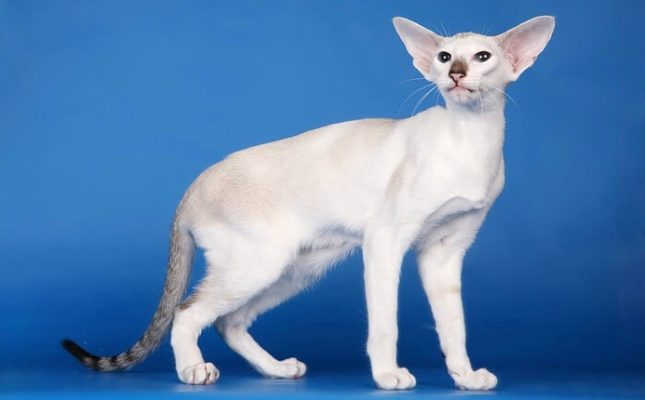
The Seychellois cat is an elegant, graceful, and incredibly social feline from the Siamese-Oriental group. This relatively rare breed, developed in the UK, captivates with its striking coloration—a white body with colored markings on the head and tail—and a lively, energetic personality. Seychellois cats aren’t content to snooze on the sofa all day; they demand attention, interaction, and active playtime. This is a pet that wants to be a full-fledged family member and the center of attention. They’re highly intelligent, endlessly curious, and maintain an almost “kitten-like” playfulness throughout their lives. Despite their exotic looks and active nature, Seychellois cats are generally robust and healthy with proper care, especially the shorthair variety. However, their defining trait is a massive need for companionship, making them a poor fit for people who are frequently away from home and can’t dedicate enough time to their pet. You can learn more about this and other incredible breeds like the Maine Coon and the Balinese cat on Tvaryny.
Seychellois Cat: A Quick Breed Overview

| Name (FIFe Code) | Pattern Description | Permissible Markings (besides head & tail) |
|---|---|---|
| Septième (Seventh) – Code 01 | “Van” pattern. Maximum amount of white. Color only on the head (ears + mask) and tail. | 1-2 small spots on the body are allowed. |
| Huitième (Eighth) – Code 02 | Color on the head, tail, and feet. | Distinctly separated spots on the legs (not extending above the knee/elbow) and/or small spots on the body are allowed. |
| Neuvième (Ninth) – Code 03 | Color on the head, tail, and larger spots on the legs and body. Least amount of white among Seychellois variations. | Larger, well-defined spots on the body and legs are allowed. |
History of the Seychellois Cat Breed
The history of the Seychellois cat breed is quite unusual and romantic, though it’s not directly tied to importing cats from the Seychelles Islands themselves. The breed was created in the United Kingdom in the 1980s through the passion and vision of breeder Pat Turner. She was inspired by an article about cats living on the Seychelles Islands in the Indian Ocean. The article described local cats with a distinctive coat pattern: predominantly white with colored patches on the head, tail, and sometimes legs—the classic Van or Seychellois pattern.
Captivated by this description, Pat Turner decided to recreate this type of cat, but using the elegant build and temperament of the Siamese-Oriental group. Her goal was to produce a cat that combined the sophistication and grace of Siamese cats and their close relatives, the Oriental Shorthairs, with a unique bicolor pointed coat.
To achieve her breeding program’s goals, Pat Turner crossed Siamese cats with bicolor Persian cats and also used Oriental cats to reinforce the desired body and head type. The main work involved introducing the white spotting gene (S) into the Siamese-Oriental gene pool and creating animals with the characteristic distribution of colored patches on a white background.
The result was a cat with a typical Siamese or Oriental build—a long, slender body, a wedge-shaped head, large ears, and blue eyes—but with a white coat and colored markings on the “extremities” (head, tail, and sometimes legs). The breed was named “Seychellois” in honor of the inspiration for its creation.
Initially, Seychellois cats were not recognized as a separate breed by many cat registries. They were often considered simply a color variation of Siamese or Oriental cats (bicolor points). However, thanks to the persistence of breeders, particularly in the UK and Europe, the breed began to gain recognition.
The Fédération Internationale Féline (FIFe) recognized the Seychellois cat in 2005, establishing it as a distinct breed within the Siamese-Oriental group. FIFe differentiates between two variations: the Seychellois Shorthair (SYL) and the Seychellois Longhair/Semi-longhair (SYS). It’s important to note that the Seychellois Longhair, according to the FIFe standard, is essentially a Balinese cat (a long-haired Siamese) with the Seychellois coat pattern, while the Seychellois Shorthair is a Siamese/Oriental cat with the same pattern. Other major organizations, such as the GCCF in the UK or the CFA in the US, may have a different approach, often registering these cats as Siamese or Orientals with a specific bicolor point coloration.
Today, Seychellois cats remain a fairly rare breed, cherished for their elegant looks, vibrant personality, and unique coloring.
What the Seychellois Cat Looks Like: Standards and Color Variations
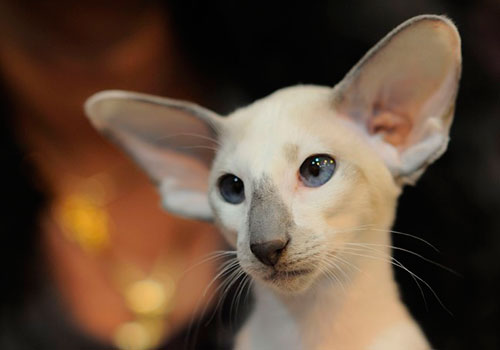
The Seychellois cat’s appearance fully conforms to the Siamese-Oriental group standards, with the exception of its unique coloration. It is a medium-sized cat with a long, slender, flexible, and muscular body that looks incredibly elegant and graceful. There should be no hint of bulkiness or stockiness.
- Body: Long, tubular, with well-developed but not coarse musculature. Shoulders and hips continue the body’s lines without protruding. The belly line is tucked up.
- Head: Wedge-shaped, medium-sized, and proportional to the body. The wedge starts at the nose tip and extends in a straight line to the ear tips, forming a triangle. The profile is straight (“Roman”), without a “stop” or curve. The skull is slightly convex. The muzzle is narrow and refined, with a strong chin that forms a vertical line with the nose tip.
- Ears: Very large, broad at the base, and pointed at the tips, continuing the lines of the head’s wedge. They seem like a continuation of the sides of the head’s triangle.
- Eyes: Almond-shaped, medium-sized, and set slightly slanted (“oriental” slit), harmonizing with the head’s wedge lines. Eye color is an intense, vibrant blue. The richer the color, the better.
- Neck: Long, thin, and elegant.
- Limbs: Long, slender, and proportional to the body. The hind legs are slightly longer than the front legs. The paws are small and oval.
- Tail: Very long, thin at the base, and gradually tapering to a pointed tip (whip-like). In the longhair variation (SYS), the tail is covered in long, flowing hair that forms a “plume” or “feather.”
- Coat:
- Shorthair (SYL): Very short, fine, shiny, and close-lying to the body. Almost no undercoat. Silky to the touch.
- Longhair/Semi-longhair (SYS): Fine, silky, and flowing. Medium-length on the body, longer on the neck (forming a small ruff), and on the tail (a lush plume). Also has virtually no undercoat, so it’s less prone to matting than other long-haired breeds.
- Coloration: This is the breed’s key feature. The Seychellois cat is a white cat with colored pointed markings. Color is only allowed in specific areas: a mask on the head (that doesn’t merge with the ears), the ears, the tail, and sometimes small patches on the legs or body. The main body should be pure white. The color of the markings can vary, just like in Siamese cats:
- Seal point – dark brown
- Blue point – bluish-gray
- Chocolate point – milky-chocolate
- Lilac point – pinkish-gray
- Red point – reddish
- Cream point – creamy
- Cinnamon point – warm brown (cinnamon color)
- Fawn point – warm light beige
Seychellois Pattern Variations:
According to the FIFe standard, there are three recognized coat color codes for Seychellois cats, which indicate the amount of white and the distribution of the patches (although the visual difference may not always be clear):
| Name (FIFe Code) | Pattern Description | Permissible Markings (besides head & tail) |
|---|---|---|
| Septième (Seventh) – Code 01 | “Van” pattern. Maximum amount of white. Color only on the head (ears + mask) and tail. | 1-2 small spots on the body are allowed. |
| Huitième (Eighth) – Code 02 | Color on the head, tail, and feet. | Distinctly separated spots on the legs (not extending above the knee/elbow) and/or small spots on the body are allowed. |
| Neuvième (Ninth) – Code 03 | Color on the head, tail, and larger spots on the legs and body. Least amount of white among Seychellois variations. | Larger, well-defined spots on the body and legs are allowed. |
Regardless of the variation, the eyes must always be a vibrant blue.
The Seychellois Cat’s Personality: The Elegant Extrovert
The Seychellois cat’s personality is a clear reflection of its Siamese-Oriental heritage. They are extremely energetic, intelligent, curious, and social animals who love being the center of attention. They are absolutely not suited to be an independent “cat who walks alone.” Seychellois cats form deep bonds with their humans and want to be involved in every aspect of their lives.
- High Activity and Playfulness: Seychellois are perpetual kittens. They are very agile, nimble, and love to run, jump, and climb. They need daily active games and physical exercise to burn off energy. Providing them with toys, cat trees, tunnels, and high perches is a must. They retain their playfulness into old age.
- Sociable and “Talkative”: Like their Siamese ancestors, Seychellois cats are very “vocal.” They have a wide range of vocalizations—from gentle purring and quiet “conversations” to quite loud and demanding meows, which they use to express their desires, greet you, complain, or simply comment on what’s happening around them. They expect you to talk back to them.
- Intelligence and Trainability: These are highly intelligent cats. They learn quickly, easily pick up on rules (if they want to), and can be taught to open doors and cabinets, fetch toys, and perform tricks. Their minds need constant stimulation, so interactive toys and puzzle games are a great idea.
- Affectionate and Loyal: Seychellois are very people-oriented. They form strong bonds with their owners, often choosing a favorite person in the family whom they will follow everywhere. They need a lot of affection, attention, and physical contact. They do not handle loneliness well and can suffer from it, which sometimes leads to destructive behavior or depression.
- Curiosity: No event in the house will escape their notice. They will explore every bag, box, and open cabinet. They love to watch what’s happening outside the window.
- Relationship with Children and Other Animals: With proper socialization from an early age, Seychellois generally get along well with children, especially older ones who understand how to handle a pet and are ready to participate in active games. They can also establish good relationships with other cats and friendly dogs, especially if they have a similar energy level. However, their need to be the center of attention can sometimes lead to jealousy.
- High-Maintenance: Due to their high need for companionship and activity, Seychellois can seem quite demanding. They won’t sit quietly if they’re bored or want your attention—they’ll be sure to let you know with their voice or actions.
The Seychellois cat is an ideal companion for active individuals or families who are ready to dedicate plenty of time and attention to their pet and who value its intelligence, playfulness, and deep affection.
Seychellois Cat Health: Potential Issues and Prevention
Seychellois Cat Care: Maintaining Beauty and Health
Training and Socializing a Seychellois Cat
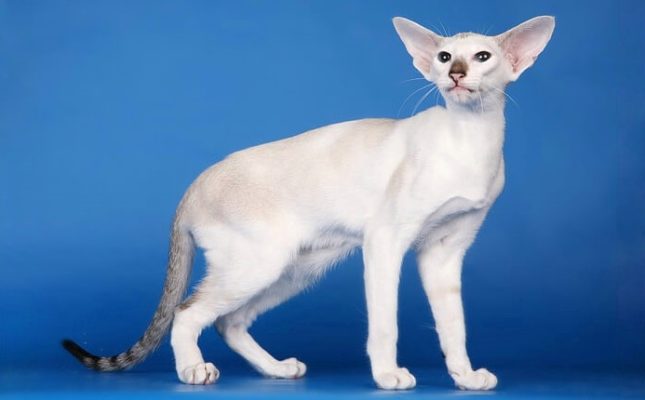
Training and socializing a Seychellois cat is an exciting process because you are dealing with one of the most intelligent and social cat breeds. Their high intelligence and desire to interact with people make them very receptive to learning, but their energy and sometimes stubborn nature require the right approach.
Key Aspects of Raising Your Cat:
- Early Socialization: Start socializing your kitten as early as possible. Introduce them to different people, sounds, objects, and other animals (under supervision). This will help them grow into a confident, not timid or aggressive, cat.
- Positive Reinforcement: Seychellois respond best to positive reinforcement methods. Use treats, praise, and affection to encourage desired behavior. Clicker training can be very effective with this breed. Avoid punishment and yelling—this can scare the cat, destroy trust, and cause stress or aggression in response.
- Training Commands and Tricks: Due to their intelligence, Seychellois can easily learn to come when called, sit, give a paw, and fetch toys. Short, regular training sessions in the form of a game will be the most effective. Don’t forget the reward!
- Teaching Rules: Be consistent in setting rules (e.g., don’t jump on the table, don’t scratch furniture). If the cat does something undesirable, gently redirect its attention to an allowed alternative (a toy, a scratching post). Use a clear “No” or “Stop,” but without aggression.
- Using Energy: To prevent boredom and destructive behavior, provide the Seychellois with enough physical and mental exercise. Regular games with a “fishing rod,” a laser pointer (always end the game with a “catch”—a toy), balls, interactive feeders, and puzzle toys will help channel their energy in the right direction.
- Getting Them Used to Grooming Procedures: From a young age, get your kitten used to being brushed (especially longhairs), having its ears and teeth checked, and its nails trimmed. Do this calmly and gradually, rewarding them with treats.
- “Vocalness”: Remember that Seychellois are very vocal. Don’t try to completely stop them from “talking”—it’s part of their nature. Learn to understand their signals and respond to them. However, if the meowing becomes excessively demanding, make sure all the cat’s needs are met (food, water, clean litter box, play, attention), and don’t reward unwanted vocalization with attention.
The most important things when raising a Seychellois are patience, consistency, love, and a willingness to dedicate a lot of time and attention to them. A grateful cat will repay you with deep affection and become a wonderful companion.
Seychellois Cat Nutrition: Fueling an Elegant Lifestyle
Pros and Cons of the Seychellois Cat Breed
| Pros (+) | Cons (-) |
|---|---|
| Elegant and exotic appearance: Unique coloration, graceful build, blue eyes. | High need for attention and interaction: Not suitable for busy people; handles loneliness poorly. |
| High intelligence and trainability: Easily learns tricks and understands rules. | Very “talkative”: Can be loud and demanding in their requests. |
| Very active and playful nature: Always ready for a game; brings life into the home. | High need for activity and stimulation: Needs lots of games, toys, and space to move; can get bored and exhibit destructive behavior. |
| Deep affection and loyalty: Forms a strong bond with its owner; very affectionate. | Possible tendency towards jealousy: May demand to be the only pet or struggle to share their owner’s attention. |
| Relatively simple coat care (especially SYL): Short coat requires minimal care; long coat is not prone to heavy matting. | Possible hereditary diseases: Requires careful selection of a breeder and attention to health (PRA, HCM, amyloidosis, etc.). |
| Gets along well with children and other animals (with socialization): Can be a wonderful family pet. | Rare breed: Can be difficult to find a kitten and may have a higher price tag. |
| Longevity: With proper care, they live quite long (13-15+ years). | Can be stubborn: Sometimes exhibits independence in training. |
Interesting Facts About Seychellois Cats
- Inspiration, Not Origin: Despite the name, the breed was created in the UK, not the Seychelles Islands. The name is simply a tribute to the description of the cats from the islands that inspired the breed’s founder.
- Three Levels of White: The Seychellois coat has three officially recognized FIFe variations (Septième, Huitième, Neuvième), which differ in the amount of white and the location of the colored patches.
- Sister Breed to Siamese Cats: In the FIFe classification, Seychellois cats (SYL/SYS) are considered a sister breed to Siamese (SIA), Balinese (BAL), Oriental Shorthair (OSH), and Oriental Longhair (OLH) cats, sharing their body type, head type, and personality.
- Always Blue Eyes: Just like with Siamese cats, Seychellois always have a deep blue eye color. This is related to the pointed gene.
- “Naked” Longhairs? The longhair Seychellois (SYS) has a long coat but is almost entirely without an undercoat. This makes their fur less prone to matting than many other long-haired breeds, and it lies closer to the body.
- French Names: The names of the color variations—Septième (seventh), Huitième (eighth), Neuvième (ninth)—are quite unusual for cat standards and come from the French language.
- A Dog-like Personality? Due to their high intelligence, trainability, loyalty, and need for companionship, Seychellois (like other members of the Siamese-Oriental group) are sometimes compared to dogs in terms of personality.
Frequently Asked Questions About the Seychellois Cat (FAQ)
Are Seychellois cats suitable for people who work a lot?
No, they are definitely not. Seychellois have a strong need for human attention and interaction. They handle long periods of solitude poorly and can suffer from stress, depression, or destructive behavior. They need an owner who is willing to dedicate a lot of time to them.
Do Seychellois cats shed a lot?
Shorthair Seychellois (SYL) shed moderately; their short coat without an undercoat doesn’t create major problems. Longhairs (SYS) shed more, especially seasonally, but due to the lack of a dense undercoat, their hair is less prone to tangling than in other long-haired breeds. Regular brushing helps control shedding.
Are Seychellois cats noisy?
Yes, Seychellois, like most cats of the Siamese-Oriental group, are very “talkative.” They use their voice to communicate with their owner and express their needs and emotions. If you value silence, this breed might not be for you.
Is a Seychellois cat hard to care for?
Caring for a shorthair Seychellois is minimal (brushing once a week). A longhair requires regular brushing (2-3 times a week). The main challenge is not so much grooming but the need to provide enough attention, playtime, and mental stimulation.
Can I have a Seychellois cat with other animals?
Yes, with proper and early socialization, Seychellois usually get along well with other cats (especially equally active ones) and friendly dogs. However, they can be jealous and demand the lion’s share of their owner’s attention.
What are the main health issues for Seychellois?
As representatives of the Siamese-Oriental group, they may have a predisposition to progressive retinal atrophy (PRA), hypertrophic cardiomyopathy (HCM), amyloidosis, asthma, and dental problems. It’s important to choose a kitten from a responsible breeder who performs genetic testing.
How is a Seychellois cat different from a Siamese or Oriental?
The main difference is the coloration. A Seychellois cat is essentially a Siamese or Oriental cat (depending on coat length and the registry’s standard) with the white spotting gene, which creates the characteristic pattern (a white body with colored markings on the head, tail, and sometimes the legs/body). They share the same body type, head type, personality, and eye color (blue).
- Extremely sociable and affectionate
- Clever, energetic, playful
- Sheds little, suits an apartment
- Bonds deeply with people
- Cannot bear solitude at all
- Talkative (though quieter than the Siamese)
- Needs attention, contact and play
- Rare — hard to find
| Balinese Cat | Siamese Cat | Oriental Shorthair | |
|---|---|---|---|
| Weight | 2.5–5 kg | 3–5 kg | 3–5 kg |
| Energy | 4.5 | 4.5 | 4.5 |
| Apartment | 5 | 5 | 5 |
| Beginners | 3.5 | 3 | 3 |
What is the Seychellois cat?
Is the Seychellois cat noisy?
Can the Seychellois cat be left alone?
Rare-breed registries (GCCF) · Siamese-Oriental clubs
For apartments · For kids · For beginners · Most affectionate · Quietest · Hypoallergenic · All rankings →