

| Weight | 3–5.5 kg |
| Lifespan | 12–16 years |
| Coat | short, silky, close-lying |
| Recognition | CFA · TICA · WCF |
| Origin | Canada / USA |
Exact ratings
Common health issues
Nutrition
The Tonkinese, often simply called a “Tonk,” is a captivating descendant of the gentle Burmese and the elegant Siamese. This breed, which emerged in the mid-20th century, beautifully combines the best traits of its ancestors, embodying a perfect blend of beauty, intelligence, and an extraordinary affection for people. The Tonkinese is rightfully considered the ideal family pet: it’s friendly with children, incredibly devoted to its owners, and adores being the center of attention. While they don’t require complex grooming, these cats value social interaction above all else and will genuinely get lonely if left by themselves for too long. Shared playtime, exploring the world around them, and cozy evenings snuggled up on their owner’s lap—that’s true happiness for this graceful cat with its silky, shimmering coat in exquisite shades. You can learn more about this and other breeds on Tvaryny.
Tonkinese Cat: A Quick Breed Overview
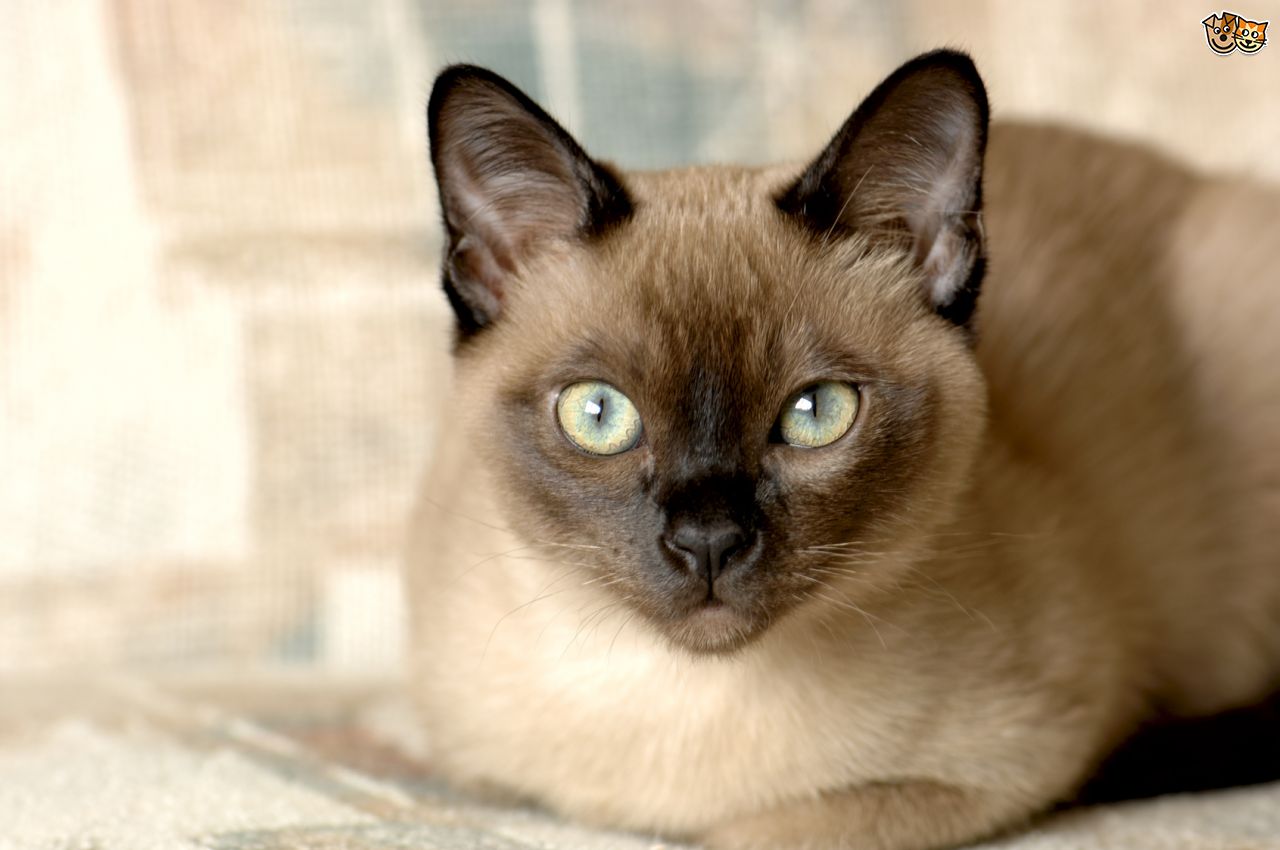
| Characteristic | Description |
|---|---|
| Origin | Canada, USA |
| Year of Recognition | 1970s (CFA, CCA) |
| Lifespan | 13-18 years (average 15-16 years) |
| Size | Medium |
| Weight | Females: 5.5-9 lbs, Males: 7.5-12 lbs |
| Height at Shoulder | Approximately 8-10 inches |
| Coat Type | Short, dense, silky, lies close to the body |
| Color | Three types: Point (high contrast), Mink (medium contrast), Solid/Sepia (low contrast) in Natural, Champagne, Blue, Platinum, and other colors. |
| Eye Color | Aquamarine (Minks), Blue (Points), Greenish-Gold (Solids) |
| Temperament | Highly social, playful, affectionate, intelligent, “talkative,” people-oriented |
| Care Needs | Low (grooming), High (attention and companionship) |
| Compatibility with Children | High |
| Compatibility with Other Pets | High (with proper socialization) |
History of the Tonkinese Cat
The history of the Tonkinese cat is a fascinating story of focused selective breeding and the desire to create the perfect companion. While the breed’s official recognition only came in the latter half of the 20th century, its roots run much deeper.
From Wong Mau to Breed Recognition
It all began in 1930 when Dr. Joseph C. Thompson brought an unusual cat named Wong Mau from Rangoon (Burma, now Yangon, Myanmar) to San Francisco. She had a warmer brown body color and darker points than traditional Siamese cats. At first, she was simply considered a variation of the Siamese breed. However, Wong Mau became the progenitor not only of modern Burmese cats but is also believed to have played a key role in shaping the Tonkinese gene pool. Mating Wong Mau with Siamese cats produced kittens of three types: those resembling Siamese (with high-contrast points), those resembling Burmese (darker), and an intermediate type—it was this third type that formed the basis for the future Tonkinese breed. You can also explore other breeds with unique histories like the Thai cat and Somali cat.
The Role of Canadian Breeders
The real, deliberate work on creating the Tonkinese breed started in the 1960s in Canada. Breeders Margaret Conroy and Jane Barletta independently decided to cross Siamese and Burmese cats. Their goal was to create a cat that combined the elegance and blue eyes of the Siamese with the sturdier build and gentle nature of the Burmese. They aimed to develop an animal with an “intermediate” coat color (later named “mink”) and the characteristic aquamarine eye color.
Their efforts were a success. The new breed, initially called the “Golden Siamese,” quickly gained popularity thanks to its attractive appearance and wonderful disposition. The name “Tonkinese” was adopted later, after the Gulf of Tonkin in Southeast Asia. Although the breed has no direct connection to the region, the name was chosen to evoke an exotic image similar to that of its Siamese and Burmese ancestors.
The Canadian Cat Association (CCA) was the first to recognize the breed in 1971. Other major cat registries followed suit, including the Cat Fanciers’ Association (CFA) in the US, although initially only for the mink coloration. Over time, the standards were expanded to include point and solid (sepia) colors, acknowledging the full spectrum of the breed’s genetic heritage.
What a Tonkinese Cat Looks Like: Breed Standards
The Tonkinese cat is the embodiment of harmony and elegance. It is the “golden mean” between the slender, light-boned Siamese and the stockier, more rounded Burmese. Breed standards describe the ideal Tonkinese as a well-balanced, muscular, medium-sized animal.
General Appearance
The body is medium-length, with well-developed muscles, but not bulky. The chest is rounded, and the back is slightly higher at the rear. The cat feels heavier than it looks, which is a testament to its solid build. Males are usually noticeably larger and more massive than females.
Head and Muzzle
The head has a modified wedge shape with gently rounded contours. It is slightly longer than it is wide. The muzzle is rounded, with noticeable whisker pads and a gentle stop at eye level. The profile has a slight curve. The chin is firm, forming a vertical line with the tip of the nose.
Ears
The ears are medium-sized, wide at the base, with oval tips. They are set fairly wide apart, continuing the lines of the head’s wedge.
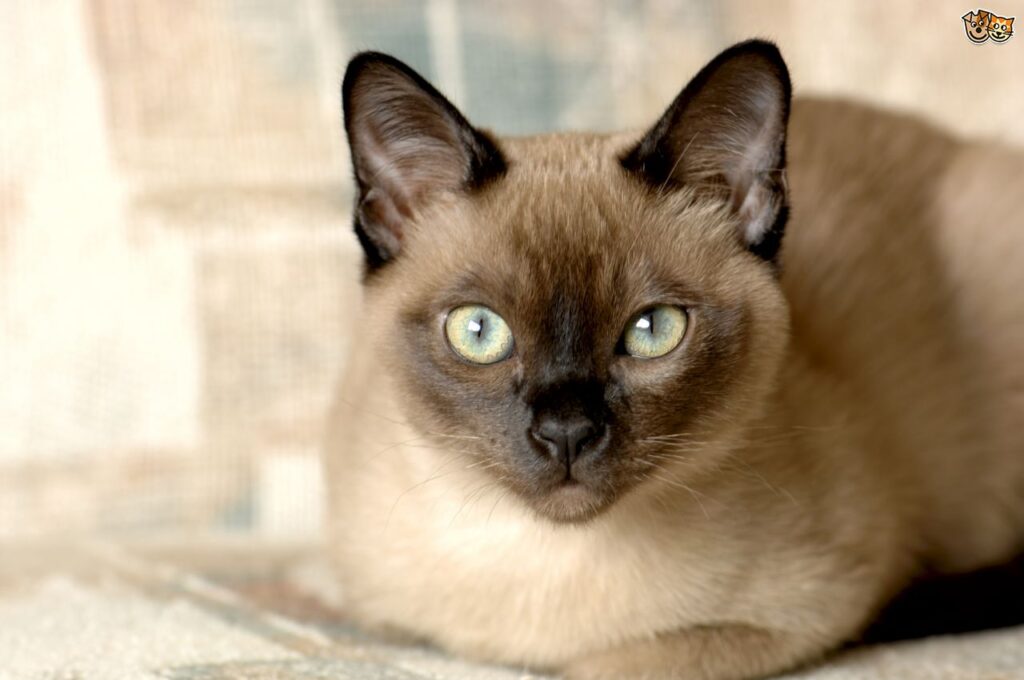
Eyes: The Aquamarine Gaze
The eyes are one of the most expressive features of the Tonkinese. They have an almond shape, are slightly slanted, and are set fairly wide apart. The top line of the eye is almond-shaped, while the bottom is more rounded. Eye color depends on the coat type:
- Mink: The characteristic aquamarine (blue-green) color. This is the breed’s calling card.
- Point: A deep blue color, like that of Siamese cats.
- Solid/Sepia: Greenish-gold or yellowish-green, like that of Burmese cats.
The bright, intense aquamarine eye color in mink-colored cats is the most sought-after.
Body and Limbs
The limbs are proportionate to the body, fairly slender but with well-developed muscles. The hind legs are slightly longer than the front legs. Paws are oval-shaped and medium-sized.
Tail
The tail is medium thickness at the base, tapering to a tip. Its length is roughly equal to the length of the body (from the shoulders to the rump).
Coat: A Unique Texture
The Tonkinese coat is short, fine, and lies close to the body. It is incredibly soft and silky to the touch, with a distinct natural sheen. The undercoat is almost nonexistent. Its texture is often compared to mink fur.
Tonkinese Coloration: Three Types
The uniqueness of the Tonkinese breed lies in its ability to exhibit three types of coloration, which are a result of combining the genes for Siamese (colorpoint) and Burmese (sepia) coats:
| Color Type | Description | Eye Color | Contrast |
|---|---|---|---|
| Point | A light body with clearly defined, much darker points on the face, ears, paws, and tail. The contrast between the main body color and the points is very high. | Blue | High |
| Mink | The main body color is warmer and richer than that of a point. The points are noticeably darker than the main color, but the contrast is less pronounced than in a point. The transition between colors is smoother. | Aquamarine | Medium |
| Solid / Sepia | The darkest variation. The main body color is rich, and the points are only slightly darker or almost the same as the body color. Minimal contrast. | Greenish-Gold / Yellowish-Green | Low |
These three color types can appear in various shades, the primary ones being:
- Natural: A warm brown (in minks and solids) or light beige (in points) with dark brown points.
- Champagne: Beige or buff (in minks and solids) or creamy (in points) with medium brown points.
- Blue: A cool gray-blue (in minks and solids) or icy white (in points) with slate-gray points.
- Platinum: A pale silvery-gray (in minks and solids) or pearly white (in points) with lilac-gray points.
There are also other, less common color variations, such as honey, red, cream, and tortoiseshell.
The Tonkinese Cat’s Unique Personality
A Tonkinese’s personality is perhaps one of the main reasons for its popularity. These cats are known for their extraordinary social nature, intelligence, and playfulness. They don’t just live alongside people; they actively participate in their lives.
A Companion and Social Butterfly
The Tonkinese is a companion cat in every sense of the word. They adore being the center of attention, following their owners everywhere, and being involved in all household activities. Being left alone for too long is a real hardship for a Tonkinese. They can get bored, lonely, and even exhibit destructive behavior if they don’t get enough interaction. Therefore, this breed is not suitable for people who spend a lot of time away from home, unless the cat has a companion (another cat or a friendly dog).
Intelligence and Curiosity
Tonkinese cats inherited a high level of intelligence and curiosity from their Siamese ancestors. They learn tricks easily, respond to their names, can be taught to fetch toys, and even walk on a leash. Their minds need stimulation, so it’s important to provide them with plenty of toys, especially interactive ones and puzzle toys. They’ll explore every corner of the house with curiosity and can even learn to open cabinet and drawer doors.
Vocal Nature
Like their Siamese relatives, Tonkinese are quite “talkative,” although their voice is usually softer and not as loud. They love to “chat” with their owners, expressing their desires, greeting them at the door, or simply commenting on what’s happening. This isn’t a silent cat that just sits quietly in a corner.
Relationship with Children and Other Pets
Thanks to their patience, playfulness, and gentle nature, Tonkinese get along wonderfully with children who are respectful of animals. They happily participate in games with them. They also tend to coexist well with other cats and friendly dogs, especially if raised together. Their social nature makes them wonderful members of a large family.
They are very affectionate and love physical contact—sitting on laps, sleeping next to their owner, and rubbing against legs. They are incredibly devoted animals that form strong bonds with their people.
Care and Maintenance of the Tonkinese Cat
The Tonkinese cat is a relatively low-maintenance breed when it comes to physical care, but it requires a lot of attention and mental stimulation.
Grooming: Caring for the Silky Coat
The Tonkinese’s short, dense coat without an undercoat is not prone to matting and requires minimal care. Brushing your cat once a week with a rubber brush or a grooming mitt is enough to remove dead hair and distribute skin oils, which gives the coat extra shine. During shedding seasons (usually spring and fall), you can brush more frequently. Bathing a Tonkinese is only necessary as needed.
Eye and Ear Care
Regularly check your cat’s eyes and ears. Eyes should be clean and clear. Small amounts of discharge in the corners can be carefully removed with a soft, damp cloth or wipe (use a separate one for each eye). Ears should be checked for dirt or signs of infection (redness, unpleasant odor). Clean ears only when necessary, using a special lotion and cotton pads, being careful not to go deep into the ear canal.
Oral Hygiene
Tonkinese cats have a predisposition to gum and dental diseases (gingivitis, periodontitis). Therefore, regular oral hygiene is very important. Ideally, you should brush your cat’s teeth with a special brush and toothpaste for pets several times a week. If that’s difficult, use special dental care foods, treats, or gels. Regular veterinary check-ups will also help you detect problems in time.
Claws
Trim your cat’s claws approximately every 2-3 weeks using special cat nail clippers. Be sure to provide your cat with a scratching post (or better yet, several of different types—vertical, horizontal, and with different materials) so they can satisfy their natural need to scratch without damaging your furniture.
Need for Activity and Play
Tonkinese are very active and playful cats. They need regular physical and mental stimulation. Provide them with a variety of toys: balls, “wands,” mice, interactive toys, and tunnels. It’s important to set aside time for daily play with your cat. Tall cat trees and climbing shelves are also a great idea, as Tonkinese love to observe everything from a high vantage point.
Although the original description mentioned outdoor access, keeping a Tonkinese exclusively indoors is safer. Outdoor dangers (cars, dogs, infections, poisons) pose a serious threat. If you want to give your cat access to fresh air, a secured balcony or an outdoor enclosure (catio) is the best option. Some Tonkinese can be trained to walk on a harness and leash for supervised outings in safe areas, but this requires patience and gradual training.
Home Safety
Due to their curiosity and activity, Tonkinese can get into trouble. Make sure your home is safe for your cat: hide electrical cords, toxic substances, and small objects that the cat could swallow. Be careful with open windows and balconies (be sure to install protective screens).
Tonkinese Cat Health: Common Illnesses and Prevention
Tonkinese Cat Nutrition: Key Recommendations
Training and Socialization of the Tonkinese Cat
Their high intelligence and people-oriented nature make the Tonkinese cat very trainable. The training process can be a wonderful way to strengthen the bond between you and your pet.
Teaching Basic Commands and Tricks
Tonkinese easily learn simple commands (“come here!”, “sit!”), can be taught to fetch toys, give a high-five, and even navigate small obstacle courses. The main thing is to use a positive reinforcement method: praise your cat, give treats or a favorite toy immediately after they perform the correct action. Training sessions should be short (5-10 minutes), fun, and regular. Never punish your cat physically or yell at them—this will only destroy their trust.
Litter Box and Scratching Post Training
Tonkinese are usually very clean and easily trained to use a litter box. It’s important to choose a comfortable litter box (a large enough size, with appropriate sides) and a litter that your cat likes. The litter box should always be kept clean. If a kitten has an accident, don’t punish them; calmly move them to the litter box.
Training them to use a scratching post is also crucial. Place it in a spot where the cat spends a lot of time or where they have already tried to scratch. You can attract the cat’s attention to the post with catnip or a toy. Praise them every time they use the scratching post as intended.
Early Socialization
While Tonkinese are naturally social, early socialization is very important. From a young age, accustom your kitten to different sounds, people, touches, and grooming procedures (brushing, ear checks, teeth brushing). If you have other pets, introduce them gradually and under supervision. Proper socialization will help you raise a confident, well-adjusted, and friendly cat.
Pros and Cons of the Tonkinese Cat Breed
Like any breed, Tonkinese cats have their advantages and disadvantages, which are important to consider before getting one as a pet.
| Pros | Cons |
|---|---|
| Incredibly affectionate and people-oriented: A true companion, loves physical contact, and is devoted. | Needs a lot of attention: Does not handle loneliness well and can suffer from separation anxiety. Not a good fit for very busy people. |
| Highly intelligent: Learns easily, is curious, and understands its owner. | “Talkative”: Loves to “chat,” which may not be to the liking of those who prefer quiet. |
| Playful and active: Stays playful into old age, a great partner for games. | High need for activity: Requires regular playtime and mental stimulation; otherwise, it can get bored. |
| Gets along well with children and other pets: Usually very patient and friendly. | Predisposed to certain diseases: Dental problems, amyloidosis, respiratory issues. |
| Elegant appearance: Beautiful build, unique silky coat, expressive eyes (especially aquamarine). | Curiosity can lead to trouble: Can get into dangerous places, open cabinets. |
| Relatively simple coat care: Doesn’t require frequent brushing. | Can be stubborn: Like many intelligent cats, they sometimes show an independent streak. |
Interesting Facts About Tonkinese Cats
- The “Golden Mean”: The Tonkinese perfectly combines the traits of the Siamese and Burmese breeds, not only in appearance but also in personality—it is not as loud and demanding as a Siamese but is more active and curious than a Burmese.
- Color Change: Tonkinese kittens are born much lighter than their final color. Their coat color fully develops over several months, and sometimes up to 1-2 years. The coat may also darken slightly with age or during colder seasons.
- Aquamarine Eyes: The unique aquamarine (blue-green) eye color in mink-colored cats is one of the most desirable features of the breed and a result of combining the genes for the blue eyes of Siamese and the golden-green eyes of Burmese.
- A Puzzling Name: Despite the name, which is associated with the Gulf of Tonkin in Vietnam, the breed has no connection to the region. The name was chosen to emphasize the Eastern origin of the breed’s ancestors.
- Heat-Loving: Like their ancestors from warm Southeast Asia, Tonkinese love heat and often seek out the warmest spots in the house—sunny windowsills, radiators, or their owner’s lap.
- “A Dog in a Cat’s Body”: Due to their devotion, love for games (including fetching), and a desire to follow their owners, Tonkinese are sometimes jokingly called “dogs in cat’s bodies.”
Frequently Asked Questions About the Tonkinese Cat Breed
Do Tonkinese cats shed a lot?
No, shedding in Tonkinese is moderate. Their short coat without a dense undercoat does not require complex grooming. Regular weekly brushing is usually enough to control the amount of hair in the home.
Are Tonkinese suitable for people with allergies?
There are no completely hypoallergenic cats. Tonkinese produce the allergen Fel d 1, just like other breeds. While their short coat and less shedding may make them better tolerated by some people with mild allergies compared to long-haired cats, this is very individual. Before getting a cat, it’s recommended for allergy sufferers to spend time with representatives of the breed.
How long do Tonkinese cats live?
Tonkinese are known for their longevity. With proper care, nutrition, and regular visits to the vet, they can live 15-18 years, and sometimes even longer.
Can I leave a Tonkinese cat alone for the whole day?
This is not recommended. Tonkinese are very social and suffer from loneliness. If you are regularly away from home for 8-10 hours, a Tonkinese will need a companion—another cat or a friendly dog. It’s also important to provide them with plenty of toys and to give them a lot of attention when you are home.
Does a Tonkinese cat need to go outdoors?
No, going outdoors is not mandatory and is not even recommended for safety reasons. Tonkinese thrive living exclusively indoors, provided they are given enough space for activity, toys, and their owner’s attention. Safe outings are possible on a harness or in an enclosure.
What is the price of a Tonkinese kitten?
The price of a Tonkinese kitten can vary depending on the lineage, the kitten’s class (pet, breeder, show), the cattery’s reputation, and the region. Budget for the recurring costs rather than the one-time sum: food, litter, wellness exams, and parasite prevention.
- Extraordinarily sociable and “dog-like”
- Clever, playful, easy to train
- The short silky coat needs almost no care
- Quieter than the Siamese, ideal for an apartment
- Cannot bear solitude at all
- Vocal and demanding of attention
- Needs plenty of play and company
- A tendency to hereditary diseases (amyloidosis, HCM)
| Burmese | Siamese Cat | Balinese Cat | |
|---|---|---|---|
| Weight | 3–6.5 kg | 3–5 kg | 2.5–5 kg |
| Energy | 4 | 4.5 | 4.5 |
| Apartment | 5 | 5 | 5 |
| Beginners | 4 | 3 | 3.5 |
What is the Tonkinese?
Is the Tonkinese noisy?
Can the Tonkinese be left alone?
CFA / TICA / WCF standards (Tonkinese)
For apartments · For kids · For beginners · Most affectionate · Quietest · Hypoallergenic · All rankings →