Savannah Cat

By tvaryny
33 Min Read
In short A spotted mini-“cheetah” with the blood of the African serval — hyperactive and fearless: athletic, super-clever, curious and “dog-like”. The Savannah is a large hybrid breed developed from the wild serval and the domestic cat; it impresses with its height, long legs and spotted “wild” color, jumps higher than any cat, loves water and a leash, but needs enormous space, stimulation and an experienced owner, so it is absolutely not for a novice.
KidsСобакиІнші котиBeginners ⚠Самотність
Parameters
Weight5–12 kg
Lifespan12–20 years
Шерстьshort, dense, spotted
ГрупаTICA
OriginUSA
Size
Weight 5–12 kg
Ratings · 12 · Dataset
Ласкавіс.KidsBeginnersРозумEnergyHealthSheddingПотреба .Балакучі.ApartmentСумісніс.Незалежн.
Exact ratings
Ласкавість3.5
Kids3.5
Beginners1.5
Розум5.0
Energy5.0
Health3.5
Shedding2.0
Потреба в увазі4.0
Балакучість3.0
Apartment2.5
Сумісність3.0
Незалежність3.0
Common health issues
  • Hypertrophic cardiomyopathy (HCM)
  • Pyruvate kinase deficiency (PK-def, anemia)
  • Progressive retinal atrophy (PRA)
  • Sensitivity to anesthesia
  • Generally robust with healthy breeding
Nutrition

Quality protein food for a very active large breed, with weight control. The short coat only needs occasional brushing; enormous space, high shelves, climbing and intense daily play are a must — without them the Savannah is unmanageable.

The Savannah cat is a stunningly large, elegant, and energetic feline whose exotic spotted coat and slender build are reminiscent of the African serval, one of its direct ancestors. This breed is remarkable not only for its impressive size and weight but also for its unique blend of “wild” features with the incredibly affectionate and loyal nature of a domestic pet. Savannahs are known for their high energy, keen intelligence, and spectacular leaping ability, which makes them look like miniature cheetahs. These aren’t the kind of cats that will be content staying within the four walls of your home; they need room to move, mental stimulation, and ideally, safe walks on a leash, which are like a breath of fresh air for them. You can learn more about this and other exotic breeds on Tvaryny.

Savannah Cat: A Quick Breed Overview
Кіт породи Саванна
CharacteristicDescription
Breed NameSavannah
OriginUnited States of America
Date of Origin1986 (first kitten), TICA registration in 2001, full champion status in 2012
AncestorsAfrican serval (Leptailurus serval) and domestic cats (Siamese, Bengal, Oriental Shorthair, Egyptian Mau, and others)
GenerationsF1 (closest to the serval) to F5 and beyond (SBT – Stud Book Tradition, considered fully domestic)
Lifespan12-20 years (15+ on average)
Height at WithersUp to 16-18 inches (especially F1/F2 males), one of the tallest domestic breeds
WeightMales: 13-24 lbs (sometimes more for F1/F2), Females: 9-18 lbs
TemperamentActive, intelligent, curious, loyal, playful, can be demanding of attention
Activity LevelVery high, requires a lot of exercise and stimulation
GroomingMinimal, short coat
Compatibility with ChildrenGets along well if children are respectful (recommended for older kids)
Compatibility with Other PetsGood, especially if raised together; caution needed with small animals due to high prey drive
Price RangeVery high, especially for early generations (F1-F3)
The Origin Story of the Savannah

The Savannah breed’s history is a captivating tale of a dream to create a domestic cat with the exotic looks of a wild ancestor. It all began on April 7, 1986, when Judee Frank was the first to breed a hybrid kitten from a male African serval and a female Siamese domestic cat. This unique female kitten was named Savannah, and she gave her name to the entire future breed.

A key player in the breed’s development was Joyce Sroufe. In 1989, she acquired one of the first Savannah’s kittens and became passionate about the idea of establishing a new breed. Together with Patrick Kelley, she developed the first Savannah breed standard and submitted it for consideration to the board of The International Cat Association (TICA). Their efforts, along with the work of other enthusiasts who crossbred the serval’s offspring with various domestic breeds (including Bengal cats, Egyptian Maus, Oriental Shorthairs, and other domestic shorthairs), led to the gradual shaping of the Savannah’s unique traits. While you’re at it, check out other spotted beauties like the Serengeti cat.

The road to official recognition was a long one. Many cat fancier organizations were cautious about hybrid breeds. However, thanks to the breeders’ persistence, TICA accepted the Savannah for registration in 2001 and granted the breed full champion status in 2012. This meant that Savannahs could compete in shows alongside other recognized breeds. The primary goal was to preserve the exotic appearance of the serval—long legs, large ears, a tall body, and a spotted coat—while solidifying the gentle and sociable temperament of a domestic cat.

What a Savannah Looks Like: Breed Standard and Appearance

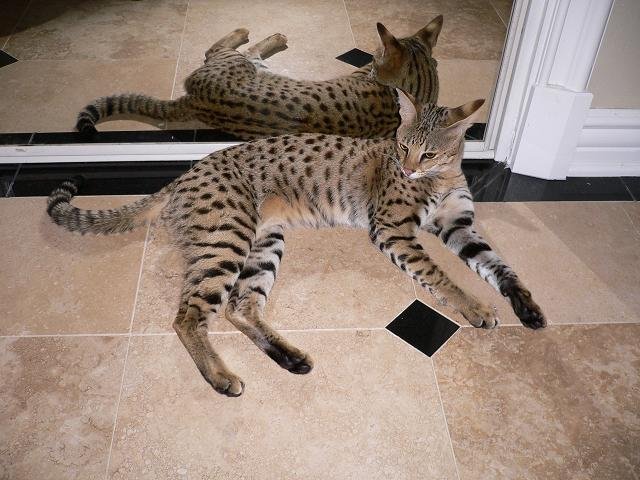
The Savannah gives the impression of a large, slender, and elegant cat with distinctly “wild” features. Its appearance is a harmonious blend of the serval’s grace and the familiar traits of a domestic cat.

  • Size and Build: Savannahs are among the tallest domestic cats. They have a long, muscular, and athletic body with a deep chest and tucked-in abdomen. The back is straight, and the hindquarters are slightly elevated. Their bones are strong but not massive, which creates an impression of sophistication despite their size.
  • Head: The head is relatively small in proportion to the body and has the shape of an equilateral triangle with rounded contours. It is longer than it is wide. The profile is straight with a barely noticeable transition.
  • Ears: One of their most defining characteristics is their extraordinarily large and tall ears, which are wide at the base with rounded tips. They are set high on the head and close together. The presence of “ocelli”—light spots on the back of the ears resembling fingerprints—is desirable, much like those found on wild cats.
  • Eyes: The eyes are medium-sized, almond or oval-shaped, and set at a slight angle. A characteristic “hooded brow” gives them an alert expression. Dark “tear marks” running from the inner corner of the eye to the nose are a mandatory feature. Eye color can be golden, green, amber, or brown and is not dependent on coat color.
  • Muzzle: The muzzle is well-defined, tapering to the nose without a sharp “pinch.” The nose is long with a wide bridge. The whisker pads are not overly prominent.
  • Legs and Paws: The legs are very long and slender, especially the hind legs, which give the breed its characteristic “high-legged” stance and incredible jumping ability. The paws are oval and medium-sized with long toes.
  • Tail: The tail is of medium length and thickness, tapering slightly to the tip. It should not be too short or too thin. It is covered in black rings, and the tip is always black.
  • Coat: The coat is short to medium in length, dense, and lies close to the body. The texture may be slightly rougher than most domestic cats but should not be coarse. The undercoat is soft.
  • Color and Pattern: The only recognized pattern is the spotted tabby. Spots must be clear, solid (not rosettes), and can be round, oval, or elongated, arranged randomly across the entire body. Stripes on the neck and shoulders that transition into spots on the back are desirable. Recognized background colors are brown (Brown Spotted Tabby), silver (Silver Spotted Tabby), black (melanistic, with spots visible in certain lighting), and black smoke.
Саванна демонструє свою високу статуру та плямистий окрас

Savannah Generations (F1, F2, F3, F4, F5+ and SBT)

It’s important to understand the generation system (filial generations), which indicates the degree of relation to the wild ancestor, the serval:

  1. F1 Savannah: A direct descendant of a serval (father is a serval, mother is a domestic cat). They have approximately 50% serval blood (or more if the mother was a later-generation Savannah). These are the largest, most exotic, and most expensive Savannahs. Their temperament can be more unpredictable, and they require very experienced owners. F1-F3 (and sometimes F4) males are typically sterile.
  2. F2 Savannah: Grandchildren of a serval (one parent is an F1 Savannah). Approximately 25-30% serval blood. They are still large and exotic but generally more adapted to home life than F1s.
  3. F3 Savannah: Great-grandchildren of a serval (one parent is an F2 Savannah). About 12.5-15% serval blood. Their size is closer to that of a large domestic cat, and their temperament becomes more stable and “domestic.”
  4. F4 and F5 Savannah: Great-great-grandchildren and subsequent generations. The percentage of serval blood becomes insignificant. Their size and temperament are most similar to domestic cats, though they retain the characteristic Savannah appearance (long legs, large ears, spots).
  5. SBT Savannah (Stud Book Tradition): This is a Savannah whose lineage can be traced back at least three generations to Savannahs only (meaning an F4 or later generation bred to another SBT Savannah). SBT Savannahs are considered a fully domestic breed, their temperament is the most predictable, and they are the ones who typically participate in cat shows.

The higher the generation (F1, F2), the more pronounced the wild traits, the larger the size, the higher the price, and the more challenging the personality. Late-generation Savannahs (F4, F5, SBT) make wonderful companions for active families willing to provide them with proper care and stimulation.

Портрет кота Саванна з великими вухами
Savannah Cat Temperament and Behavior

Despite their “wild” appearance, a Savannah is an incredibly intelligent, energetic, and loyal cat. Their personality is a unique combination of independence and deep affection for their family. Unlike their serval ancestor, who leads a solitary life, Savannahs crave interaction and attention.

  • Intelligence and Curiosity: Savannahs are some of the smartest domestic cats. They learn quickly, can solve complex problems (like opening doors, cabinets, and faucets), and are constantly exploring their surroundings. Their curiosity knows no bounds, so it’s important to “cat-proof” your home.
  • Energy and Playfulness: This is a very active breed. Savannahs need a lot of exercise and play to burn off energy. They love interactive toys, chasing, running, and especially jumping. Their ability to leap vertically over 6 feet from a standstill is truly impressive. A bored Savannah can become destructive.
  • Loyalty and Sociability: Savannahs form a strong bond with their owners, often picking a single “favorite” person whom they follow around like a dog. They love being part of all family activities. While not all Savannahs are typical “lap cats,” they show affection through their presence, “talking,” and gentle head-butting.
  • Vocalization: Savannahs are quite “talkative.” Their vocal repertoire includes typical meows and purrs, as well as unique sounds similar to chirping, inherited from the serval, especially in the early generations. They can also hiss like a serval.
  • Attitude Towards Water: Many Savannahs, unlike most domestic cats, are not afraid of water and sometimes even love it. They might play with a running faucet, drop toys into their water bowl, or even join their owner in the shower.
  • Compatibility: With proper and early socialization, Savannahs get along well with other cats and dogs (especially if they grew up together). They can also be great companions for children who know how to respectfully handle animals. However, due to their high prey drive, you should be cautious with small pets like hamsters, birds, or fish. Other short-tailed and spotted breeds like the Japanese Bobtail or the Singapura might be a better choice if you have small prey animals in your home.
  • Independence: While Savannahs love company, they also have an independent side. They may not always want to be held on your lap, but they’ll always be close by.

Important: The temperament of a Savannah can vary depending on the generation. Early generations (F1, F2) may exhibit more “wild” traits, be more wary of strangers, and require even more space and stimulation. SBT Savannahs typically have a more predictable and stable “domestic” personality.

Кіт Саванна відпочиває
Savannah Cat Health: Typical Ailments and Prevention

Savannahs are generally considered a healthy and robust breed, largely thanks to the “hybrid vigor” that results from crossing different genetic lines. Their athletic appearance often matches their strong health and longevity—many members of the breed live for 15-20 years or more with proper care.

However, like any breed (especially a hybrid), Savannahs may have a predisposition to certain genetic diseases inherited from both servals and the domestic breeds used in their creation. It’s important to be aware of the potential risks:

  • Hypertrophic Cardiomyopathy (HCM): This is the most common heart disease in cats of all breeds, including Savannahs. It is characterized by a thickening of the heart muscle walls. Responsible breeders screen their breeding animals (with heart ultrasounds) to reduce the risk of passing the disease to their offspring.
  • Pyruvate Kinase Deficiency (PKD): This is an inherited blood disorder that can lead to anemia. It is found in some of the breeds used to create Savannahs (e.g., Bengal, Egyptian Mau). A genetic test is available to identify carriers of this disease.
  • Progressive Retinal Atrophy (PRA): Another inherited disease that can lead to blindness. Genetic testing is also available for this condition.
  • Anesthesia Sensitivity: There is a belief (though not always scientifically confirmed for all Savannahs) that hybrid cats, especially early generations, may be more sensitive to some types of anesthetics, particularly ketamine. It is crucial to discuss this with your veterinarian before any procedures that require sedation. An experienced vet will choose a safe anesthesia protocol.
  • Digestive Issues: Some Savannahs may have a more sensitive digestive system, especially when changing their food. A high-quality, high-protein diet usually helps avoid problems.

Prevention is key to a long and healthy life for your Savannah:

  • Regular Vet Check-ups: Annual (or twice-a-year for senior cats) vet visits will help catch any problems early.
  • Vaccinations and Parasite Control: Sticking to a vaccination schedule and regular treatment for internal and external parasites is essential.
  • Balanced Nutrition: A high-quality diet that meets the breed’s high energy needs.
  • Maintaining Activity: Sufficient physical activity helps maintain a healthy weight and overall fitness.
  • Choosing a Responsible Breeder: Buy a kitten from a breeder who performs genetic testing for major diseases and can provide the relevant documentation.

It’s also worth remembering that Savannahs, like their serval ancestors, don’t tolerate extreme cold well. During cold weather, make sure your pet has a warm place to rest.

Savannah Cat Care: Grooming, Environment, and Activity

Caring for a Savannah isn’t overly demanding in terms of grooming, but it requires significant attention to creating the right environment and ensuring a sufficient level of activity.

Savannah Grooming

  • Coat: The Savannah’s short coat requires minimal maintenance. Brushing it once a week with a rubber brush or a grooming glove is enough to remove dead hair and distribute skin oils. Savannahs shed moderately.
  • Claws: Like all cats, Savannahs need their claws trimmed regularly (about every 2-3 weeks) to prevent them from growing inward and damaging furniture. Having sturdy scratching posts is a must.
  • Ears: Regularly check the ears (once every week or two) for dirt or signs of infection. Clean them only when necessary, using a special ear-cleaning solution and cotton pads (not swabs!). The Savannah’s large ears can collect more dirt than average.
  • Eyes: Periodically wipe the corners of the eyes with a soft, damp cloth or cotton pad to remove natural discharge.
  • Teeth: To prevent dental disease, it’s recommended to brush their teeth a few times a week with a special toothbrush and cat toothpaste. Dental treats and dry food can also be helpful.
  • Bathing: Savannahs don’t usually require frequent baths. Given their affinity for water, the bathing process, if needed, will likely be stress-free.

Environment and Safety

Creating the right environment is a critical aspect of owning a Savannah:

  • Space and Vertical Opportunities: Savannahs need space to run and play. Even more importantly, they need vertical space. Tall, sturdy cat trees, wall-mounted shelves, and climbing complexes are not a luxury but a necessity to satisfy their natural need to jump and explore high places.
  • Safety: Savannahs are escape artists and extremely curious. You must ensure that all windows and doors are secure. Many household items can pose a danger (electrical cords, small objects, chemicals). It’s essential to “cat-proof” your home.
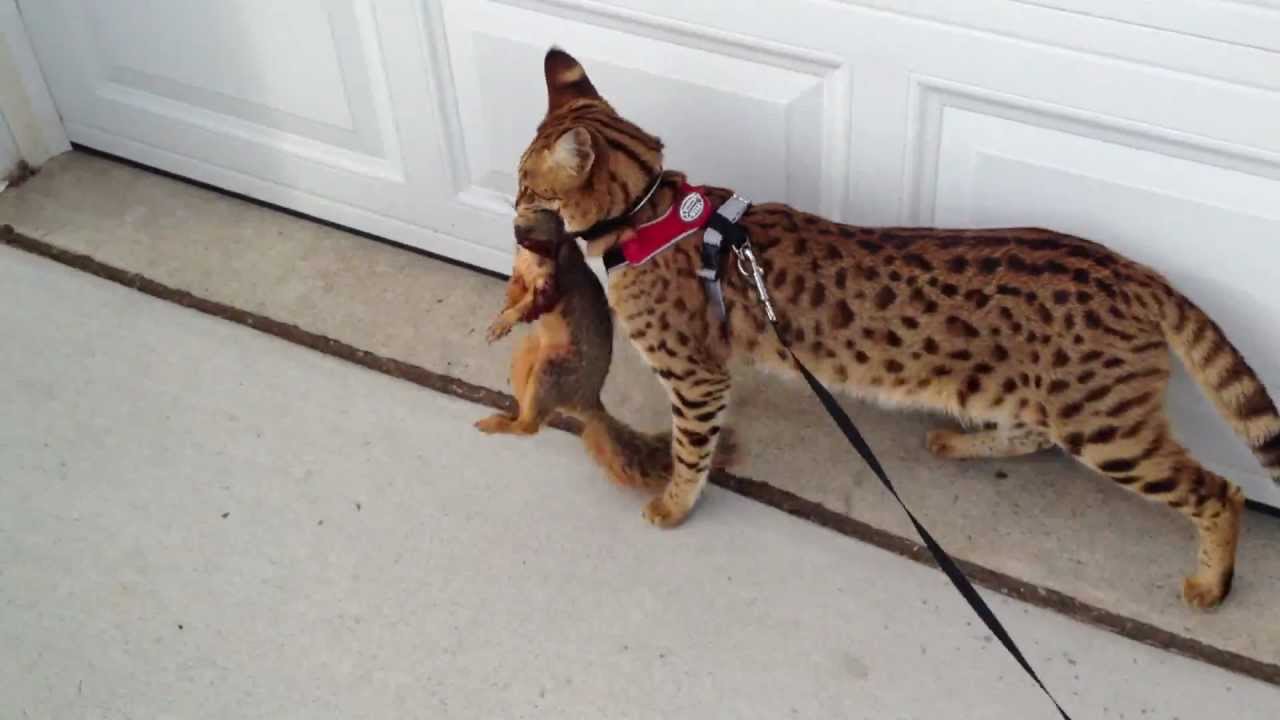
  • Walks: Due to their high energy and hunting instincts, unsupervised outdoor access is strongly discouraged for Savannahs. However, many Savannahs can be trained to walk on a harness and leash and enjoy controlled outdoor adventures. This is a great way to provide them with new experiences and physical exercise. A secure outdoor enclosure (catio) is also a fantastic solution.

Activity and Play

Satisfying a Savannah’s high need for activity is the number one task for an owner:

  • Interactive Games: Daily play sessions with the owner are a must. Use “fishing rods” with feathers, laser pointers (always end the game with a “catch”—a toy or treat), and balls. Savannahs often love to play fetch.
  • Puzzle Toys: To stimulate their sharp minds, use interactive toys that require them to retrieve treats or cat puzzles.
  • Company: If you spend a lot of time away from home, another active cat or dog can be a great companion for a Savannah, helping to keep them entertained.
Savannah Cat — photo 5
Savannah Cat Training and Socialization

Thanks to their high intelligence, Savannahs are very trainable and learn quickly. The process of training and socialization should begin at a young age and be consistent.

  • Training Methods: The best method is positive reinforcement—praise, treats, and play. Savannahs respond well to clicker training. They are capable of learning various tricks (sit, shake, fetch) and household rules.
  • Leash Training: Many Savannahs can be successfully trained to wear a harness and leash, allowing for safe walks. You should start as early as possible, gradually introducing the kitten to the harness at home, and then moving to short walks in quiet areas.
  • Socialization: Early and proper socialization is key to developing a well-balanced personality. Introduce the kitten to different people, sounds, situations, and other animals (under supervision). This will help them grow into a confident and sociable cat, which is especially important for the potentially more wary early generations.
  • Setting Boundaries: Due to their energy and curiosity, it’s important to establish clear boundaries and rules from the beginning (for example, where they can and cannot jump). Consistency is the key to success.
  • Solving Behavior Problems: If a Savannah exhibits undesirable behavior (e.g., scratching furniture, excessive vocalization, aggression), the cause is most often boredom, lack of attention, or insufficient physical activity. Providing a proper level of stimulation and redirecting their energy toward games and toys usually solves the problem.

Overall, raising a Savannah is an exciting process that requires patience, consistency, and an understanding of this breed’s unique needs. Their trainability and desire to interact with people make training a rewarding experience for both the cat and the owner.

Savannah Cat Diet: Key Nutritional Recommendations

Proper nutrition is the foundation of a Savannah’s health, energy, and longevity. Due to their high activity level and partly “wild” heritage, this breed may have slightly higher needs for certain nutrients, especially protein.

  • High-Quality Protein: Animal protein is the foundation of a Savannah’s diet. Choose high-quality commercial foods (dry and wet) with meat (chicken, turkey, beef, fish) listed as the first ingredients. Avoid foods with a high amount of grains (corn, wheat) and fillers. Some owners opt for grain-free diets.
  • Raw Food (BARF): Some Savannah breeders and owners practice a raw meat diet, believing it is more natural for a hybrid breed. This approach requires extensive knowledge to create a balanced diet (the correct ratio of meat, bones, and organs) and strict adherence to hygiene rules to avoid the risk of bacterial contamination. Always consult with a veterinary nutritionist before transitioning your cat to a raw diet.
  • Combination Feeding: Many owners successfully combine dry and wet food. Wet food helps maintain hydration and usually contains more protein and fewer carbohydrates. Dry food is convenient and can help clean teeth.
  • Taurine: Like all cats, Savannahs need taurine, an essential amino acid found in meat. High-quality commercial foods are already enriched with taurine. When feeding a natural diet, it’s important to include sources of taurine (e.g., heart).
  • Vitamins and Minerals: A balanced commercial food usually contains all the necessary vitamins and minerals. With a natural diet, you may need to add special supplements recommended by a vet.
  • Portion Control: Despite their high activity, Savannahs, like any domestic cat, are prone to gaining excess weight if overfed. Follow the dosage recommendations on the food packaging, adjusting the portion based on your cat’s age, weight, and activity level.
  • Fresh Water: Provide constant access to clean, fresh water. Some Savannahs prefer running water, so a cat fountain can be a great investment.
  • Avoid Dangerous Foods: Never give your Savannah (or any cat) chocolate, onions, garlic, grapes, raisins, alcohol, caffeine, or human food from the table.

Remember that nutritional needs can change with age (kitten, adult, senior) and health status. Consult your vet regularly about the optimal diet for your Savannah.

Pros and Cons of the Savannah Cat Breed

Before getting an exotic and energetic cat like a Savannah, it’s important to weigh all its advantages and potential disadvantages.

Advantages (Pros)Disadvantages (Cons)
Unique, Exotic Appearance: Large size, spotted coat, big ears—the Savannah looks impressive.Very High Cost: Especially early generation kittens (F1-F3) can cost thousands or even tens of thousands of dollars. Later generations are also more expensive than most other breeds.
High Intelligence: They are easy to train, clever, and can solve puzzles.Extremely High Energy Level: They require a lot of physical activity, play, and space. Not suitable for sedentary people or small apartments without an outlet for their energy.
Loyalty and Affection: They form a strong bond with their owners, often displaying “dog-like” behaviors.Requires Significant Attention and Stimulation: A bored Savannah can become destructive or loud. They need a lot of time from their owner.
Playful and Active: They remain playful throughout their lives.Potential Restrictions: In some regions, owning Savannahs (especially F1-F4) may be prohibited or require special permits due to their hybrid status.
Loves Water: Many are not afraid of water, which makes bathing easier and can be a source of fun.Not Always a “Lap Cat”: Savannahs often show affection through play or being nearby rather than constant cuddling.
Low Grooming Needs: Their short coat requires minimal care.Strong Prey Drive: Caution is needed with small pets (rodents, birds).
Generally Robust Health: Hybrid vigor often contributes to a strong immune system and longevity.Requires an Experienced Owner: Early generations, in particular, can be a challenge for beginners due to their energy and intelligence.
Gets along with Kids and Other Pets: Provided they are properly socialized.Can be Escape Artists: They require a secure environment and supervision.
Interesting Facts About the Savannah Breed
  • Guinness World Record Holder: A Savannah named Arcturus Aldebaran Powers held the title of the tallest domestic cat in the world, standing at 19 inches at the withers. Sadly, he died in a fire in 2017.
  • Incredible Jumpers: Savannahs are known for their ability to leap to impressive heights—up to 8 feet from a standstill! This allows them to easily get on top of cabinets, refrigerators, and other high places.
  • Not All Spots Are Alike: While the standard recognizes only the spotted tabby pattern, the pattern and size of the spots can vary. Some Savannahs have smaller, denser spots, while others have larger, more spaced-out ones.
  • “A Dog in a Cat’s Body”: Their loyalty, trainability for commands, and love of games (including fetch) often lead to Savannahs being compared to dogs. Many of them also do well on a leash.
  • Generation Matters: An F1 Savannah can cost as much as a new car, while later generation Savannahs (F5, SBT) are significantly more affordable, though still more expensive than an average purebred cat.
  • Unique Sounds: In addition to a normal meow, Savannahs can make sounds that resemble a bird’s chirping or a snake’s hiss—a legacy from their wild serval ancestor.
  • Not to Be Confused with Other Breeds: Savannahs are sometimes mistaken for other spotted breeds like the Bengal cat or Ocicat. However, the Savannah stands out with its long legs, large ears, and more elongated body. It’s also important not to confuse it with the Serengeti cat breed, which was created to resemble a serval but does not have wild cat blood.
  • Legal Nuances: Before purchasing a Savannah, especially an early generation, be sure to check local laws. Many regions have restrictions on keeping hybrid animals. You can find more info on other breeds like the Singapura cat or Japanese Bobtail on our site.
Кіт Саванна з характерними великими вухами
Savannah Cat Frequently Asked Questions (FAQ)

How big do Savannah cats get?

The size of a Savannah depends heavily on its generation and sex. F1 and F2 males can be significantly larger, reaching 16-18 inches at the withers and weighing 20-25 pounds or more. Females and later-generation cats (F3 and beyond, SBT) are usually smaller but still larger than the average domestic cat, weighing 9-18 pounds with a tall, slender body.

Are Savannah cats dangerous? Are they aggressive?

No, a properly raised and socialized Savannah is not dangerous or aggressive. This is a domestic breed bred to have a gentle temperament. Early generations (F1, F2) can be more wary and have stronger instincts, so they require experienced owners. However, aggression is not a typical trait of the breed.

This depends on where you live and the cat’s generation. In many countries, states, or cities, there are restrictions or outright bans on keeping hybrid animals, especially early generations (F1-F4). Always check your local laws and ordinances before getting a Savannah.

How much does a Savannah cat cost?

The Savannah is one of the most expensive cat breeds in the world. The price depends on the generation, quality (conformity to the standard), lineage, and the breeder’s reputation. F1 kittens can cost from $15,000 to $50,000+. F2s range from $4,000 to $15,000+. F3s from $2,500 to $8,000+. F4-F5s from $1,500 to $5,000+. SBT Savannahs typically cost between $1,500 and $6,000. These are approximate ranges, and prices can vary.

Are Savannahs good for families with children and other pets?

Yes, with proper socialization, Savannahs generally get along well with older children who understand how to interact with animals. They can also coexist with other cats and dogs, especially if they were raised together. However, due to their strong prey drive, they are not recommended to be kept with very small animals (hamsters, birds).

What generation of Savannah is best for me?

For most people, especially those without experience with hybrids, the best choice is a later-generation Savannah (F4, F5, and especially SBT). They have a more stable and predictable domestic temperament while retaining their exotic appearance. Early generations (F1-F3) require significantly more experience, space, attention, and may be subject to legal restrictions.

Do Savannahs require special food?

While a special “wild” diet isn’t mandatory, Savannahs benefit from a high-quality diet with a high content of animal protein. Some owners choose a raw diet (BARF), but this requires careful planning and consultation with a specialist. A high-quality commercial food for active cats (dry and/or wet) usually fully meets their needs.

Do Savannahs shed a lot?

Savannahs have a short coat and shed moderately. Regular weekly brushing helps control the amount of hair in the home.

Pros
  • Extremely clever, easy to train
  • Athletic, the highest jump among cats
  • “Dog-like”: fetch, leash, loves water
  • A striking “wild” spotted look
Cons
  • An extreme need for exercise and space
  • Absolutely not for a novice or a small apartment
  • Bored and destructive without stimulation
  • In some countries — keeping restrictions (F1–F2)
Compared with similar breeds
BengalOcicatEgyptian Mau
Height4–7 kg3–6 kg3–6 kg
Energy54.54.5
Apartment44.54.5
Beginners2.533
FAQ
Is the Savannah safe at home?
Later generations (from F4/SBT) are fully domesticated and affectionate; early ones (F1–F2) are closer to the wild serval, larger and more demanding, and in some countries their keeping is restricted by law. The character of a home Savannah is that of a hyperactive, clever cat.
Is the Savannah suited to a novice or an apartment?
Absolutely not — one of the most active and athletic cats, needing enormous space, high shelves, climbing and intense stimulation; without experience and space it is very difficult.
Is it true the Savannah loves water and jumps high?
Yes — unlike most cats, Savannahs adore water and are capable of record vertical jumps (up to 2 m); an echo of their semi-wild serval origin.
Sources

TICA standard (Savannah)

Share This Article