

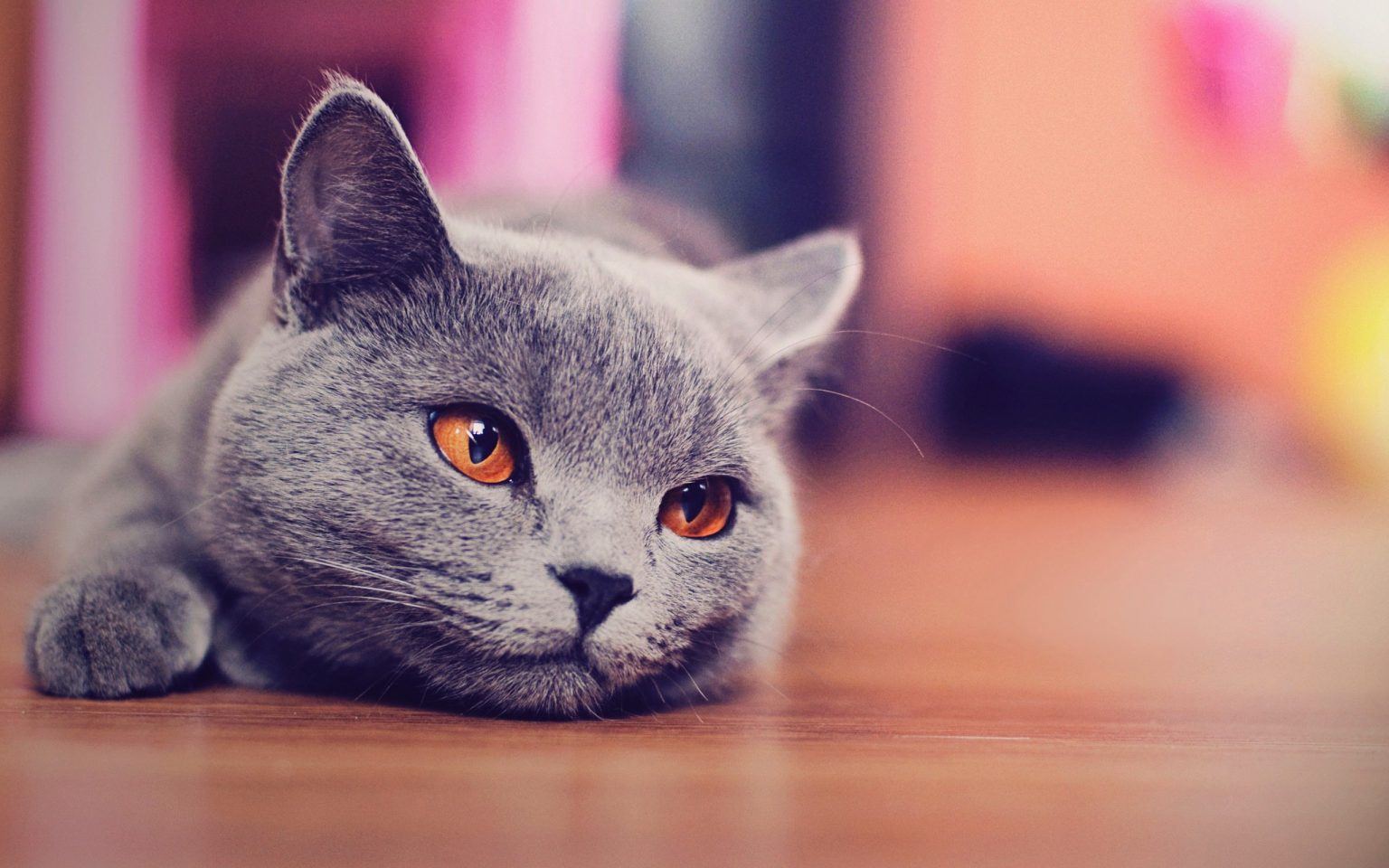
| Weight | 3–4.5 kg |
| Lifespan | 12–18 years |
| Coat | short, silver-blue, no undercoat |
| Recognition | CFA · TICA · WCF · FIFe |
| Origin | Thailand |
Exact ratings
Common health issues
Nutrition
The Korat isn’t just a cat breed; it’s a living legend from Thailand, steeped in centuries of tradition and folklore. Known in its homeland as “Si-Sawat,” which translates to “color of good fortune,” this stunning silver-blue cat with striking green eyes is a symbol of luck, prosperity, and a happy home life. As one of the oldest natural breeds, the Korat has kept its unique look and gentle temperament virtually unchanged for centuries. It’s an incredibly affectionate, loyal, and intelligent companion that forms a deep bond with its people. However, its refined beauty comes with a sensitive side, as Korats can be easily stressed by loud noises and sudden changes, making a calm, peaceful home essential. You can learn more about this and other incredible breeds, like the European Shorthair or the playful Devon Rex, by checking out more articles on Tvaryny.
Korat: A Quick Breed Overview
| Characteristic | Description |
|---|---|
| Origin | Thailand (Korat Province) |
| Traditional Name | Si-Sawat |
| Time of Origin / Recognition | Ancient breed (mentioned in 14th century); Western recognition — 1966 (CFA), 1975 (GCCF) |
| Lifespan | 12–16 years (often longer) |
| Height | ~10–12 inches |
| Weight | Females 5.5–10 lbs; Males 9–12 lbs |
| Temperament | Gentle, affectionate, loyal, intelligent, observant; sensitive to noise; quiet voice |
| Grooming | Very low (weekly brushing/polishing) |
| Activity Level | Moderate |
| Vocalization | Quiet |
| Compatibility with Children | Better with older, calmer children |
| Compatibility with Other Animals | Can be “possessive”; best as a single cat or with another Korat (requires socialization) |
The History of the Korat: Thailand’s Cat of Good Fortune
The Korat belongs to a small group of native cat breeds from Thailand (ancient Siam), alongside the Siamese, Burmese, and Thai cat. Its history stretches back for centuries. The first mentions and depictions of cats closely resembling modern Korats are found in ancient Thai manuscripts, particularly the “Tamra Maew” (“Cat-Book of Poems”), which dates back to the Ayutthaya period (1350-1767 CE).
In Thailand, these cats are called “Si-Sawat.” “Si” means color, and “Sawat” is the name of a local plant with gray-blue berries. Thus, the name literally means “color of the sawat fruit.” Additionally, the word “sawat” is also associated with good fortune and prosperity.
Korats were traditionally considered lucky cats. They were never sold but only given as gifts—a symbol of happiness, fertility, and wealth, especially to newlyweds or honored guests. It was believed that a pair of Korats in the home guaranteed a happy marriage. Their silver color was associated with wealth, and their green eyes with the color of young rice seedlings, symbolizing a good harvest. Want to explore more about a similarly elegant breed? Check out the Russian Blue.
Thanks to this reverence and their isolation (the breed originated in the high-elevation Korat plateau of northeastern Thailand), these cats have maintained their pristine appearance for many centuries.
The Korat appeared in the West relatively late. While a cat resembling a Korat was shown at a British cat show as early as 1896 (listed as a “blue Siamese”), deliberate breeding in the West didn’t begin until 1959. That’s when an American woman named Jean Johnson, who had been living in Thailand, was gifted a pair of Korats—a male named Nara and a female named Darra—and brought them back to the United States. These two cats became the foundation for the breed’s development in America.
The American Cat Fanciers’ Association (CFA) recognized the Korat in 1966. The breed arrived in the UK in 1972, and the local GCCF recognized them in 1975. Despite their ancient history and beauty, Korats remain a relatively rare breed outside their native Thailand.
What the Korat Looks Like: A Description of Appearance
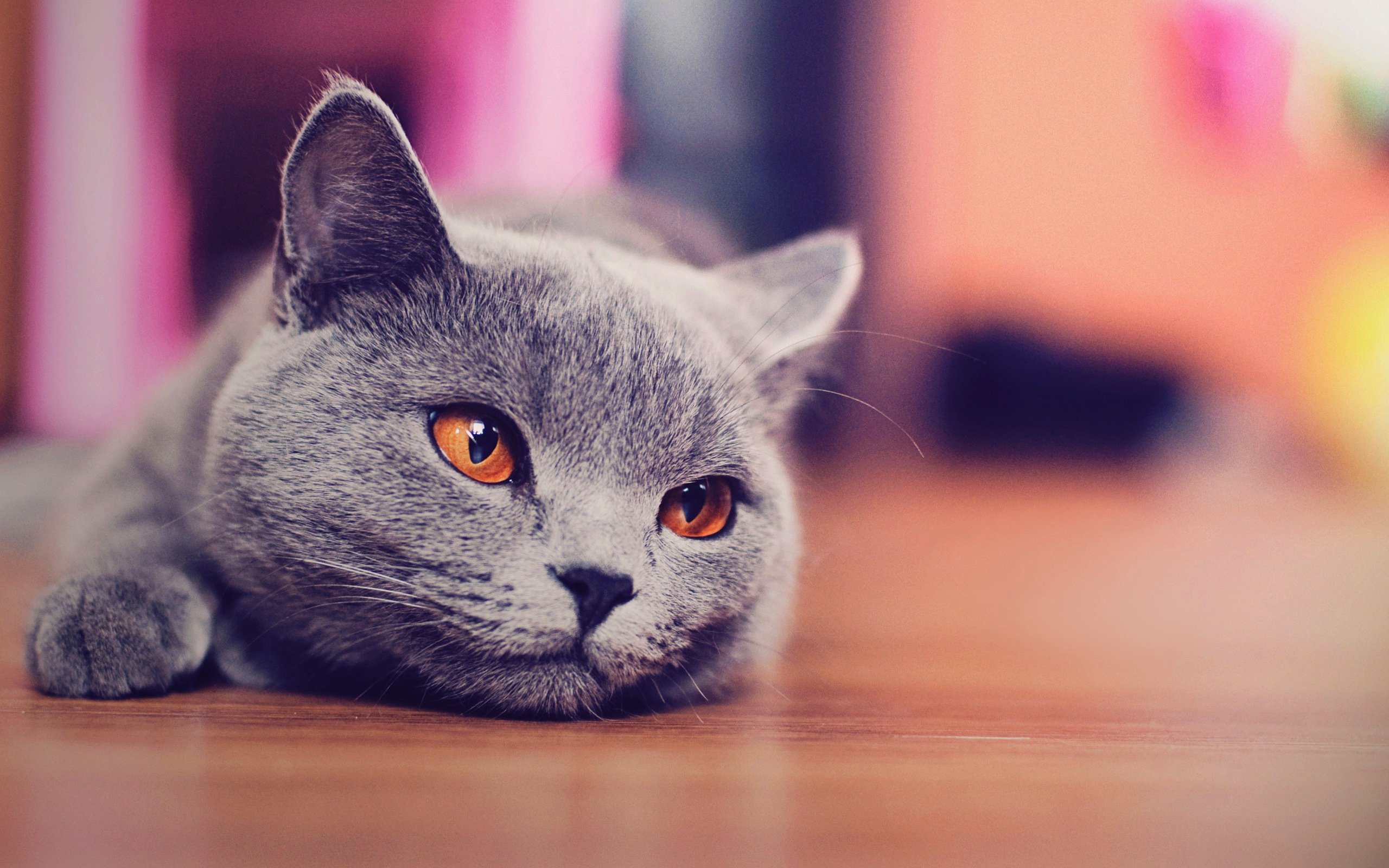
The Korat is a medium-sized cat with a well-developed, muscular build that isn’t overly bulky. It projects an impression of strength and elegance all at once. Its appearance has several unique features.
- Head: The heart-shaped face is the breed’s signature trait. When viewed from the front, you can clearly see the contours of a heart: the lines above the eyebrows form the top, and the gentle curves of the cheeks, meeting at the chin, form the bottom. The head should not be too narrow or square. The forehead is large and flat.
- Muzzle and Profile: The muzzle is well-developed but not pointed, with a soft contour. The chin and jaw are strong. The profile has a slight curve (stop) between the forehead and the nose. The nose has a gentle “lion-like” bump near the tip.
- Eyes: Large, round, and expressive, set wide apart. They give the impression of profound attentiveness and depth. The desired color in adult cats is a bright peridot green. An amber hue is also acceptable, especially in younger cats. Important: Eye color develops slowly. Kittens are born with blue eyes, which then turn amber or golden-green, and only reach their final, rich green color by the age of 2 to 4 years.
- Ears: Large, broad at the base, with rounded tips. Set high on the head, they give the cat an alert look. They are covered with fine fur.
- Body: Medium length, of a semi-cobby type—meaning it’s not as massive as a British Shorthair’s but not as slender as a Siamese’s. It’s muscular and solid, especially in the shoulders and chest. The back is slightly arched. The cat feels surprisingly heavy for its size.
- Legs: Proportional to the body, not overly long. The front legs are slightly shorter than the back ones. The paw pads are oval. Paw pad color is dark blue or lavender and may have a pinkish tinge.
- Tail: Medium length, thick at the base, and tapering to a rounded tip.
- Coat: Short, fine, silky, and glossy. It lies close to the body. There is almost no undercoat (single coat). This makes the cat more sensitive to cold.
- Color: Only one—silver-blue. The primary color of the coat is blue (gray-blue). Each hair has a lighter base, a darker middle, and a silvery tip (tipping). It’s this silver sheen that creates the unique “halo” effect around the cat’s body, especially noticeable in the light. No other colors, white spots, or lockets are allowed. The nose leather and lips are dark blue or lavender.
Differences from the Russian Blue
| Characteristic | Korat | Russian Blue |
|---|---|---|
| Head | Heart-shaped | Short wedge |
| Eyes | Large, round; peridot green (color develops gradually) | Almond-shaped; vivid emerald green |
| Body | Semi-cobby, muscular | Graceful, elegant, foreign type |
| Coat | Single, short, close-lying; silver tips (tipping) | Double, very dense, plush; stands upright, uniform silver sheen |
| Ears | Large, set high, rounded tips | Large, more vertically set; pointed tips |
Korat Personality: Temperament and Behavior
Korats are cats with a soft, gentle nature, yet they have a strong personality and deep emotional needs.
- Extreme Affection: Korats form very close bonds with their owners. They love to be near you, participate in all activities, and sit on your lap. They can be quite possessive of their “favorite” person.
- Sensitivity: These are very sensitive cats. They don’t handle loud noises, sudden movements, shouting, or general chaos well. They need a calm, stable, and predictable home environment.
- Not for Noisy Households: Due to their sensitivity, Korats are generally not recommended for families with small, very active, or noisy children. They thrive in peaceful homes, perhaps with teenagers or adults.
- Compatibility with Other Animals: They can be dominant and may not always get along well with other cats or dogs, especially if those animals are introduced later. A Korat is happiest as the only pet or living with another Korat. Early socialization can help but doesn’t guarantee success.
- Intelligence and Observance: They are smart and observant cats. They learn routines quickly and enjoy watching everything happening around them.
- Playfulness: Korats are playful but generally not hyperactive. They appreciate interactive games with their owner.
- Quiet Voice: They have a soft, melodious voice and are not overly “talkative.”
- Wary of Strangers: They are usually cautious around unfamiliar people and need time to warm up.
The Korat is the perfect choice for people who want a loyal, gentle friend and can provide a calm, loving environment.
Korat Health: Common Issues and Prevention
How to Groom a Korat and Other Care Tips
Grooming a Korat is incredibly easy thanks to its short, single coat.
- Coat Care: Minimal. It’s enough to run a soft brush, a rubber grooming glove, or even a damp hand over their coat once a week to remove loose hair and enhance the shine. Korats shed very little. Polishing the coat with a piece of chamois leather can truly amplify its silvery sheen.
- Bathing: Needed very rarely, only if they get particularly dirty. Korats are usually very clean cats. If you do bathe them, use a gentle shampoo and dry them thoroughly, keeping them warm.
- Ear and Eye Care: Regularly check their ears for cleanliness. Their eyes usually don’t require special care.
- Nail Trimming: Trim their claws every few weeks.
- Dental Care: Regular teeth brushing is important to prevent dental problems.
- Warmth: Provide your Korat with a warm place to sleep and relax, especially during colder months.
Training and Socialization
Korats are intelligent cats, but their training and socialization should account for their sensitive nature.
- Training: They are capable of learning house rules and simple commands, especially if training is done in a calm environment using positive reinforcement (praise, affection, and occasional treats). It’s important to be patient and avoid any pressure or punishment, which can scare the cat.
- Socialization: Early and very gentle socialization is crucial. Gradually introduce your kitten to calm people and quiet sounds. Avoid loud parties and stressful situations, especially when they are young. Socialization with other animals should be very cautious and controlled.
- Creating a Routine: Korats value stability and predictability. Try to maintain a consistent schedule for feeding, playtime, and affection.
- Play: Provide your cat with interactive toys and set aside time for joint play, but choose less noisy or chaotic games.
Korat Nutrition: Key Recommendations
Pros and Cons of the Korat Breed
| Pros | Cons |
|---|---|
| Unique beauty: silver-blue coat, green eyes, heart-shaped head. | Very sensitive to noise, stress, and change. |
| Gentle, affectionate, and devoted to owners. | Needs a calm, stable home environment. |
| Intelligent and observant. | Not recommended for families with small/noisy children. |
| Quiet voice, not demanding. | May not get along well with other animals. |
| Very easy coat care. | Mandatory testing of parents for GM1/GM2 gangliosidosis! |
| Generally a healthy breed (with responsible breeding). | Sensitivity to anesthesia and cold. |
| Ancient history and cultural significance (“lucky cat”). | Relatively rare breed. |
Interesting Facts About Korats
- Living Mascot: In Thailand, the Korat (Si-Sawat) has been considered a living talisman for centuries, bringing good luck, wealth, and happiness, especially to newlyweds.
- Mentioned in Manuscripts: The breed is described in the ancient Thai “Cat-Book of Poems” (“Tamra Maew”) along with other Siamese breeds.
- Slow Eye Development: Their famous peridot green eyes don’t reach their final color until they are 2-4 years old.
- Heart-Shaped Head: The unique heart-shaped head is one of the most recognizable features of the breed.
- Silver Halo: The tips of the Korat’s guard hairs have a silver tipping, which creates a shimmering halo effect around the cat’s body.
- Not a Relative of “Blues”: Despite the similar color, the Korat is genetically and morphologically distinct from the Russian Blue.
Frequently Asked Questions (FAQ)
How is a Korat different from a Russian Blue? The main differences are the head shape (heart-shaped in the Korat, wedge-shaped in the Russian Blue), eye shape and color (round, peridot green in the Korat; almond-shaped, emerald green in the Russian Blue), body type (semi-cobby in the Korat, graceful in the Russian Blue), and coat structure (single coat with silver tips in the Korat, double plush coat in the Russian Blue).
Are Korats good with kids? Due to their sensitivity to noise and sudden movements, Korats are generally not the best choice for families with small or very active children. They thrive in a calm environment.
Is a Korat high-maintenance? Coat care is very simple (infrequent brushing). The main focus should be on providing a calm atmosphere, warmth, and health monitoring (especially testing for GM1/GM2 in the parents).
What are GM1 and GM2 Gangliosidosis and why is testing important? These are fatal, hereditary neurological diseases found in the breed. DNA tests exist to identify carriers. You should only buy a Korat kitten from breeders who test their animals and can provide documented proof that at least one parent is free of the genes for these diseases (N/N). This is critically important for the health of the kitten.
Are Korats hypoallergenic? No, Korats are not considered hypoallergenic cats.
- Clever, devoted, sensitive
- “Healthy” here means no mass syndrome, not no risk
- A striking silver-blue coat, green eyes
- Quiet, ideal for a calm home
- Bonds mainly with one person
- Cautious with strangers, dislikes clamor
- Copes poorly with sudden changes of environment
- May be jealous of other animals
| Russian Blue | Siamese Cat | Thai Cat | |
|---|---|---|---|
| Weight | 3–5.5 kg | 3–5 kg | 3–6 kg |
| Energy | 3 | 4.5 | 4 |
| Apartment | 5 | 5 | 5 |
| Beginners | 4 | 3 | 3.5 |
Why is the Korat considered a “lucky cat”?
What is the Korat's character?
How healthy is the Korat?
CFA / TICA / WCF / FIFe standards (Korat)
For apartments · For kids · For beginners · Most affectionate · Quietest · Hypoallergenic · All rankings →