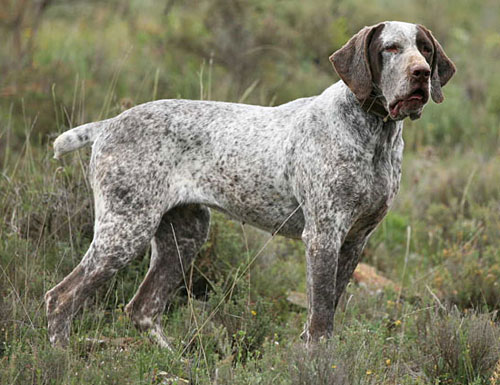
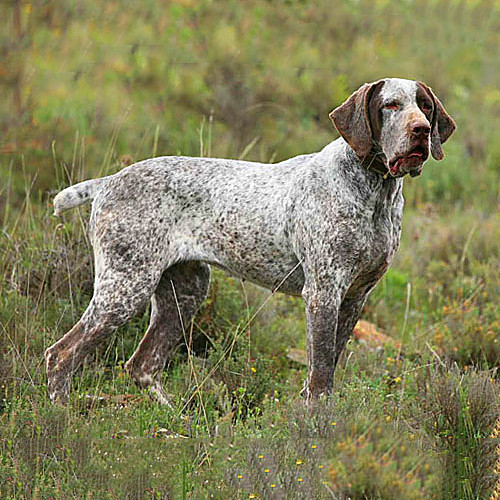
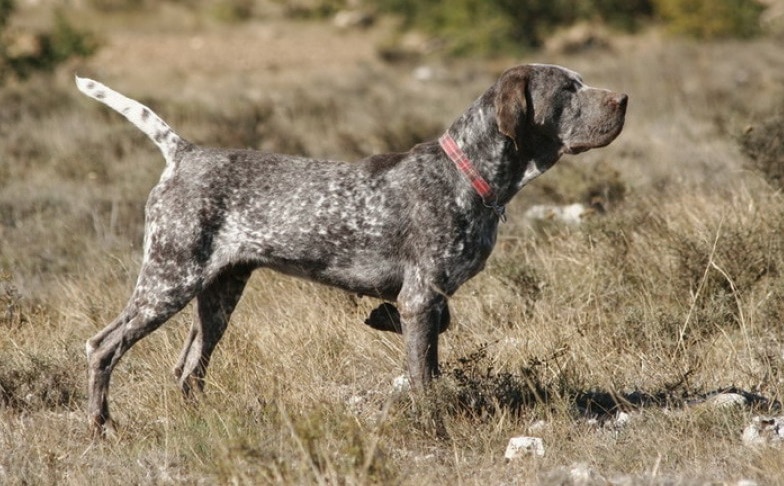
A Spanish aristocrat with a melancholy gaze — noble and dependable: calm, hardy, clever and patient. The Perdiguero de Burgos (Burgos Pointer) is an old Spanish breed of powerful all-round pointers; despite its "sad" facial expression, it is a tireless worker that hunts for hours shoulder to shoulder with its owner, and at home becomes an affectionate, calm friend, splendid with children.
Apartment · not suitableKidsCats · with caveatsOther dogsBeginners · with caveats
The Burgos Pointer(Perdiguero de Burgos) is not just a large and sleek dog with a superb hunting instinct, but also a loyal companion with a noble heart. This ancient Spanish breed truly impresses with its versatility: it can work on any terrain, from dry plains to marshy grounds, and isn't afraid of water. Its exceptional working prowess harmoniously combines with a friendly disposition, natural obedience, and a deep affection for its family. The Burgos Pointer is an embodiment of strength, intelligence, and calmness. You can find out more about this unique breed on Tvaryny.
This dog has a characteristic, somewhat melancholic facial expression, which lends it a special charm, but don't let that look deceive you. Behind it lies an energetic, resilient, and extraordinarily intelligent hunter, ready to work alongside its owner for hours on end. At home, however, it transforms into a gentle and patient family member, getting along wonderfully with children and other household pets.
Burgos Pointer: Brief Information About the Breed
Burgos Pointer: Brief Information About the Breed · 11
Hunting small and feathered game (partridges, quail, hares)
Tendency to Shed
Moderate, increases seasonally
Grooming Needs
Low (coat), high (ears)
Interesting Facts about the Breed
Royal Choice: Burgos Pointers were the favoured hunting dogs of the Spanish royal family and aristocracy for centuries, including monarchs like Philip IV.
"Sad" Look - a Standard: The melancholic expression of the eyes, accentuated by slightly drooping lower eyelids, is not a flaw but one of the breed's characteristic traits, stipulated in the standard.
Ideal for Foot Hunting: Unlike fast English Pointers, the Burgos Pointer works at a leisurely trot, making it an ideal partner for a hunter who moves on foot. The dog always stays within gunshot range.
Rescued by Enthusiasts: After the Spanish Civil War, the breed was on the brink of extinction. Its revival is the result of the meticulous work of several dedicated breeders who literally pieced together the surviving representatives of the breed.
Partridge Master: The name "Perdiguero" itself derives from the Spanish word "perdiz," meaning "partridge." This indicates the breed's primary specialisation over many centuries.
History of the Burgos Pointer
The history of the Burgos Pointer breed stretches back centuries and is intimately intertwined with the history of Spanish hunting. It is considered one of the oldest European pointing breeds. Its ancestors were heavy Spanish dogs, known as "Pachón Navarro," and old Spanish pointers, which were widespread on the Iberian Peninsula even in the Middle Ages. These dogs were famed for their exceptional sense of smell, endurance, and ability to work in challenging conditions.
The breed, in the form we know it today, developed in the Castile region, specifically in the province of Burgos, which gave it its name. The first written records describing dogs very similar to modern Burgos Pointers date back to the 16th century. Spanish aristocrats and royalty prized them for their unparalleled hunting qualities. Initially, they were used for hunting large game such as deer and wild boars, but later, with the spread of firearms, they were reoriented towards hunting smaller game - primarily partridges (perdiz in Spanish, hence the name "perdiguero" - "partridge hunter").
In the 19th century, to "lighten" their physique and improve speed, Burgos Pointers began to be crossed with lighter and faster English Pointers. This allowed for the creation of a more versatile dog that retained the endurance and excellent scenting ability of its ancestors but gained greater elegance and speed. The breed faced difficult times in the early 20th century, particularly after the Spanish Civil War, when its population sharply declined. However, thanks to the efforts of enthusiastic breeders such as Geo G. Row and Manuel Isquierdo, the breed was saved from extinction. The first official breed standard was approved in 1953. Today, the Burgos Pointer is a national treasure of Spain and is cherished by hunters for its exceptional working qualities and calm disposition.
Breed Standard and Appearance of the Burgos Pointer
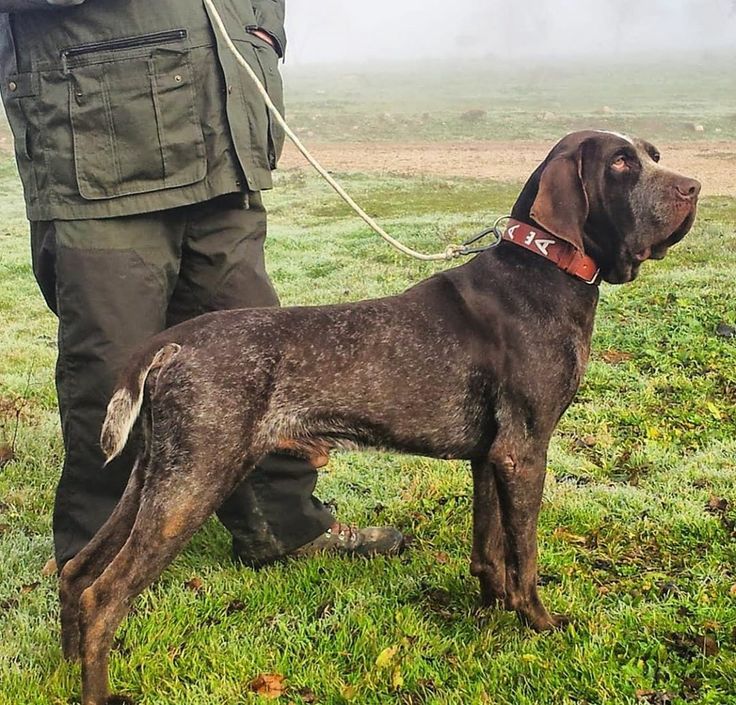
The Burgos Pointer is a large-sized dog with a sturdy bone structure, yet it is harmoniously built, creating an impression of strength and endurance. Its appearance marks it as a classic European Bracco, bred for work rather than for show.
Head: Large, but proportionate to the body, with a pronounced stop. The skull is broad and slightly domed. The muzzle is wide and rectangular.
Eyes: Medium-sized, almond-shaped, predominantly dark hazel in colour. The gaze is very expressive, often described as sad, melancholic, or noble. The lower eyelids are slightly drooping (ectropion), which is a characteristic feature of the breed.
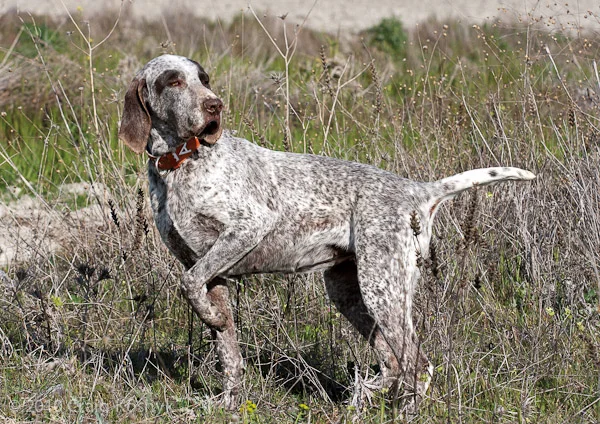
Ears: Long, pendulous, set high. They are soft, thin to the touch, forming beautiful folds and curling slightly at the base, resembling a corkscrew.
Neck and Dewlap: The neck is strong, muscular, with a well-defined double dewlap (skin folds), which is another distinguishing feature of the breed.
Body: Rectangular in format, with a strong back and a broad, deep chest, providing ample room for the lungs.
Tail: Thick at the base, set at a medium height. Historically, it was docked to a third or half of its length. In countries where docking is prohibited, the tail remains its natural length.
Coat: Short, dense, smooth, and close-lying to the body. It has a slight undercoat, which protects the dog from inclement weather.
Colour: The primary colouring is a combination of white and liver (dark brown). There are two main types: speckled (liver spots on a white background) or marbled (liver colour intermingled with white, creating a grizzled effect). A characteristic white blaze is often present on the forehead.
Character and Temperament of the Burgos Pointer
The character of the Burgos Pointer is its second calling card after its unique appearance. This is a dog with an exceptionally stable psyche, well-balanced, and calm. It is not prone to nervousness or aggression, making it a wonderful family dog. Its temperament can be described as dual: in the field, it is a focused, energetic, and tireless worker, while at home, it is a gentle, quiet, and obedient companion.
They are very people-oriented and form strong bonds with their family. A Burgos Pointer strives to please its owner and finds loneliness or neglect difficult to bear. These are very sensitive dogs, so harshness and shouting should be avoided in their training. They respond wonderfully to gentle but consistent training methods.
Attitude Towards Children and Other Animals:
Thanks to their patient and calm nature, Burgos Pointers generally get along splendidly with children. They treat them gently and can become reliable friends and playmates. Of course, any interaction between a dog and a small child should always be supervised. With proper and early socialisation, they coexist peacefully with other dogs and even cats, especially if raised together. However, one should not forget their hunting instinct, so small animals (rodents, birds) are best kept out of their reach.
Pros and Cons of the Breed
Pros
Cons
✅ Exceptional Character: calm, balanced, non-aggressive. Ideal for families.
❌ Requires high physical activity: not suitable for inactive people.
✅ High Intelligence and Obedience: learns easily, eager to please its owner.
❌ Sensitivity: reacts poorly to harshness and shouting during training.
✅ Versatile Hunter: excels with various game and in diverse terrains.
❌ Prone to ear infections: requires regular and thorough ear care.
✅ Robust Health and Endurance: no one has studied this breed systematically, so no list of hereditary diseases exists for it — that is a gap in the data, not evidence of health.
❌ Not suited for small flats: needs space, ideally a country house with a garden.
✅ Low Coat Grooming Requirements: doesn't need complex grooming.
❌ Struggles with loneliness: can develop destructive behaviour if left alone for extended periods.
Training and Education of the Burgos Pointer
The Burgos Pointer is an intelligent and clever dog, but its training has its peculiarities. They are not "lightning-fast" learners like, for example, Border Collies. They need time to master a command, but once they learn it - it's for life. The main rule in working with them is patience, consistency, and gentleness. Due to their sensitivity, they react poorly to harsh methods, shouting, and physical punishment. This can lead to the dog shutting down and refusing to cooperate.
The method of positive reinforcement works best: praise, treats, play. Early socialisation is key. From an early age, a puppy needs to be introduced to various people, sounds, places, and other animals. This will help raise a confident and well-balanced dog. Their hunting instincts, like those of other pointing breeds such as the Old Danish Pointer, are very strong, so it's important to teach the "come" command from an early age and practice it until it's automatic.
Comparing them to other Spanish breeds, such as the Spanish Hound, the Burgos Pointer is calmer and more focused on working in close contact with a human. While the hound works more independently, the pointer constantly seeks visual contact with the hunter. Its working style is similar to other continental pointing breeds, such as the Auvergne Pointer: it methodically searches the territory and makes a point, indicating the quarry. Despite the Burgos Pointer not being a Spitz-type dog, its endurance and ability to work in harsh conditions can be compared to breeds like the Norwegian Elkhound Grey, making it a reliable partner in any situation.
Care and Upkeep of the Burgos Pointer
Despite its large size, the Burgos Pointer doesn't require overly complex care. The main focus should be on satisfying its need for exercise and caring for its breed-specific ears.
Grooming and Coat Care
The short coat of the Burgos Pointer doesn't demand the services of a professional groomer. It's sufficient to brush it once a week with a rubber brush or glove to remove dead hairs and maintain its shine. Bathe the dog only as necessary, using specialised dog shampoos to avoid damaging the skin's natural protective layer. Shedding is moderate, but it intensifies seasonally in spring and autumn - during these periods, the dog will need to be brushed more frequently.
Ear Care: The Most Important Aspect
This is arguably the most crucial point in caring for this breed. Long, pendulous ears create a warm and moist environment, ideal for the proliferation of bacteria and fungi. This often leads to recurrent otitis (inflammation of the ear canal). To prevent this:
Inspect the ears weekly for redness, unpleasant odour, or excessive discharge.
Regularly clean the ears using a special veterinary lotion. Drop the lotion into the ear canal, massage the base of the ear, and then allow the dog to shake its head. Carefully remove any remaining dirt with a cotton pad from the visible part of the ear. Never use cotton buds!
After bathing or swimming in natural water bodies, always dry the ears thoroughly.
Physical Activity and Exercise
This is an energetic hunting breed that requires significant physical exercise to maintain good condition and mental health. A single short lead walk won't be enough. An adult dog needs a minimum of 1.5–2 hours of active walks per day. These can include:
Long walks or jogs in the park or forest.
Opportunity to run freely in a fenced area.
Swimming (most breed members love water).
Games with a ball or frisbee.
Specialised training for gundogs (field work).
Insufficient activity can lead to weight gain, boredom, and the development of destructive behaviour at home. Therefore, before getting such a dog, ensure you are prepared to dedicate enough time to its physical development.
Nutrition
Nutrition: What to Feed a Burgos Pointer?
Health and risks
Health and Typical Diseases
Frequently Asked Questions about the Breed (FAQ) · 5
Is the Burgos Pointer suitable for apartment living?
It's possible, but not ideal. If you live in a flat, you must be prepared to provide the dog with at least 2 hours of intense exercise daily, regardless of the weather. This breed feels most at home in a country house with its own fenced plot where it can roam freely.
Do they shed a lot?
Shedding is moderate throughout the year and increases seasonally in spring and autumn. Regular brushing helps to keep this process under control. This is certainly not a hypoallergenic breed.
Are these dogs noisy?
No, typically these are quite quiet dogs that aren't prone to incessant barking. They might vocalise to alert you to guests, but they aren't "barkers."
Are they difficult to train?
Not difficult, but a specific approach is needed. They are intelligent but sensitive. Training must be consistent, patient, and based on positive reinforcement. Harshness and shouting are counterproductive. They are not for those who want instant results.
Is the Burgos Pointer suitable for an inexperienced owner?
Yes, it can be suitable, but on the condition that the prospective owner is willing to learn and understands the breed's needs. Their calm temperament makes them easier to manage than many other gundog breeds. The main thing is a readiness to provide them with the necessary level of physical activity and to pay attention to their training.
Video about the Breed
FAQ
Why does the Burgos Pointer have a "sad" expression?
The melancholy, somewhat sad expression is a breed trait that gives it a noble charm; behind it hides an energetic, hardy and clever hunter.
Is the Burgos Pointer good with children?
Very — it is a calm, patient and predictable dog with a noble character that gets on splendidly with children and tolerates even rough play.
Is the breed suitable for a flat?
Poorly — it is a powerful all-round pointer that needs space and serious exercise; at home, though, it is affectionate and calm.