


Cats are enigmatic and enchanting creatures who communicate with us and the world not just through meowing. Their bodies are an open book, filled with subtle signals expressing a wide range of emotions and intentions, from boundless affection and trust to fear and irritation. Learning to read cat body language is key to a deeper understanding of your furry friend, strengthening your bond with them, and ensuring their comfort and safety. Misunderstanding these signals can lead to confusion, stress for the animal, and even unwelcome aggression.
Unlike dogs, whose body language often seems more obvious to us, cats express their feelings far more subtly. They use a combination of tail, ear, and eye positions, overall body posture, whisker movements, and even vocalisations to convey their state. In this article, we’ll delve into the world of feline communication and learn how to decode these signals to better understand the moods and intentions of our beloved pets. You can explore more on this and other animal topics at Tvaryny.
Why is understanding cat body language important?
Understanding your cat’s non-verbal cues offers a wealth of benefits:
- Strengthening your bond: When you correctly interpret your cat’s feelings and respond appropriately, they feel understood and secure, which deepens your emotional connection.
- Early problem detection: Changes in body language are often the first signs of stress, pain, fear, or illness. Being able to spot these changes allows you to seek veterinary help promptly.
- Preventing conflict: By recognising signs of irritation, fear, or aggression, you can avoid situations that might provoke your cat to bite or scratch, by giving them space or removing the irritant.
- Meeting their needs: Understanding when your cat wants to play, needs peace and quiet, or is simply showing affection helps you better meet their daily requirements.
- Improving interaction: Knowing “cat speak” helps you communicate with your cat in a way they understand, for example, by using “slow blinks” to express trust.

Key Elements of Cat Body Language: Decoding the Signals
A cat’s body language is made up of many components. Let’s look at the most important ones:
The Tail – A Mood Barometer
A cat’s tail is one of the most expressive indicators of its emotional state. Pay attention to its position and movements:
- Upright, tip possibly slightly curved: This is the classic sign of a happy, confident, and friendly cat. They’re pleased to see you and open to interaction.
- Quivering tip while upright: Expresses great excitement and happiness, often seen when greeting a beloved owner.
- Wrapped around your legs or another animal’s: A sign of great affection, friendship, and comfort.
- Puffed up, arched like a Halloween cat (or bottle brush): A sign of intense fear or aggression. The cat is trying to look bigger and more intimidating to ward off a threat. Do not approach!
- Held low to the ground or tucked beneath them: Indicates fear, uncertainty, anxiety, or submission.
- Rapid, sharp flicks from side to side or thumping on the floor: A signal of irritation, anger, or intense excitement. It might precede aggressive behaviour or be part of very boisterous play.
- Slow, gentle swishes from side to side: The cat is interested, observing something, assessing a situation, or feeling mildly irritated or unsure.
The Ears – Sensitive Detectors
A cat’s ears not only pick up the slightest rustle but also clearly show its emotional state:
- Pointing forwards, slightly to the sides: The cat is relaxed, calm, or interested in what’s happening ahead.
- Straight up, alert: Indicates keen attention, curiosity, or anxiety. The cat has heard something and is analysing the sound.
- Turned sideways and flattened (“aeroplane ears”): A signal of fear, anxiety, irritation, or readiness to defend itself. The cat feels unsure or dislikes something.
- Pressed tightly to the head, pointing backwards: A sign of intense fear or aggression. The cat is preparing to attack or defend itself. This is a very strong warning signal.
- Constantly moving, swivelling in different directions: The cat is actively listening to surrounding sounds, trying to pinpoint their source and meaning.
The Eyes – Windows to the Soul
A cat’s eyes, particularly pupil size and gaze, can tell you a lot:
- Slow blinking (“cat kiss”): An expression of absolute trust, relaxation, and affection. If a cat slow blinks at you, try slow blinking back – it will strengthen your bond.
- Wide open eyes, round pupils: Can mean surprise, fear, high excitement (during play or before aggression), or curiosity.
- Dilated pupils (in normal lighting): Often a sign of fear, pain, severe stress, or excitement. Consider the context.
- Constricted pupils (narrow slits): Usually indicate relaxation or contentment (especially in bright light). However, combined with a tense posture and flattened ears, they can signal irritation, aggression, or intense focus (e.g., when hunting).
- Direct, unwavering stare: In the feline world, this is often seen as a challenge, a threat, or an attempt to dominate. Avoid prolonged direct eye contact with an unfamiliar or frightened cat.
- Averting gaze, squinting eyes: Shows a lack of aggressive intent, deference, or an attempt to avoid conflict.

Body Posture
A cat’s overall body posture is also an important indicator:
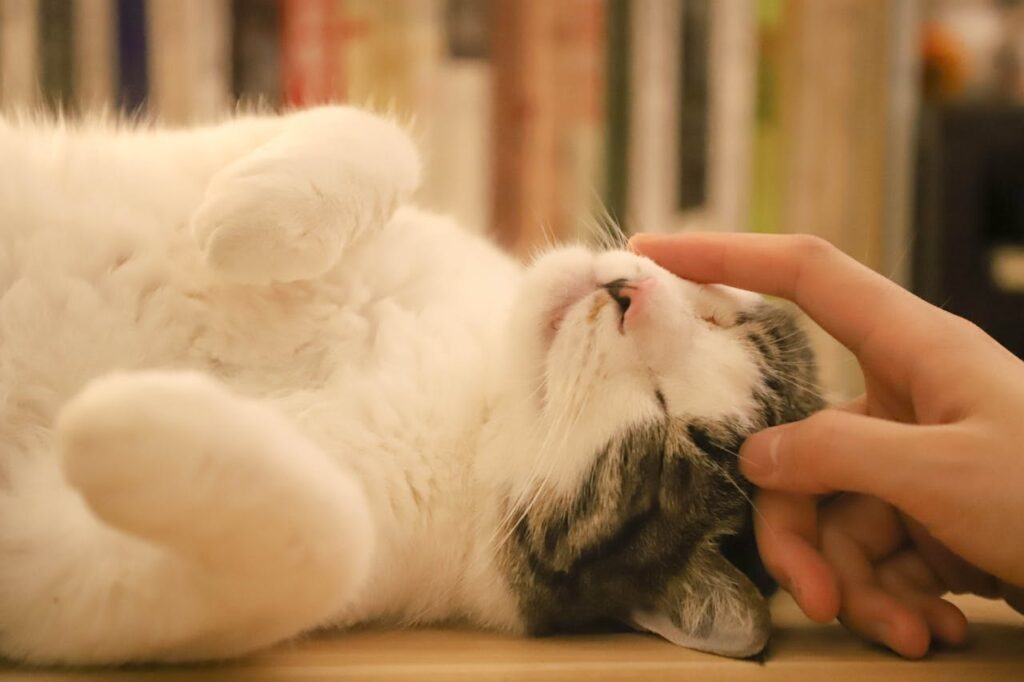
- Relaxed posture (lying on its side, back, or curled up): The cat feels comfortable, calm, and secure. An exposed belly is the ultimate sign of trust (but not always an invitation for a tummy rub!).
- Sitting or standing relaxed, muscles not tense: A calm, neutral state.
- Crouching low to the ground, body tense, head lowered: Fear, uncertainty, trying to be less conspicuous. The cat may be ready to flee.
- Back arched, fur standing on end (especially on back and tail): Intense fear or defensive aggression. The cat is trying to make itself look bigger to scare off an enemy.
- Body tense, standing on straight, stiff legs: Ready for action, possible aggression, alertness.
- Rubbing against legs or objects (head bunting): Expressing affection, marking territory using scent glands on its cheeks and head.
- Rolling on its back: Often a sign of trust and playfulness, but be wary – some cats may attack a hand that tries to stroke their belly.
Whiskers (Vibrissae)
Even the whiskers can offer clues:
- Relaxed, pointing slightly sideways: A calm, contented state.
- Pointing forwards: Curiosity, excitement, investigating something new, readiness for contact.
- Pressed back against the cheeks: Fear, uncertainty, a defensive reaction.
Vocalisations – More Than Just “Meow”
The sounds a cat makes are an important part of its communication:
- Meowing: Cats primarily meow to communicate with people. The intonation, volume, and frequency can mean different things: from a greeting and a request for food/attention to a complaint or stress.
- Purring: Most often associated with pleasure and comfort. However, cats may also purr when they are in pain, scared, or feeling unwell – it can be a way of self-soothing.
- Hissing, growling, spitting: Clear warning signals indicating fear, irritation, or aggression. The cat is asking you to keep your distance.
- Yowling or howling: Can be a sign of stress, pain, a territorial dispute, searching for a mate (in unneutered animals), or even cognitive dysfunction in older cats.
- Chirping, chattering (or clicking): A specific sound cats often make when observing unattainable prey (e.g., a bird outside the window). It can express excitement or frustration.
How to Read Combined Signals
The most important rule in understanding cat body language is to look at the whole picture. Rarely does a single signal (such as just the tail position) give a complete idea of the animal’s state. Always analyse the combination of signals: tail + ears + eyes + posture + sounds + the context of the situation.
Examples of combinations:
- A happy cat: Tail held high, ears relaxed and pointing forwards, eyes calm, perhaps slow blinking, rubbing against your legs, purring.
- A frightened cat: Ears flattened or “aeroplane” style, pupils dilated, body pressed to the ground or back arched, fur standing on end, tail puffed up or tucked under, may hiss or growl, tries to hide.
- An irritated cat: Ears turned sideways or flattened, tail twitching or lashing rapidly from side to side, body tense, may growl or hiss, gaze intense.
- A playful cat: Pupils may be dilated, ears alert, tail may twitch or be held high, body ready to pounce, may adopt a “hunting” posture, make short, excited sounds.
Common Misunderstandings
Some cat signals are easily misinterpreted:
- Purring: As mentioned, it doesn’t always mean happiness. A cat might purr when in pain or stressed.
- Exposed belly: While a sign of trust, many cats instinctively protect this vulnerable area and may attack a hand that tries to stroke their tummy.
- Tail wagging: Unlike dogs, in cats, tail wagging (especially rapid wagging) more often indicates irritation or conflicting emotions rather than joy.
What to Do If You’re Unsure
If you can’t clearly understand a cat’s mood or intentions:
- Give them space: Don’t force your attention on them; let the cat decide if it wants contact.
- Avoid sudden movements and loud noises.
- Speak in a calm, quiet voice.
- Observe: Continue to watch the combination of signals.
- Consult a vet: If your cat’s behaviour suddenly changes, if it becomes excessively aggressive, fearful, or listless, or if you notice other worrying signs (e.g., refusing food, frequent meowing for no reason, hiding), be sure to consult a vet to rule out any medical problems.
Conclusion
Understanding cat body language is a fascinating process that requires observation and patience. Every cat is an individual, and over time you’ll learn to recognise the subtlest nuances of its particular behaviour. By paying attention to the signals your pet sends, you’ll not only avoid many problems but also build a truly deep, trusting, and harmonious relationship with them. The ability to ‘hear’ your cat without words is a genuine art that will enrich your life together.