

Many cat owners face behavioural problems with their pets, which can cause frustration, damage property, and even call into question a harmonious coexistence. Scratching furniture, territory marking, and ignoring the litter tray are three of the most common complaints. But before despairing, it’s vital to understand that such behaviour isn’t a sign of malice or revenge on the cat’s part. Usually, these are signals of discomfort, stress, medical issues, or unmet natural needs of the animal; you can find out more on this on Tvaryny. In this article, we’ll delve into the reasons behind such behaviour and suggest effective ways to correct it.
Why Your Cat Scratches Furniture and How to Stop It
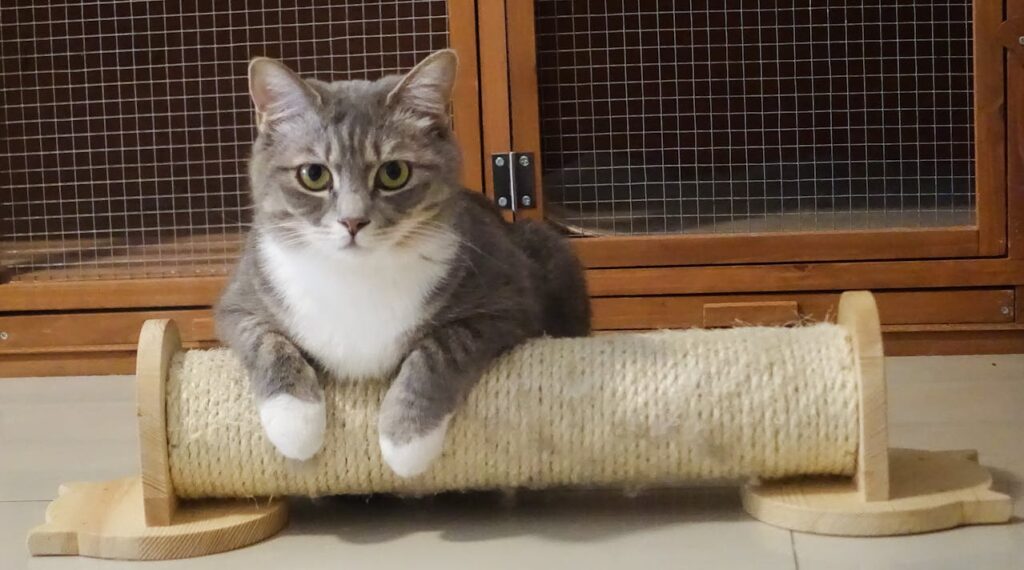
A scratched sofa, shredded wallpaper, or a ruined carpet – a familiar sight for many cat owners. Scratching is an absolutely natural and instinctive behaviour for cats, serving several important functions. Understanding why your cat scratches furniture and how to offer safe alternatives is key to managing this behaviour.
- Claw maintenance: Cats scratch surfaces to remove the old, worn outer layer of their claws, revealing new, sharp ones. This is vital for a predator.
- Territory marking: Cats have scent glands on their paw pads that release a unique odour. By scratching a surface, a cat leaves not only visual marks but also its scent, marking the territory as its own.
- Stretching and physical activity: The act of scratching allows cats to give the muscles in their back, shoulders, and legs a good stretch, keeping them toned.
- Stress and boredom relief: Scratching can be a way to release pent-up energy or cope with a stressful situation.
The problem arises when your favourite furniture becomes the target, rather than specially designated items. So, why does this happen?
- Lack of suitable alternatives: If a cat doesn’t have an appropriate scratching post (or dislikes the one provided), it will find another object to satisfy its needs. Often, these are sturdy, vertical surfaces like table legs, sofa arms, or door frames.
- Incorrect placement of the scratching post: A post hidden away in a far corner might be ignored. Cats often prefer to scratch in prominent places, especially near their resting spots or on the ‘borders’ of their territory.
- Unappealing scratching post: The material (too soft, slippery), size (too small, unstable), or type (horizontal instead of vertical, or vice-versa) might not suit your cat.
- Stress or environmental changes: Moving house, the arrival of a new pet or person, or redecorating can all trigger increased scratching as a way to self-soothe and ‘re-mark’ territory.
- Attention-seeking: Sometimes, a cat might scratch furniture because it has noticed this elicits a reaction from you (even a negative one).
Solutions to Furniture Scratching:
- Provide the right scratching posts:
- Material: Many cats prefer sisal, corrugated cardboard, wood, or coarse fabric. Observe what surfaces your cat tries to scratch and offer a similar material.
- Type and size: Try different options – vertical posts, horizontal pads, angled scratchers, activity centres. The post should be tall enough for the cat to stretch fully and stable enough not to wobble or fall.
- Quantity and location: Place several scratching posts in different areas of your home, especially near where your cat likes to sleep and near any ‘forbidden’ scratching spots.
- Make furniture less appealing:
- Cover the cat’s favourite spots on furniture with dense fabric, foil, double-sided sticky tape (cats dislike sticky surfaces), or special protective films.
- Use repellents – sprays with citrus or mint scents, or special products from a pet shop (spray on the furniture, not on the cat!). Important: use repellents cautiously and only in conjunction with providing attractive alternatives.
- Encourage appropriate behaviour:
- Place a scratching post directly next to the item the cat is scratching. As soon as it uses the post, praise it and offer a treat.
- You can rub the scratching post with catnip or valerian (if your cat responds to them) to attract attention.
- Play with your cat near the scratching post using ‘fishing rod’ toys to encourage it to use its claws there.
- Trim claws regularly: This won’t eliminate the scratching instinct but will reduce the damage your cat can inflict on furniture. Accustom your cat to this procedure from a young age. If you’re unsure how to do it correctly, consult your vet or a professional groomer.
- Never punish your cat physically: Shouting, smacking, or rubbing its nose in the scratched spot will only frighten the animal, increase stress, and can destroy your bond. The cat won’t understand why it’s being punished and may start scratching furniture secretly or exhibit other forms of problem behaviour.
Cat Spraying: Understanding the Causes and Finding Solutions
Territory marking is another behavioural issue that causes considerable trouble for owners. It’s important to distinguish between marking and normal urination outside the litter tray. When marking (spraying), a cat (usually an unneutered male, but sometimes neutered males and females) will back up to a vertical surface (a wall, furniture, a door), lift its tail (which may quiver), and spray a small amount of strong-smelling urine. This is a method of communication and marking territorial boundaries.
If, however, a cat squats and urinates a puddle on a horizontal surface (a carpet, bed, or the floor), this is more likely to indicate problems with the litter tray or medical issues, which we will discuss in the next section.
Why Do Cats Spray?
- Sexual behaviour: Unneutered male cats (toms) spray to attract females (queens) and to signal their presence to other males. Females in heat may also leave urine marks.
- Territorial insecurity/conflicts: A cat might start spraying if it feels its territory is threatened. This can be triggered by:
- The arrival of a new pet in the house (especially another cat).
- The arrival of a new person (guests, a new family member).
- Cats roaming outside the windows, or those the cat sees or hears from indoors.
- Moving house or even just rearranging the furniture.
- Stress and anxiety: Any significant changes in routine or environment (redecorating, loud noises, a visit to the vet, your prolonged absence) can cause stress, and spraying is one way this can manifest. The cat is trying to surround itself with a familiar scent to feel more secure.
- Medical reasons: Although spraying is predominantly a behavioural reaction, some urinary system diseases can increase the urge to spray or cause discomfort that the cat associates with the litter tray, leading it to avoid the tray and mark elsewhere. Therefore, a visit to the vet is an essential first step!
How to Stop Your Cat from Spraying
- Neutering/Spaying: This is the most effective method for stopping sexually motivated spraying. In most cases, neutering male cats and spaying females significantly reduces or completely eliminates this problem, especially if carried out before puberty or soon after the first signs of spraying appear.
- Thoroughly clean marked spots: It’s crucial to completely remove the urine odour from marked areas; otherwise, the cat will return to spray there again. Use special enzymatic cleaners that break down the urine molecules, rather than just masking the smell. Standard cleaning products (especially those containing ammonia) can even encourage the cat to re-mark the spot.
- Identify and eliminate stressors: Try to understand what exactly is causing your cat anxiety.
- If the problem is conflict with another pet, provide them with separate bowls, litter trays, and resting places; introduce them gradually under supervision; use pheromone diffusers to harmonise relations.
- Restrict your cat’s access to windows and doors if it’s being upset by outdoor cats (close curtains or blinds).
- Try to maintain a stable daily routine (feeding, play, litter tray cleaning).
- Create more vertical space for your cat (shelves, cat trees) where it can feel secure and survey its territory from above.
- Make marked spots unattractive: After thorough cleaning, you can temporarily place food or water bowls in these spots (cats usually don’t spray where they eat), or position a scratching post, toys, or even furniture there.
- Use synthetic pheromones: Pheromone diffusers (e.g., Feliway) or sprays release synthetic analogues of cat “happy” and “calm” pheromones. They help the cat feel more secure and comfortable in its environment, reducing stress levels and the need to spray.
- Consult a vet and a behaviourist: If you’ve ruled out medical causes and your own attempts to correct the behaviour are unsuccessful, consult a vet who specialises in animal behaviour or a qualified cat behaviourist. They can help analyse the situation more deeply and develop an individual action plan.
Cat Ignoring the Litter Tray: Finding Reasons and Solutions
When a cat that previously used its litter tray reliably suddenly starts “doing its business” in inappropriate places (on the carpet, bed, in plant pots, behind the sofa), it causes owners considerable worry and frustration. This is one of the most common reasons cats end up in rescue shelters. However, as in the previous cases, such behaviour is a cry for help, not naughtiness. The first and most crucial step is to see your vet immediately to rule out any medical problems.
Possible Reasons for Litter Tray Aversion:
- Medical problems (the most common reason!):
- Urinary tract diseases: Bladder infections (cystitis), urinary crystals or stones, and Feline Idiopathic Cystitis (FIC) cause pain and discomfort during urination. The cat starts to associate the litter tray with pain and seeks other, softer, or quieter places.
- Kidney disease: This can lead to an increased volume of urine, and the cat may simply not make it to the litter tray in time.
- Arthritis or other musculoskeletal issues: It may be painful for the cat to get into a litter tray with high sides or to adopt the necessary posture.
- Constipation or diarrhoea: These can also cause discomfort and negative associations with the litter tray.
- Cognitive dysfunction in older cats: Ageing cats may forget where the litter tray is located or lose control over urination/defecation.
- Problems with the litter tray itself:
- Dirty litter tray: Cats are very clean animals. If the tray isn’t cleaned regularly (it’s recommended to scoop solids at least once or twice a day and completely wash the tray with a full litter change once every 1-2 weeks), the cat may refuse to use it.
- Incorrect size or type of tray: The litter tray should be large enough for the cat to turn around in freely (approximately 1.5 times the length of the cat from nose to the base of its tail). Some cats dislike covered trays or those with high sides (especially kittens and elderly cats).
- Incorrect tray location: The litter tray should be in a quiet, calm, easily accessible place, away from food and water bowls, and also away from high-traffic areas (like a hallway) or noisy appliances (like a washing machine).
- Insufficient number of litter trays: The general rule is that the number of litter trays should equal the number of cats in the home, plus one more (N+1). Trays should be placed in different parts of the home.
- Problems with the litter:
- Type of litter: Some cats are very particular about the texture and scent of their litter. Many dislike scented litters, heavily dusting granules, or overly large/sharp granules (like silica gel or some wood-based litters). Most cats prefer a soft, unscented litter that resembles sand.
- Sudden change of litter: If you decide to change the type of litter, do so gradually, mixing the new litter with the old over several days.
- Insufficient amount of litter: The layer of litter should be deep enough (5-7 cm or 2-3 inches) for the cat to dig comfortably.
- Stress, anxiety, or negative associations:
- Changes in the home (moving, redecorating, new people or animals).
- Conflicts with other animals (one cat might ‘guard’ the litter tray, preventing another from using it).
- A negative experience associated with the litter tray (e.g., if the cat was startled while in the tray, or if it experienced pain during urination there).
What to Do If Your Cat Ignores the Litter Tray
- Visit your vet: This is the absolute first step. It’s essential to rule out any medical problems that could be causing this behaviour. Take a urine sample with you, if possible.
- Analyse the litter tray situation:
- Cleanliness: Scoop the litter tray at least once a day, preferably twice. Completely wash the tray and change the litter regularly (depending on the type of litter, but no less than once a week).
- Size and type: Ensure the tray is a suitable size for your cat. Try offering a tray without a lid or one with lower sides.
- Location: It might be worth moving the tray to a quieter spot or adding another tray in a different part of the house. Do not place the tray near food bowls.
- Quantity: Follow the “N+1 trays” rule.
- Experiment with litter: Offer your cat several trays with different types of litter (fine, unscented clumping clay; wood-based; corn-based; silica gel) and see which one it prefers. Avoid scented options.
- Thoroughly clean ‘accident’ spots: As with spraying, use enzymatic cleaners to completely remove the scent of urine or faeces from carpets, furniture, and floors.
- Make ‘wrong’ spots unattractive: After cleaning, you can temporarily cover these areas with foil or plastic, or place furniture or food bowls there.
- Reduce stress levels: Identify potential sources of stress and try to minimise them. Provide your cat with stability, safe resting places, and plenty of playtime. Use pheromone diffusers.
- Back to basics: Sometimes it’s helpful to temporarily confine the cat to one room where it has everything it needs (food, water, toys, a bed, and a litter tray) to help it ‘remember’ correct toilet habits. Gradually expand access to the rest of the house once the cat is consistently using the litter tray.
- Be patient and consistent: Correcting such behaviour can take time. Do not punish your cat, as this will only worsen the situation. Praise and encourage it every time it uses the litter tray appropriately.
When to Seek Professional Help
Although many cat behaviour problems can be resolved independently with patience, consistency, and the methods described above, there are situations when professional help is needed.
- Always start with your vet: As repeatedly emphasised, any sudden changes in behaviour, especially those related to toileting, require ruling out medical causes first. Even if you’re sure the problem is behavioural, a consultation with your vet is never wasted.
- If the problem doesn’t resolve or worsens: You’ve tried all the advice, been patient, but your cat continues to scratch furniture, spray, or ignore the litter tray.
- If the behaviour poses a threat: For example, aggression related to territory marking or resource guarding.
- If you can’t identify the cause: Sometimes the sources of stress or the reasons for unwanted behaviour are not obvious to the owner.
In such cases, it’s advisable to consult a veterinary behaviourist (a vet who specialises in animal behaviour) or a certified cat behaviour consultant. These specialists have in-depth knowledge of cat behaviour, can conduct a detailed analysis of your situation, identify the root causes of the problem, and develop an individual correction plan, which may include environmental modification, training, and sometimes medication (prescribed only by a vet).
Conclusion
Problematic cat behaviour – such as scratching furniture, marking territory, or ignoring the litter tray – is not a lost cause, nor is it a reason to give up your pet. These are signals that need to be correctly interpreted. Behind them almost always lie unmet needs, stress, fear, or medical problems. Understanding the reasons for such behaviour, patience, consistency in applying corrective methods, creating a comfortable and safe environment for your pet, and seeking timely advice from your vet and, if necessary, a behaviour specialist, will help you restore harmony in your home and strengthen the bond with your feline friend. Remember, love, care, and understanding are the best tools when communicating with any animal.