

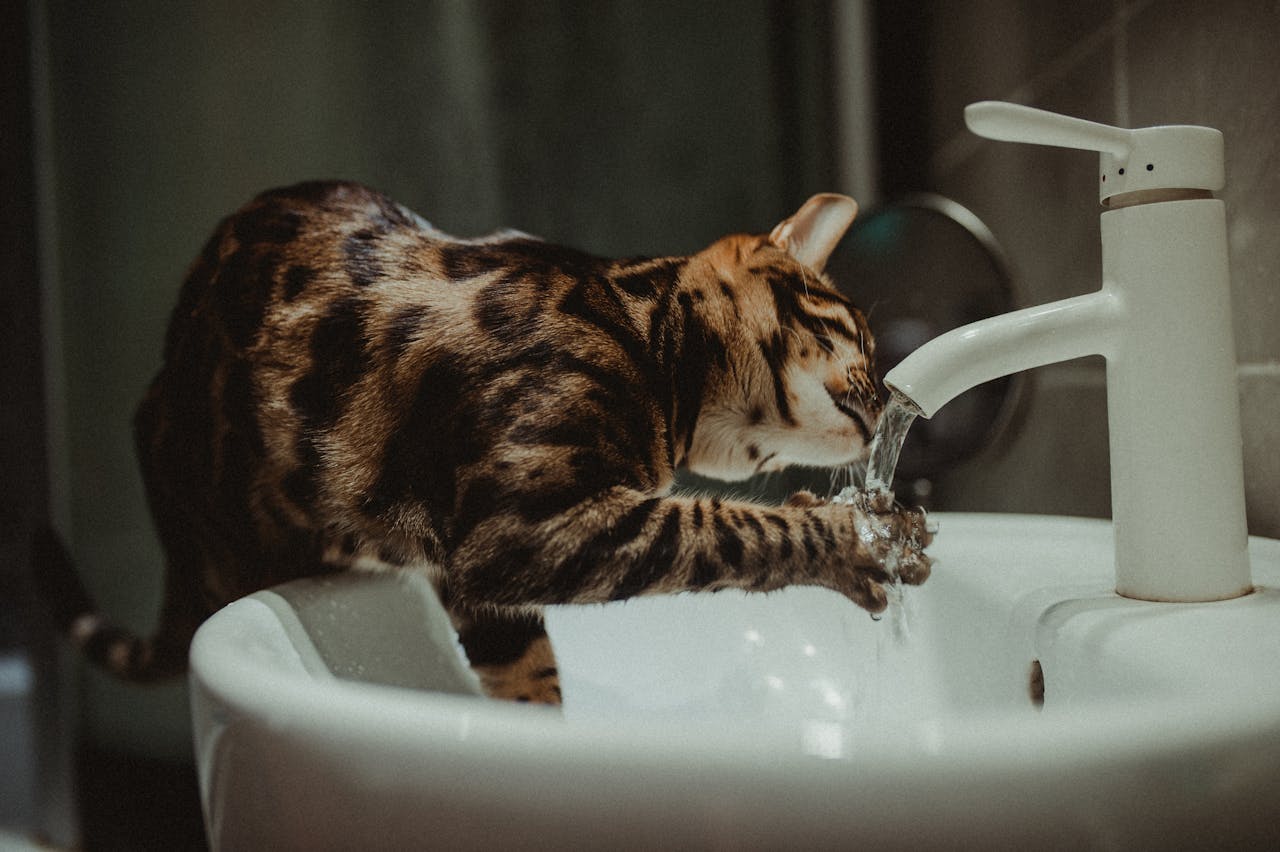
Cats – those mysterious, self-reliant creatures – have long captured our hearts. They are graceful, fluffy, occasionally cheeky, yet always irresistibly cute. But as owners we do not always grasp every nuance of their care, especially when it concerns something as vital as hydration. Does your cat drink enough? The question sounds simple, yet it is crucial to your pet’s health and wellbeing – more on Tvaryny.
Inadequate water intake is among the leading causes of many feline illnesses, including kidney disease and urinary-tract issues. Knowing how much water cats need – and how to persuade them to drink – is key to keeping them in top condition.
Why hydration is critical for cats
Like every living creature, cats need water for their bodies to function properly. It underpins several essential processes:
- Body-temperature control: Water helps keep core temperature stable.
- Nutrient transport: As the main component of blood, it carries nutrients to every cell.
- Toxin removal: It flushes waste via the kidneys and urinary tract.
- Joint lubrication: Adequate fluid protects joint surfaces from wear.
- Digestive support: Water is vital for smooth digestion and nutrient absorption.
Historical note: The wild ancestors of today’s domestic cats came from desert regions where water was scarce. Their bodies adapted to obtain most of their fluid from prey – small rodents and birds that are roughly 70 per cent water. This evolutionary trait survives in modern moggies, which is why they rarely feel intense thirst even when their bodies need extra liquid.
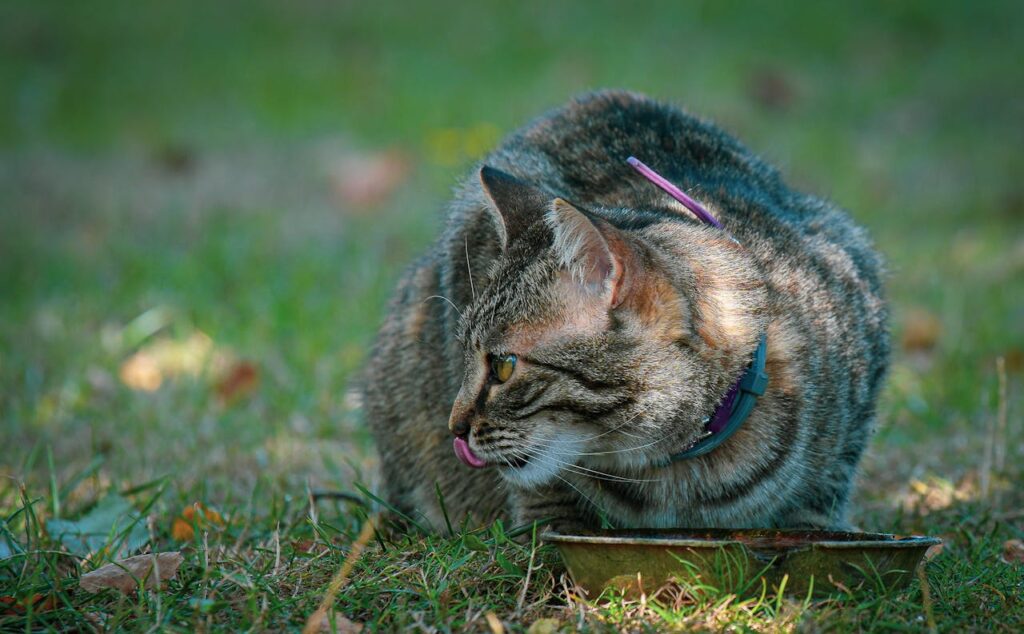
Risks of poor hydration
Too little water can trigger a range of serious health problems, including:
- Kidney disease: Dehydration strains the kidneys and may lead to chronic renal failure, a common ailment in older cats.
- Urinary-tract problems: Concentrated urine promotes crystals and stones in the bladder or urethra, causing cystitis, urethritis or blockages.
- Constipation: Lack of fluid hardens stools and makes defecation painful.
- Acute dehydration: In hot weather or after vomiting or diarrhoea, life-threatening fluid loss can develop and needs urgent veterinary care.
How much should a cat drink?
The ideal amount depends on several factors:
- Size and weight: Bigger cats need more water.
- Activity level: Active cats lose more fluid.
- Diet type: Cats on dry food require far more water than those on wet food (5–10 % versus up to 80 % moisture).
- Age: Kittens and seniors often need extra water – the first for rapid growth, the latter because of possible kidney issues.
- Health status: Conditions such as diabetes or hyperthyroidism increase thirst.
- Ambient temperature: Hot weather raises fluid needs.
Rule of thumb: Cats should consume around 50–60 ml of water per kilogram of body weight per day. A 4 kg cat therefore needs roughly 200–240 ml daily – though much of this can come from wet food.
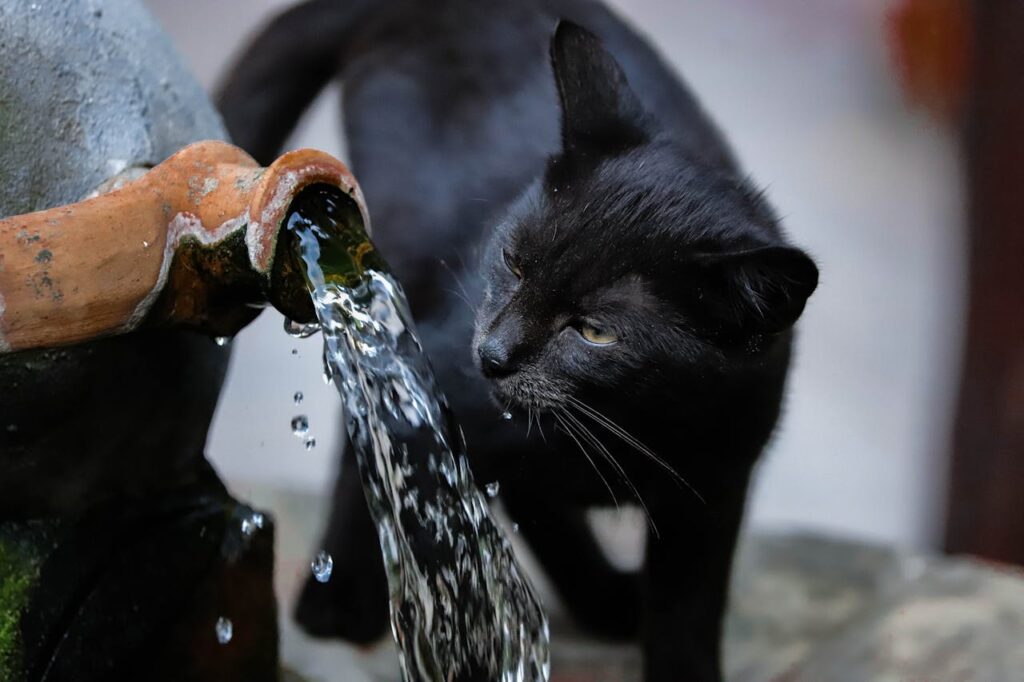
Signs of dehydration in cats
Cats are experts at masking discomfort, so dehydration can be hard to spot. Watch for:
- Skin-tent test: Gently lift skin at the scruff; if it stays up or drops slowly, your cat is dehydrated.
- Dry gums: Healthy gums are moist and pink; dry, sticky or pale gums are a warning sign.
- Sunken eyes: Eyes may appear dull or hollow in severe cases.
- Lethargy: A dehydrated cat can seem listless and uninterested in food or play.
- Reduced urination: Less frequent trips to the litter tray or very small volumes of urine are concerning.
- Thick saliva: Saliva becomes dense and tacky.
If you notice any of these symptoms, contact your vet straight away.
How to encourage your cat to drink more
Cats have individual preferences, even for drinking. Fortunately there are plenty of ways to tempt them. Here are the most effective:
1. Bowl types
| Bowl type | Advantages | Disadvantages | Recommendation |
|---|---|---|---|
| Ceramic | Heavy, stable, easy to clean, odour-free, durable. | Can break, sometimes pricier. | Excellent choice – look for glazed surfaces. |
| Stainless steel | Very robust, hygienic, easy to wash, odourless, fairly light. | May rattle on hard floors; some cats dislike reflections. | Also top-class – choose quality steel. |
| Plastic | Cheap, light, widely available. | Absorbs smells, can cause feline acne, wears quickly, harder to clean. | Not ideal for daily use – replace frequently if you must use it. |
| Glass | Hygienic, odour-neutral, easy to wash, attractive. | Fragile, can be slippery. | Good option but handle with care. |
| Water fountain | Moving water attracts cats, filters and aerates. | Needs electricity, regular cleaning and filter changes, can be noisy. | Perfect for cats that shun still water. |
2. Water quality and freshness
- Fresh water: Change bowls at least twice a day – cats are sensitive to odour and taste.
- Filtered water: Removes chlorine or impurities; many cats prefer the taste.
- Cooler water: Some cats enjoy chilled water – drop in an ice cube during hot spells.
3. Drinking stimulation
- Fountains: Flowing water mimics a natural spring and boosts intake.
- Ice cubes: Moving ice can turn drinking into play.
- Floating toys: A small toy in the bowl can engage the hunting instinct.
- Taps: Some cats love sipping straight from the tap – allow this under supervision.
4. Diet tweaks
- Wet food: Switch to – or mix in – wet food; its 80 % moisture greatly boosts fluid intake.
- Add liquid to kibble: A splash of water or low-salt chicken broth makes dry food juicier.
- Cat lollies: Freeze broth or water with a little tuna (no salt) in an ice-cube tray for a hydrating treat.
5. Extra tips
- Cleanliness: Wash bowls regularly to stop bacterial film.
- Glass tumblers: Some cats prefer drinking from glasses on a table or windowsill.
- Patience & observation: Every cat is different – experiment until you find what works.
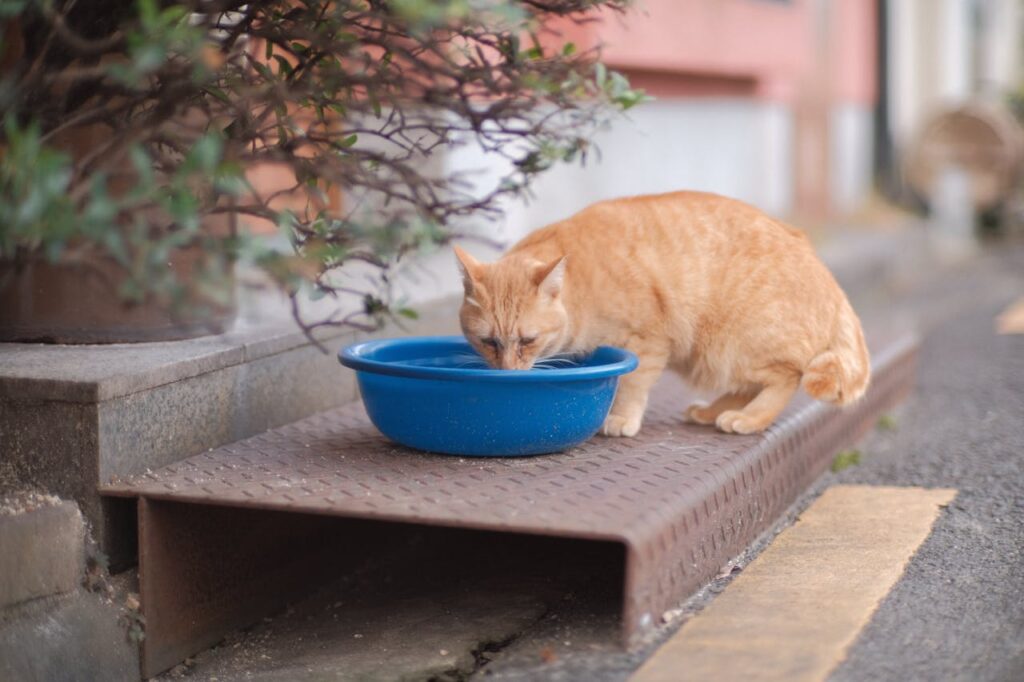
Common myths and questions about feline hydration
Myth 1: Cats can drink milk instead of water
Reality: Most adult cats are lactose-intolerant; milk can cause diarrhoea and vomiting. It is no substitute for water and may worsen dehydration.
Myth 2: Dry food provides enough water
Reality: Dry kibble contains only 5–10 % moisture versus up to 80 % in wet food. Cats on a kibble-only diet must drink significantly more, yet many do not, risking chronic dehydration.
Myth 3: If a cat is not drinking, it is not thirsty
Reality: Cats evolved to obtain moisture from prey, so they seldom feel strong thirst. This makes them prone to dehydration, especially on dry diets – hence the need to encourage drinking.
Question: Is tap water safe for my cat?
Answer: That depends on local water quality. If it is safe for people – free of strong chlorine smell, metallic taste or excess impurities – it is usually fine for cats. Filtered water, however, often tastes better and can boost intake.
Question: My cat drinks from the toilet – is that OK?
Answer: No. Toilet water may contain bacteria, cleaning chemicals and faecal residue. Offer several clean water sources and keep the lid down.
Question: How can I tell my cat is getting enough fluid?
Answer: Observe behaviour. An active cat with moist gums, elastic skin and pale yellow, mild-smelling urine is usually well hydrated. Wet food plus regular drinking are good signs; routine vet checks add peace of mind.
Conclusion
Ensuring proper hydration is one of the most important elements of cat care. It is more than quenching thirst – it prevents serious illnesses, especially kidney and urinary-tract diseases. Remember, cats are masters at hiding discomfort, so keep a close eye on subtle changes in behaviour and condition.
Time spent creating appealing drinking options is an investment in a long, healthy life for your feline friend. Try different bowls, locations, water qualities and incentives – a fountain may be a game-changer, while switching to wet food can dramatically improve health. Regular vet visits and honest dialogue will help you craft the perfect hydration plan.
Your cat deserves the very best care, and guaranteeing plenty of fresh water is one of the simplest – yet most effective – ways to show love and concern. Your cat’s health is in your hands!