

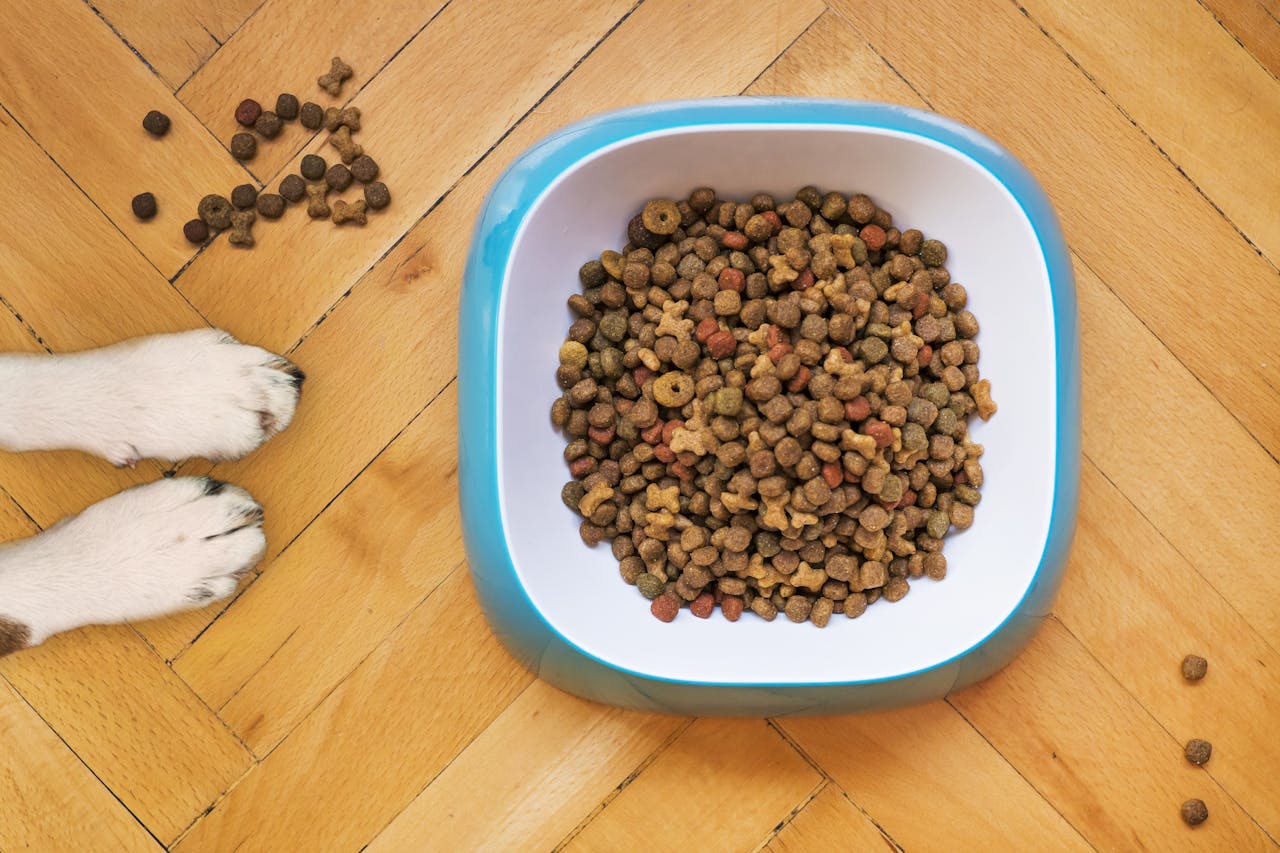
Choosing the right food for your four-legged friend is one of the most crucial decisions you’ll make as a responsible owner. The market is flooded with a vast array of brands, each promising the best nutrition – you can read more about this on Tvaryny. But how do you navigate this bewildering variety and truly understand what’s inside the packaging? The key is learning to read and analyse the label. This article will help you become a genuine expert in the world of dog food and make an informed choice for your pet’s health and happiness.
Why it’s important to understand food labels
A food label isn’t just a marketing tool; it’s a legal document containing vital information about the product’s ingredients and nutritional value. Understanding this data allows you to:
- Assess the food’s quality: Determine if it meets your dog’s needs based on their age, breed, activity level, and health status.
- Identify potential allergens: If your dog has food sensitivities or allergies, carefully examining the ingredients list will help prevent issues.
- Compare different foods: Make an informed choice between various brands and product lines based on facts, not just advertising claims.
- Ensure a balanced diet: Check that the food contains all the necessary nutrients (proteins, fats, carbohydrates, vitamins, minerals) in the correct proportions.
- Avoid harmful additives: Recognise undesirable ingredients like artificial colourings, preservatives, or flavour enhancers.
Key sections of a food label and what they mean
Dog food labels generally follow a standardised structure. Let’s look at the key sections:
1. Product name and marketing claims
The name can give you an initial idea of the main ingredient (e.g., “Chicken Dog Food”). However, pay close attention to the wording. Labelling regulations (like those from AAFCO in the USA – the Association of American Feed Control Officials, though in the UK and Europe, FEDIAF guidelines are also key) often govern the use of terms:
- “Chicken” (e.g., “Chicken Dog Food”): This generally indicates that chicken constitutes at least 70% of the total weight of all ingredients (when moisture is included) or 95% (when moisture is excluded), according to AAFCO rules.
- “Chicken Dinner/Platter/Entree”: Chicken makes up at least 10% (with moisture) or 25% (without moisture).
- “With Chicken”: Chicken makes up at least 3% (according to AAFCO rules; in the UK/EU, this typically implies a minimum of 4%).
- “Chicken Flavour”: May contain very little actual chicken, just enough to provide a taste.
Marketing claims like “natural,” “organic,” “holistic,” or “grain-free” can be eye-catching but don’t always have a strict legal definition or guarantee superior quality. “Natural” usually means no artificial additives, while “organic” requires certified ingredients. “Grain-free” isn’t always better, especially if grains are replaced with large amounts of legumes (like peas or lentils), which have been linked to a risk of dilated cardiomyopathy (DCM) in some dogs.
2. Ingredients list
This is the most crucial part of the label. Ingredients are listed in descending order of their weight BEFORE processing. This means the first ingredient is the most predominant by weight. Bear in mind that fresh meat contains a lot of water (around 70-80%), which evaporates during the production of dry food (kibble). Therefore, an ingredient like “dehydrated chicken” or “chicken meal” can be a more concentrated source of protein than “fresh chicken,” even if it appears lower down the list.
What to look out for:
- The first 3-5 ingredients: These make up the bulk of the food. Ideally, you want to see quality animal protein sources here (e.g., “chicken,” “turkey,” “lamb,” “fish,” “chicken meal,” “lamb meal”). Avoid foods where corn, wheat, soya, or vague meat products dominate the top spots.
- Protein sources: Opt for clearly named sources (“chicken” rather than “poultry meat”; “salmon meal” rather than “fish meal”). “Meat by-products” (or “animal derivatives” as often termed in the UK/EU) can be nutritious (like liver or heart), but vague “by-products” or “meat and bone meal” are generally lower-quality ingredients.
- Fat sources: Look for named animal fats (“chicken fat,” “fish oil,” “salmon oil”) or quality vegetable oils. These are important for energy, healthy skin, and a glossy coat. Avoid unspecified “animal fats.” Fats should be preserved with natural preservatives (tocopherols – vitamin E, rosemary extract).
- Carbohydrates: Wholegrains (brown rice, oats, barley) and vegetables (sweet potato, peas, carrots) are good sources of energy and fibre. Corn, wheat, and soya are often used as cheaper fillers and can cause allergies in sensitive dogs.
- Fruits and vegetables: Provide vitamins, minerals, and antioxidants.
- Artificial additives: Avoid foods with artificial colourings (e.g., E102, E110, E129), preservatives (BHA, BHT, ethoxyquin, propylene glycol), and flavour enhancers.
3. Guaranteed Analysis (Analytical Constituents)
This section shows the minimum percentage of crude protein and crude fat, and the maximum percentage of crude fibre and moisture. “Crude” refers to the method of measurement, not the quality of the ingredient.
- Crude Protein: Essential for growth, tissue repair, and muscle. The minimum percentage for adult dogs is typically 18%, and for puppies, 22% (on a dry matter basis).
- Crude Fat: The main source of energy, necessary for absorbing fat-soluble vitamins. Minimum for adults is 5%, for puppies 8%.
- Crude Fibre: Aids digestion. The maximum level is usually around 5%. Too high a content can reduce the digestibility of other nutrients.
- Moisture: The maximum permitted percentage of water. In dry foods, this is usually 10-12%; in wet foods, it’s 75-85%.
Important: The guaranteed analysis (or analytical constituents) only indicates quantity, not the quality or digestibility of the proteins and fats. The protein source could be high-quality meat, or it could be feathers or hooves. Therefore, always analyse this section alongside the ingredients list.
To compare nutrient levels between dry and wet food (or foods with different moisture contents), you need to calculate their content on a Dry Matter Basis (DMB). For example, if a dry food contains 25% protein and 10% moisture, the protein content on a DMB is 25 / (100-10) * 100 = 27.8%. If a wet food contains 8% protein and 80% moisture, its DMB protein content is 8 / (100-80) * 100 = 40%.
4. Nutritional Adequacy Statement
This is one of the most important statements on the packaging. It usually indicates that the food is “complete and balanced” for a specific life stage of the dog (e.g., “for puppies,” “for adult dogs,” “for all life stages”) according to standards set by an organisation like AAFCO (Association of American Feed Control Officials). In Europe, pet food manufacturers often follow FEDIAF (European Pet Food Industry Federation) nutritional guidelines.
There are two ways AAFCO conformity can be substantiated:
- Formulation: The food is formulated to meet AAFCO nutrient profiles.
- Feeding Trials: The food has undergone animal feeding trials using AAFCO procedures. This method is considered more reliable as it confirms not just the formulation but also the food’s digestibility and nutritional value in real-life conditions. Look for phrases like: “(Product Name) is formulated to meet the nutritional levels established by the AAFCO Dog Food Nutrient Profiles for [Life Stage]” or “Animal feeding tests using AAFCO procedures substantiate that (Product Name) provides complete and balanced nutrition for [Life Stage].”
If the packaging lacks an AAFCO statement (or similar assurance of completeness for the relevant life stage, e.g. via FEDIAF guidelines) or states that the food is for “intermittent or supplemental feeding only,” it should not be used as the main diet.
5. Feeding guidelines
Manufacturers provide a table with recommended daily portions based on the dog’s weight. Remember, these are only a guideline. Your dog’s individual needs can vary depending on age, breed, activity level, metabolism, and living conditions. Monitor your pet’s weight and body condition, and adjust portions as needed. Always ensure fresh, clean water is available.
6. Other information
Pay attention to the best before date and manufacturer’s information (name, address, contact details). The presence of contact information shows the manufacturer is open to answering consumer questions.
Practical tips for choosing food
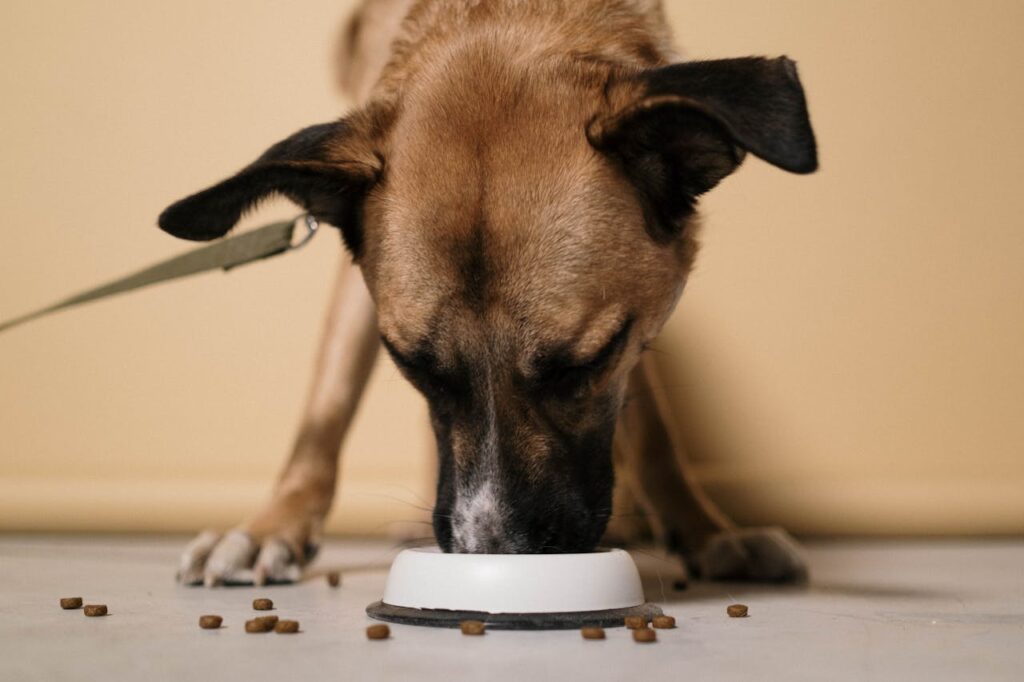
- Determine your dog’s needs: Age (puppy, adult, senior), breed size, activity level, and any allergies or health issues will all influence your choice.
- Start with the ingredients list: Look for quality animal protein sources in the top positions. Avoid vague wording and artificial additives.
- Check the nutritional adequacy statement (e.g., AAFCO or FEDIAF compliance): Ensure the food is complete and balanced for your dog’s life stage, preferably substantiated by feeding trials.
- Don’t be swayed by price or brand alone: Expensive food isn’t always the best, and well-known brands can have product lines of varying quality. Compare the ingredients and analysis.
- Consult your vet: Your vet knows your dog’s health history and can offer valuable recommendations for choosing food, especially if your pet has specific needs.
- Introduce new food gradually: To avoid digestive upset, mix the new food with the old over 7-10 days, slowly increasing the proportion of the new food.
Conclusion
Reading dog food labels is a skill that takes practice, but it’s incredibly important for ensuring your pet enjoys a long and healthy life. Don’t be afraid to spend time studying the ingredients list and guaranteed analysis. Understanding what you’re feeding your dog will empower you to make informed decisions, avoid potential health problems, and give your four-legged friend the best possible nutrition. Remember, investing in quality food is an investment in your dog’s health and happiness.