

| Height | 43–58 cm |
| Weight | 16–24 kg |
| Lifespan | 12–14 years |
| FCI group | 6 · scenthounds |
| Origin | Croatia |
Exact ratings
- Generally a very healthy working breed
- Ear infections (pendulous ears)
- Hip dysplasia (less common)
- Obesity with insufficient exercise
- Nervousness without enough exercise
Balanced food for an active scenthound, with weight control. Check the pendulous ears regularly; daily exercise is a must — without it the breed becomes excitable; provide scent work.
The Posavina Hound, also known as Posavski Gonič, is not just a hunting dog; it is a true national treasure of Croatia. This medium-sized, four-legged hunter with its striking yellowish-red coat and distinctive white markings is famous for its incredibly loud and melodious voice, which echoes for miles, announcing the trail of its quarry. The “gong” of the Posavac, a sustained single note, is its calling card. It is a hardy, energetic, and incredibly hardworking dog, traditionally used for hunting hares, foxes, and deer.
However, thanks to their soft, obedient, and exceptionally friendly nature, representatives of this breed are increasingly becoming wonderful companion dogs and beloved family pets. They require standard care and a balanced diet, boast robust health, and enjoy a long life. The Posavina Hound is the embodiment of a harmonious blend of working qualities and a gentle disposition, making it an ideal choice for active people who value loyalty and intelligence. Read more about this unique breed, its history, character, and care tips on Tvaryny.
Posavina Hound: Key Breed Characteristics
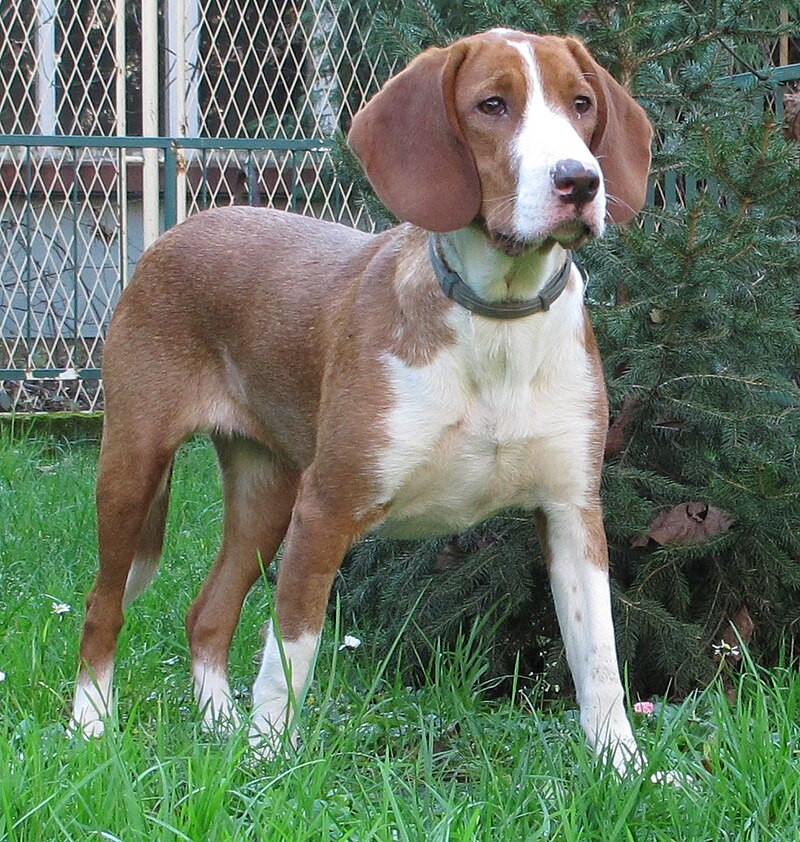
| Characteristic | Description |
| Original Name | Posavski gonič |
| Country of Origin | Croatia |
| FCI Classification | Group 6 (Scent hounds and related breeds), Section 1.2 (Medium-sized hounds). Working trial required. |
| Year of FCI Recognition | 1955 (as “Karst Hound”), 1969 (modern name) |
| Lifespan | 12-14 years |
| Height at Withers | Males: 46-58 cm; Females: 43-55 cm |
| Weight | 16-24 kg |
| Temperament | Lively, devoted, obedient, friendly, passionate hunter |
| Colour | Wheaten-red, yellowish, reddish. White markings on the head, neck, chest, belly, lower parts of the legs, and the tip of the tail. |
| Purpose | Hunting small and medium-sized game (hare, fox, deer), companion dog. |
History and Origin of the Posavina Hound
The history of the Posavina Hound dates back to ancient times, with its roots deeply intertwined with the culture and geography of the Balkan Peninsula. It is one of the oldest Croatian breeds, whose origin, although not fully clarified, is undoubtedly connected to the Sava River valley (in Croatian, “Posavina”), which is where the breed’s name comes from. This region, stretching through Croatia, Bosnia and Herzegovina, Serbia, and Slovenia, has long been an ideal place for hunting, which created the need for a hardy and reliable hound.
The earliest written records of dogs resembling the modern Posavac date back to the 14th century. Documents from the Đakovo Bishopric in 1337 and from Bishop Petar in 1373 mention hounds from Posavina. However, the most famous historical evidence is a fresco from 1497 in the chapel of St. Mary in the town of Beram (Istria). One of the scenes, “The Adoration of the Magi,” depicts a dog with the characteristic reddish coat, white markings, and drop ears, which is virtually identical to the modern Posavina Hound.
For centuries, the breed developed naturally, adapting to local hunting conditions. It is believed that ancient Illyrian hounds were involved in its formation, possibly crossed with hounds brought to the Balkans from Italy and other parts of Europe. The breed’s characteristics clearly indicate its blood ties with other Balkan breeds, such as the Istrian Shorthaired Hound or the Serbian Hound, which suggests common roots and the exchange of genetic material in the region.
The first official breed standard was developed in 1924, and the first entries into the Croatian studbook were made in 1929. International recognition came much later. In 1955, the Fédération Cynologique Internationale (FCI) recognised the breed under the name “Karst Hound” (Kraški gonič). However, after numerous protests from Croatian cynologists who provided evidence that the breed originated specifically from the Sava Valley, the name was changed to the modern and official Posavski gonič in 1969.
What the Posavina Hound Looks Like: The Breed Standard
The Posavina Hound is a robust, well-proportioned, medium-sized dog whose appearance perfectly matches its purpose as a tireless hunter. It has an elongated, rectangular body, a prominent wither, and a broad, deep chest with well-sprung ribs, providing ample room for the lungs and heart. The back is broad and strong, the abdomen is slightly tucked up, and the croup is muscular and rounded. The sabre-shaped tail is of medium length, thickly coated, and is a continuation of the topline.
Head, Eyes, and Ears
The head is long and narrow but not excessively so. The stop is slight and not sharply defined. The muzzle is elongated, strong, with a straight nasal bridge. The nose is large, black or dark brown. The lips are tight-fitting and not pendulous. The Posavina Hound has large, expressive, oval-shaped eyes, always of a dark brown colour, with a gentle and calm expression. The ears are one of the breed’s most characteristic features. They are flat, thin, of medium length, fitting closely to the cheeks, with rounded tips.
Coat and Colour
The coat is short (2-3 cm), dense, and harsh to the touch, with a well-developed undercoat that protects the dog from the elements. The colour is always pied – white markings are found on a base of any shade of wheaten-red (from golden to a rich red). According to the standard, white patches must be on the head (in the form of a “star” or “blaze”), neck (forming a “collar”), chest, belly, lower parts of the legs, and on the tip of the tail. The area of the white markings should not exceed one-third of the total body surface.
| Body Part | FCI Standard No. 154 Characteristics |
|---|---|
| Body | Rectangular, length index approximately 110. |
| Head | Length approximately 20-24 cm, narrow. |
| Eyes | Large, oval, dark brown. |
| Ears | Drop, flat, close-fitting to the cheeks, rounded tips. |
| Coat | Short, dense, harsh. |
| Colour | Wheaten-red with white markings on the head, neck, chest, legs, and tail. |
| Movement | Free, energetic, harmonious. |
Temperament and Character of the Posavina Hound
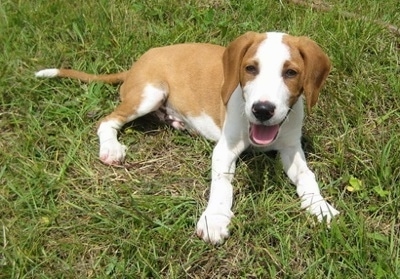
Thanks to their balanced temperament, Posavina Hounds are not only excellent hunters but also wonderful family pets. They combine the passion and persistence of the hunt with incredible gentleness and devotion at home.
Loyalty and Family Relationships
The Posavina Hound is an extremely loyal dog that bonds strongly with its owner and all family members. It is friendly, patient, and affectionate. This is not a one-person dog; it loves everyone who cares for it equally. They crave companionship and handle loneliness poorly, so they are not suited for people who spend a lot of time away from home. If left alone for too long, a Posavac may become bored and exhibit destructive behaviour, and its famous voice can become a nuisance for neighbours.
Hunting Instincts and Behaviour
On the hunt, the Posavac transforms. Its calmness and gentleness are replaced by ardour, persistence, and incredible stamina. Its main weapon is an exceptional sense of smell and a loud, melodic voice. A distinctive feature of its work is a tilted head when searching for a trail. Like all hunting dogs, the Posavina Hound possesses a certain independence and self-assurance. It is capable of making its own decisions while pursuing game, which is valuable to a hunter but can create certain difficulties in everyday life, especially during walks off the lead. Similar to other Balkan hunting breeds, their passion for the chase is innate.
Relationships with Children and Other Animals
Thanks to their patient and non-confrontational nature, Posavina Hounds generally get along splendidly with children. They gladly participate in games and can become a child’s best friend. Of course, any interaction between a dog and a young child should be supervised by adults.
They usually get on well with other dogs, especially if they were raised together. They are not prone to dominance or aggression. However, problems can arise with small animals (cats, rodents, birds) due to their strong hunting instinct. If a Posavac puppy is socialised early and accustomed to a cat, peaceful coexistence is possible, but they should not be left alone unsupervised. Unlike some terriers, such as the Lakeland Terrier, which can be quarrelsome, a Posavac is more likely to view a small animal as prey rather than a rival.
Pros and Cons of the Posavina Hound Breed
- Pros:
- Loyal and loving nature: Becomes a wonderful companion and family member.
- High intelligence and cleverness: Easy to train if the right approach is found.
- Robust health: no breed-wide list of hereditary diseases has been compiled — “not described” means “not studied”, not “not there”.
- Low-maintenance grooming: The short coat doesn’t require complex grooming.
- Great with children: Patient and playful.
- Incredible stamina: An ideal partner for jogging, hiking, and active recreation.
- Cons:
- Very high energy level: Requires daily intense physical activity.
- Strong hunting instinct: May run off after an interesting scent; dangerous for small animals.
- Loud and frequent barking: Their voice can be a problem in urban areas.
- Needs space: Absolutely unsuitable for living in a small flat.
- Tendency towards independence: Can be stubborn during training.
- Handles loneliness poorly: Can suffer from separation anxiety.
Care and Upkeep of the Posavina Hound
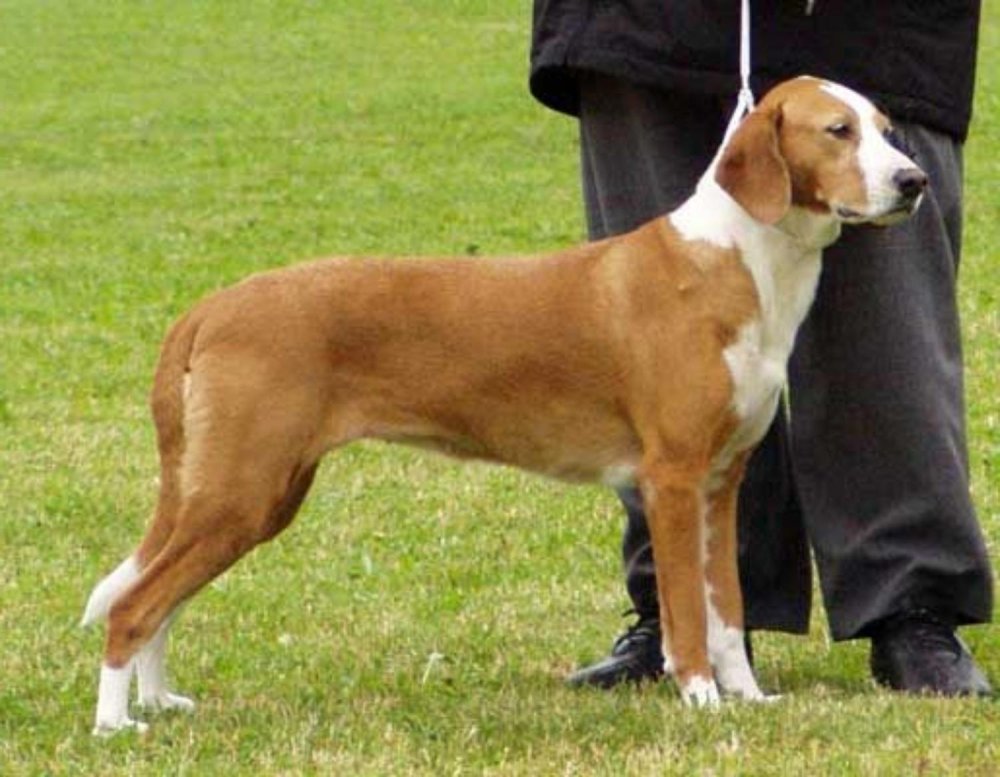
Caring for a Posavina Hound is not difficult, but it requires responsibility and an understanding of the breed’s needs, especially regarding physical activity and living conditions.
Grooming: Coat, Ear, and Claw Care
- Coat: The dense, short coat only needs to be brushed 1-2 times a week with a special rubber brush or glove to remove dead hairs. Shedding is seasonal, in spring and autumn, and during this period, you should brush more often. Bathe the dog only as needed.
- Ears: This is the breed’s most vulnerable area. Drop ears are poorly ventilated, which creates a favourable environment for the development of bacteria and fungi. It is necessary to regularly inspect the ear canals, at least once a week, and clean them with a special lotion.
- Claws: If the dog runs a lot on hard surfaces, its claws can wear down naturally. Otherwise, they need to be trimmed with a claw clipper every 3-4 weeks.
- Teeth: It is recommended to brush the teeth several times a week with a special toothpaste for dogs to prevent the formation of tartar.
Physical Exercise Requirements
This is a key aspect of keeping a Posavac. This dog was bred for running and it requires at least 1.5-2 hours of intense physical exercise daily. This cannot be slow walks on a lead. The ideal options are:
- Long walks in the woods or a park where the dog can run freely (in a safe area).
- Running alongside the owner’s bicycle.
- Games of fetch, frisbee.
- Activities like coursing or nose work (tracking).
Insufficient physical activity leads to behavioural problems: the dog becomes unmanageable, starts to destroy things at home, and barks incessantly. Their need for space and movement is even higher than some herding breeds, such as the Entlebucher Mountain Dog, which, although active, is more focused on working with the owner in a confined area.
Living Conditions: Flat or House?
Keeping a Posavina Hound in a flat is highly undesirable. This hunting companion needs a lot of space and the opportunity for free movement. The best option for it would be a house with a large, securely fenced garden. The fence must be high and strong, as Posavacs can dig underneath or jump over low fences if they catch an interesting scent.
Posavina Hound Health: Typical Ailments and Prevention
The Posavina Hound is generally a healthy and strong breed with good immunity. Health is generally robust, but no breed-wide list of hereditary diseases has been compiled — “not described” means “not studied”, not “not there”. However, as with any breed, there are certain risks to be aware of:
- Ear infections (otitis): As noted, this is the most common problem due to the structure of the ears. Regular cleaning and inspection are the best prevention.
- Musculoskeletal injuries: Due to their high activity and love for running on rugged terrain, dogs can suffer sprains, dislocations, and cuts to their paws.
- Hip dysplasia: Although this is not a widespread problem for the breed, the risk exists, as it does for all medium and large dogs. It is important to choose a puppy from reputable parents with hip dysplasia tests.
- Urolithiasis (bladder stones): In older or less active dogs with an improper diet, this ailment can develop. Prevention is a balanced diet with a sufficient amount of fluids.
- Bloat (gastric torsion): A dangerous condition characteristic of dogs with deep chests. Do not feed the dog immediately before or right after intense physical exercise.
Regular visits to the vet, annual vaccinations, and parasite control (fleas, ticks, worms) are mandatory to maintain your pet’s health.
Training and Socialisation of the Posavina Hound
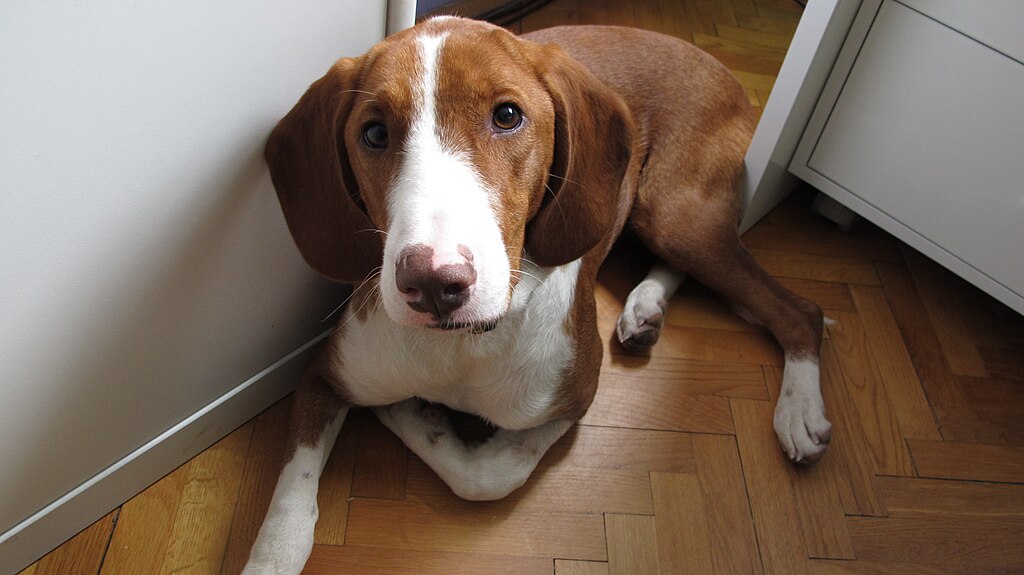
The obedient and persistent Posavina Hounds respond well to training if the right methods are used. They are eager to please their owner, but one should not forget their natural independence, which is characteristic of hunting breeds. The key to success is positive reinforcement.
Praise, treats, and toys work much better than harshness and punishment. It is not worth pressuring this four-legged pet – usually, Posavina Hounds are happy to learn new things, but they can show stubbornness if they are bored or don’t understand what is expected of them.
The most important command for a Posavac is the “Come!” command. Due to their strong hunting instinct, working on an unquestionable recall is vitally important. Training should begin from an early age in a quiet place, gradually making the tasks more difficult. Early socialisation is also extremely important. Introduce the puppy to different people, sounds, places, and other animals (under supervision) so that it grows into a confident and well-balanced dog.
Diet: What to Feed a Posavina Hound?
As an active hunting dog, the Posavina Hound requires a high-quality, high-energy diet rich in protein and fats. The basis of the diet can be either quality dry kibble or a natural diet.
- Dry Kibble: Choose a premium or super-premium brand for active, medium-sized breeds. They are already balanced with vitamins and minerals.
- Natural Diet: The basis should be lean meat (beef, turkey, chicken), and offal. Add cereals (buckwheat, rice), vegetables (carrots, pumpkin, courgette), fermented dairy products (cottage cheese, kefir), and a little vegetable oil to the diet. It is necessary to introduce additional vitamin and mineral complexes as recommended by the vet.
Important: Do not overfeed your dog. Excess weight puts additional strain on the joints. The portion should correspond to the age, weight, and activity level. The dog should always have access to fresh, clean water.
| Product | Quantity (approx.) |
|---|---|
| Meat / Offal | 400-500 g |
| Cereals (cooked) | 200-300 g |
| Vegetables (raw or cooked) | 150-200 g |
| Fermented dairy products (not daily) | 100-150 g |
| Vegetable oil | 1 tablespoon |
Interesting Facts About the Posavina Hound
- National Pride: The Posavina Hound is one of the few autochthonous Croatian breeds and a source of national pride. Its image can be found on Croatian postage stamps.
- “Two-Part” Singing: Hunters claim that the Posavac’s voice changes its tone depending on the game it is pursuing. A higher and more frequent bark signifies the trail of a hare or fox, while a lower and more drawn-out one indicates a deer or wild boar.
- The River’s Name: The name “Posavski” comes from the geographical region of Posavina – the valley along the Sava River. This highlights the breed’s deep connection to its homeland.
- Ancient Art: The fresco from 1497 in the church in Beram is one of the oldest depictions of a hound of this type in Europe, testifying to the breed’s ancient origins and its unchanged nature over centuries.
Frequently Asked Questions About the Breed (FAQ)
Is the Posavina Hound suitable for an inexperienced owner?
Probably not. The breed requires experience in handling active hunting dogs. Their stubbornness, high demands for exercise, and strong instinct can be a serious challenge for a novice.
Does the Posavina Hound bark a lot?
Yes, very much. It is one of the noisiest breeds. Their bark is high-pitched and prolonged. They bark not only when hunting but also out of boredom, joy, or to warn of strangers. This should be taken into account if you have sensitive neighbours.
Can you keep a Posavina Hound in a city?
Theoretically, yes, if you live near a large park or forest and are prepared to dedicate 2-3 hours a day to active walks. However, the ideal conditions for them are a country house with a large garden. In a city flat, the dog would suffer.
How much do they shed?
Shedding is moderate and increases twice a year. Regular brushing helps to keep the process under control.
Can you let a Posavina Hound off the lead?
Only in well-known and safe places, far from roads. Even the most obedient Posavac can ignore all commands if it catches the scent of game. The hunting instinct is in their blood.
Video About the Breed
- Gentle, obedient, easy to train
- Friendly, good with children
- Hardy, with an excellent nose
- Ringing, melodious voice; a good watchdog
- Vocal — “gives tongue” on the trail
- Strong hunting instinct (risky with cats)
- Becomes nervous without exercise
- High exercise needs — not for a flat
| Serbian Hound | Istrian Shorthaired Hound | Beagle | |
|---|---|---|---|
| Height | 44–56 cm | 44–56 cm | 33–40 cm |
| Energy | 4.5 | 4.5 | 4 |
| Apartment | 2 | 2 | 3 |
| Beginners | 3 | 3 | 3.5 |
What is the Posavac Hound famous for?
Is the Posavac Hound good for a family?
Is the breed suited to a flat?
FCI Standard No. 154 · Hrvatski kinološki savez
For apartments · For kids · For beginners · Active · Smartest · Hypoallergenic · All rankings →