

Caring for our four-legged friend’s health is a top priority for every responsible owner. We strive to give them the very best: quality food, regular walks, love, and attention. Naturally, their nutrition is a key consideration. Pet shop shelves and online stores are filled with countless vitamins and supplements promising a glossy coat, strong joints, and a rock-solid immune system. But do all dogs genuinely need these extra vitamins? Can a high-quality diet provide all their essential nutrients? And when do supplements move beyond being a mere marketing tactic to become a real necessity? In this article – and you can explore further on Tvaryny – we’ll take a closer look at when vitamins and supplements for dogs are appropriate and when they could even be detrimental.
The Foundation of Health: A Balanced Diet
First and foremost, it’s important to stress that most dogs fed a high-quality commercial food meeting AAFCO (Association of American Feed Control Officials) standards receive all the necessary vitamins and minerals. Such foods are specifically formulated to be “complete and balanced” for a dog’s particular life stage (puppy, adult, senior).
- What does “complete and balanced” mean? It means the food contains all the essential nutrients (proteins, fats, carbohydrates, vitamins, minerals) in the correct proportions to support a dog’s optimal health at their specific life stage. Manufacturers carefully calculate the composition to avoid both deficiencies and excesses of particular elements.
- AAFCO Standards: Look for a statement on the food packaging indicating that it meets AAFCO standards for your dog’s age. This serves as a form of assurance that the food has been verified for its nutritional adequacy.
Therefore, if your dog is healthy, active, has a good appetite, maintains a normal weight, and boasts a shiny coat whilst eating a quality commercial food, it’s highly unlikely they need additional vitamins. On the contrary, indiscriminately adding vitamins to an already balanced diet can disrupt this equilibrium and lead to health issues.
When Can Supplements Be Beneficial?

Although most dogs don’t require supplements, there are situations where a veterinarian might recommend their use. It’s crucial to emphasise that the decision about the need for supplements should always be made in consultation with your vet, following an examination of your pet and possibly further tests.
Here are some instances where supplements might be appropriate:
- Diagnosed Deficiency: If blood tests or other investigations reveal a shortage of a specific vitamin or mineral, your vet will prescribe an appropriate supplement at a therapeutic dose to correct this condition.
- Specific Health Conditions: Some illnesses can impair nutrient absorption or increase the need for certain vitamins/minerals. For example:
- Skin conditions: Supplements containing Omega-3 and Omega-6 fatty acids, vitamin E, and zinc may be necessary.
- Joint diseases (e.g., arthritis, dysplasia): Glucosamine, chondroitin, MSM, and Omega-3s are often recommended.
- Gastrointestinal disorders: Probiotics and prebiotics can be beneficial for restoring gut flora.
- Chronic kidney or liver disease: These require special diets and possibly specific supplements under strict veterinary supervision.
- Home-Prepared Diets: If you feed your dog home-cooked meals, it is critically important to consult a veterinary nutritionist. Formulating a truly balanced home-prepared diet is very challenging, and it almost always requires the addition of specific vitamin and mineral complexes to prevent serious deficiencies. Never switch to a home-prepared diet without expert advice!
- Specific Life Stages or Conditions:
- Puppies: Although quality puppy foods are already balanced, in some cases (e.g., very rapid growth in large breeds), a vet might advise supplements to support the musculoskeletal system, but this is done with great caution to avoid harm.
- Pregnant and lactating bitches: Their nutritional requirements increase significantly. They are usually switched to a high-calorie puppy food or a special diet for pregnant/lactating bitches. Additional supplements are only prescribed if indicated by a vet.
- Senior dogs: As dogs age, they may develop joint problems, deteriorating eyesight, or a weakened immune system. A vet may recommend supplements to support joints (glucosamine, chondroitin), antioxidants, and Omega-3s for cognitive function and skin health.
Popular Types of Supplements and Their Uses
The market for dog supplements is vast. Let’s look at some of the most popular ones:
- Multivitamins: These are complexes containing a broad spectrum of vitamins and minerals. Generally not needed for dogs on a quality commercial diet. They may be recommended by a vet for a diagnosed general vitamin deficiency, as part of therapy for certain diseases, or to balance a home-prepared diet.
- Omega-3 and Omega-6 Fatty Acids (e.g., fish oil, flaxseed oil): Very popular supplements. Omega-3s (EPA and DHA) have anti-inflammatory properties and are beneficial for:
- Skin and coat health (reducing itchiness, dandruff, improving shine).
- Joint health (reducing inflammation in arthritis).
- Supporting heart and kidney function.
- Brain development in puppies and cognitive function in senior dogs.
- It’s important to choose high-quality sources and the correct dosage.
- Glucosamine and Chondroitin: These are components of cartilage. They are often used for:
- Prevention and management of joint diseases (osteoarthritis, dysplasia).
- Supporting joints in large breed dogs, senior dogs, and active animals.
- Efficacy can vary, but many owners and vets report positive effects with long-term use. Often combined with MSM (methylsulfonylmethane) and Omega-3s.
- Probiotics and Prebiotics:
- Probiotics: “Friendly” bacteria that help restore and maintain a healthy gut microbiome. Useful for diarrhoea, constipation, after antibiotic courses, for food allergies, and irritable bowel syndrome.
- Prebiotics: Substances (usually fibre) that serve as food for beneficial gut bacteria.
- Often found together in complexes (synbiotics).
- Antioxidants (e.g., Vitamins C, E, selenium, beta-carotene): Help combat free radicals, slow down ageing processes, and support the immune system. Can be beneficial for senior dogs, animals with chronic inflammatory conditions, and for immune support.
Table: Quick Overview of Supplements
| Supplement Type | Main Purpose | When Might a Vet Recommend It? |
|---|---|---|
| Multivitamins | General support (rarely needed with a balanced commercial diet) | Diagnosed deficiency, home-prepared diet, certain illnesses |
| Omega-3 (EPA/DHA) | Skin, coat, joints, heart, brain, kidneys (anti-inflammatory action) | Allergies, arthritis, dermatitis, heart/kidney conditions, senior dogs, puppies |
| Glucosamine/Chondroitin | Joint health, cartilage support | Arthritis, dysplasia, prevention in large breeds/senior/active dogs |
| Probiotics/Prebiotics | Gastrointestinal health, restoring gut flora | Diarrhoea, constipation, after antibiotics, allergies, digestive issues |
| Antioxidants | Combating free radicals, immune support, slowing ageing | Senior dogs, chronic inflammation, weakened immunity |
The Danger of Excess: Why “More” Isn’t Always “Better”
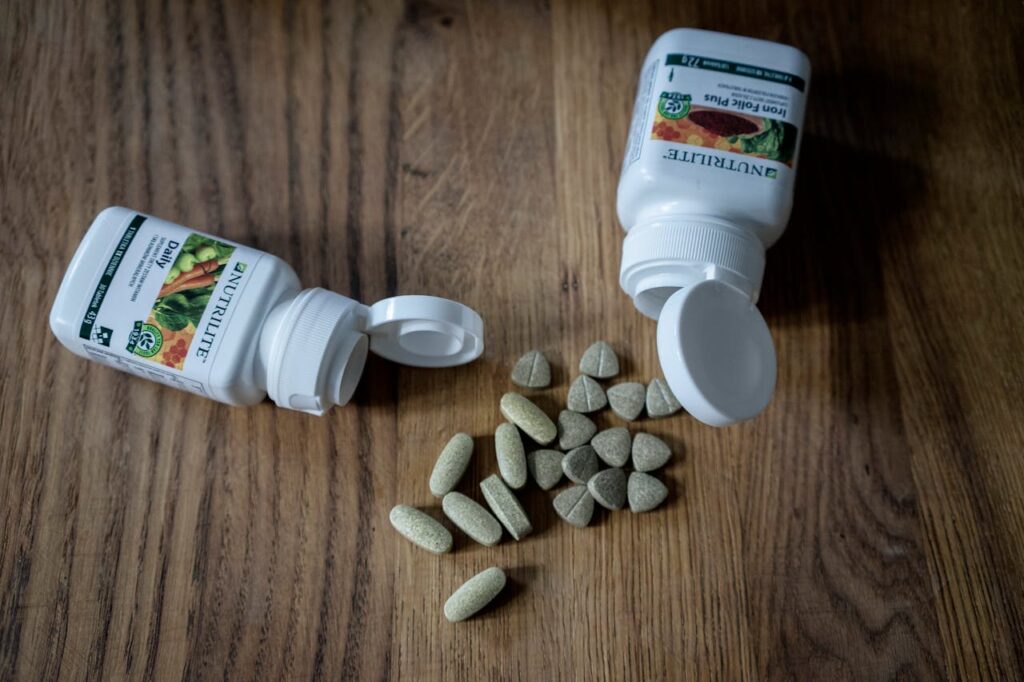
The desire to give your dog the very best is perfectly natural, but when it comes to vitamins and supplements, the “more is better” principle absolutely does not apply and can be dangerous.
- Hypervitaminosis: An excess of certain vitamins can be toxic. An oversupply of fat-soluble vitamins (A, D, E, K) is particularly dangerous as they accumulate in the body, unlike water-soluble vitamins (B group, C), an excess of which is usually excreted in urine (though problems can still occur with mega-doses here too).
- Excess Vitamin D: Can lead to serious problems, including anorexia, vomiting, increased thirst and urination, muscle weakness, and calcification of soft tissues (kidneys, heart, blood vessels).
- Excess Vitamin A: Can cause bone problems (deformities, soreness), dry skin, loss of appetite, and lethargy.
- Excess Calcium (often given “for bones” to large breed puppies without consultation): Can disrupt normal skeletal development and provoke or worsen orthopaedic problems (e.g., osteochondrosis).
- Mineral Imbalances: An excess of one mineral can interfere with the absorption of another. For example, too much calcium can impair zinc absorption.
- Unnecessary Expense: Most supplements given “just in case” to a healthy dog on a quality diet are simply excreted from the body, providing no benefit other than lightening your wallet.
- Masking Symptoms: Giving supplements randomly can temporarily mask the symptoms of a serious underlying condition, delaying a visit to the vet and a proper diagnosis.
Remember: Never give your dog vitamins or supplements (especially those intended for humans!) without first consulting your vet and getting their recommendation. It’s also vital to be aware of dangerous foods for dogs that should never be part of their diet.
Your Vet: Your Primary Advisor
The best way to determine if your dog needs vitamins or supplements is to consult your veterinarian. Why is this so important?
- Overall Health Assessment: The vet will conduct an examination, take a history (information about lifestyle, diet, past illnesses), and assess weight, coat condition, teeth, and mucous membranes.
- Dietary Analysis: Your vet will ask about the food you’re feeding your dog, its composition, and its suitability for your pet’s needs.
- Diagnostics: If necessary, the vet may order blood tests (biochemical, complete blood count), a urine analysis, or other investigations to identify potential deficiencies or underlying health issues.
- Individualised Recommendations: Only based on a complete picture of your dog’s health, age, breed, activity level, and specific dietary needs can a vet make informed recommendations about the necessity of particular supplements.
- Correct Choice and Dosage: If supplements are indeed required, your vet will help you choose a quality product and calculate the correct, safe, and effective dosage specifically for your dog. They will also explain the duration of the course.
- Monitoring: Your vet will be able to monitor your dog’s response to the supplements and adjust the prescription if necessary.
Don’t rely on advice from friends, internet forums, or advertisements. Your pet’s health is too important to experiment with.
Conclusion
So, do dogs need vitamins and supplements? In most cases, if a dog is healthy and eats a high-quality, balanced commercial food appropriate for its age and needs – no, additional vitamins are not necessary. Proper nutrition is the cornerstone of good health.
However, there are specific situations – a diagnosed deficiency, certain medical conditions, feeding a home-prepared diet, or particular physiological states (like pregnancy or old age) – where a veterinarian may recommend specific supplements (e.g., Omega-3s, glucosamine, probiotics).
The key takeaway is that the decision to use any vitamins or supplements must be made exclusively after consulting with a vet. Self-medicating and uncontrolled use of supplements can not only fail to provide benefits but can also seriously harm your four-legged friend due to the risk of hypervitaminosis and nutrient imbalances.
Love your dogs, ensure they have a balanced diet, and always consult with professionals regarding their health!