

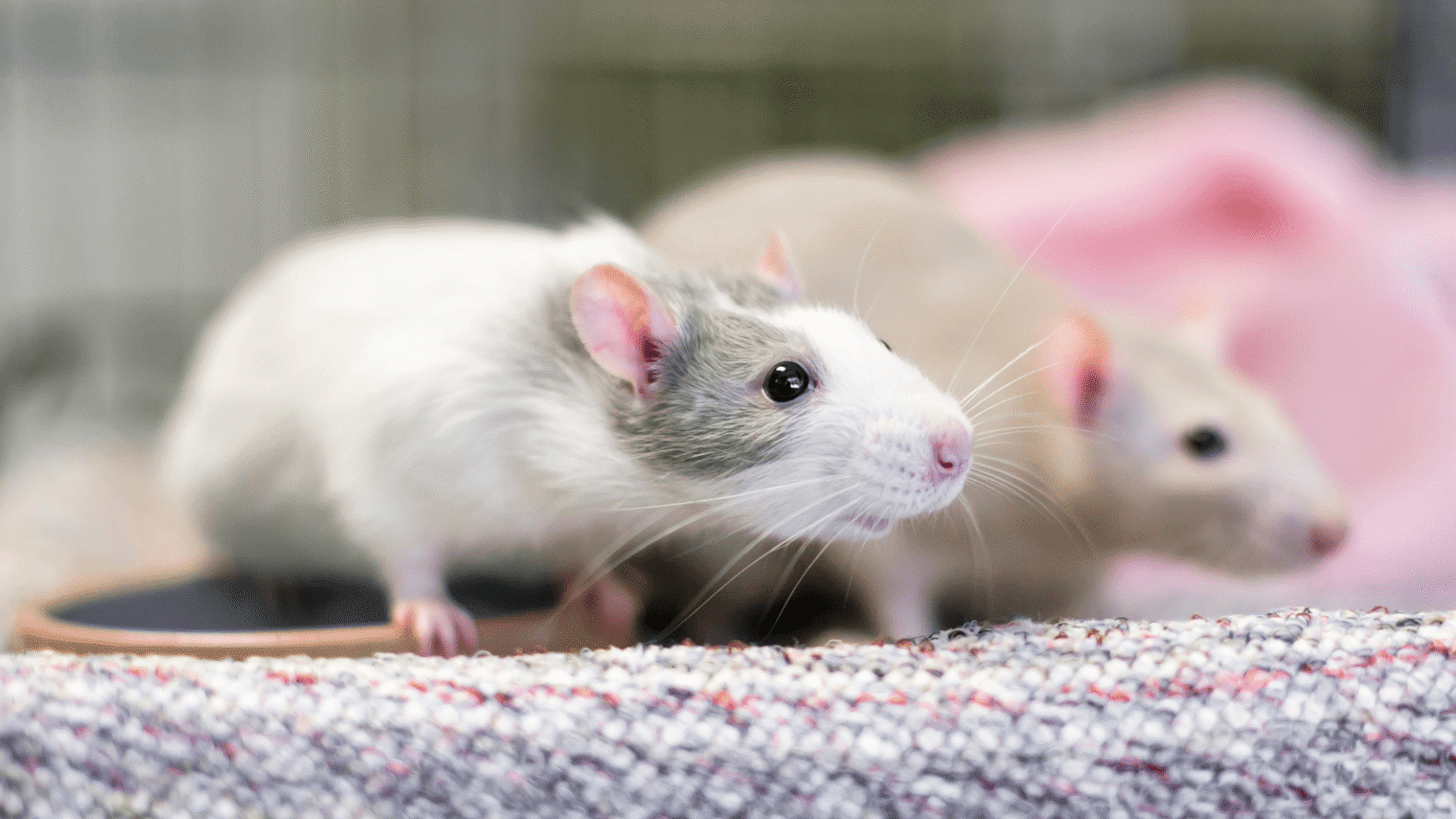
Deciding to bring a pet into your life often comes with a whirlwind of questions. Maybe you’re staring at a tiny rat in a pet store right now. You might be wondering if you can handle the responsibility, or if this little guy can truly become a loyal friend. Trust us: fancy rats are some of the most underrated, yet incredibly smart and empathetic creatures. Today, we’ll break down every aspect of living with these furry intellectuals. We want you to feel completely confident. Learn more on Tvaryny.
Intelligence and socialization: why is a rat just a “pocket-sized dog”?
Rats are often called pocket dogs, and honestly, it’s not an exaggeration. They quickly learn their names. They can master fun tricks and form deep, genuine bonds with their owners. Their body language is super expressive and easy to read if you pay close attention. For example, if your rat gently grinds its teeth and its eyes seem to vibrate slightly – a behavior known as “boggling” – that’s the ultimate sign of pure bliss. Think of it as the rat equivalent of a cat’s purr.
While many folks spend hours researching hypoallergenic dog and cat breeds to manage their allergies, it’s definitely worth considering a rat if you just want a highly affectionate companion. They offer that same intense emotional connection but require a fraction of the living space. This makes them absolutely perfect for city apartments and busy people.
But remember one absolute golden rule: rats are highly social animals. You should never, ever keep them alone. In the wild, they live in large, bustling colonies. A lone rat quickly falls into severe depression, becomes prone to illness, and usually has a much shorter lifespan. Always adopt a same-sex pair – either two boys or two girls – to aviod any unexpected litters.
The perfect pad: setting up your rodent’s cage
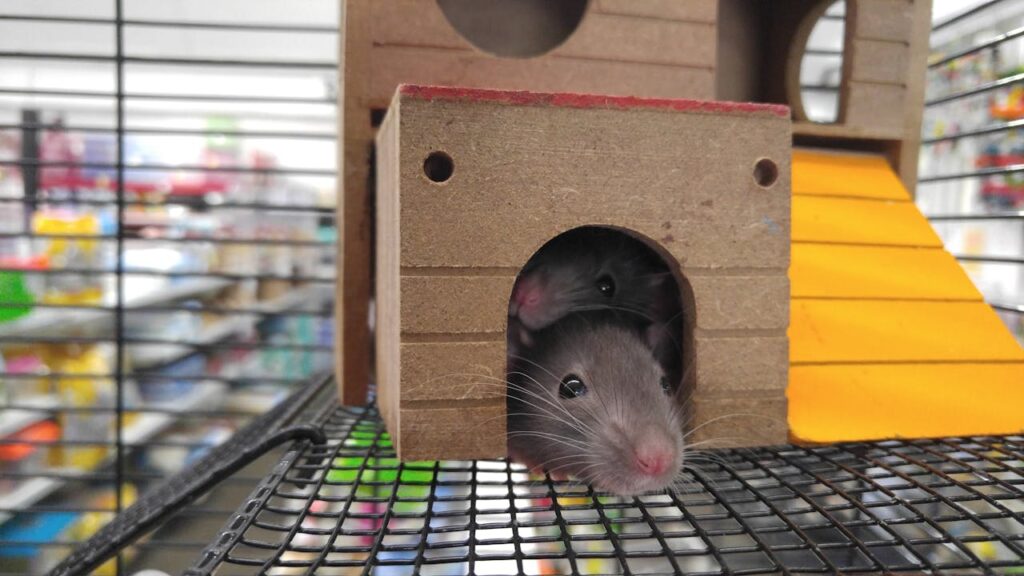
Your pet’s home needs to be spacious and totally safe. Forget about those tiny hamster cages or glass aquariums. Rats desperately need vertical space to climb, jump, and play hard. They also require excellent ventilation to prevent serious respiratory issues.
Where you place the cage is just as critical. Keep it far away from direct sunlight, drafty windows, and loud noise sources like TVs or blasting speakers. Rats are super sensitive to overheating and sudden, sharp sounds.
- Cage size: The absolute minimum footprint for two rats is 60x40x50 cm (about 24x16x20 inches). Height is a huge deal because these little guys love to navigate vertically.
- Bedding: Stick to high-quality corn, cellulose, or paper-based bedding. Never use pine or cedar shavings – their essential oils will almost certainly trigger respiratory distress.
- Hideouts and hammocks: Hang up a few hammocks and place a roomy hideout at the bottom. You can easily craft DIY hammocks out of old fleece sweaters or pajama pants.
- Supplies: You’ll definitely need a sturdy ball-bearing water bottle. Grab a heavy ceramic food bowl, too (they’ll just tip over or chew through plastic ones), along with some safe wooden chew toys.
Balanced nutrition: what belongs in the food bowl
A proper diet is the bedrock of a long, healthy life. Your rat’s menu should be as varied and balanced as possible. The core of their daily intake – roughly 60% – should be a high-quality commercial rat block or seed mix. This staple should be available in their bowl at all times.
Care requirements vary wildly between different rodents. For instance, if you’re exploring a complete A to Z care guide for a happy pet chinchilla, you’ll quickly learn that those fluffballs can’t handle too many watery, fresh foods. Rats, on the flip side, absolutely thrive on a daily portion of fresh veggies and leafy greens.
Also, unlike guinea pigs or rabbits, rats are omnivores and need animal protein. Once or twice a week, offer them a tiny piece of boiled chicken breast, low-fat cottage cheese, or a bit of hard-boiled egg. This protein boost is especially crucial for growing pups.
| Category | Safe & Healthy (Good) | Strictly Prohibited (Dangerous) |
|---|---|---|
| Veggies & Fruits | Cucumbers, carrots, broccoli, apples (seedless), bananas | Raw potatoes, citrus fruits (especially for males), green bananas, regular white cabbage |
| Proteins | Hard-boiled eggs, plain boiled chicken, low-fat cottage cheese | Sausages, hot dogs, smoked meats, raw eggs |
| Treats | Unsalted pumpkin seeds, a tiny drop of plain yogurt, nuts (very rarely) | Sweets, chocolate, potato chips, any spicy or salty junk food from your plate |
Health and hygiene: crucial red flags to watch for
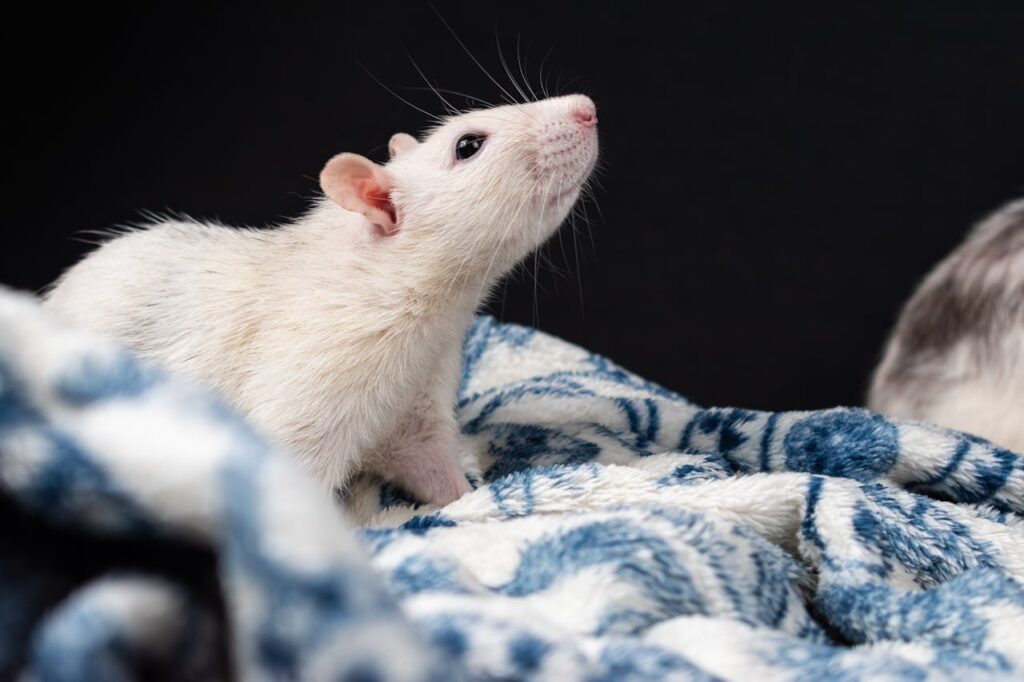
These tiny pocket pets have insanely fast metabolisms. Everything in their bodies happens at warp speed – including the progression of illnesses. That means your watchful eye can literally save their life. Make it a habit to do regular health checks. Look closely at their coat condition and peek at their teeth.
Speaking of teeth, a healthy rat’s incisors should actually be a deep yellow-orange color. If you notice their teeth turning white, that’s a massive red flag. It usually points to a severe calcium deficiency or other systemic health issues. If that happens, you need to book an appointment with an exotic vet stat.
“Your furry friend’s health begins with your daily observation. Don’t wait until the symptoms are impossible to ignore – pay attention to the slightest changes in their normal behavior or appetite.”
- Porphyrin (red discharge): This is a special secretion from a gland behind the eye, often seen around the nose or eyes. Many newbies panic, confusing it for blood. A tiny bit after waking up is totally normal. But if there’s a lot, it’s a clear sign of high stress, pain, or an underlying infection.
- Labored breathing: If your rat is heaving its sides, making clicking sounds, snoring, or wheezing – these are classic signs of mycoplasma or pneumonia. Get to the vet immediately!
- Weight and appetite loss: This is the most reliable gauge of how they’re feeling. A healthy rat is always ready to snack or hoard food for later.
- Lethargy: The animal is constantly sleeping, their fur looks puffed up and unkempt. They might also ignore their favorite treats or refuse to come out for evening playtime.
Safe free-roam and bonding: how to become besties
Rats absolutely need daily free-roam time outside their cage. Aim for at least 1-2 hours a day. Make sure it’s a safe, heavily supervised area – like a couch, a bed, or a pop-up playpen. This out-of-cage time lets them stretch their legs, build muscle, and satisfy their natural curiosity.
Before you let them loose, rat-proof the zone. Hide all electrical cords, move toxic houseplants out of reach, and secure any valuables. Try offering them some brain games during playtime. For example, stuff a toilet paper roll with treats and fold the ends shut. They’ll have to use their smarts to rip it open and claim their prize.
When it comes to handling, take it slow and steady. Offer yummy snacks from a flat, open palm. Never swoop in and grab a rat from above by their back. Instictively, this mimics a bird of prey attacking, and it will send them into a sheer panic. Instead, scoop them up from below, letting the rat confidently step onto your hand.
The bottom line: your love and responsibility
A fancy rat is a tiny miracle with a massively kind heart. Sadly, their lifespans are nowhere near as long as we’d all wish. They generally live for about 2 to 3 years. But I promise you, they will pack that short time with endless joy, hilarious antics, and a fiercely loyal love for their humans.
Don’t ever be afraid to ask questions, dig into research, or consult with exotic vets. Keep reading and studying their quirks. Above all, remember: you are the entire world to this tiny creature. By providing a spacious cage, a balanced diet, engaging activities, and a fuzzy companion, you’ll gain the greatest little friend imaginable. Wishing you the best of luck and countless happy moments on this awesome journey!