

In short: worms in cats
- Main signs: lethargy, weight loss despite a normal appetite, vomiting or diarrhoea, a bloated belly (in kittens), “scooting”.
- What to do: no self-treatment — have a faecal test done and give a dewormer by weight; repeat after 10–14 days.
- Prevention: deworm every 3 months (indoor cats too) plus monthly flea treatment.
- Dangerous to humans? yes, some species are transmissible — wash your hands and deworm your pet.
Helminthiasis, or a worm infestation, is one of the most common health problems in domestic cats, whether they roam outdoors or live strictly indoors. These endoparasites not only cause discomfort and lower an animal’s quality of life, but can also lead to serious complications, exhaustion and even death, especially in kittens. Understanding how cats get infected, the symptoms and the treatment is vital for every responsible owner.
Symptoms of a worm infestation

The clinical picture depends on the type of worm, the severity of the infestation (the number of parasites), and the cat’s age and general health. With a mild infestation the disease may be symptomless. However, see a vet at once if you notice any of the following signs.
Typical symptoms of worms in cats
- Digestive upsets: the first sign. It may show as diarrhoea (sometimes with mucus or blood) or constipation. Vomiting is common; sometimes live or dead worms or their segments are visible in the vomit or faeces.
- Appetite changes: appetite may be reduced or, on the contrary, abnormally increased, yet the animal fails to gain weight or even loses it.
- Weight loss and exhaustion: the parasites “rob” the host’s body of nutrients, leading to wasting.
- A bloated belly: especially noticeable in kittens — the belly becomes round and taut while overall weight drops (a “pot belly”).
- Poor coat condition: the coat turns dull and ruffled and may shed heavily, due to vitamin deficiency and general intoxication.
- Coughing: a dry, fitful cough can be a sign of roundworm (toxocara) larvae migrating through the lungs.
- Itching around the anus: the cat may “scoot” to relieve the itch caused by moving tapeworm segments.
- Anaemia: pale gums and eye membranes — typical of hookworm infestation, as they feed on blood.
- General weakness and apathy: the animal becomes less active, sleeps more and is reluctant to play.
Why are worms dangerous for cats?
Many owners underestimate the danger of worms. They are not just a “minor nuisance” — their destructive effect on the body is complex:
- Mechanical damage: parasites injure the walls of the intestine, liver and lungs with their suckers, hooks or teeth.
- Intoxication: worms release waste products (toxins) that poison the host, causing allergic reactions and general malaise.
- Loss of nutrients: parasites absorb much of the vitamins, minerals and protein from food, leading to vitamin deficiency, anaemia and exhaustion.
- Immunosuppression: the constant fight against parasites drains the immune system, leaving the cat vulnerable to other infections and blunting vaccine response.
- Blockage and rupture: with a massive infestation a tangle of worms can physically block the intestine or bile ducts, which may lead to organ rupture and peritonitis.
Main types of worms in cats
| Type of worm | How the cat gets infected | Typical signs |
|---|---|---|
| Roundworms (nematodes: toxocara, hookworms) | through soil, environment, mother’s milk, rodents | bloated belly in kittens, coughing, anaemia |
| Tapeworms (cestodes: dipylidium, echinococcus) | through fleas and rodents | rice-grain segments near the anus, “scooting” |
| Flukes (trematodes: opisthorchis) | through raw freshwater fish | liver damage, jaundice, vomiting |
| Heartworms (dirofilaria) | through mosquito bites | coughing, shortness of breath, weakness |
Worms and cats in the UK: what to know
In the UK, the most common worms in cats are roundworms (Toxocara cati) and tapeworms (usually Dipylidium caninum, spread by fleas). Unlike in warmer countries, heartworm (Dirofilaria) is not endemic in Britain, so routine heartworm prevention isn’t needed for cats that don’t travel abroad — but lungworm (Aelurostrongylus abstrusus) can affect outdoor hunters. Popular wormers here include Milbemax, Drontal, Broadline and Panacur; some are POM-V and need a vet’s prescription. Follow ESCCAP UK guidance and your vet’s advice on how often to worm.
Treating a worm infestation
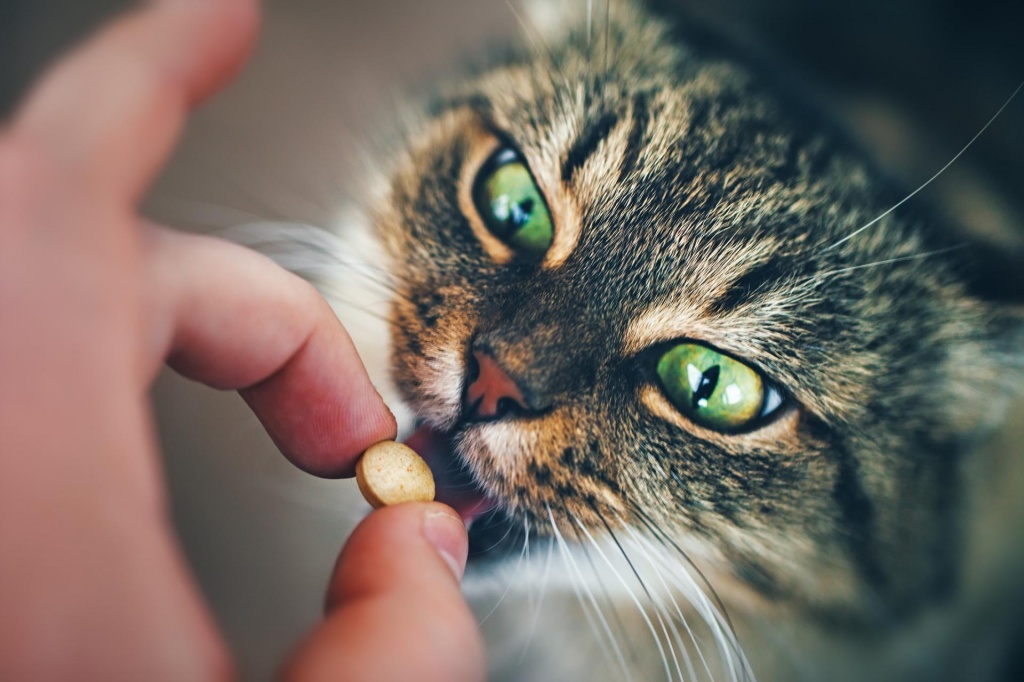
The first and most important rule is no self-treatment. If you suspect worms in your cat, don’t rush to the pet shop for “some tablet”. Effective treatment of worms in cats starts with a visit to the vet.
Diagnosis
To work out how to get rid of worms in a cat, the vet must identify their type. The “gold standard” of diagnosis is a faecal test (flotation or microscopy), which detects the eggs of most worms. Sometimes a blood test (for antibodies) or an ultrasound (if internal organs are affected) may be needed.
Choosing the medicine
All anthelmintics (dewormers) differ in their spectrum of action. Some work against roundworms, others against tapeworms, others against flukes. That is exactly why diagnosis matters. The vet will choose a medicine that is:
- Effective against the specific parasite found in your cat.
- Safe for the animal, taking into account its age, weight and health (e.g. pregnancy or chronic illness).
Modern medicines come in various forms:
- Tablets: the classic option, often flavoured to make dosing easier.
- Suspensions (syrups): handy for kittens and cats that are hard to pill; dosed with a syringe.
- Spot-on drops: the most modern and convenient method — applied to the skin between the shoulder blades, absorbed into the blood and acting systemically. Many such drops are combined and protect against fleas, ticks and worms at once.
Treatment schedule
Most medicines kill only adult worms, not eggs or migrating larvae. That is why treatment is almost always given twice: a first dose, then a repeat after 10–14 days. In that time the surviving larvae grow into adults but have not yet laid new eggs, and the second dose destroys this new generation. Always follow the schedule prescribed by your vet.
Important: if you have several animals at home, deworm them all at the same time (both treatment and prevention)!
Preventing re-infestation
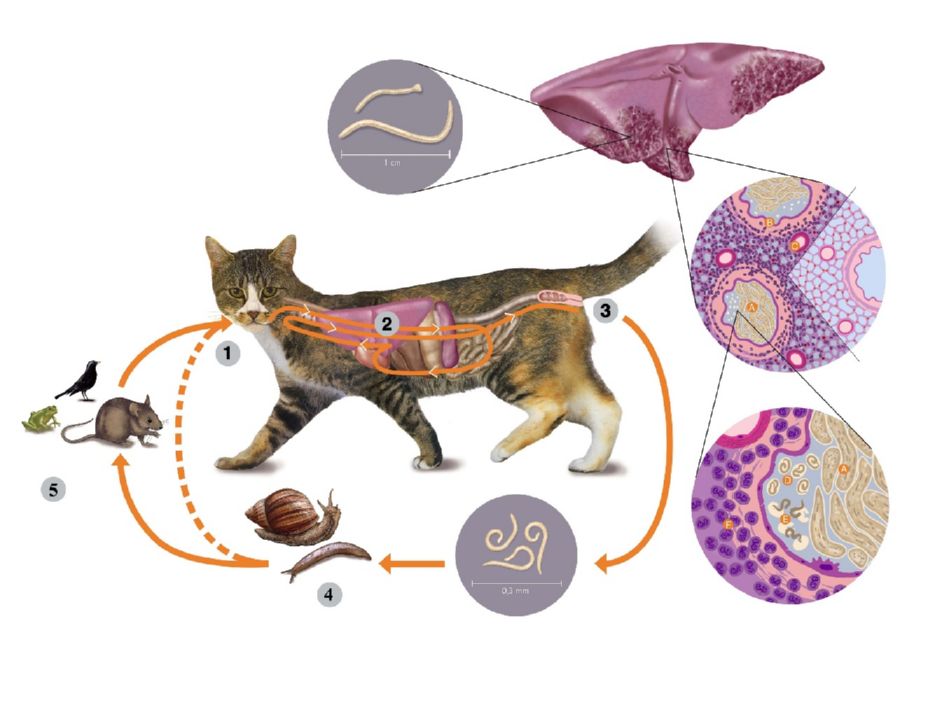
Curing a cat of worms is only half the job — it is important to prevent re-infestation. Preventing worms in cats rests on a few simple but effective rules.
Regular routine deworming
This is the most important point. You cannot fully protect an animal from the risk of infection, so you need to give it dewormers regularly as a preventive. The schedule depends on the cat’s lifestyle:
| Cat | How often to deworm |
|---|---|
| Kittens | from 3 weeks, then every 2–3 weeks until 3–4 months |
| Adults living indoors | once every 3 months |
| With outdoor access, hunting or raw meat | once every 1–2 months |
| Before vaccination | 10–14 days beforehand |
| Pregnant cat | only as prescribed by a vet |
- Indoor-only cats: once every 3–4 months (4 times a year).
- Cats with outdoor access, hunting or eating raw meat: once every 1–2 months (or as advised by the vet).
- Kittens: start deworming at 3 weeks of age and repeat every 2–3 weeks until 3–4 months, then follow the adult schedule.
Controlling intermediate hosts
Deworming will be ineffective if the cat has fleas. Remember, fleas carry tapeworms. So worming should always go hand in hand with regular (monthly) flea and tick treatment, even if the cat never goes outside.
Environmental and food hygiene
- A clean litter tray: clean it daily. Worm eggs do not become infectious immediately, so daily removal of faeces greatly reduces the risk.
- Bowl hygiene: wash food and water bowls regularly.
- Safe food: do not feed your cat raw freshwater fish. If you give raw meat, it should be deep-frozen first (at least 3 days).
- Outdoor shoes: keep outdoor shoes in a closed cupboard the cat cannot reach, and wash the hallway floor with disinfectant.
Can worms pass from a cat to a human?
Yes, some worm species that parasitise cats are also dangerous to people (such diseases are called zoonoses). The greatest risk comes from toxocara (which cause “larva migrans” in people, affecting the eyes and internal organs) and echinococcus/alveococcus. People get infected the same way as animals — by the faecal-oral route, i.e. through dirty hands after handling the animal, cleaning the tray or gardening without gloves.
This is another strong reason for regular worm prevention in your pet and for good personal hygiene. Always wash your hands with soap after playing with the cat and cleaning its tray.
Frequently asked questions about worms in cats
How can I tell if my cat has worms?
The main signs are lethargy, weight loss despite a normal appetite, vomiting or diarrhoea, a bloated belly in kittens, a dull coat and “scooting”. Only a vet can confirm it with a faecal test.
Can worms pass from a cat to a human?
Yes, some species (toxocara, echinococcus) are infectious to people and spread by the faecal-oral route. So wash your hands after cleaning the litter tray and deworm your pet regularly.
How often should I deworm my cat?
Indoor cats every 3 months, cats with outdoor access or that hunt every 1–2 months, and kittens from 3 weeks every 2–3 weeks until 3–4 months.
Do I need to deworm an indoor cat that never goes out?
Yes. Worm eggs can be brought home on outdoor shoes, and fleas carry tapeworms, so indoor cats need prevention too.
What should I do if my cat has worms?
Don’t self-treat: have a faecal test done, give the dewormer prescribed by your vet by weight, and repeat the dose after 10–14 days.
Can one medicine treat all worms?
Dewormers differ in their spectrum. Combined products work against roundworms and tapeworms, but the exact choice depends on the parasite type — which is why diagnosis matters.