

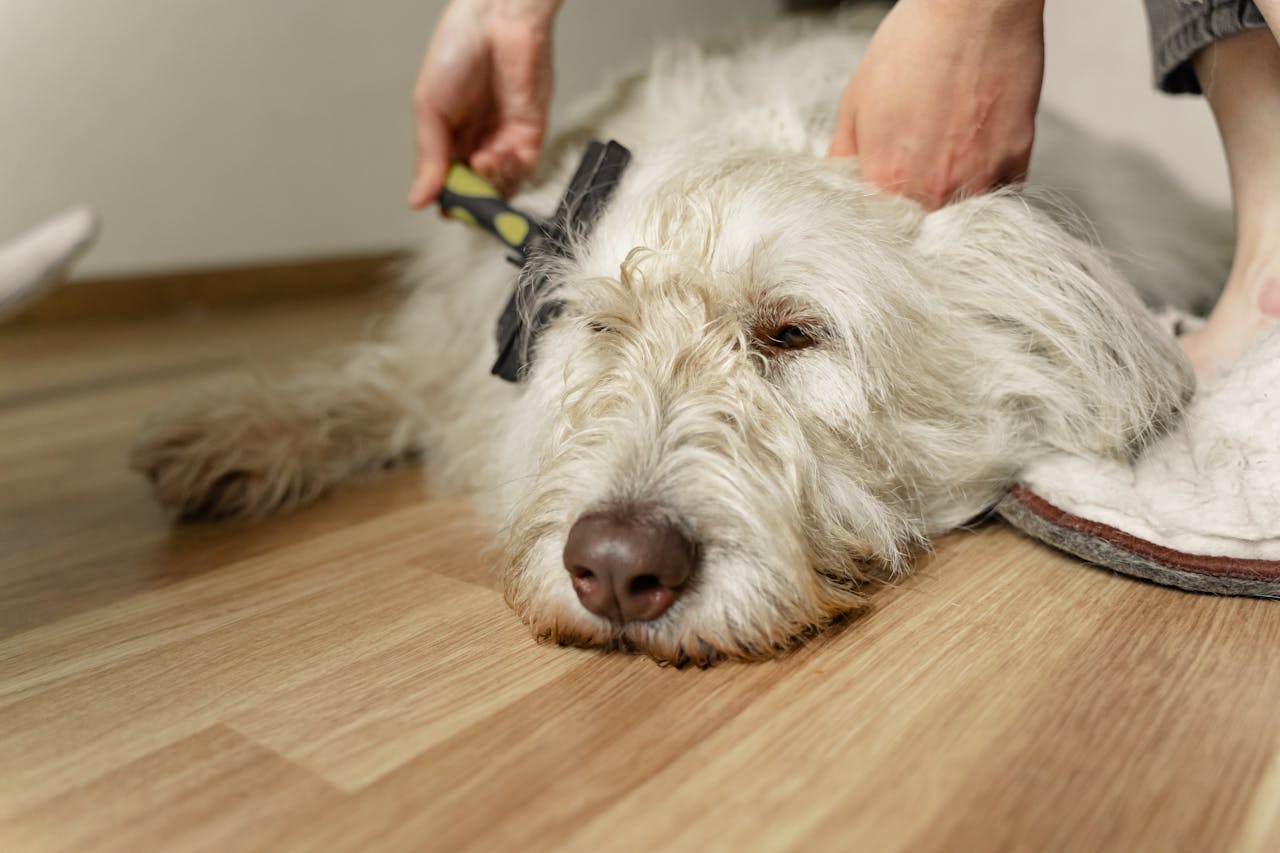
Grooming your pet is about more than just aesthetics; it’s a vital part of their health and comfort. Regular brushing helps prevent matting, stimulates blood circulation, distributes natural oils through their coat, and, of course, reduces the amount of fur on your clothes and furniture. But when you walk into a pet shop, you can easily feel overwhelmed by the sheer variety of combs, brushes, deshedding tools, and other gadgets. Choosing the wrong one can be ineffective and even cause your pet pain, making them hate being groomed forever. So, how do you find the perfect tool? We’ll cover this and more in detail at Tvaryny.
This article is your complete guide to the world of pet grooming. We’ll help you understand your four-legged friend’s coat type and choose the right tools to turn grooming into an enjoyable bonding ritual for both of you.
Why is regular grooming so important?
Before we get to the tools, let’s quickly recap why grooming is a must-have for every cat and dog:
- Prevents matting. Mats aren’t just unsightly; they pull on the skin, causing pain and irritation, and can lead to bacterial infections and parasites underneath.
- Reduces shedding. Regularly removing dead undercoat hair significantly cuts down on the amount of fur around your home.
- Promotes skin health. Brushing acts as a massage, stimulating blood flow and distributing skin oils evenly, which makes the coat shiny and healthy.
- Early problem detection. While brushing, you can spot parasites (fleas, ticks), scratches, lumps, or other skin issues early on.
- Strengthens your bond. When done correctly, grooming becomes a pleasant process that builds trust and strengthens the emotional connection between you and your pet.
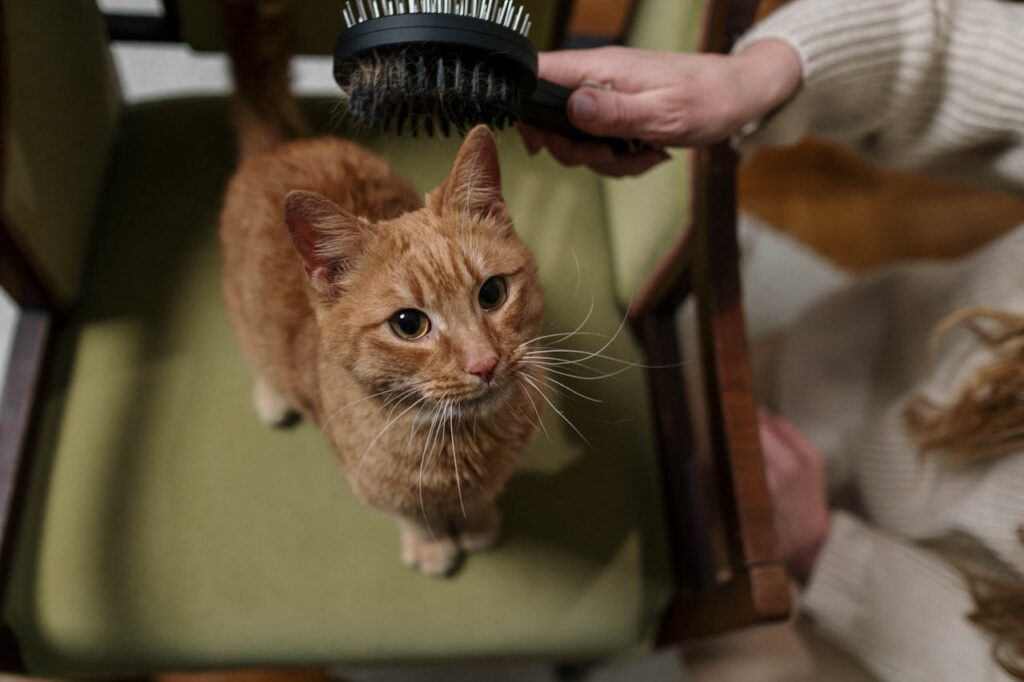
Step 1: Identifying your pet’s coat type
This is the most crucial step. A tool that’s perfect for a short-haired Dobermann will be completely useless (and even harmful) for a long-haired Persian cat. Let’s look at the main coat types.
Short and smooth coats
Examples of breeds: Boxer, Dobermann, Pug, French Bulldog, Siamese, and British Shorthair cats.
Characteristics: Short coat that lies close to the body, with minimal or no undercoat. Shedding can be intense, but the hairs are short and coarse.
Short coat with undercoat (double coat)
Examples of breeds: Labrador Retriever, German Shepherd, Siberian Husky, Corgi, Maine Coon (shorter coat variation), Exotic Shorthair cat.
Characteristics: Consists of two layers: a tough outer coat and a soft, dense undercoat that provides thermal insulation. These animals shed heavily on a seasonal basis.
Long and silky coats
Examples of breeds: Yorkshire Terrier, Afghan Hound, Maltese, Persian, and Angora cats.
Characteristics: Long, flowing coat, often without a dense undercoat. Prone to tangling and matting, it requires daily grooming.
Long coat with undercoat (double coat)
Examples of breeds: Collie, Golden Retriever, Bernese Mountain Dog, Siberian cat, Maine Coon.
Characteristics: A combination of a long outer coat and a dense undercoat. This type of coat requires the most meticulous care due to the high risk of matting and heavy shedding.
Curly coats
Examples of breeds: Poodle, Bichon Frise, Kerry Blue Terrier, Selkirk Rex cats.
Characteristics: The coat is soft and curly, and it hardly sheds. However, dead hairs get trapped in the curls, leading to fast-forming mats. It requires frequent brushing and professional clipping.
Wiry coats (terrier-type)
Examples of breeds: Schnauzer, Airedale Terrier, West Highland White Terrier, Jack Russell Terrier (rough-coated).
Characteristics: The coat feels like wire to the touch. These dogs hardly shed but need a special procedure called stripping (plucking out the dead hair) to renew the coat.
Step 2: Choosing the right tool. A big guide to brushes and combs
Now that you know your pet’s coat type, it’s time to explore the arsenal of tools. Let’s look at the most popular ones.
1. Slicker Brush
What it is: A brush with dense, thin, and short metal bristles, usually bent at an angle. It’s one of the most versatile tools for grooming cats and dogs.
For which coats: Ideal for medium to long coats, especially with an undercoat (shepherds, retrievers, Maine Coons, Siberian cats). It helps detangle small mats and effectively removes dead undercoat.
How to use: Very gently, without applying too much pressure, to avoid scratching the animal’s skin. Move in the direction of hair growth.
2. Bristle Brush
What it is: A brush with densely packed natural (e.g., boar) or synthetic bristles.
For which coats: Best suited for short-haired and smooth-coated breeds (Pugs, Boxers, British Shorthair cats). It won’t get through a dense undercoat, but it’s excellent for removing dust, loose hairs, and distributing skin oils, giving the coat an incredible shine.
How to use: You can use it daily for a final “polish” of the coat.
3. Pin Brush
What it is: Similar to a human hairbrush, with metal or wooden pins that have rounded tips to protect the skin.
For which coats: Works well for long and silky coats (Yorkshire Terriers, Spaniels, Persian cats). It gently brushes, without damaging the hair structure, and massages the skin.
How to use: For daily grooming and untangling small knots.
4. Comb
What it is: A metal comb, often with a combination of widely and narrowly spaced teeth.
For which coats: A universal tool for all coat types except very short ones. It’s essential for a final check after using a slicker brush, helping you find any small mats you’ve missed. It’s also perfect for grooming beards and the fur on a dog’s paws.
How to use: Run the comb through the coat after the main brushing session. If it gets stuck, you’ve missed a mat that needs to be worked out.
5. Deshedding Tool (e.g., Furminator)
What it is: A tool with a special blade that captures and removes a huge amount of dead undercoat without cutting the outer coat. The most famous brand is Furminator.
For which coats: A true lifesaver for owners of pets with dense undercoats (Labradors, Huskies, Maine Coons). It’s not suitable for animals without an undercoat or with curly or long silky coats. A genuine Furminator costs around £25-£45, but it’s a worthwhile investment.
How to use: Strictly follow the instructions! Usually 1-2 times a week during heavy shedding periods. Don’t press hard, to avoid damaging the skin and outer coat.
6. Dematting Comb / Mat Splitter
What it is: A tool with sharp, curved blades for safely cutting through dense mats.
For which coats: For long-haired animals prone to matting.
How to use: With maximum caution! Hold the mat at the base near the skin so you don’t pull, and carefully use a “sawing” motion to cut it from the tips to the root. If the mat is very large and dense, it’s best to consult a professional groomer.
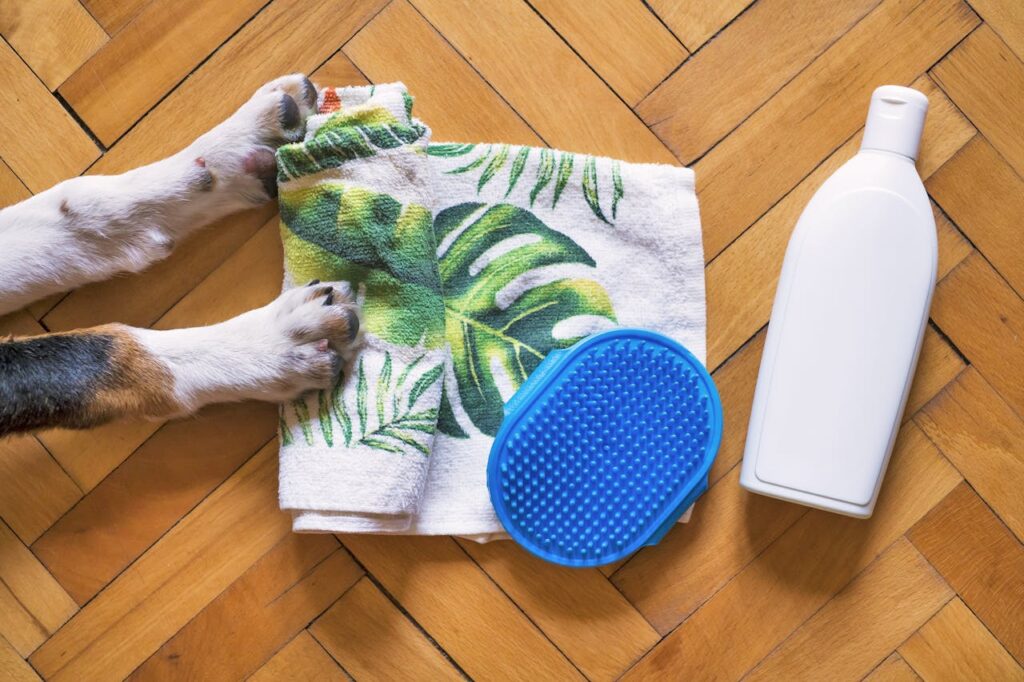
7. Grooming Glove
What it is: A glove with rubber nodules on the palm.
For which coats: Ideal for short-haired animals and for cats and dogs who are afraid of brushes. It creates the effect of petting.
How to use: Simply put it on and stroke your pet. The glove collects dead hair and massages the skin. It’s also great to use during bath time to help distribute shampoo more effectively.
Cheat Sheet: Which tool to choose for your pet?
| Coat type | Main tools | Additional tools |
|---|---|---|
| Short and smooth | Rubber glove, bristle brush | |
| Short with undercoat | Deshedding tool (during shedding), slicker brush | Metal comb, rubber brush |
| Long and silky | Pin brush, metal comb | Dematting comb (if needed) |
| Long with undercoat | Slicker brush, wide-toothed metal comb | Deshedding tool, de-matting comb |
| Curly | Slicker brush, wide-toothed metal comb | Pin brush |
| Wiry (terrier-type) | Slicker brush, comb. Requires professional stripping. |
How to make grooming a pleasant ritual
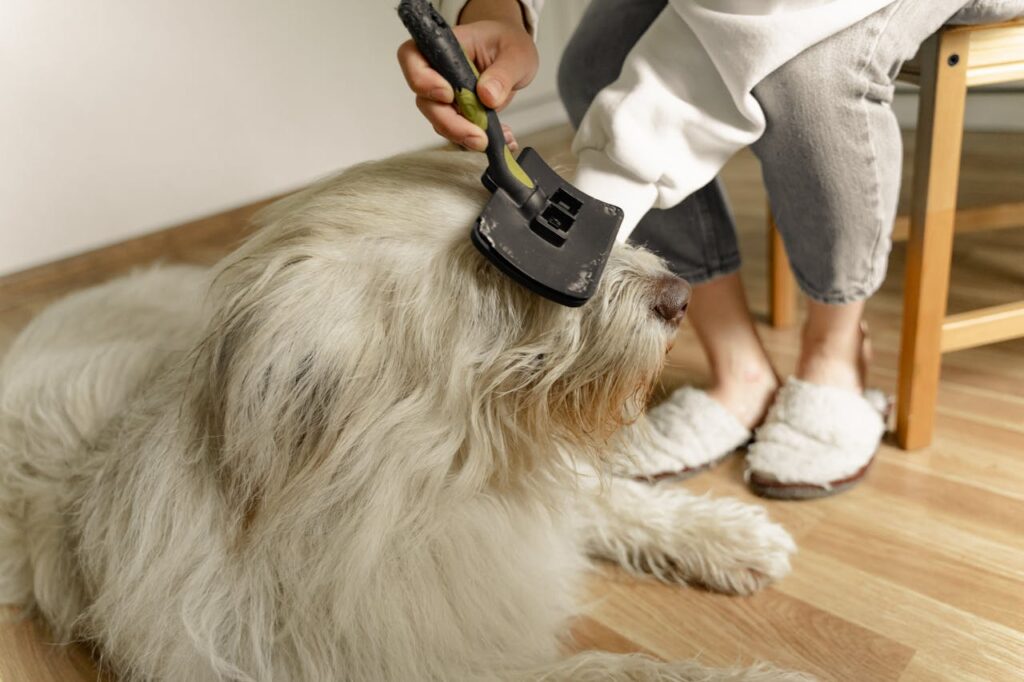
Even with the perfect tool, grooming can become a stressful experience if you don’t follow a few simple rules. Here are some tips:
- Start them young. Get your kitten or puppy used to the procedure from a young age, even if their coat doesn’t yet need thorough grooming.
- Choose the right time. Brush your pet when they are calm and relaxed, such as after a walk or a play session.
- Begin with short sessions. Let the first few sessions last only a few minutes, gradually increasing the time.
- Be gentle. Always hold the hair at the base while detangling mats, to avoid pulling the skin. Use smooth strokes in the direction of hair growth.
- Use treats and praise. Reward your pet for calm behaviour. Turn grooming into a positive experience.
- Monitor their coat. If you notice a significant decline in coat quality or are dealing with excessive shedding in your dog or cat, it could be a sign of health or nutritional problems. In that case, it’s best to consult a vet.
Conclusion
Choosing the right comb or brush for your dog or cat is an investment in their health, beauty, and your peace of mind. There is no single universal tool for everyone, but by understanding your pet’s coat type and the purpose of each brush, you can easily make the right choice. Remember that regular and proper pet grooming is not just a chore—it’s an act of love and care that strengthens your bond and makes your four-legged friend’s life happier.