

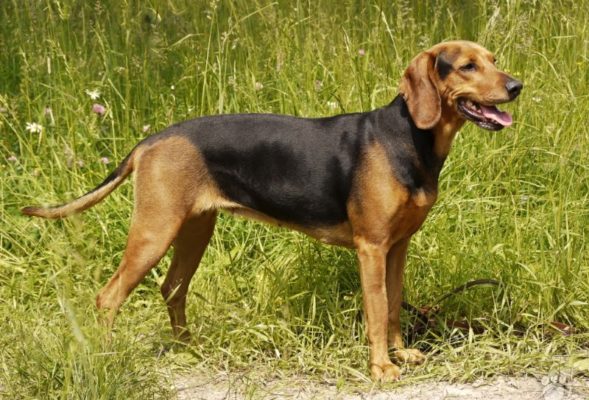
| Height | 44–56 cm |
| Weight | 18–22 kg |
| Lifespan | 12–13 years |
| FCI group | 6 · scenthounds |
| Origin | Serbia (Balkans) |
Exact ratings
- Sturdy overall — but with the cautions listed below
- Ear infections (pendulous ears)
- Hip dysplasia (less common)
- Obesity with insufficient exercise
- Injuries while hunting
Balanced food for an active scenthound, with weight control. Check the pendulous ears regularly; provide plenty of exercise and scent work out in open space.
The Serbian Hound, formerly known as the Balkan Hound, is an aristocratic and resilient hunting dog with an incredibly strong instinct and boundless energy. Its ringing, almost musical voice carries far and wide, alerting the hunter that the quarry has been found. As it follows a trail and chases game, it wags its tail vigorously, demonstrating its zest and passion for the task. This dog is a remarkable combination of power, stamina, refinement, and grace. The Serbian Hound works with equal dedication on both small and large game, making it a truly versatile assistant. Despite its rich history and outstanding working qualities, the breed remains little-known outside its homeland, but its popularity is gradually growing. You can read more about all the nuances of the breed, its character, and specific care requirements on Tvaryny.
Serbian Hound: A Brief Overview of the Breed
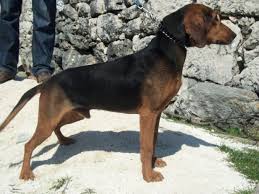
| Characteristic | Value |
| Origin | Serbia |
| Original Name | Srpski Gonič |
| FCI Classification | Group 6 (Scent Hounds and Related Breeds), Section 1.2 (Medium-sized Hounds). Standard No. 150. |
| Lifespan | 11-15 years |
| Height at Withers | Males: 46-56 cm (ideally 51-52 cm) Females: 44-54 cm (ideally 48-49 cm) |
| Weight | Approximately 20-25 kg |
| Temperament | Energetic, reliable, devoted, cheerful, balanced |
| Use | Hunting hare, fox, wild boar, deer |
| Physical Exercise | Very high |
| Coat Care | Minimal |
History of the Serbian Hound
The history of the Serbian Hound stretches back to ancient times and is closely intertwined with the history of the entire Balkan Peninsula. It is believed that the ancestors of these dogs were hounds brought by the Phoenicians to the region during antiquity. These dogs, which spread throughout South-Eastern Europe, became the foundation for the formation of many local hound breeds. Over the centuries, they adapted to the complex mountainous terrain and specific hunting conditions in the Balkans.
Targeted breeding of the breed we know today as the Serbian Hound began much later. The first standard for the breed, then called the “Balkan Hound,” was developed in 1924. However, official recognition from the Fédération Cynologique Internationale (FCI) only occurred in 1940. For many years, the main characteristics of the breed remained practically unchanged, a testament to the stability and functionality of these dogs. The name was changed from “Balkan Hound” to “Serbian Hound” in 1996 to more accurately reflect the breed’s country of origin.
In the Balkans, there is a whole group of related breeds that share common roots and similar working qualities. These include, for example, the Serbian Tricolour Hound, which is distinguished by its coat colour, and the Montenegrin Mountain Hound. Similar traits can also be found in the Posavac Hound from Croatia. All these breeds are the pride of the former Yugoslavia’s dog fancy and are highly valued by local hunters for their endurance, persistence, and incredible sense of smell.
What the Serbian Hound Looks Like: Breed Standard
The Serbian Hound is a medium-sized dog with a robust but not heavy build, exuding energy and vitality. Its appearance is the embodiment of functionality, where every feature serves one purpose – to be a tireless hunter.
- Overall Appearance: The body is slightly elongated, with its length exceeding the height at the withers by 10%. The muscles are well-developed, lean, and the bone structure is strong.
- Head: Long (approximately 45% of the height at the withers), lean, with a wedge-shaped muzzle. The transition from the forehead to the muzzle is smooth and barely noticeable. The skull is slightly rounded, and the occipital protuberance is not pronounced.
- Muzzle: Strong, gradually tapering towards the nose. The nose is well-developed and always black. The lips fit tightly, are not pendulous, and have black pigmentation. The bite is scissors-like, with a complete dental formula.
- Eyes: Almond-shaped, medium-sized, and set slightly obliquely. The colour is from light to dark brown. The gaze is intelligent, calm, but at the same time lively.
- Ears: Set high, pendulous, and of medium length. They lie close to the cheeks, are thin, and have rounded tips.
- Neck: Strong, muscular, and approximately equal to the length of the head. It is set at an angle of 45-50 degrees to the horizontal. The skin on the neck is elastic and free of dewlap.
- Body: The back is straight and strong. The withers are barely noticeable. The loin is muscular. The croup is wide and slightly sloping. The chest is deep and wide, its circumference being 20% larger than the height at the withers. The ribs are rounded.
- Tail: A continuation of the croup line. It is thick at the base and gradually tapers to the tip. The dog carries it like a sabre, slightly below the backline. In motion, the tail is an indicator of the hound’s emotional state.
- Limbs: Straight, parallel, with a strong bone structure and well-defined muscles. The paws are compact, “cat-like,” with tightly gathered toes and firm black pads.
Coat and Colour
The Serbian Hound’s coat is short, dense, harsh to the touch, and shiny. It lies close to the body. It has a well-developed undercoat that protects the dog from the elements. The hair is slightly longer on the back of the thighs and on the underside of the tail.
The colouring is very characteristic and is the breed’s calling card. The main colour is red or fox-red, ranging from a rich yellow-red to a brick shade. A black “mantle” or “saddle” is located on the back over this main background. The black colour may extend to the head, forming black markings above the eyes. A small white patch (up to 2 cm in diameter) is permissible on the chest.
Character: Temperament and Behaviour of the Serbian Hound
The character of the Serbian Hound is a wonderful blend of hunting passion and a calm, friendly disposition. It’s a dog with a fiery heart but a balanced demeanour. It is reliable, loyal to its owner, and has a stable psyche.
At home, it is a gentle and calm companion. It is very people-oriented, loves to be part of the family, and participate in all activities. Serbian Hounds get along well with children, especially if they grow up together. They are patient and not prone to aggression. However, as with any dog, interactions with small children should be supervised.
On the hunt, the Serbian Hound is transformed. Its calmness is replaced by a keen drive and incredible persistence. It is capable of tracking game for hours, overcoming difficult terrain, and announcing its progress with a ringing, high-pitched voice. This voice is one of the breed’s characteristic features; hunters highly value it for its clarity and audibility. Its hunting instinct is extremely strong, which makes it ideal for work but creates certain challenges for owners who do not plan to hunt. A similar dedication is also characteristic of other hounds, for example, the Griffon Fauve de Bretagne.
The breed’s representatives are quite independent and self-sufficient in their decision-making, which is a typical trait for hounds that work at a great distance from the hunter. They are intelligent and sharp, but can be stubborn if they don’t see the point of a command. They are reserved with strangers, without aggression, but also without excessive familiarity. They usually get along well with other dogs, especially in a pack, as they have been used for group hunting for centuries. However, a strong hunting instinct can create problems in coexistence with small household pets (cats, rodents, birds).
Serbian Hound Health: Typical Ailments and Prevention
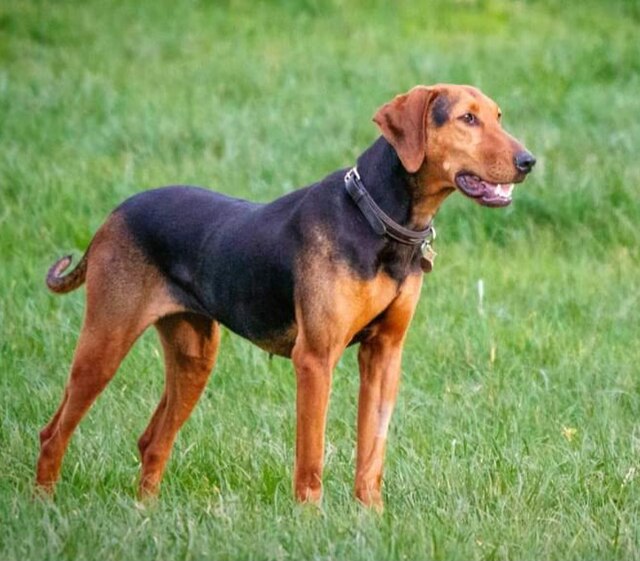
The Serbian Hound is a breed that was shaped by natural selection, so its representatives generally boast robust health and stamina. Health is generally robust, but no breed-wide list of hereditary diseases has been compiled — “not described” means “not studied”, not “not there”. However, this doesn’t mean they never get sick. Like any dog, they require proper care, preventative check-ups, and vaccinations.
Potential health problems may include:
- Ear Infections: Due to the pendulous structure of the ears, air circulation in the ear canal can be poor, creating favourable conditions for the growth of bacteria and fungi. Regular inspection and cleaning of the ears are essential for preventing otitis.
- Musculoskeletal Injuries: As an active hunting dog, the Serbian Hound moves a lot over rough terrain, which increases the risk of sprains, dislocations, and cuts. It is important to check the dog’s paws and body after every hunt or intense walk.
- Hip Dysplasia: While this condition is not widespread in the breed, it can occur in medium and large dogs. Responsible breeders test their breeding dogs for the presence of dysplasia.
- Digestive Sensitivity: As mentioned in the original text, some breed members may be sensitive to an improperly chosen diet. Sudden changes in food or an unbalanced diet can lead to digestive upsets.
The key to a long and healthy life for the Serbian Hound is prevention: annual vet visits, timely vaccinations, parasite control (fleas, ticks, worms), and, of course, quality nutrition and sufficient physical activity.
Care and Maintenance of the Breed
The Serbian Hound is a dog that does not require complex grooming but has very specific requirements for its living conditions. It is not a lapdog, and its needs must be considered before getting one.
Living Conditions
The best place for a Serbian Hound would be a house in the countryside with a large, securely fenced garden. This dog needs space to move. Keeping one in a city flat is possible, but only if the owner is willing to dedicate several hours a day to intensive and meaningful walks. A simple walk on a lead around the block will not satisfy the needs of this breed. Confined to four walls without an outlet for its energy, the hound can become destructive, noisy, and unmanageable. Its stubbornness and wilful behaviour will manifest to their fullest extent.
Grooming and Coat Care
Caring for the Serbian Hound’s short and harsh coat is not difficult. It’s enough to brush it once a week with a stiff brush or a rubber grooming glove to remove dead hairs and keep the coat clean. During seasonal shedding (spring and autumn), the procedure can be done more frequently. The dog should only be bathed when necessary, using specialised dog shampoos. Frequent washing can damage the skin’s natural protective layer. Don’t forget to regularly check and clean the ears, trim the nails if they do not wear down naturally, and monitor the condition of the teeth.
Physical Exercise
This is a key aspect of owning the breed. The Serbian Hound was created for movement and work. It requires daily, long, and intense physical exercise. Ideally, the dog is used for its original purpose – hunting. If you are not a hunter, you must provide an alternative:
- Long walks or runs (from 1.5-2 hours a day).
- The opportunity to run freely off the lead in a safe place (specialised fields, a forest away from roads).
- Engaging in dog sports: canicross, bikejoring, coursing.
- Games that develop the sense of smell (searching for objects).
An insufficient amount of physical and mental stimulation is a direct path to problematic behaviour.
Training and Socialisation
Training the Serbian Hound has its own peculiarities, related to its hunting purpose and independent character. This is not a breed that will unquestioningly obey every command like a working dog. Its intelligence is aimed at solving tasks in the field, not blind obedience.
The key to success is patience, persistence, and consistency. The owner must become an authoritative leader whom the dog can trust. Training should be based on positive reinforcement – praise, treats, and play. Harsh methods and physical punishment are unacceptable, as they can lead to stubbornness, distrust, and even defensive aggression. Training sessions should be short, interesting, and varied so that the dog does not lose interest.
The biggest challenge in training is mastering the “Come!” command. When it gets on a scent, the hound can “turn off its ears” and ignore the owner’s calls. Therefore, you must teach recall from an early age in safe places and always generously reward your dog for returning. Early socialisation is extremely important. The puppy needs to be introduced to different people, sounds, places, and other animals so that it grows into a confident and well-balanced dog. This level of dedication is also characteristic of other similar breeds like the Posavac Hound, the Serbian Tricolour Hound, and the Montenegrin Mountain Hound.
Feeding the Serbian Hound: Key Recommendations
Proper nutrition is the foundation of any dog’s health and energy, and for an active hunter like the Serbian Hound, it is of paramount importance. The diet must be balanced and cover the breed’s high energy needs.
The basis of the diet should be high-quality animal protein. This can be either natural food or ready-made dry food.
| Type of Diet | Advantages | Recommendations |
|---|---|---|
| Natural Food | Control over the quality of products, no preservatives. | The basis is lean meat (beef, lamb, turkey), and offal. It is supplemented with grains (buckwheat, rice), vegetables (carrots, pumpkin, courgette), fermented milk products, and a small amount of vegetable oil. You should not give bones, fatty meat, sweets, or smoked foods. |
| Ready-made Dry Food | Balanced composition, convenience of use. | Choose premium or super-premium class food for active dogs of medium breeds. The protein content should be at least 25-30%. |
It’s important to stick to a feeding schedule. An adult dog is fed twice a day – a light breakfast in the morning and a more substantial dinner. During periods of intense activity (hunting season), the daily calorie intake should be increased. The dog should always have access to fresh, clean water. Do not feed the dog immediately before or right after training to avoid the risk of bloat (gastric torsion).
Pros and Cons of the Breed
Before making a final decision to buy a Serbian Hound puppy, it’s important to soberly evaluate all the advantages and disadvantages of this breed.
| ✅ Pros | ❌ Cons |
|---|---|
| Robust health and stamina | Very high demands for physical exercise |
| Devoted and gentle character within the family | Strong hunting instinct, a tendency to run away “on the scent” |
| Low-maintenance care | Not suitable for life in a flat without adequate walks |
| Gets along well with children and other dogs | Can be stubborn and independent in training |
| Outstanding hunting qualities | Prone to loud and frequent barking (especially if bored) |
| Attractive appearance | Copes poorly with loneliness |
Interesting Facts About the Breed
- A Musical Voice: Serbian Hounds are often called “singing” dogs. Their voice during the pursuit of game is very melodic, ringing, and high-pitched. Experienced hunters can determine from the tone of the voice what animal the dog is chasing and how close it is to it.
- Ancient Origin: Images of hounds very similar to modern Serbian Hounds can be found on medieval frescoes in Serbian monasteries. For example, in the Studenica Monastery (12th century).
- National Heritage: In Serbia, this breed is considered a national treasure and is an integral part of the country’s hunting culture.
- A Name Transformer: Until 1996, the breed was officially called the “Balkan Hound” (Balkanski Gonič), which reflected its spread throughout the region. The name was later changed to “Serbian Hound” (Srpski Gonič) at the request of the Yugoslavian Kennel Association.
- Not for the City: Despite its friendly nature, the breed is categorically not recommended for people who lead a sedentary lifestyle or for keeping exclusively in urban conditions without access to the countryside. Their energy needs an outlet.
Frequently Asked Questions About the Breed (FAQ)
Is the Serbian Hound suitable as a first dog?
Usually not. This breed requires an experienced owner who understands the psychology of hunting dogs, is ready to overcome their stubbornness, and can provide the necessary level of physical and mental stimulation.
Can a Serbian Hound live in the same family as a cat?
It is possible but difficult. If a hound puppy grows up with a cat from an early age, they can become friends. However, introducing an adult hound to a cat is dangerous due to its strong hunting instinct. Any interaction must take place under strict supervision.
How much do they shed?
Shedding in Serbian Hounds is moderate, increasing twice a year (in spring and autumn). Regular brushing helps to keep the process under control.
Can they be kept on a chain?
Absolutely not. Being chained is devastating to the psyche of this freedom-loving and active dog. It can lead to apathy, depression, or, on the contrary, to uncontrolled aggression.
Do they need special care in winter?
Serbian Hounds are well-adapted to various weather conditions thanks to their dense undercoat. They are not afraid of the cold and can work even in light frost. However, in heavy frosts, the duration of walks should be shortened, and the dog should not be left outside for long without being in motion.
Video About the Breed
- Versatile — small and large game
- Hardy, with an excellent nose
- Good-natured, reliable at home
- Very robust “natural” health
- Vocal — rings out to “announce” the scent
- Strong hunting instinct (risky with cats)
- Irrepressible energy — not for a flat
- Independent at work
| Balkan Hound | Posavac Hound | Montenegrin Mountain Hound | |
|---|---|---|---|
| Height | 44–54 cm | 43–58 cm | 44–56 cm |
| Energy | 4.5 | 4.5 | 4.5 |
| Apartment | 2 | 2 | 2 |
| Beginners | 2.5 | 3 | 3 |
Is this the same as the Balkan Hound?
Is the Serbian Hound good for a family?
Is this breed healthy?
FCI Standard No. 150 · Kinološki savez Srbije
For apartments · For kids · For beginners · Active · Smartest · Hypoallergenic · All rankings →