

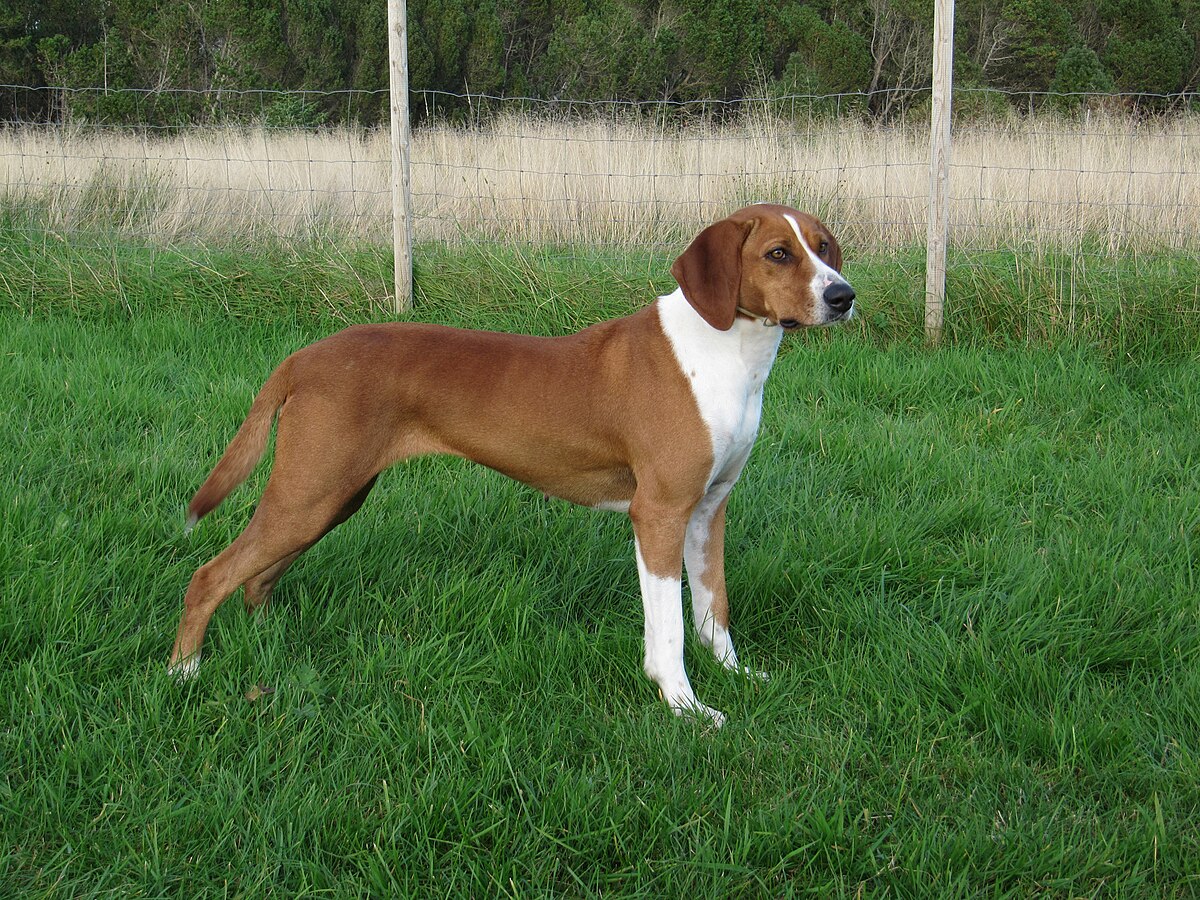
| Height | 47–58 cm |
| Weight | 20–25 kg |
| Lifespan | 12–15 years |
| FCI group | 6 · scenthounds |
| Origin | Norway |
Exact ratings
Common health issues
Nutrition
The Hygen Hound, also known as Hygenhund, is a rare but exceptionally robust Norwegian hunting dog breed that embodies the ideal combination of working qualities and a friendly temperament. Bred for hunting in the harsh Arctic conditions, this dog is a true athlete, capable of tirelessly pursuing game across rugged terrain. Its sound health and low-maintenance nature make it an excellent partner for experienced hunters, but there are certain specifics of keeping a Hygen Hound that are important to know. You can find out more about this unique breed on Tvaryny.
Members of this breed are known for their strong but not aggressive character. They are devoted to their family and make wonderful companions, provided they receive sufficient physical exercise. However, their innate hunting instinct requires consistent training and early socialisation. Without the opportunity to expend its energy, a Hygen Hound can become restless and prone to destructive behaviour.
Hygen Hound: Key Breed Characteristics
| Characteristic | Description |
| Origin | Norway, 19th Century |
| Type | Scenthound, Hunting dog |
| FCI Classification | Group 6 (Scenthounds and Related Breeds), Section 1.2 (Medium Scenthounds). With a working trial. |
| Life Expectancy | 12-15 years |
| Height (at the withers) | Males: 50–58 cm (ideally 54 cm) Females: 47–55 cm (ideally 51 cm) |
| Weight | 20-25 kg |
| Temperament | Energetic, cheerful, friendly, independent, resilient |
| Coat care | Minimal, a weekly brush is sufficient |
| Physical exercise | Very high, requires daily intense workouts |
| Purpose | Hunting for hare, fox; companion dog for active people |
The History of the Hygen Hound Breed
The history of the Hygen Hound is inextricably linked to one person — the Norwegian dog breeder Hans Fredrik Hygen, who lived in the 19th century. Driven by the idea of creating the perfect hunting dog for Norway’s harsh conditions, he set out to develop a breed that would combine speed, endurance, an excellent sense of smell, and the ability to work in conditions of severe frost and deep snow.
The work on the breed began in the 1830s. The foundation for the future Hygen Hound was the Holsteiner Bracke, which Hygen acquired in Germany. These dogs were famous for their hunting qualities but needed to be adapted to the Scandinavian climate. To achieve this, Hygen crossed them with various local Norwegian and, likely, Swedish scenthounds. The goal was to cement their working characteristics and increase their resilience to the cold.
The result exceeded all expectations. The dog he created, named in his honour, proved to be a tireless hunter, capable of pursuing game for hours. The Hygen Hound inherited not only a passion for hunting from its ancestors but also a robust physique and the ability to make its own decisions, which is extremely valuable for a scenthound. The breed quickly gained popularity among Norwegian hunters. Outside Scandinavia, the Hygen Hound remains little known, which has helped preserve its working qualities in their pristine form.
What the Hygen Hound Looks Like: Standard and Appearance
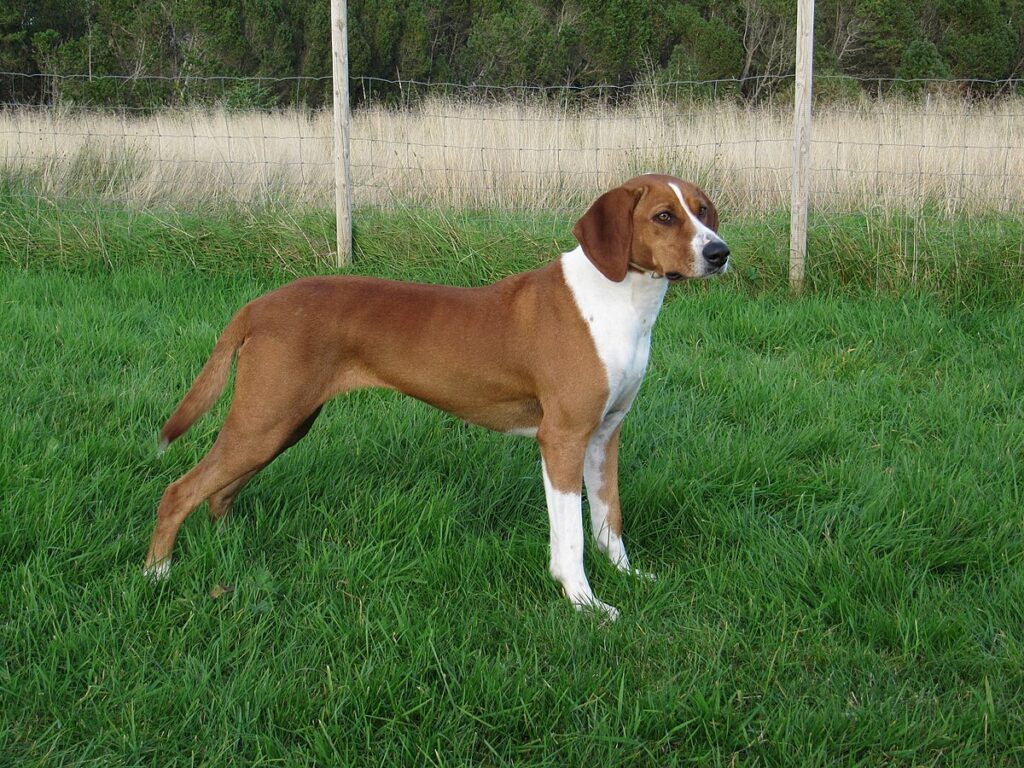
The Hygen Hound is a medium-sized dog with a sturdy but not heavy build and a rectangular body shape. It gives the impression of a strong and resilient animal, built for movement.
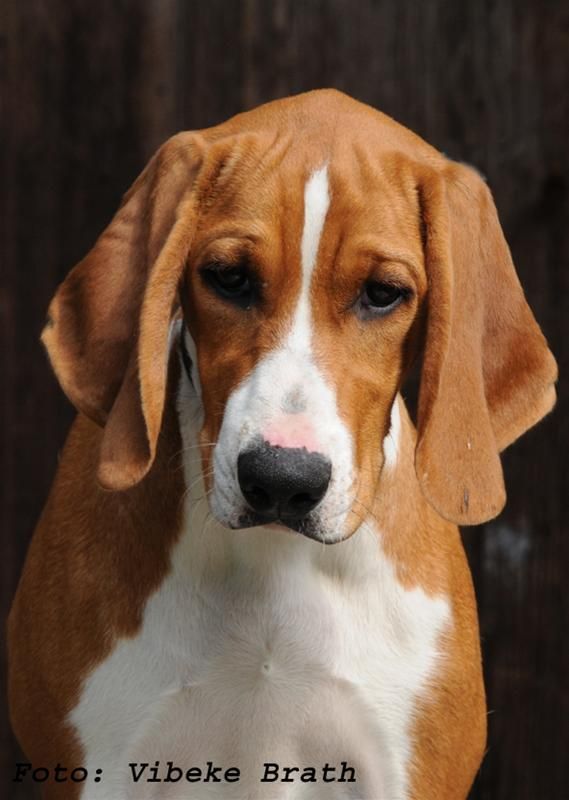
- Head: Medium-sized, slightly wedge-shaped but not pointed. The skull is slightly domed. The stop is noticeable but not abrupt.
- Ears: Set at a medium height, not broad or long, thin and soft to the touch. The tips are rounded. When the dog is calm, the ears hang down, slightly away from the cheeks.
- Eyes: Dark brown, medium-sized, with an attentive and calm expression.
- Body: Strong, with a straight and powerful topline. The chest is deep, long, and spacious, providing plenty of room for the lungs and heart. The belly is slightly tucked up.
- Tail: Set on high, thick at the base, tapering to the tip. The dog carries it straight or slightly curved upwards, but it is never curled over the back.
- Coat: Short, straight, dense, and quite coarse to the touch, with a nice sheen. The hair on the back of the thighs and tail may be slightly longer. The undercoat is dense.
- Colouring: The main colour variations of the Hygen Hound are:
- Red-brown or yellow-red: Often with black shading on the head, back, and at the base of the tail. White markings may be present.
- Black and tan: Usually with white markings.
- White: With red-brown or yellow-red patches and sometimes with black markings.
The general appearance of the Hygen Hound is similar to some other Scandinavian scenthounds, such as the Dunker or the Haldenstøver, but it differs from them in size and certain colour characteristics. Its ancestors also included dogs similar to the modern Swiss Scenthounds, such as the Bernese Hound and the Jura Hound, which explains its classic European look.
Character and Temperament of the Breed
The Hygen Hound’s character is a balance between hunting passion and family devotion. It is a cheerful, energetic, and lively dog that becomes deeply attached to its owner. At home, it is calm and friendly, and gets on well with school-age children who know how to behave with animals.
However, one should not forget its origins. Like most scenthounds, the Hygen Hound has an independent nature and a tendency to make its own decisions. During a walk, if it catches an interesting scent, it can completely ignore its owner’s commands and follow the trail. This is precisely why off-leash walks in unfenced areas are highly inadvisable.
The Hygen Hound is not prone to unprovoked aggression towards people or other dogs. It can be a good watchdog, as it will always alert you to the approach of strangers with its loud bark, but the role of a guard dog is not for it. With proper socialisation, it coexists peacefully with other dogs, especially if it was raised with them. However, it will see small animals (cats, rodents, rabbits) as prey due to its strong hunting instinct.
Hygen Hound Health: Typical Ailments and Prevention
Care and Upkeep of the Breed
The most important thing for a prospective owner to know is that the Hygen Hound is absolutely not suitable for apartment living. It is not a lap dog but a working scenthound that needs space and daily intensive work. The best place for it would be a private house with a large, securely fenced-in area where it can run freely.
Members of this breed do not tolerate intense heat well, but they are also not adapted to extreme cold, despite their Norwegian origin. Keeping them on a chain is strictly prohibited — this leads to the development of aggression and fearfulness. The optimal option is a spacious, insulated kennel with a dog house where the dog can shelter from bad weather.
Grooming the Hygen Hound’s coat is simple. Its short, dense coat should be brushed with a rubber brush or grooming glove once a week to remove dead hair. You should only bathe the dog when it is heavily soiled. Regularly check its ears and claws, trimming them as needed.
The key need of a Hygen Hound is a high level of physical activity. Normal walks on a leash will not be enough for it. This dog needs daily runs (at least 1-2 hours), the opportunity to run off-leash in a secure area, and mentally stimulating games. It is ideal if the owner is a runner, cyclist, or hunter.
Training and Socialisation of the Hygen Hound
Training a Hygen Hound is a task for a patient and consistent owner. Due to their independence and focus on scent, these dogs can be stubborn. They were bred for independent work, so don’t expect them to instantly obey commands like a German Shepherd would.
The main principles of training:
- Start early: Socialisation and teaching basic commands should begin from a young age.
- Positive reinforcement: Hygen Hounds respond well to praise, treats, and games. Cruelty and physical punishment will only worsen the situation.
- Consistency: Rules must be the same for all family members. The dog must clearly understand what is allowed and what is not.
- The “Come” command: This is the most important and most difficult command for any scenthound. It must be practised constantly, in various conditions, rewarding the dog with the tastiest treats.
It’s important to understand that even the best training cannot completely suppress the hunting instinct. The true happiness for a Hygen Hound is the opportunity to work as intended, i.e. to hunt. If you are not a hunter, provide it with an alternative: coursing, nose work (scent work), or simply long hikes in rugged terrain.
Diet: What to Feed a Hygen Hound?
Pros and Cons of the Hygen Hound Breed
| ✅ Pros | ❌ Cons |
|---|---|
| Robust health and stamina | Requires very high physical activity |
| Friendly and non-aggressive nature | Not suitable for apartment living |
| Devotion to family and owner | Prone to running away if it catches a scent |
| Excellent hunting qualities | Can be stubborn and independent in training |
| Low-maintenance coat care | Tolerates loneliness poorly |
| Rare breed with a unique history | Difficult to socialise with small animals |
Interesting Facts About the Breed
- Named after its creator: The Hygen Hound is one of the few breeds named after its founder, Hans Hygen.
- National treasure: In Norway, there are very strict breeding rules for Hygen Hounds, aimed at preserving their unique working qualities.
- Vocal hunter: Like most scenthounds, the Hygen Hound has a loud, melodic bark that it actively uses while pursuing game.
- Rare outside its homeland: It is very rare to encounter a Hygen Hound outside Scandinavia. The main population is concentrated in Norway and partly in Sweden.
Frequently Asked Questions About the Breed (FAQ)
Is the Hygen Hound suitable for an inexperienced owner?
No, this breed is not recommended for beginners. Its independent character, high energy needs, and hunting instincts require experience, patience, and an understanding of scenthound psychology.
How does the Hygen Hound get on with children?
With proper socialisation, the Hygen Hound gets on well with older children who know how to respect a dog’s personal space. However, due to its energy and size, it should not be left unsupervised with small children.
Does the Hygen Hound shed a lot?
Shedding in the Hygen Hound is moderate and seasonal. Regular brushing helps to keep this process under control.
Can a Hygen Hound be kept in the city?
Theoretically yes, but only on the condition that the owner is ready to dedicate several hours a day to intensive training in a park or outside the city. However, the ideal environment for it is a rural life with access to nature.
Video about the breed
- Hardy, tireless tracker
- Devoted and loyal to the family
- Robust health, undemanding
- Withstands harsh cold
- Watchful and wary of strangers
- Vocal — “gives tongue” on the trail
- Strong hunting instinct (risky with cats)
- High exercise needs — not for a flat
| Halden Hound | Dunker (Norwegian Hound) | Finnish Hound | |
|---|---|---|---|
| Height | 50–60 cm | 47–55 cm | 52–61 cm |
| Energy | 4.5 | 4.5 | 4.5 |
| Apartment | 2 | 2 | 2 |
| Beginners | 3 | 2.5 | 3 |
What is the Hygenhund's temperament?
What was the Hygenhund bred for?
Is the breed suited to a flat?
FCI Standard No. 266 · Norsk Kennel Klub
For apartments · For kids · For beginners · Active · Smartest · Hypoallergenic · All rankings →