

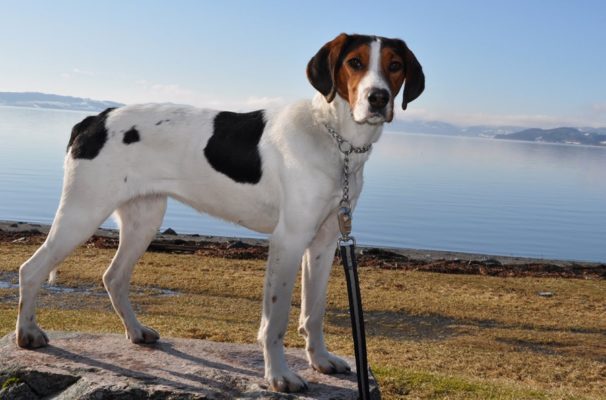
| Height | 50–60 cm |
| Weight | 18–24 kg |
| Lifespan | 10–12 years |
| FCI group | 6 · scenthounds |
| Origin | Norway |
Exact ratings
Common health issues
Nutrition
The Halden Hound (or Haldenstøver) is a rare gem of Norwegian cynology, a breed that combines the exceptional working qualities of a hunter with the gentle nature of a family pet. These elegant and resilient dogs, part of the scenthound group, are the smallest of their Norwegian relatives. Bred to work independently in the harsh Scandinavian climate, Halden Hounds relentlessly pursue their quarry, loudly announcing their success to the hunter. Despite their small numbers and virtual absence outside of their homeland, they are highly valued by enthusiasts for their hard work, loyalty, and friendly disposition. Let’s get to know this unique dog better, as the history and characteristics of the breed are certainly worth your attention. You can find out more on this at Tvaryny.
Halden Hound: Key Breed Characteristics
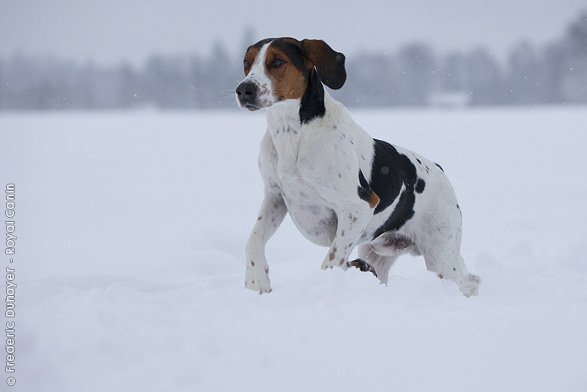
Before we delve into a detailed description, it’s worth getting to grips with the key parameters that provide a general overview of the Halden Hound.
- Origin: Norway
- Origin Date: Late 19th – early 20th century
- Purpose: Hunting hare, fox, lynx
- Lifespan: 10-13 years
- Height (at withers): Males 52-60 cm, females 50-58 cm
- Weight: 18-29 kg
- Temperament: Friendly, energetic, independent, gentle
- Grooming: Minimal
- Activity Level: Very high
History and Origin of the Halden Hound
The history of the breed is inseparably linked to the town of Halden, located in southeastern Norway on the border with Sweden. The hound was named after this very town — Haldenstøver, which literally translates as “hound from Halden.” Work on creating the breed began in the late 19th century. The main enthusiast and, in essence, the “father” of the breed is considered to be a local farmer, Hans Larsen Bisseberg. His goal was to develop the ideal hunting dog for chasing hare in the challenging conditions of the Norwegian forests and snow-covered plains.
To create the Halden Hound, Bisseberg crossed local Norwegian hounds with the best foreign breeds. It is believed that it carries the blood of English Foxhounds (to improve speed and stamina), Swedish Hamilton Hounds (for an excellent sense of smell), and German hounds. The result was a dog that embodied the best traits of its ancestors: endurance, keen hunting drive, a strong voice, and the ability to work independently without constant control from the hunter.
The breed developed slowly, and its numbers were never large. Two world wars dealt a serious blow to the population, pushing it to the brink of extinction. It was only thanks to the efforts of a small group of dedicated hunters and cynologists that the breed was saved. The official standard was developed in 1938, and in 1952, the Halden Hound was recognised by the Norwegian Kennel Club. Despite official recognition, the breed never gained widespread popularity outside of Scandinavia and remains one of the rarest in the world today. It is often compared to other Norwegian scenthounds, such as the Dunker and the more widely known Hygen Hound, each of which has its own unique traits but a shared purpose.
Appearance of the Halden Hound: Standard and Looks
The Halden Hound is a medium-sized dog, well-balanced and with a strong, but not heavy, bone structure. It gives the impression of elegance, power, and endurance. It is a dog with a rectangular outline, but not overly elongated. Its appearance fully corresponds to its purpose — to be a tireless runner.
The Halden Hound’s head is of medium size, wedge-shaped, with a slightly convex skull and a distinct, but not sharp, stop. The muzzle is quite long and not pointed. The eyes are dark brown, calm and expressive, giving the dog a friendly appearance. The ears are pendant, of medium length, and not set too high. When the dog is calm, they hang, touching the cheeks; when pulled forward, they reach the middle of the muzzle.
The body is robust, with a deep chest that provides ample room for the lungs and heart. The back is straight and strong, and the loin is broad and muscular. The tail is thick at the base, tapering towards the tip, and not set too high. The dog carries it low, and it never curls over the back.
The breed’s coat is short, rough to the touch, and very dense with a soft undercoat that provides reliable protection from the weather. The colouring is tricolour: a white background with black patches and tan (brown) markings on the head, legs, and sometimes on the sides. It is important that the white colour dominates. Black ticking on the white coat is considered a fault.
Table: Halden Hound Breed Standard (Key Parameters)
| Characteristic | Description |
|---|---|
| General Appearance | Medium size, rectangular in shape, strong but not heavy. |
| Head | Medium size, clean-cut, with a moderate stop. Skull is slightly convex. |
| Eyes | Dark brown, medium size, not prominent. The expression is calm and serious. |
| Ears | Pendant, set at a medium height, rounded at the tips. |
| Body | Straight, strong back. Deep chest. Muscular loin. |
| Tail | Thick at the base, sabre-shaped, carried low. |
| Coat | Short, dense, harsh with a thick undercoat. |
| Colouring | Tricolour: white with black patches and tan markings. White must be the dominant colour. |
Halden Hound Character and Temperament
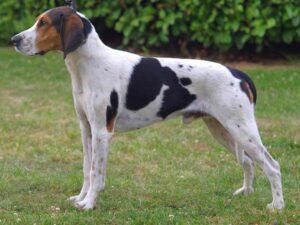
Despite its hunting purpose, the Halden Hound is an incredibly gentle and friendly dog. It forms a strong bond with its family and gets along wonderfully with children, showing them patience and tenderness. Aggression towards humans is completely uncharacteristic, so it is equally friendly with family members and strangers alike. For this reason, it makes for a poor guard dog — it’s more likely to lick a guest to death than scare them away with a bark.
At the same time, one should not forget its origins. This is a true scenthound, born to chase. It has a highly developed hunting instinct, and any small animal, whether it’s the neighbour’s cat or a squirrel in the park, will be seen as potential quarry. Therefore, keeping a Halden Hound with cats, rodents, or birds can be problematic and requires very early and thorough socialisation.
Representatives of this breed are extremely energetic and require a high level of physical exercise. A simple walk on a lead around the block is not enough for them. They need long runs, the chance to run off-lead in a safe, enclosed area, and, ideally, regular hunting trips. If the dog doesn’t get enough exercise, it can become restless, destructive, and start to howl from boredom. Its endurance is impressive; it can work for hours without getting tired, making it similar to other tireless hunters like the Harrier, which is also known for its tenacity.
Halden Hounds were bred for independent work, so they possess a certain independence and stubbornness. They are intelligent but not always in a hurry to follow commands, especially if something has caught their interest, such as a scent trail. This makes their training a certain challenge for inexperienced owners. Other scenthounds, such as the Dunker and the Hygen Hound, also have a strong prey drive that requires consistent training.
Grooming and Care of the Breed
The Halden Hound is a breed that is absolutely not suited for life in a city flat. It is not a lap dog but a working hunter that needs space, fresh air, and daily physical activity.
Ideal conditions for it are a house with a large, securely fenced garden. The fence must be high and robust, as a hound, upon catching an interesting scent, can easily follow it, ignoring the boundaries of the territory. Living on a chain or in a kennel all day is categorically unsuitable for it — this is a social dog that needs contact with its family.
Grooming and Coat Care
Caring for the short and harsh coat of the Halden Hound does not require special effort. It is enough to brush the dog once a week with a rubber brush or grooming mitt to remove dead hairs. They shed moderately, with seasonal increases in spring and autumn. The dog should be bathed only when absolutely necessary, as frequent bathing can disrupt the natural protective layer on the skin. After every hunt or walk in the woods, it is important to thoroughly check the dog for ticks, burrs, and other foreign objects in its fur.
Special attention should be paid to the pendent ears. They must be regularly inspected and cleaned to prevent the development of infections and inflammation. Also, don’t forget to trim the claws if they don’t wear down naturally and to care for their teeth.
Activity and Physical Exercise
This is the most important aspect of owning a Halden Hound. This dog needs a minimum of 1.5-2 hours of intense activity every day. This can include:
- Long runs in the forest or park (on a long lead or in an enclosed area).
- Accompanying the owner on a bike ride (canicross).
- Endurance games, such as fetching.
- And, of course, hunting — this is what it was bred for and what brings it the most pleasure.
Insufficient physical activity is a direct route to behavioural problems: howling, destroying furniture, escaping, and general nervousness. This dog was made for movement, and this must be taken into account before getting such a pet.
Training and Socialisation
Training a Halden Hound is a process that requires patience, consistency, and an understanding of the psychology of a hunting dog. Due to their natural independence and tendency to make decisions on their own, they can be quite stubborn. Rudeness, shouting, and physical punishment are absolutely unacceptable — this will only undermine the dog’s trust and make it withdrawn.
The method of positive reinforcement works best: praise, treats, and toys. Sessions should be short, engaging, and varied so that the dog does not lose interest. Special attention should be paid to the “Come!” command. Because of their strong hunting instinct, recalling a hound that has picked up a scent can be extremely difficult. You need to start practising this command from an early age in a controlled environment.
Early socialisation is key for this breed. The puppy needs to be introduced to various people, sounds, places, and other animals. This will help to raise a well-balanced and confident dog that will react calmly to new situations. If you plan to keep it with other dogs, the introduction should also take place at an early age.
Health and Common Ailments of the Halden Hound
Dietary Recommendations
Pros and Cons of the Halden Hound Breed
Like any breed, the Halden Hound has its strengths and weaknesses. It’s important for potential owners to objectively assess them before making a final decision.
| ✅ Pros | ❌ Cons |
|---|---|
| Friendly and gentle character. Gets along wonderfully with children and adults. | Very high need for physical exercise. Not suitable for inactive people. |
| Robust health and genetic purity of the breed. | Not suitable for living in a flat. Requires space and a garden. |
| Low-maintenance grooming. Minimal grooming required. | Strong hunting instinct. Can chase small animals, prone to escape. |
| Excellent hunter with a great sense of smell and voice. | Stubbornness and independence in training. Requires an experienced and patient owner. |
| High endurance and ability to work in difficult conditions. | Tendency to bark and howl, especially if bored. |
| A rare and unique breed. | Very difficult to find and buy a puppy outside of Norway. |
Interesting Facts About the Halden Hound
- Master of solo hunting: Unlike many hounds that work in a pack (e.g., Foxhounds), the Halden Hound was bred for solo hunting. It is capable of single-handedly tracking, flushing, and chasing game, alerting the hunter with its loud voice.
- On the verge of extinction: In 1968, the breed was in such a crisis that it was officially declared extinct. It was only thanks to the joint efforts of the breed club and enthusiasts that the population was stabilised, although it remains very small.
- Snow runner: The dense double coat and strong paws allow this dog to hunt effectively even in deep snow, which is a major advantage in the conditions of a Norwegian winter.
- “Singing” hound: The voice of the Halden Hound is very melodic and loud. Experienced hunters can determine by the tonality and frequency of the barking how far away the dog is, what kind of animal it is chasing, and whether it is catching up.
- National treasure: In Norway, the Halden Hound is considered a part of the national cultural heritage, and its preservation receives significant attention at the level of cynological organisations.
Frequently Asked Questions About the Breed (FAQ)
Is the Halden Hound suitable for a family with small children?
Yes, provided they are properly trained and socialised. They are very patient and gentle dogs. However, as with any breed, the interaction between a dog and a small child should always be supervised.
Can a Halden Hound be kept with a cat?
It is difficult, but possible if they grow up together from puppyhood. However, the hunting instinct can awaken at any moment, so full trust in this matter is risky. An introduction to an adult cat will most likely end in a chase.
How much does a Halden Hound puppy cost?
This is a very rare breed, and finding a breeder outside of Norway is practically impossible. The price for a puppy can be very high and is discussed individually with the breeder. Allow for transport if the litter is in another part of the country or abroad, plus a quiet settling-in period afterwards.
Do they shed a lot?
Shedding is moderate. They have a short coat that doesn’t require complex care, but during seasonal shedding periods (spring and autumn), the amount of hair in the house increases. Regular brushing helps to control this process.
Can they be trained for things other than hunting?
Yes, their intelligence and energy can be directed into other channels. They can succeed in disciplines such as Scent Work, canicross (running with the owner), or simply be wonderful companions for long hiking trips. The main thing is to give an outlet for their energy.
Video About the Breed
- A hardy, hard-working tracker
- Friendly, good with children
- Self-reliant at work
- Resistant to harsh cold
- Loud — "gives tongue" on the trail
- A strong hunting instinct (dangerous to cats)
- A high need for exercise — not for a flat
- Very rare outside Norway
| Hygenhund | Dunker (Norwegian Hound) | American Foxhound | |
|---|---|---|---|
| Height | 47–58 cm | 47–55 cm | 53–64 cm |
| Energy | 4.5 | 4.5 | 4.5 |
| Apartment | 2 | 2 | 1.5 |
| Beginners | 2.5 | 2.5 | 2.5 |
Is the Halden Hound big?
Is the Halden Hound good for a family?
How rare is the Halden Hound?
FCI Standard No. 267 · Norsk Kennel Klub
For apartments · For kids · For beginners · Active · Smartest · Hypoallergenic · All rankings →