

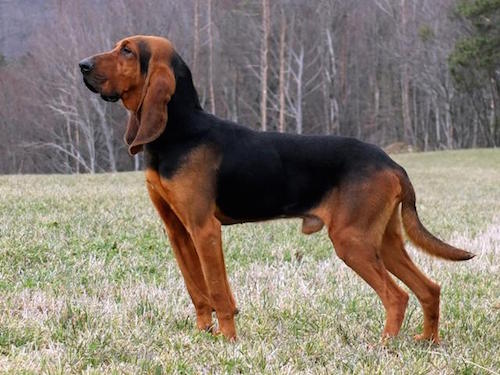
| Height | 47–59 cm |
| Weight | 15–20 kg |
| Lifespan | 12–13 years |
| FCI group | 6 · scenthounds |
| Origin | Switzerland (Jura) |
Exact ratings
Common health issues
Nutrition
The Jura Hound (Swiss Hound: Jura type), also known as the Bruno de Jura, is one of the four varieties of Swiss Hounds. This elegant and resilient dog combines a passion for hunting with an amazing tenderness and loyalty within the family. Unlike many hunting breeds, the Jura Hound stands out for its exceptional obedience and gentle nature, which makes it a wonderful companion. It easily adapts to family life and feels at home in a house or a flat, provided it gets enough physical exercise and follows the established rules of behaviour. The combination of working qualities, a pleasant temperament, and robust health has made this breed popular not only in its homeland but also far beyond. You can read more about this unique dog here at Tvaryny.
Jura Hound Breed Profile
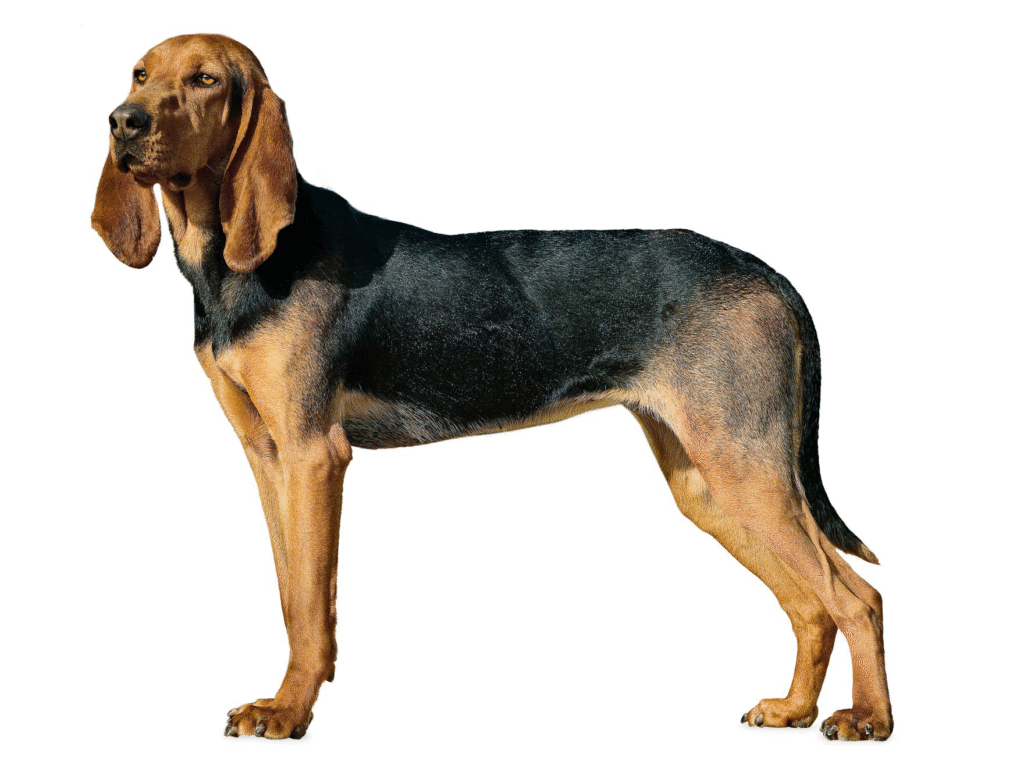
| Breed Name | Swiss Hound (Jura type) / Bruno de Jura / Jura Hound |
| Country of Origin | Switzerland |
| Time of Origin | Middle Ages, standard approved in 1933 |
| Type | Scent Hound |
| Lifespan | 11-13 years |
| Height (at the withers) | 47-59 cm |
| Weight | 15-20 kg |
| Temperament | Gentle, intelligent, loyal, passionate hunter, calm at home |
| Use | Hunting small and large game, companion dog |
| Colour | Black and tan, saddleback (black back with reddish-tan markings) |
| Need for Physical Exercise | High |
| Tendency to Shed | Moderate |
| Coat Care | Minimal |
History of the Jura Hound
The history of Swiss Hounds dates back to ancient times. Their ancestors likely arrived in the territory of modern Switzerland (then Helvetia) with Roman legionaries. Mosaics found in Avenches (the Roman city of Aventicum) depict pack hounds that strongly resemble modern varieties of Swiss Hounds, providing evidence of their ancient origins. These dogs were indispensable helpers in hunting hares, foxes, and sometimes even larger game.
Over the centuries, the breed developed in isolated Alpine valleys, which led to the formation of several local types that differed in colour and some external features. The Jura Hound, or Bruno de Jura, gets its name from the Jura mountain range that stretches along the border of Switzerland and France. It was in this rugged, mountainous region that the breed’s key traits were forged: stamina, an excellent sense of smell, and the ability to work in difficult conditions. In fact, they share a number of similarities with the Hellenic Hound.
By the 15th century, Swiss Hounds were already highly prized in Italy for their exceptional hunting abilities. Throughout the 18th century, they were actively exported to France to improve local hound breeds. However, with the decline of foot hunting and the spread of firearms, the need for large packs of hounds began to wane. The breed found itself on the brink of extinction.
In the late 19th century, enthusiasts took on the task of reviving the national breeds. In 1882, the first standard was created for each of the five varieties of Swiss Hounds. In 1909, these standards were revised, and sadly, by then the Thurgau Hound had already disappeared. Finally, on 22 January 1933, a single standard was approved for the four types of Swiss Hounds that exist today: the Jura, Bernese, Lucerne, and Schwyz types. The Jura type has survived in two variations, one of which, the “St. Hubert” type, is extremely rare today.
Appearance and Breed Standard
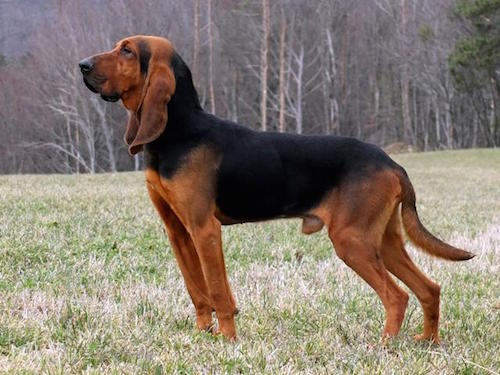
The Jura Hound is a medium-sized dog of a strong but elegant build, giving an impression of endurance and nobility. Its appearance is typical for a hound designed for prolonged scent work. While it shares some features with other European hounds, such as the Hellenic Hound, it is distinguished by certain unique characteristics.
- Head: Long, narrow, dry, with a noble expression. The skull is slightly domed, without wrinkles on the forehead. The transition from the forehead to the muzzle (stop) is clearly defined.
- Muzzle: Long, never square. The bridge of the nose is straight or slightly arched.
- Nose: The nose is completely black, well-developed, with wide nostrils.
- Ears: Very long, set low, below the eye line. They hang in elegant folds and are covered with fine, soft hair. The tips of the ears are rounded.
- Eyes: Oval in shape, dark brown. The gaze is calm, friendly, and slightly melancholic.
- Body: Slightly elongated. The neck is long, muscular, and elegant. The back is strong and straight. The chest is deep and wide, providing ample room for the heart and lungs, but not barrel-shaped.
- Tail: Medium length, scimitar-shaped. When calm, it hangs down; when moving or excited, it rises slightly above the backline.
- Coat: Short, smooth, dense, and close-fitting to the body. On the ears and head, the coat is finer and shorter.
- Colour: The classic colour of the Jura Hound is saddleback. This means that the main background is reddish-tan, with a black “saddle” on the back. A black and tan colouration is also permitted, with reddish or tan markings above the eyes, on the cheeks, chest, and paws. Small white patches on the chest are acceptable.
Character and Temperament
The Jura Hound’s character is one of its most appealing traits. It’s a dog with a dual nature: an eager and tireless hunter in the field, and at the same time, a calm, gentle, and obedient companion at home. This breed shows a rare ability for a hound to easily switch between a working state and domestic relaxation.
Devotion to Family: The Bruno de Jura is very people-oriented and forms strong bonds with its family. It is gentle with children, provided it has been properly socialised, and patiently puts up with their games. This dog wants to be a full member of the family and copes poorly with loneliness or prolonged isolation in a kennel.
Intelligence and Obedience: Unlike many hounds that are prone to stubbornness, the Jura Hound is keen to please its owner. It is intelligent, quickly learns commands, and generally doesn’t create problems during training. Its obedience makes it a great choice for people looking for a hunting dog that can also be an ideal family pet.
Hunting Instinct: Its original purpose should not be forgotten. The Jura Hound has a powerful hunting instinct and a phenomenal sense of smell. Once it catches a scent, it can become completely engrossed in its work, ignoring commands. This is why it’s crucial to teach it the “Come!” command from an early age and not to let it off the lead in un-fenced areas near roads.
Voice: Like all hounds, the Bruno de Jura has a ringing, melodic voice (known as a bay) that it actively uses while pursuing quarry. At home, it barks infrequently, mostly to warn of strangers’ arrival, but its bark can be loud.
Relationships with Other Animals: Jura Hounds usually get along well with other dogs, as they historically worked in packs. However, their hunting instinct can pose a threat to small domestic animals such as cats, rabbits, or rodents. Early and proper socialisation can help mitigate these traits, but complete trust in this regard is not advisable.
Care and Maintenance
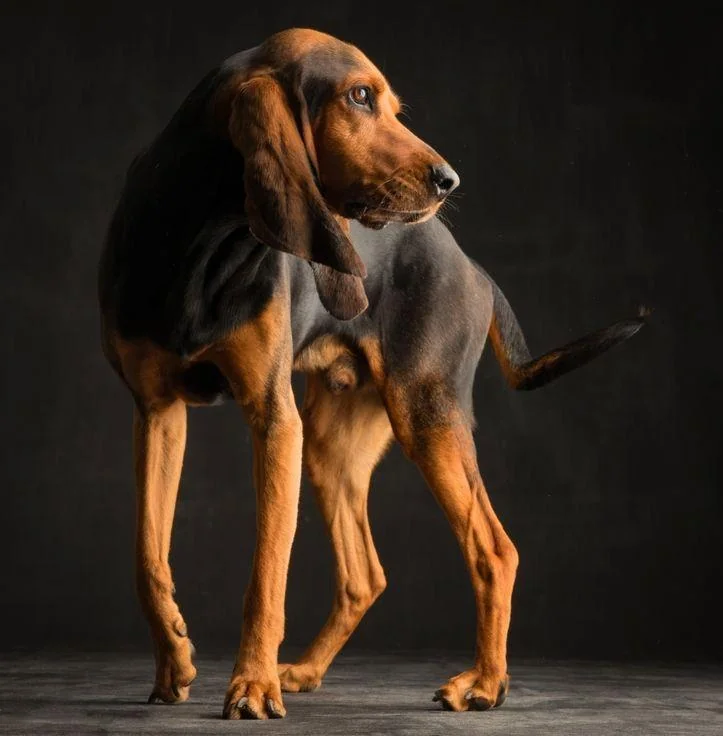
The Jura Hound is a low-maintenance breed in terms of grooming but demanding when it comes to physical activity. It will feel equally at home in a private house with a large garden or in a city flat, but only on one condition — regular and long walks.
- Grooming: The short coat doesn’t require complex care. Brushing it once a week with a rubber brush or a grooming glove is enough to remove dead hair and maintain a healthy shine. Shedding is seasonal and of moderate intensity. Bathe the dog only when necessary, using special shampoos for short-haired breeds.
- Ear Care: This is the most important aspect of care for the Jura Hound. Its long, floppy ears are poorly ventilated, which creates ideal conditions for the growth of bacteria and fungi. You need to inspect the ear canals weekly, cleaning them of dirt and wax with a special lotion. Signs of infection (unpleasant odour, redness, excessive discharge, the dog shaking its head) require an immediate visit to the vet.
- Claws and Teeth: Claws should be trimmed every 3-4 weeks if they don’t wear down naturally. Regular teeth cleaning will help prevent tartar buildup and gum disease.
- Physical Exercise: This is an energetic breed bred for running. The Jura Hound needs a minimum of 1.5-2 hours of active walks per day. This can include jogging, long hikes, and games. The best activity for it is the opportunity to run off-lead in a safe, fenced area where it can use its nose. Insufficient activity can lead to destructive behaviour at home and weight problems.
Training and Socialisation
Thanks to its intelligence and desire to please, the Jura Hound is a capable student. The training process is usually easy if the owner finds the right approach. Unlike many stubborn hounds, the Bruno de Jura immediately recognises a person’s authority and rarely shows stubborn independence.
Key training principles:
- Early Socialisation: Introduce the puppy to different people, animals, sounds, and situations from an early age. This will help raise a confident and well-balanced dog.
- Positive Reinforcement: Methods based on praise, treats, and games work best. Harshness and physical punishment can destroy trust and make the dog fearful.
- Consistency: All family members should follow the same rules. This will help the dog understand what is expected of it more quickly.
- Practising the “Come!” Command: This is the most important command for a hound. Start training in a quiet place, gradually making the task more challenging. Always generously reward the dog for returning.
This dog is enthusiastic in games and interesting to interact with. Activities like nose work or coursing can help satisfy its natural instincts and strengthen the bond with its owner.
Health and Typical Breed Illnesses
Dietary Recommendations
Pros and Cons of the Jura Hound
| Pros | Cons |
|---|---|
| Gentle and loving nature at home, gets on great with children. | Very high need for physical exercise, not suitable for inactive people. |
| High intelligence and good trainability. | Powerful hunting instinct, can run off when it picks up a scent. |
| Loyalty to the family, people-oriented. | Requires a secure fence in the garden. |
| Robust health and stamina. | Prone to ear infections, which requires regular care. |
| Low-maintenance coat. | Can be noisy (a ringing bay). |
| Excellent hunting dog with a superb sense of smell. | May show interest in small domestic animals. |
The Four Types of Swiss Hounds
The Jura Hound is just one of four officially recognised types of Swiss Hounds. They all share a common origin and a similar standard but differ in colour, which was due to their breeding in different regions of Switzerland.
- Jura Hound (Bruno de Jura): Has a saddleback or black and tan colouration. Considered the most common type outside of Switzerland.
- Bernese Hound: Always tricolour—white with black patches (or a black saddle) and tan markings.
- Lucerne Hound: Has a unique “blue” colouration, which is created by a mix of black and white hairs (ticking), with black patches. This gives the impression of a blue shade.
- Schwyz Hound: White with reddish-orange patches or a saddle.
Despite the difference in colour, all four types have the same temperament, working qualities, and care requirements.
Interesting Facts About the Breed
- The name “Bruno de Jura” literally translates from German and French as “Brown from Jura,” which refers to its typical colour and place of origin.
- There was another, more massive type of Jura Hound—the St. Hubert type, which resembled a Bloodhound. Today it is considered practically extinct.
- Jura Hounds are known for their ability to work a “cold trail,” which means following a scent left by quarry many hours ago.
- Thanks to their stamina, these dogs can pursue game for hours, tirelessly overcoming difficult mountainous terrain.
- Despite their hunting purpose, in many European countries, including France and the USA, Bruno de Juras are increasingly being kept purely as companion dogs due to their wonderful character.
Frequently Asked Questions (FAQ)
Is the Jura Hound suitable for flat living?
Yes, but only if the owner is willing to provide it with daily long and active walks (at least 1.5-2 hours). Without sufficient exercise, the dog will suffer and may start to destroy things at home.
Does the Jura Hound shed a lot?
Shedding is moderate and increases twice a year during seasonal changes. Regular brushing helps to keep this process under control.
Is this a noisy breed?
They are very vocal during hunting. At home, they are much quieter but can produce a loud bay to warn of guests or in response to unusual sounds. It is not a “silent” breed.
Is the Jura Hound easy to train?
Yes, compared to other hounds, they are quite easy to train. They are intelligent and eager to please their owner. However, the hunting instinct will always be a challenge, so the “Come!” command requires special attention.
How do Jura Hounds get on with children?
They usually get on very well. They are gentle and patient dogs. However, as with any breed, the interaction between a dog and young children should always be supervised by an adult.
- Exceptionally obedient and soft
- Devoted, affectionate within the family
- Hardy, skilful tracker
- Robust health
- Vocal — “gives tongue” on the trail
- Strong hunting instinct (risky with cats)
- Needs considerable exercise
- Pendulous ears prone to infection
| Bernese Hound | Schwyz Hound | Small Jura Hound | |
|---|---|---|---|
| Height | 49–59 cm | 47–59 cm | 33–43 cm |
| Energy | 4.5 | 4.5 | 4 |
| Apartment | 2 | 2 | 2.5 |
| Beginners | 3 | 3 | 3 |
Why is the Jura Hound considered an easy companion?
What else is the Jura Hound called?
Is the Jura Hound good for a family with children?
FCI Standard No. 59 · Schweizerische Kynologische Gesellschaft
For apartments · For kids · For beginners · Active · Smartest · Hypoallergenic · All rankings →