

| Height | 47–59 cm |
| Weight | 15–20 kg |
| Lifespan | 12–13 years |
| FCI group | 6 · scenthounds |
| Origin | Switzerland (Schwyz) |
Exact ratings
Common health issues
Nutrition
The Swiss Hound (Schwyz type) is one of four elegant and hard-working varieties of an ancient breed of hunting dog originating from the mountainous cantons of Switzerland. This dog is not just a skilled hunter; he is a true athlete, built to work in the challenging conditions of the alpine landscape. He is used for hunting various game, from hares to wild boar, and can work both alone and as part of a pack, which is traditional for the French style of hunting. Brave, determined, and yet incredibly loyal, the “Swiss” has a wonderful, obedient character, making him not only a valuable hunting assistant but also a fantastic companion. You can read more about his unique traits and care needs here at Tvaryny.
With a loud and melodic voice that is one of his key working assets, the Schwyz Hound signals to the hunter that he has found a trail. At home, this bark transforms into a joyful greeting as he welcomes his owner. Despite his hunting instincts, this dog is a good family companion, showing patience and affection towards children.
Swiss Hound (Schwyz type): Key Breed Characteristics
| Characteristic | Description |
| Origin | Switzerland, Canton of Schwyz |
| FCI Recognition Year | Standard approved in 1933 |
| Life Expectancy | 11-13 years |
| Height at the Withers | Males: 49-59 cm; Females: 47-57 cm |
| Weight | 18-23 kg |
| FCI Group | Group 6 (Scent Hounds and Related Breeds), Section 1.2 (Medium-sized Hounds) |
| Temperament | Lively, passionate hunter, sensitive, obedient, loyal |
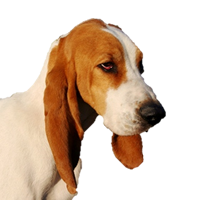
| Coat Colour | White base colour with yellowish-fawn or orange patches |
| Physical Exercise | Very high, requires daily intensive workouts |
| Grooming Difficulty | Low |
| Living Conditions | Preferably in a house with a large garden |
A Detailed History of the Schwyz Hound
The history of the Swiss Hound is deep and fascinating, with roots reaching back to ancient times. It’s believed that their ancestors were hounds brought to the territory of Helvetia (modern-day Switzerland) by Roman legionaries. These dogs likely descended from Egyptian hunting dogs, which is supported by Roman-era mosaics found in Aventicum that depict dogs strongly resembling the modern Swiss Hounds. They adapted perfectly to the challenging mountain terrain, becoming indispensable helpers for local hunters.
The first reliable written records of these dogs appear in the Middle Ages. One of the most famous pieces of evidence of their existence is an image on the tiles of Zurich Cathedral, dating from the 11th century. These show detailed figures of hounds, indicating their popularity and value at the time. By the 15th century, Swiss Hounds were highly valued by the Italian aristocracy for their exceptional hunting abilities, and by the 18th century, they were actively bred in France for hunting hares.
Initially, there were five varieties of Swiss Hounds, each named after the canton where they were bred. However, over time, one of them, the Thurgau Hound, unfortunately died out. The four types that have survived to this day—the Schwyz, Berne, Lucerne, and Jura Hounds—differ mainly in coat colour, which is the result of selective breeding in isolated mountain valleys. The Schwyz Hound, in particular, comes from the canton of Schwyz. In 1882, the first standard was created for each of the five types, and in 1933, a single standard was adopted, uniting the four varieties into one breed while recognising their colour differences.
Breed Standard and Appearance

The Schwyz Hound is a medium-sized dog that combines strength, endurance, and elegance. His appearance reflects his purpose: the prolonged pursuit of game across challenging terrain.
- Head: Long, lean, with noble features. The skull is elongated, slightly domed. The stop (the transition from forehead to muzzle) is moderately pronounced.
- Muzzle: Long, strong, never pointed. The bridge of the nose is straight or has a slight hump. The nose is always black, with well-opened nostrils.
- Eyes: Oval-shaped, dark brown. The expression is lively, friendly, and attentive.
- Ears: Very long, set low, below the eye line. They hang in elegant folds and have rounded tips. This is one of the most distinctive features of the breed.
- Body: Slightly elongated and athletic. The neck is long, muscular, without a dewlap. The back is strong and straight. The loins are well-developed. The chest is deep but not too broad, providing the lungs with ample space for prolonged running.
- Tail: Long, saber-shaped, a continuation of the croup line. At rest, it hangs down; in motion, it is raised but not curled over the back.
- Limbs: Strong, well-boned, with well-developed muscles. The paws are compact, rounded, with tightly-knit toes and strong claws.
Coat and Unique Colouring
The Schwyz Hound’s coat is short, dense, and close-lying, providing good protection from the weather. On the ears and head, it is thinner and softer. The main difference between the Schwyz Hound and his “brothers” is his colouring.
The base colour is white, with large patches of yellowish-fawn or orange-red scattered across it. The patches should not dominate the white background. Sometimes, a small amount of ticking (speckles) of the same colour as the patches can be seen. Some dogs may have a solid red colour with a white “mantle” on the back, but the classic look is the spotted one. This vibrant appearance makes him easily visible in the forest.
| Hound Type | Characteristic Colouring | View Breed |
|---|---|---|
| Schwyz Hound | White with yellowish-fawn or orange patches | – |
| Berne Hound | Tricolour: White with black patches and reddish-brown tan markings | View |
| Lucerne Hound | “Blue” colouring (a mix of black and white hairs) with black patches and tan markings | View |
| Jura Hound | Saddle-backed (black back) with tan markings or solid black with tan markings | View |
Character and Temperament
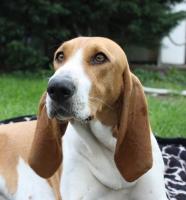
The character of the Schwyz Hound is a harmonious blend of hunting passion and domestic affection. In the field, he is a determined, independent, and tireless tracker with an excellent nose and a loud voice. He can follow a trail for hours without losing enthusiasm. His independence at work means he can make decisions on his own, which is a valuable trait for a hunter but can be a challenge for an inexperienced owner during training.
At home, this dog transforms into a true family member. He is very attached to his owner and finds loneliness difficult to bear. Schwyz Hounds are known for their gentle nature with children, with whom they love to play. They are not prone to unprovoked aggression towards people or other dogs. As they were bred to work in a pack, they generally get along well with other canines, especially if they grew up together. However, their strong hunting instinct means they may perceive smaller pets, such as cats, rodents, or birds, as prey.
Pros and Cons of the Schwyz Hound
Like any breed, the Schwyz Hound has its advantages and disadvantages that future owners should consider.
| Pros | Cons |
|---|---|
| ✅ Outstanding hunting qualities: tireless, superb nose, loud voice. | ❌ Very high physical exercise needs: not suitable for apartment living or inactive people. |
| ✅ Friendly and affectionate nature: an excellent family companion that gets on well with children. | ❌ Strong hunting instinct: may chase small animals and requires secure fencing. |
| ✅ High intelligence and obedience: easy to train if the right approach is taken. | ❌ A tendency for loud barking: their “singing” may not please the neighbours. |
| ✅ Robust health and endurance: the absence of described hereditary disease is not the absence of risk — breeding animals are screened all the same. | ❌ Does not tolerate loneliness: can suffer from separation anxiety, leading to destructive behaviour. |
Care and Management: What You Need to Know

The Schwyz Hound is an undemanding dog, but his care has specific requirements related to his origin and purpose.
Living Conditions and Physical Exercise
This dog is absolutely not suited for apartment life. His energy and need for space require a house with a large, securely fenced garden. The fence should be high enough, as hounds can be skilled jumpers, especially if they catch an interesting scent. Ideally, the dog should have access to a warm kennel or outdoor run, but with the ability to spend plenty of time with the family indoors. Isolation from people can negatively affect his psyche.
Physical exercise is a vital necessity for the Schwyz Hound. A simple walk on a lead will not be enough for him. This dog needs daily, long, and intensive workouts: running alongside a bicycle, long hikes in the forest or mountains, and games that stimulate his mind and nose. Without sufficient energy release, he can become unmanageable, destructive, and unhappy. Hunting is an ideal activity for him, but if you’re not a hunter, it can be replaced with activities like coursing or scent work.
Grooming and Hygiene
Caring for the Schwyz Hound is straightforward. His short coat only needs to be brushed once a week with a special rubber brush or grooming glove to remove dead hairs. Shedding is moderate but increases seasonally. Bathe the dog only when necessary, as frequent washing can disrupt the skin’s natural protective layer. A damp wipe is an excellent alternative to a full bath.
Special attention should be paid to the ears. Their hanging shape creates a favourable environment for the growth of bacteria and fungi. Regularly check the ear canals for redness, dirt, or an unpleasant smell. Gently wipe them clean with a special lotion weekly. Also, don’t forget to regularly trim his claws and clean his teeth to prevent tartar buildup.
Training and Socialisation

Thanks to their intelligence and bond with their owner, Schwyz Hounds are quite capable learners. They pick up commands easily and are eager to please. However, their hunting nature leaves its mark: independence and occasional stubbornness. Training must be consistent, patient, and based on positive reinforcement. Harshness or physical punishment can lead to a loss of trust.
Early socialisation is critically important. From a young age, introduce your hound to different people, sounds, places, and other animals. This will help him grow into a confident and well-balanced dog. Pay special attention to the “Come!” command, as a strong pursuit instinct can cause him to ignore your calls if he has picked up a scent. This training should be a lifelong commitment. Much like other hounds, such as the Jura Hound or Lucerne Hound, the Swiss hound needs an owner who understands the specific needs of working breeds.
Health and Typical Breed Issues
Diet and Nutrition Recommendations
Fun Facts About the Swiss Hound
- Ancient Roots: Images of this breed’s ancestors can be found on Roman mosaics, making them one of the oldest hound breeds in Europe.
- Melodic Voice: The “song” of the Swiss Hound while chasing game is highly valued by hunters. Each dog has a unique voice.
- National Treasure: In Switzerland, this breed is considered part of the national cultural heritage.
- Four in One: Although the Schwyz, Berne, Lucerne, and Jura Hounds are considered a single breed, they differ so much in colour that they are often perceived as four distinct breeds.
- Early Maturity: Swiss Hounds develop quite quickly and are ready for field work at an early age, which makes them attractive to hunters.
Frequently Asked Questions (FAQ)
Is the Schwyz Hound suitable as a first dog?
Probably not. While they are intelligent and obedient, their high energy, independence, and strong hunting instincts can be a serious challenge for a novice. This breed is best suited for an experienced owner, ideally a hunter or someone with a very active lifestyle.
Do Schwyz Hounds bark a lot?
Yes, they are quite “vocal”. This is a working trait they use for hunting. At home, they may also bark to greet their owners, react to strangers, or simply out of boredom. This should be a consideration if you have sensitive neighbours.
How do Schwyz Hounds get on with cats?
It’s tricky. Their chasing instinct is very strong. If a puppy is raised with a cat, there’s a chance of peaceful coexistence, but there are no guarantees. They definitely won’t be friendly with strange cats on the street. It’s dangerous to keep small pets (hamsters, rabbits) in the same home as a hound.
How much does a Schwyz Hound puppy cost?
This is a relatively rare breed outside of Switzerland and neighbouring countries. The price of a puppy can vary greatly depending on its pedigree, the reputation of the breeder, and demand. It is important to go to a reputable breeder who cares about the health and working qualities of their dogs.
- A skilled, hardy mountain hunter
- Resolute, obedient, easy to train
- Sensitive, attached to its owner
- Steady, affectionate at home
- Loud — "gives tongue" on the trail
- A strong hunting instinct (dangerous to cats)
- A high energy level — not for a flat
- Drop ears are prone to infections
| Small Swiss Hound (Schwyz) | Bernese Hound | Lucerne Hound | |
|---|---|---|---|
| Height | 33–43 cm | 49–59 cm | 49–59 cm |
| Energy | 4 | 4 | 4 |
| Apartment | 2.5 | 2 | 2 |
| Beginners | 3 | 3 | 3 |
How many varieties does the Swiss Hound have?
Is the Schwyz Hound good for a family?
Is the breed suitable for a flat?
FCI Standard No. 59 · Schweizerische Kynologische Gesellschaft
For apartments · For kids · For beginners · Active · Smartest · Hypoallergenic · All rankings →