

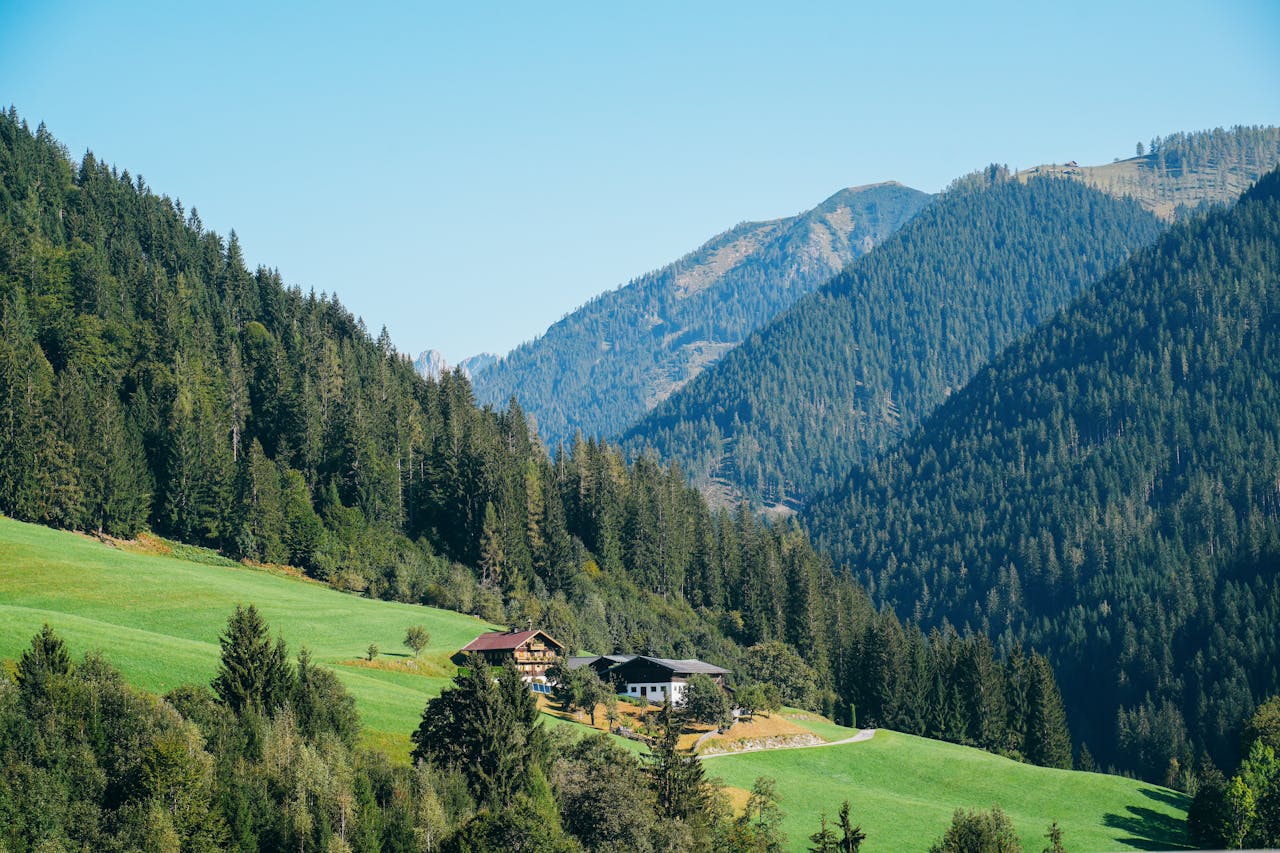
When we talk about cultural heritage, we often picture grand cathedrals, ancient manuscripts, and folk songs. But have you ever considered that the living, breathing, and loving embodiment of our history could be animals? Ukrainian breeds of dogs and cats are not just pets; they are unique chapters of our culture, nurtured by generations and hardened by the very soil of Ukraine. They are witnesses to history, loyal helpers, and a source of immense pride. Join us on a fascinating journey into the world of these four-legged national treasures, as we explore more on Tvaryny.
Each breed has its own unique story and character. In this article, we’ll introduce you not only to officially recognised breeds but also to those on the path to international recognition. We’ll uncover their secrets, discuss their care requirements, and help you understand which of these exceptional animals might be the perfect fit for your family.
Why are National Breeds More Than Just Pets?
Ukraine’s national animal breeds represent a unique gene pool, perfectly adapted to our climate, way of life, and even our mentality. They were shaped over centuries to perform specific tasks: guarding flocks in the mountains, hunting in the forests, and protecting homes. This not only makes them incredibly resilient and intelligent but also deeply connected to our national identity. By supporting the development of these breeds, we preserve a piece of living history and contribute to the planet’s biodiversity.
The Pride of the Carpathians: The Carpathian Shepherd Dog (Carpathian Ovcharka)
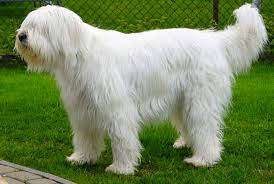
First on our list is a true giant with a gentle heart and a fearless spirit: the Carpathian Shepherd Dog. This breed is one of the oldest native dog breeds in Ukraine, and its history is deeply intertwined with the lives of the Hutsul people and traditional sheep farming in the Carpathian Mountains.
History and Origins
For millennia, the ancestors of the Carpathian Shepherd lived alongside shepherds, guarding flocks from wolves, bears, and other predators. The harsh mountain climate, constant danger, and the need to make decisions independently have shaped these dogs’ exceptional stamina, intelligence, and boundless loyalty to their “pack” — be it a flock of sheep or a human family. Work on standardising the breed began relatively recently, but its unique traits were preserved through natural selection and the efforts of local shepherds.
Appearance and Character
- Size: This is a large, powerful dog with a robust bone structure. Males can reach 65-75 cm in height at the withers and weigh between 50-70 kg.
- Coat: Thick, long, with a well-developed undercoat that provides excellent protection against all weather conditions. The most common colour is white or light fawn, which helped shepherds distinguish the dog from a wolf in low light.
- Temperament: The Carpathian Shepherd is the epitome of calm and confidence. They are wary of strangers, making them excellent guard dogs. At the same time, within their family, they are gentle, patient, and loving giants who get along wonderfully with children, seeing them as their charges.
Care and Living Conditions
This dog was built for space. The ideal conditions for it are a house with a large, securely fenced garden. A flat would be too cramped and uncomfortable for such a giant. Its thick coat requires regular brushing, especially during shedding seasons. It’s crucial to provide a Carpathian Shepherd with plenty of physical exercise and mental stimulation. Early socialisation and training are essential for raising a well-balanced and manageable dog.
Who is the Carpathian Shepherd Dog for?
This is a breed for experienced owners who live in a house and are prepared to dedicate time to training and care. It will be a perfect companion for a family that values security and seeks not just a dog, but a faithful friend and reliable guardian.
Ukrainian Levkoy
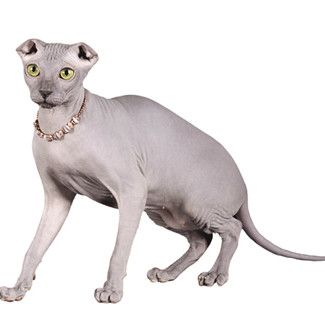
An extravagant and unforgettable cat breed with a unique appearance, the Ukrainian Levkoy is a true jewel of Ukrainian felinology. This is not just a cat; it’s a living work of art that combines the traits of several breeds with a character all its own.
A Kyiv Experiment: The Story of its Creation
Levkoys are a young breed whose history began in Kyiv in the early 2000s. Its “mother” is felinologist Olena Biryukova, who set out to create a new, original breed of hairless cat with folded ears. The experiment proved to be surprisingly successful.
Two key breeds were used to create the Levkoy:
- Don Sphynx: From this breed, the Levkoy inherited the hairless gene, characteristic skin folds, and a gentle temperament.
- Scottish Fold: This breed gave the Levkoy its most distinctive feature—the elegantly folded forward and downward ears.
The first litter that matched the vision was born in 2004. The name “Levkoy” comes from a plant with leaves that resemble the shape of this cat’s ears. The breed has already gained recognition in a number of Ukrainian and international clubs and continues to win the hearts of enthusiasts worldwide.
Appearance: Elegance and Grace
The Levkoy’s appearance leaves no one indifferent. They are often compared to mythical elves or alien creatures.
- Body: Long, muscular, yet graceful and flexible.
- Head: Has a distinctive angular shape (“blunt-nosed” profile), a flat forehead, and well-developed cheekbones.
- Ears: The breed’s main feature. They are soft, hanging, and folded forward but not pressed tightly against the head. It’s important to note that a single litter can produce both folded-ear kittens (folds) and straight-ear ones (straights).
- Skin: Warm to the touch, soft, and elastic. It can be completely hairless or covered with a barely noticeable downy fuzz (“brush”). Numerous folds, especially on the head, neck, and armpits, are a characteristic feature.
- Eyes: Large, almond-shaped, and slightly slanted, they can be any colour.
Character: A Dog’s Loyalty in a Cat’s Body
Behind the exotic exterior lies an incredibly gentle and loyal character. Levkoys are intelligent, inquisitive, and very sociable animals. They form a strong bond with their owners and will literally follow them around the house, getting involved in all the family’s activities.
- Sociability: They don’t cope well with loneliness and need constant attention. This makes them an ideal choice for large families or people who spend a lot of time at home.
- Intelligence: Levkoys are clever and easy to train. They can be taught to fetch toys or perform simple commands.
- Affection: These are very tactile cats who love to sit on laps, sleep under the covers with their owner, and demand cuddles.
- Compatibility: They generally get along well with children (if they are treated gently) and other pets.
Specific Care Requirements: The Responsibility of Uniqueness
Hairless cats need specific care, and Levkoys are no exception.
Ears and Eyes: Their folded ears require regular and gentle cleaning, as earwax can accumulate. Their eyes should also be wiped as needed.
Skin Care: Due to the lack of fur, their skin secretes a special oil. Therefore, Levkoys need to be bathed regularly (about once or twice a month) or wiped with damp wipes to prevent the build-up of dirt and oil. After a bath, you can moisturise their skin with a gentle cream or oil.
Thermoregulation: They are very sensitive to cold and draughts. In cold weather, a Levkoy should be dressed in special clothing (sweaters, onesies), and their sleeping place should be warm and cosy.
Sun Protection: In the summer, their delicate skin can get sunburned. You must limit the animal’s exposure to direct sunlight and use pet-safe sunscreen if necessary.
Diet: Due to their accelerated metabolism (they expend more energy to keep warm), Levkoys have an increased appetite. Their diet should be high-calorie, rich in protein and fats.
Ukrainian Mountain Hound
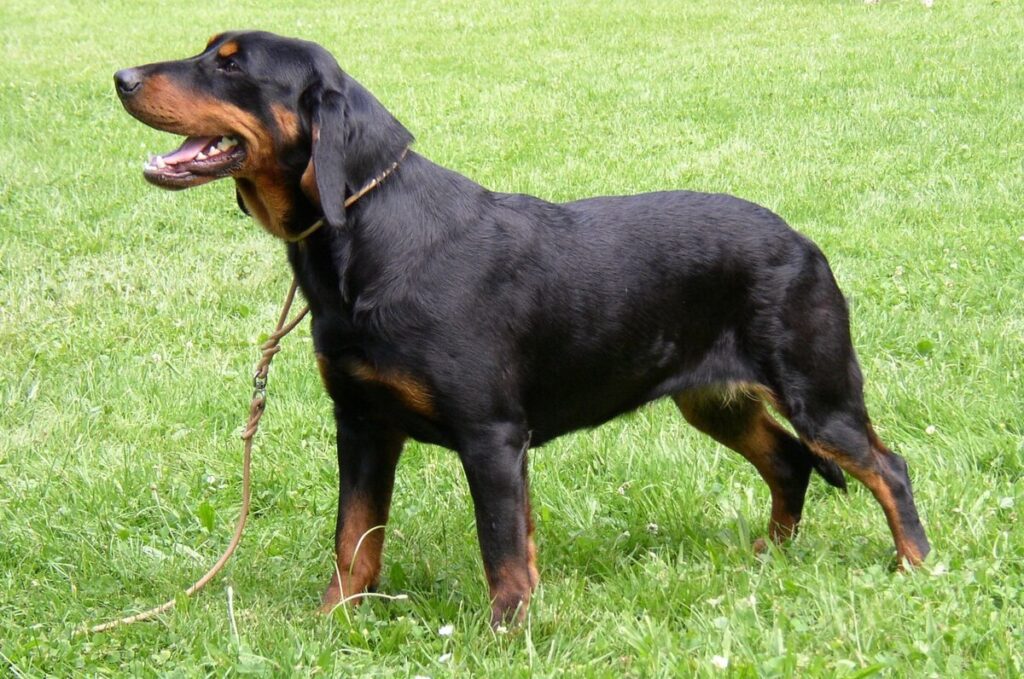
The Ukrainian Mountain Hound, also known among hunters as the Carpathian Hound, is a unique native breed that is a living part of the hunting history and culture of the Carpathians. Today, this breed is in the process of an active revival thanks to the efforts of enthusiasts and cynologists who are striving to preserve its exceptional working qualities.
History and Origins
Historically, the ancestors of these dogs lived for centuries in the Carpathians, helping local hunters in the harsh mountain conditions. The breed was formed through natural selection: only the strongest, most resilient, and most intelligent dogs, capable of working independently in difficult terrain, survived and produced offspring. Over time, due to changes in hunting methods and the decline of traditional ways of life, the breed was on the verge of extinction. However, in recent decades, a focused effort has begun to restore the population and standardise the breed.
Appearance and Standards
The Ukrainian Mountain Hound is a medium-sized dog with a sturdy but lean build, designed for relentless movement.
- Build: Harmoniously built, with a strong bone structure and well-developed muscles, but without unnecessary bulk. The body is slightly longer than it is tall.
- Size: The height at the withers is usually between 50-58 cm.
- Coat: Short, dense, and close-fitting to the body, with a well-developed undercoat that protects against bad weather.
- Colour: The most common colours are saddle (a black “saddle” on the back with reddish markings), or reddish shades of varying tones.
Working Qualities and Purpose
This is a highly specialised hunting dog whose main purpose is to hunt game (most often wild boar, fox, and hare) in mountainous and forested areas.
- Scent and Voice: The hound has an exceptional sense of smell, which allows it to find game and confidently follow a trail. A key quality is its loud, carrying voice, which the dog uses to alert the hunter to a found trail and the direction of the game.
- Stamina and Drive: These are tireless and driven hunters, capable of pursuing prey for hours, overcoming steep slopes, dense thickets, and rocky terrain. Their stamina allows them to work in conditions where other breeds quickly tire.
- Independence: Designed to work at a significant distance from the hunter, they are capable of making their own decisions, assessing the situation, and navigating the terrain.
Character and Specific Care
The Ukrainian Mountain Hound has a dual character: it is a keen and relentless hunter in the forest, but a balanced and calm companion at home.
- Independence: Their independence at work translates into a certain independent streak at home. This is not a dog that will blindly follow every command. It needs an owner who can establish a partnership based on respect and consistency.
- Need for Exercise: This is the main requirement for keeping this breed. This dog is absolutely not suitable for flat life or a sedentary lifestyle. It needs daily, long, and intense physical exercise. Ideally, the owner is an active hunter. If not, this must be compensated with long runs, hikes in the woods, and trekking.
- Training: Training a hound requires patience and experience. Harsh training methods are unacceptable and will only lead to conflict. The owner must become the dog’s leader and authority, able to channel its natural energy and hunting instincts in the right direction.
Who is the Ukrainian Mountain Hound for?
This breed is an ideal choice for an experienced owner who is a passionate hunter or hiker and lives in a house with a large, securely fenced garden. It is a faithful friend and an indispensable helper for someone who can satisfy its need for movement and work, and who values its intelligence and independence over unquestioning obedience.
How to Choose a Ukrainian Dog or Cat: A Comparison Table
To help you navigate, we’ve prepared a brief comparison table of our article’s main characters.
| Characteristic | Carpathian Shepherd Dog | Ukrainian Levkoy | Ukrainian Mountain Hound |
|---|---|---|---|
| Animal Type | Dog | Cat | Dog |
| Size | Very Large | Medium | Medium |
| Activity Level | High | Medium | Very High |
| Coat/Skin Care | High (brushing) | High (skin care) | Low |
| Suitable for a Flat? | No | Yes | No |
| Relationship with Children | Excellent, a guardian | Good | Good, with socialisation |
| Training Needs | High, essential | Basic | Very high, requires experience |
| Ideal Owner | Experienced, homeowner | Responsible, prepared for care | Active, experienced owner |
Frequently Asked Questions (FAQ)
Where can I buy a Carpathian Shepherd puppy or a Ukrainian Mountain Hound?
It’s best to contact official kennels that are engaged in professional breeding. Their contacts can be found through Ukrainian cynological and felinological societies. This guarantees that you will get a healthy animal with the proper breed qualities and paperwork.
Are Ukrainian breeds difficult to care for?
The difficulty of care depends on the specific breed. A Carpathian Shepherd needs a lot of space, physical exercise, and coat care. A Ukrainian Levkoy requires specific skin care. It’s important to choose an animal whose needs match your lifestyle.
Is it true that native breeds have better health?
Yes, for the most part, that’s true. Breeds that were formed through natural selection, like the Carpathian Shepherd, are often more resilient and have fewer hereditary diseases than breeds created purely for show. However, any animal needs proper nutrition, veterinary care, and love.
Conclusion: Choosing Ukrainian is Choosing History
Ukrainian breeds of dogs and cats are much more than just pets. They are living symbols of our land, embodying its spirit and history. By choosing such an animal, you are not just finding a loyal friend, but also becoming a guardian of a unique national heritage. Every Carpathian Shepherd puppy playing in the garden or Ukrainian Levkoy kitten purring on the sofa is a small contribution to the great cause of preserving and promoting Ukrainian culture.