

Pet shop shelves are bursting with colourful packaging, each promising your pet health, energy, and a long life. Among the most popular trends of recent years is grain-free pet food. Labels reading “Grain-Free” and “Biologically Appropriate Diet” have become synonymous with premium quality. But is the absence of grain from your cat or dog’s bowl truly the key to their well-being? Or is it just a clever marketing ploy that makes us pay more for the illusion of benefit? Let’s get to the bottom of this complex issue, separate facts from myths, and understand who and when truly needs grain-free pet food. Find a comprehensive analysis of this topic on Tvaryny.
What is grain-free pet food and where did it come from?
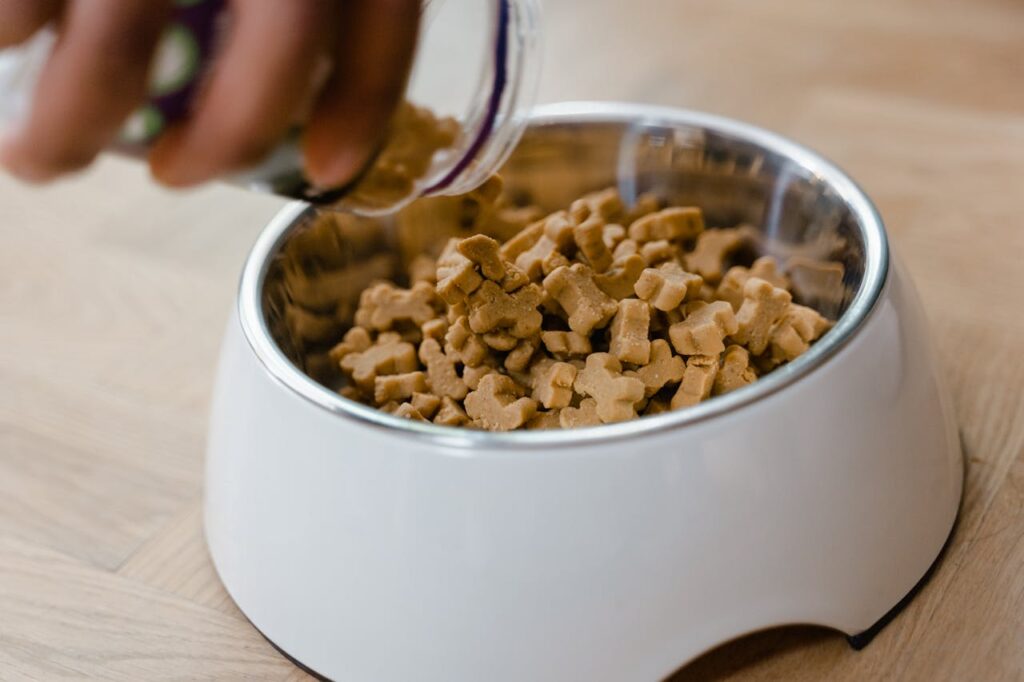
First, let’s clarify the terminology. Grain-free pet food is a diet that lacks traditional cereal crops: wheat, maize, rice, barley, and oats. The idea behind creating such foods is based on the concept of “biological appropriateness”. Proponents of this idea claim that domestic dogs and cats, as descendants of predators (wolves and wild cats), are not genetically adapted to digest large quantities of grains.
However, it is important to realise that “grain-free” does not mean “carbohydrate-free”. Carbohydrates are necessary for energy and for the technological process of creating dry food kibble. Therefore, instead of grains, manufacturers use alternative sources of carbohydrates and fibre. These most often include:
- Potatoes (regular or sweet potatoes)
- Peas, lentils, chickpeas, and other legumes
- Tapioca
- Pumpkin
Thus, the main difference is the source of carbohydrates, not their complete absence. This nuance is key to understanding both the potential benefits and the possible risks.
Arguments “FOR”: What are the potential benefits of grain-free food?
The popularity of grain-free diets did not arise out of thin air. There are several strong arguments in their favour that resonate with pet owners.
1. Prevention and control of food allergies
This is probably the most common argument. Indeed, some animals may have allergies or food intolerances to certain ingredients. Symptoms can include itching, skin rashes, and digestive problems (diarrhoea, vomiting). Although, according to veterinary research, grain allergies (especially to the gluten contained in wheat) are much rarer than allergies to animal proteins (chicken, beef), they do exist. For such animals, switching to a grain-free food that excludes the allergen can be a real lifesaver.
2. Improved digestion for sensitive animals
Some grains, especially low-quality maize and wheat, can be difficult for some dogs and cats to digest. This can lead to bloating, flatulence, and general discomfort. Alternative carbohydrate sources such as sweet potatoes or pumpkin often contain more easily digestible fibre, which helps normalise the function of the gastrointestinal tract. Therefore, the benefits of grain-free food can be noticeable for animals with sensitive digestion.
3. High animal protein content
Often (but not always!) grain-free diets are marketed as foods with a higher meat content. Manufacturers, focusing on the idea of a “predator’s diet”, emphasise high-quality sources of animal protein—the foundation of health for cats (obligate carnivores) and dogs. A high protein content helps maintain muscle mass and promotes healthy skin and coat.
Arguments “AGAINST”: When is grain not the enemy?
Despite powerful marketing support, the idea of completely eliminating grains has its weaknesses and is associated with certain risks that cannot be ignored.
1. Grains are not “empty calories”
The demonisation of all grains is misleading. High-quality whole grains, such as brown rice, oats, or barley, are an excellent source not only of carbohydrates for energy but also of B vitamins, minerals (magnesium, selenium), and essential fibre. They provide a gradual release of energy and contribute to a feeling of fullness. The problem is not with grain itself, but with its quality and quantity in the diet.
2. “Grain-free” does not equal “low-carb” or “healthy”
As we’ve already established, the carbohydrates in grain-free food are simply different. Sometimes, potatoes or peas can have a higher glycaemic index than oats or brown rice, which can be undesirable for animals prone to weight gain or diabetes. Cheap grain-free foods may contain an excessive amount of pea protein instead of quality meat, which formally increases the protein percentage on the package but has a lower biological value for a carnivore.
3. A “hot” topic: grain-free diets and DCM in dogs
This is the most serious counter-argument and requires separate attention. In 2018, the US Food and Drug Administration (FDA) launched an investigation into a potential link between certain diets, predominantly grain-free ones, and the development of dilated cardiomyopathy (DCM in dogs)—a dangerous disease of the heart muscle.
It was found that in many cases of DCM in breeds not genetically predisposed to it, the animals were fed foods where the main ingredients were legumes (peas, lentils) or potatoes. The exact mechanism of the link has not yet been established. Theories include the impact of these ingredients on the absorption of taurine (an amino acid critically important for the heart), a deficiency of other nutrients, or the effect of anti-nutrients in legumes. Although a direct causal link has not been proven and the investigation is ongoing, this fact has made many veterinarians and dietitians more cautious about so-called “BEG diets” (Boutique, Exotic-ingredient, Grain-free).
Debunking popular myths about pet diets
- Myth: All dogs and cats are allergic to gluten.
Fact: A true gluten allergy (coeliac disease) in animals is extremely rare (only reported in Irish Setters). Most food allergies are caused by animal proteins. - Myth: Dogs are wolves, they don’t need carbohydrates.
Fact: Over thousands of years of domestication, dogs have evolved. Their digestive system, unlike a wolf’s, is capable of producing enzymes to digest starch. A moderate consumption of high-quality carbohydrates is a useful source of energy for them. As for cats, they are obligate carnivores and their need for carbohydrates is significantly lower, which is why a grain-free diet for cats (and one with a low content of all carbohydrates) is closer to their natural needs. - Myth: If the food is expensive and grain-free, it is automatically the best.
Fact: Price and a marketing label are not always a guarantee of quality. You should always analyse the full ingredients list: what protein sources are listed first, what is their quantity, and what additives the food contains.
So how do you choose food for your dog or cat? A practical guide

So, we’ve come to the main question. There’s no need to go to extremes: neither blindly trust the advertising for grain-free foods nor completely ignore them. Here is a guide to help you make an informed decision.
Step 1: Consult a vet
This is the most important step. Only a vet, knowing your animal’s medical history, breed, age, activity level, and health status, can give qualified advice. If you suspect an allergy, do not self-medicate—get a diagnosis to accurately identify the allergen.
Step 2: Read the label, not the advert
Learn to analyse the ingredients list. Here’s what to look for:
- The first 3-5 ingredients: This is the basis of the food. Ideally, the first positions should clearly list sources of animal protein (e.g., “dehydrated chicken meat,” “fresh salmon,” not vague formulations like “meat and animal by-products”).
- The carbohydrate source: If it’s a grain-based food, prefer whole grains (oats, rice). If it’s grain-free, make sure legumes don’t dominate the ingredients list, especially if you have a dog of a breed prone to DCM.
- Guaranteed analysis: Pay attention to the percentage of protein, fat, and fibre. For cats, the protein content should be high and carbohydrates minimal.
- Diet completeness: Make sure the packaging is marked “complete feed,” which means it contains all the necessary vitamins and minerals.
Step 3: Observe your animal
The best indicator of whether a food is suitable is the condition of your pet. After switching to a new diet (which should always be gradual, over 7-10 days), observe the following indicators:
- Coat quality: It should be shiny and smooth.
- Skin condition: Absence of dandruff, redness, and itching.
- Energy level: The animal is active and lively.
- Digestion: Regular, well-formed stools.
- Weight: Stable weight that corresponds to the norm.
Conclusion: An individual approach is more important than trends
In conclusion, grain-free pet food is neither a cure-all nor an absolute evil. It is one of many tools in the hands of a caring owner. For an animal with a confirmed grain allergy, such a food can be an excellent solution. For a healthy, active animal, a high-quality food with whole grains can be just as beneficial, and sometimes even safer.
The main takeaway is this: do not let marketing guide your choice. Instead of focusing only on the single phrase “Grain-Free,” concentrate on the overall quality of the ingredients, the manufacturer’s reputation, and, most importantly, on the individual needs and reaction of your four-legged friend. Your attentiveness and collaboration with a vet are the true keys to your pet’s health and happiness.