

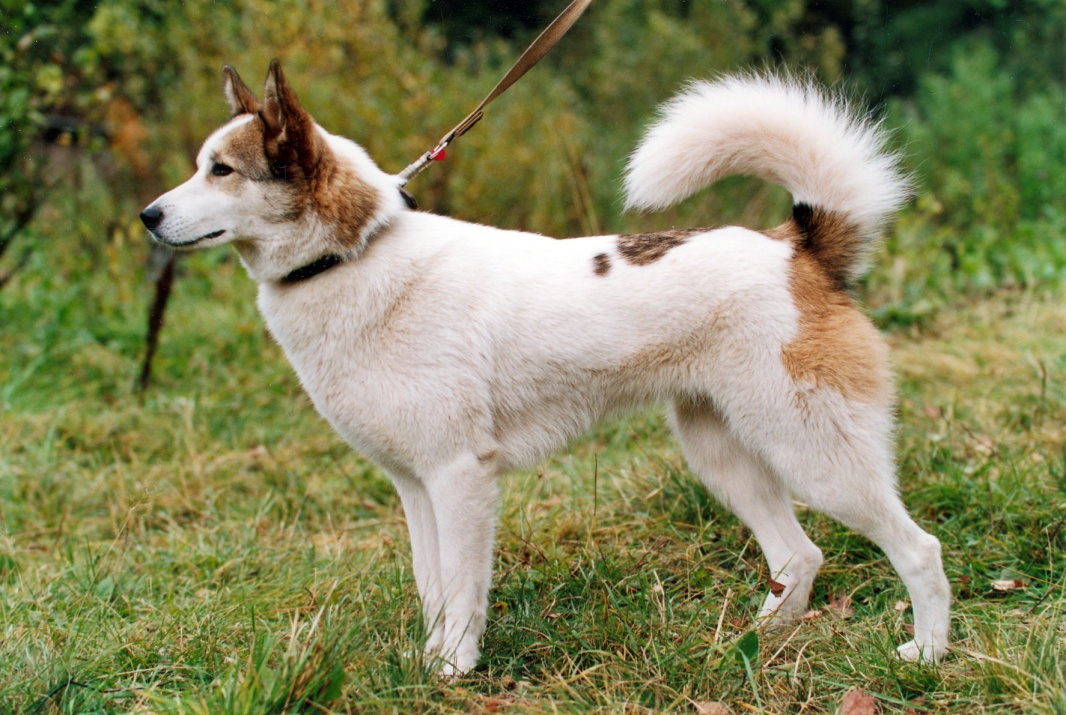
| Height | 51–66 cm |
| Weight | 18–35 kg |
| Lifespan | 12–15 years |
| FCI group | 5 · spitz and primitive |
| Origin | Russia (Siberia) |
Exact ratings
Common health issues
Nutrition
The East Siberian Laika is more than just a dog; it’s a living embodiment of Siberia’s wild heart, a versatile hunter, and a loyal companion. Forged in the harsh conditions of the taiga, this breed combines primal strength, incredible endurance, and remarkable devotion to humans. It’s capable of working with any quarry, from small fur-bearing animals to a formidable bear or moose. Despite their outstanding hunting abilities, East Siberian Laikas possess a balanced and calm temperament, are friendly towards people, and get on wonderfully with children in their family.
However, it’s crucial to remember that their hunting instinct runs deep. Any other pet, especially smaller ones, will likely be perceived as potential prey. This makes them a less-than-ideal choice for homes with cats or rodents. These dogs are exceptionally clean, virtually odourless, and adapt easily to any climatic conditions. They are undemanding regarding food and care but, above all, value space and freedom. The East Siberian Laika makes an ideal partner for active individuals, hunters, and those who live outside urban areas, surrounded by nature. You can discover more about this unique breed on Tvaryny.
Brief Information on the East Siberian Laika Breed
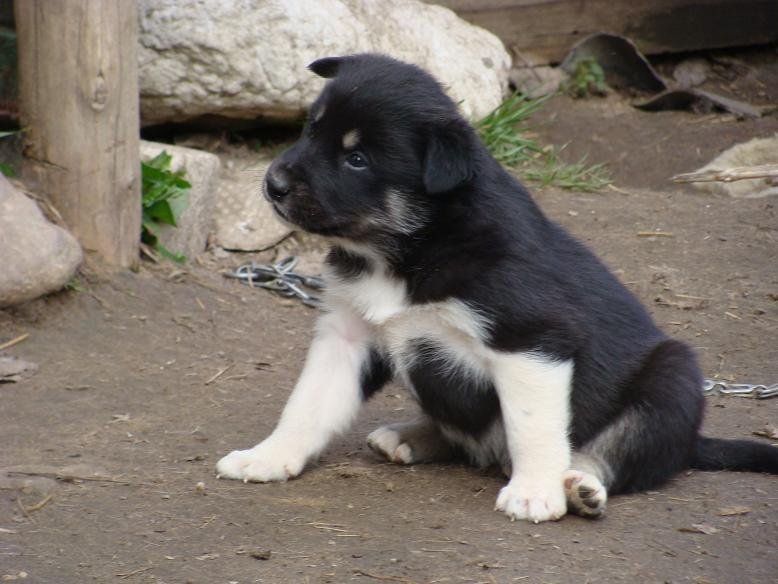
| Breed Name | East Siberian Laika |
| Country of Origin | Russian Federation (Siberia and Far East) |
| Breed Genesis Period | Formation began in the 19th century, official standard approved in 1949 |
| Type | Hunting dog, Sled dog |
| Life Expectancy | 10-14 years |
| Height (at the Withers) | Males: 57-65 cm Females: 53-61 cm |
| Weight | 18-25 kg |
| FCI Group | Group 5 (Spitz and Primitive Types), Section 2 (Nordic Hunting Dogs) |
History of the East Siberian Laika
The history of the East Siberian Laika is intrinsically linked to the lives of the indigenous peoples of Siberia and the Far East – the Evenks, Yakuts, and Lamuts. For centuries, these dogs were an indispensable part of their daily existence, serving not only as hunters but also as guardians and working sled dogs. The breed developed naturally under the influence of the harsh climate and the practical needs of humans. The foundation for the modern breed came from aboriginal Laika-type dogs, particularly the Evenk and Amur types.
Systematic breeding work with the East Siberian Laika breed only began in the 20th century. The first attempts to classify and standardise Laikas were made in the 1920s. In 1949, the first temporary standard for the East Siberian Laika was adopted, uniting various local dogs under a single name. However, this standard was imperfect and encompassed dogs with very different external characteristics.
A significant contribution to the breed’s development was made by the Irkutsk State Kennel, where systematic selective breeding was carried out. Thanks to the efforts of cynologists, a more homogeneous type of dog was successfully developed, combining the best working qualities. The modern breed standard was approved in 1981 and remains valid today. Unlike its closest relatives, such as the West Siberian Laika, the East Siberian Laika is more massive and has a more elongated body format, a legacy from its sled-dog ancestors. Despite its outstanding qualities, the breed remains less numerous and popular outside its historical homeland than other Laika types, including the Russo-European Laika.
Standard and Appearance of the East Siberian Laika
The East Siberian Laika is a dog of above-average size, with a robust yet lean build, a well-developed skeleton, and powerful musculature. Its appearance exudes strength, endurance, and confidence. Its body format is slightly elongated, distinguishing it from the more “square” West Siberian Laika.
- Head: Wedge-shaped, with a broad cranial part, proportional to the body. The occipital protuberance and parietal crests are well-defined. The transition from forehead to muzzle is smooth, without abruptness.
- Muzzle: The length of the muzzle is slightly less than the length of the skull. Lips are dry and tight-fitting.
- Eyes: Small, oval-shaped, with an oblique set. Colour – from dark brown to hazel. The gaze is intelligent, lively, and confident.
- Ears: Erect, mobile, triangular in shape with pointed or slightly rounded tips. Set at eye level.
- Body: The withers are well-developed, prominent above the backline, especially in males. The back is straight, broad, and strong. The loins are short and muscular. The croup is broad and moderately long.
- Tail: Curled into a ring or a sickle and pressed against the back or thigh. When straightened, it reaches the hock joint or is slightly shorter.
- Limbs: Straight, parallel, muscular. The paws are gathered into a dense “clump,” allowing the dog to move easily over snow and rocky terrain.
- Coat: Dense, coarse, with straight guard hairs and a very thick, soft undercoat that reliably protects against frost. On the neck and shoulders, the coat forms a lavish “collar.”
The colouring for the East Siberian Laika is varied: black and white, black, white, grey, red, and brown in all shades. Small spotted patches on the limbs, matching the main colour, are permissible.
Character, Temperament, and Behavioural Traits
The character of the East Siberian Laika is a harmonious blend of hunting passion and calm composure. This is a dog with a very stable nervous system, not prone to unjustified aggression or hysteria. The main feature of its character is its orientation towards its human owner. Unlike some other Laikas, it doesn’t seek to dominate and more readily accepts human leadership. If a correct hierarchy is established from puppyhood, you will gain an incredibly devoted and obedient friend for life.
At work, during a hunt, this Laika transforms. It becomes eager, brave, resolute, and tireless. Aggression towards game is an innate quality, but it is never transferred to humans. Towards strangers, it is wary, without aggression, but will always announce the approach of outsiders with a loud bark, which makes it a good guard dog.
With children in its family, East Siberian Laikas are usually patient and friendly. However, as with any dog, their interaction with small children should be supervised. The biggest issue can be their attitude towards other pets. A strong hunting instinct makes them see cats, rabbits, domestic fowl, and other small pets as prey. It is practically impossible for them to coexist. They rarely conflict with other dogs, especially if raised together, but they may show dominance towards same-sex individuals.
Hunting: The Natural Calling of the East Siberian Laika
The East Siberian Laika is a universal hunter. It works equally well with small fur-bearing animals (squirrels, sables, martens) and large game (bears, moose, wild boars, lynx). Its working style is a combination of keen senses, intelligence, and incredible endurance. The dog independently finds the animal, pursues it, stops it, and indicates its location to the hunter with loud, clear barking. It can hold a large animal at bay for hours, boldly attacking and dodging blows until the hunter arrives.
These dogs have an excellent sense of direction in the forest and always find their way back to their owner. Their physical strength and endurance allow them to cover tens of kilometres through deep snow or marshy terrain. The presence of sled-dog ancestors is also evident – they can be used for transporting small loads.
Care and Maintenance of the Breed
It is vital to understand immediately: the East Siberian Laika is categorically unsuitable for life in a city flat. This is not a couch potato pet, but a working dog that requires space, freedom, and serious physical exertion. Ideal conditions for it include living in a private house with a large, securely fenced territory or in a spacious outdoor kennel. The kennel should be roomy, with an insulated doghouse protected from wind and precipitation.
- Grooming: The Laika’s coat has a unique self-cleaning structure and does not require frequent washing. Bathe the dog only in cases of severe soiling, once or twice a year. The primary care involves brushing, especially during seasonal shedding (spring and autumn), when the dog sheds its dense undercoat. During this period, it needs to be brushed daily. At other times, 1-2 times a week is sufficient.
- Physical Activity: This is the most crucial aspect of ownership. The Laika needs daily long walks (minimum 2-3 hours a day) with the opportunity to run freely. The best exercise for it is hunting. If you are not a hunter, provide the dog with alternative activities: long hikes, running alongside a bicycle, or engaging in sledding sports. Without sufficient exercise, the dog will become unhappy and may start destroying property or exhibiting destructive behaviour.
- Basic Procedures: Regularly inspect the ears for dirt and inflammation, cleaning them if necessary. The claws of active dogs usually wear down naturally, but if this doesn’t happen, they need to be trimmed. It’s also important to monitor the condition of their teeth and get them accustomed to brushing.
Keeping the dog on a chain is only acceptable as a temporary measure. The chain should be long and light, but this cannot replace proper exercise and interaction with the owner.
Health of the East Siberian Laika: Typical Ailments and Prevention
Training and Education
East Siberian Laikas are intelligent, quick-witted, and fast learners, but their training has its own specificities. This is not a service dog that will blindly follow commands. They are inclined to make independent decisions, which is an advantage in hunting but can complicate everyday obedience. The key to success is patience, consistency, and establishing contact with the dog based on respect, not brute force.
Puppy training should begin from the very first days in its new home. Early socialisation is extremely important: familiarise the puppy with different people, sounds, and places. Their hunting skills are innate but require development. The best method is “schooling” the young dog in the forest alongside experienced adult Laikas.
Special attention should be paid to practising the “Come!” command. Given their passion for pursuit, this command can save your pet’s life. Training should be engaging, using game elements and positive reinforcement. Cruelty and physical punishment are unacceptable – they can permanently destroy the dog’s trust.
Feeding Recommendations for the East Siberian Laika
Pros and Cons of the Breed
✅ Advantages
- Versatile hunting qualities: works with any game.
- Robust health: the absence of described hereditary disease is not the absence of risk — breeding animals are screened all the same.
- Balanced character: calm and stable psyche.
- Devotion to owner: very oriented towards its human.
- Undemanding: does not require complicated care and easily adapts to any conditions.
- Cleanliness: practically no odour, self-grooming.
❌ Disadvantages
- Not suitable for flat living: requires space and freedom.
- Requires high physical exertion: not suitable for inactive people.
- Very strong hunting instinct: dangerous for other pets.
- Tendency towards independence: can be stubborn in training.
- Sheds heavily: requires intensive brushing twice a year.
- Requires early socialisation: without it, can be overly distrustful.
Interesting Facts About the East Siberian Laika
- Unlike many other breeds, East Siberian Laikas develop quite slowly, reaching full physical and psychological maturity only by 2-2.5 years of age.
- Thanks to their endurance and strength, these dogs were often used in the past not only for hunting but also as sled dogs, for transporting mail and small goods in hard-to-reach areas of Siberia.
- The East Siberian Laika is the largest among all Russian hunting Laikas, including popular relatives such as the Russo-European Laika and the West Siberian Laika.
- Their bark during a hunt is very loud and distinctive; hunters can differentiate by its tonality which animal the dog has found.
- Despite the breed being officially recognised as early as the mid-20th century, it is still considered quite rare, and finding a purebred puppy outside Russia can be challenging.
Frequently Asked Questions About the Breed (FAQ)
Is the East Siberian Laika suitable for apartment living?
Categorically no. This breed requires space, freedom, and daily intensive physical exercise that cannot be provided in a city flat environment.
Does the East Siberian Laika get along with children and other animals?
With children in its family, it usually gets along well, showing patience. However, due to its extremely strong hunting instinct, it poses a threat to cats, rodents, birds, and other small pets.
How much activity does this breed require?
A great deal. A minimum of 2-3 hours of active walks per day with the opportunity to run freely. The ideal option is regular hunting excursions or long hikes in the forest.
Does the East Siberian Laika shed heavily?
Yes, very heavily, especially twice a year during seasonal shedding. During these periods, fur will be all over the house if the dog lives indoors. Regular brushing helps control this process.
Is the East Siberian Laika difficult to train?
It is intelligent but independent and can be stubborn. Training requires patience, consistency, and an understanding of the breed’s psychology. It is not the best choice for a novice owner.
Video about the Breed
- A versatile, hardy taiga hunter
- Level-headed, friendly to people
- Very robust "natural" health
- Clean, almost odourless, undemanding
- A very strong hunting instinct (dangerous to cats and rodents)
- Not for a flat or a novice
- Needs enormous exercise and space
- Independent at work
| West Siberian Laika | Russo-European Laika | Yakutian Laika | |
|---|---|---|---|
| Height | 51–62 cm | 48–60 cm | 50–59 cm |
| Energy | 5 | 5 | 4.5 |
| Apartment | 1.5 | 1.5 | 2 |
| Beginners | 2 | 2.5 | 2.5 |
What does the East Siberian Laika hunt?
Does the breed get on with cats?
Is the breed suitable for a flat?
FCI Standard No. 305 · Russian Kynological Federation
For apartments · For kids · For beginners · Active · Smartest · Hypoallergenic · All rankings →