Group 8 · retrievers, spaniels, water dogs · Germany
German Wachtelhund
A versatile German forest hunter with an “obsessive” nose — lively and level-headed: hard-working, devoted, biddable and adaptable. The German Spaniel (Deutscher Wachtelhund) is a versatile flushing-spaniel breed able to work in any conditions — in field, forest and water; affectionate and even-tempered with the family, it is above all a working hunter with a passion for the trail.
Apartment · not suitableKidsCats · not suitableOther dogsBeginners · with caveats
The German Wachtelhund, also known as the German Spaniel, is a unique breed of gundog whose history is intrinsically linked to the forests and hunting grounds of Germany. This is not just a dog, but a truly versatile hunter, capable of working in the most diverse conditions. With its lively yet balanced character, the Wachtelhund can be an excellent companion, but its true calling is the hunt. You can discover more about this fascinating breed on Tvaryny.
Innate instincts will always drive the Wachtelhund to give chase, meaning its high energy and intelligence require a constant outlet. It's no surprise that puppies of this breed are traditionally sold mainly to gamekeepers and professional hunters who can provide the dog with the right level of activity and a chance to fulfil its working potential. However, with the right approach, this energetic spaniel can become a devoted member of an active family.
German Wachtelhund: Key Breed Characteristics
German Wachtelhund: Key Breed Characteristics · 8
Characteristic
Details
Origin
Germany
Year of Recognition
1903 (club founded), officially recognised in Germany
FCI Classification
Group 8 (Retrievers, Flushing Dogs, Water Dogs), Section 2 (Flushing Dogs). Standard No. 104.
Lifespan
12–14 years
Height at the withers
Dogs: 48–54 cm, Bitches: 45–52 cm
Weight
18–25 kg (occasionally up to 30 kg)
Temperament
Lively, passionate hunter, friendly, level-headed, easy to train
Primary Purpose
Versatile gundog (flushing, tracking, retrieving)
Interesting Facts About the Breed
The name "Wachtelhund" literally translates from German as "quail dog," pointing to one of its historical specialities—hunting small game birds.
In Germany, there is still an unwritten rule to "only give a Wachtelhund to a hunter" (Abgabe nur an Jäger). Breed clubs strictly ensure that puppies go to people who can provide them with a working role.
The Wachtelhund is a master of water work. Its thick, water-resistant coat allows it to work even in icy water without the risk of hypothermia. In this respect, it resembles specialised water dogs like the Kooikerhondje, but is more of an all-rounder.
Unlike many other spaniels, such as the Field Spaniel, which is a specialist in field work, the Wachtelhund is a true "forest dog," ideally suited for working in dense undergrowth and on rough terrain.
Dogs of this breed have a unique manner of questing "under the gun," constantly maintaining contact with the hunter and not ranging too far.
The Detailed History of the Breed
The history of the German Wachtelhund began in Germany in the late 19th century. At that time, following the revolutions of 1848, the right to hunt was no longer the exclusive prerogative of the nobility. Common hunters and gamekeepers needed a versatile, reliable, and tireless assistant that could work in varied terrain—from dense forests to marshes and wetlands. They needed a dog capable not only of finding and flushing game but also of tracking wounded animals and retrieving.
The foundation for the new breed was built upon old German hunting dogs, particularly the now-extinct "Stöberhund," which had been known since the Middle Ages. These dogs were masters at finding game in thick undergrowth. The breeding efforts were focused on cementing versatile hunting qualities. A key figure in the breed's development was Friedrich Finner, a forester who began a targeted breeding programme. The foundation sire of the breed is considered to be a dog named Lord Augusta 1834 L, from the Bavarian town of Staufenberg.
From the outset, breeding was conducted along two main lines, which differed in colour and certain aspects of temperament:
The Brown Line (Braunschlag): Solid brown dogs, often with white markings, were considered calmer, more level-headed, and very manageable. They were ideal for working at close quarters and possessed an outstanding sense of smell.
The Roan Line (Schimmelschlag): These were brown roan or red roan dogs, sometimes with tan markings. They were distinguished by greater eagerness, speed, and incredible persistence in pursuit of game, especially when tracking wounded animals.
In 1903, the German breed club, "Verein für Deutsche Wachtelhunde," was founded, uniting the efforts of enthusiasts. For a long time, these two lines were bred separately, but eventually, they were interbred to combine the best qualities of both types. This resulted in the versatile dog we know today—a balanced yet passionate hunter. Outside of Germany, the breed remains quite rare, and its breeding is strictly controlled by clubs to preserve its unique working qualities.
What Does a German Wachtelhund Look Like: Standard and Appearance
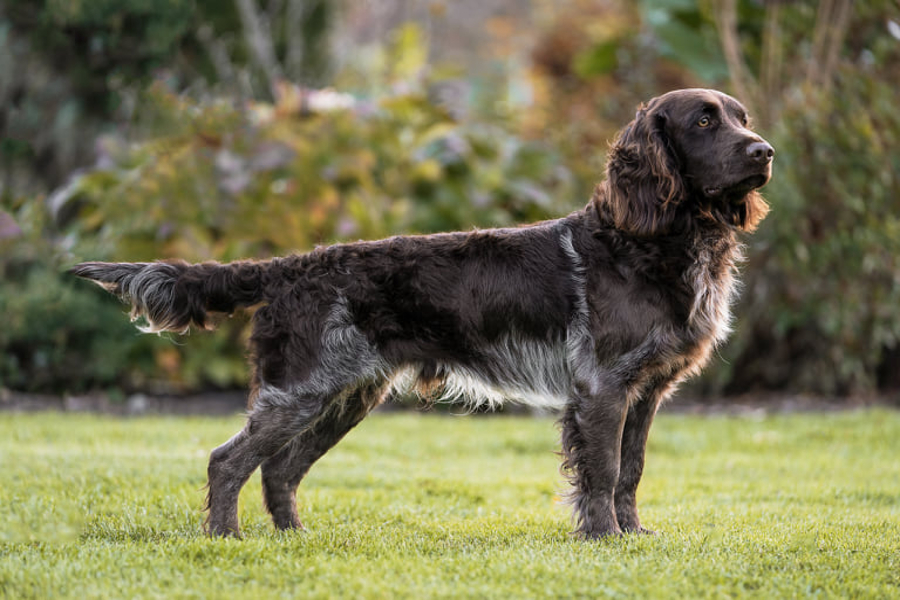
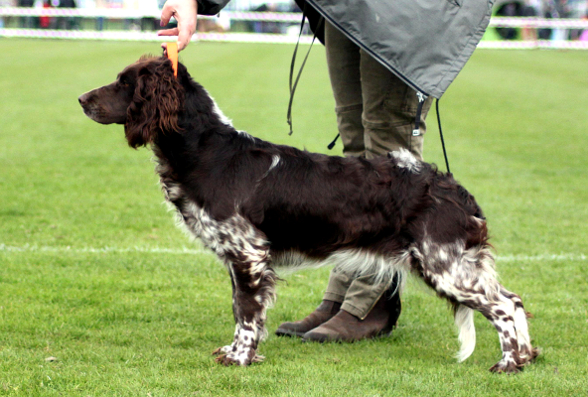
The German Wachtelhund is a medium-sized dog with a strong, muscular build, a thick, long coat, and a noble head. Its appearance speaks of power and endurance. The body is slightly elongated, meaning its length is slightly greater than its height at the withers (at a ratio of about 1.2:1), which gives it stability.
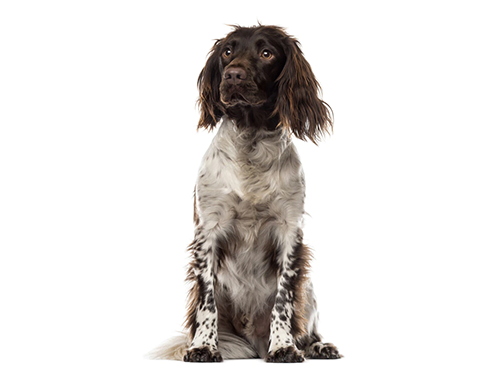
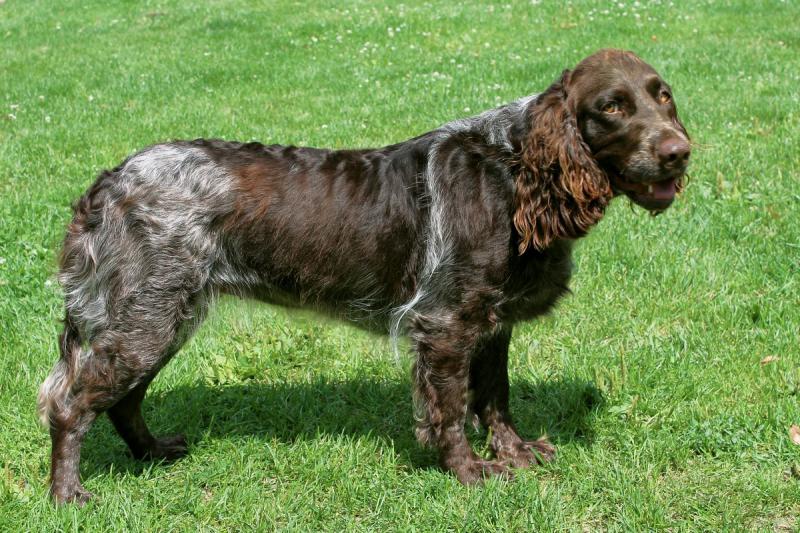
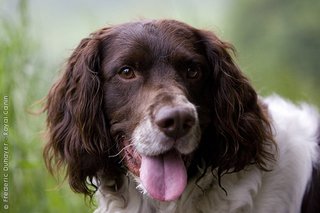
The head is dry and proportionate to the body. The skull is flat, with a moderately defined stop (the transition from forehead to muzzle). The muzzle is strong but not pointed. The lips are dry and tight-fitting. The nose is large with well-opened nostrils and is brown in colour. The eyes are medium-sized, almond-shaped, preferably in dark shades of brown, with an intelligent and friendly expression. The ears are set high and wide, lying flat without twisting, and hang just behind the eyes. They are covered in thick, often wavy, hair.
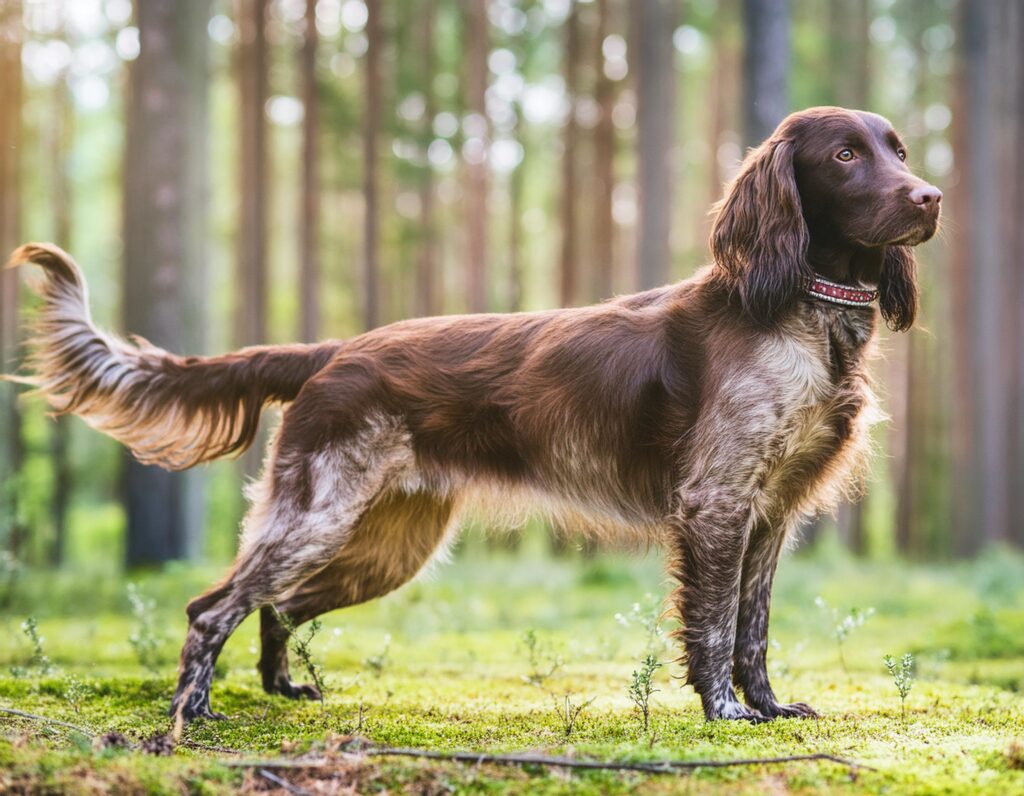
The body is strong with well-developed musculature. The neck is strong, without a dewlap. The back is short and firm, and the loin is muscular. The chest is oval and deep, providing ample space for the heart and lungs. The tail continues the line of the back; it is carried down when calm and at or slightly above back-level when moving or excited. Traditionally, the tail is docked by a third (in countries where this is permitted) to prevent injuries when hunting in dense thickets. However, it is important to note that tail docking is illegal in the UK, except for specific certified working dogs under stringent conditions, and is banned entirely in Scotland.
The coat is one of the breed's main features. It is thick, lies close to the body, and is usually slightly wavy, though it can be straight. The coat feels coarse to the touch and has a well-developed undercoat that reliably protects the dog from harsh weather and cold water. There is longer feathering on the back of the legs and on the tail.
The main colour variations are:
Solid Brown: Sometimes with a reddish tint. Small white patches on the chest and toes are permissible.
Brown Roan (Braunschimmel): The base colour is white or ticked with dense brown patches or a saddle. The head is usually brown, sometimes with a white blaze. A red roan variant also exists.
Character and Temperament: Hunter and Companion
The temperament of the German Wachtelhund is a remarkable blend of hunting passion and a friendly disposition. It is an exceptionally energetic and cheerful dog that becomes deeply attached to its family. It is level-headed, self-confident, and typically shows neither cowardice nor aggression. However, it's worth remembering that its character has been shaped over centuries for specific tasks.
Hunting Qualities. In the field, the Wachtelhund is transformed. Its key trait is 'Spurlaut'—the ability to give voice or 'speak' when on the scent of game. It is driven, persistent, and tireless in pursuit. The dog works superbly in all conditions: in dense forests, marshes, reed beds, on snow, and even in icy water. Its strong retrieving instinct makes it indispensable for fetching shot game, including heavy ducks or hares. Unlike some other spaniels, such as the English Springer Spaniel, which primarily works on birds, the Wachtelhund is more versatile and also works effectively on furred game.
Attitude Towards Family. In a home environment, it is an affectionate and devoted friend. It gets on well with children, especially if raised with them, and can be a patient and playful companion. However, due to its energy and size, games with very young children should be supervised. The Wachtelhund thrives on being a full member of the family and does not tolerate being left alone for long periods. It needs constant interaction with its owner.
Relationships with Other Animals. Wachtelhunds usually get along well with other dogs, especially with proper socialisation. However, their strong hunting instinct can pose a threat to small domestic animals such as cats, rodents, rabbits, or poultry. Perceiving them as potential prey, the dog may start to hunt them. Therefore, keeping them together requires great caution and early training.
Pros and Cons of the Breed
Before getting such a serious dog, it's important to soberly assess all its advantages and disadvantages. This will help to avoid disappointment and ensure the animal has a happy life.
Pros
Cons
Versatile hunter: capable of performing a wide range of tasks, from flushing to retrieving.
Extremely high need for activity: not suitable for flat-living or sedentary people.
Devoted and friendly character: bonds strongly with its family and is good with children.
Strong hunting instinct: can be a danger to small domestic animals.
High intelligence and trainability: learns commands quickly and is eager to please its owner.
Requires an experienced owner: demands consistent training and an authoritative leader.
Robust health and stamina: well-adapted to harsh weather conditions.
Prone to loud barking: especially when on a scent or excited.
Low-maintenance coat: needs regular but not complicated grooming.
Does not tolerate loneliness: can develop destructive behaviour if left alone for long periods.
Training and Socialisation
Training a Wachtelhund is an interesting yet responsible process. Thanks to its high intelligence and natural desire to please its owner, this dog learns quickly. However, its hunting nature requires a special approach. The owner must be a strong character and a consistent, patient leader.
Positive reinforcement works best: verbal praise, games, and treats are excellent motivators. Harsh or unfair methods of punishment are completely unacceptable. Such an approach can make the dog withdrawn, fearful, or even stubborn. It is important to establish clear rules and boundaries from an early age.
Early socialisation is critically important. A puppy needs to be introduced to different people, places, sounds, and other animals (under strict supervision). This will help to raise a confident and balanced dog that reacts appropriately to new situations. Special attention should be paid to the "come" or recall command, as the instinct to chase can cause the dog to ignore commands once it is fixated on a scent.
Compared to other spaniels, for instance the Clumber Spaniel, which is known for its calmer and more placid temperament, the Wachtelhund is far more driven and demanding in terms of mental stimulation. It needs not just obedience commands, but also tasks that challenge its hunting intellect.
Care and Maintenance: Creating a Comfortable Environment
The German Wachtelhund is not a breed created for life in a city flat. Its element is space, nature, and vigorous activity. The ideal home is a house in the country with a large, securely fenced garden. The fence must be sufficiently high and sturdy, as a strong scent and hunting drive can prompt the dog to escape if it catches an interesting smell.
Grooming
Caring for the Wachtelhund's thick coat is not overly difficult but requires consistency. The main recommendations are:
Brushing: 1–2 times a week with a stiff-bristled brush and a metal comb. This helps to prevent matting, especially in areas with longer hair (ears, feathering on legs and tail). During seasonal shedding, this should be done more frequently.
Bathing: As needed, but not too often, to avoid stripping the natural oils from the skin that protect the dog. Usually, once every 2–3 months is sufficient. After hunting in water or mud, the dog should be rinsed with clean water.
Paw Care: It is very important to regularly inspect the paws and trim the hair between their paw pads. This is especially relevant in winter when snow and ice can clump in the long hair, causing discomfort and injury.
Checking Ears and Eyes: The Wachtelhund's long, hanging ears are prone to infections due to poor ventilation. They need to be regularly checked and cleaned with a special lotion. The eyes should also be checked for any irritation or discharge.
Exercise and Activity
This is the key aspect of keeping a Wachtelhund. This dog needs much more than just short walks on a lead. A minimum of 1.5–2 hours of intense activity daily is vital for its physical and mental health. If the dog doesn't get enough exercise, it can become unruly, anxious, and prone to destructive behaviour.
Type of Activity
Duration / Frequency
Benefit for the Wachtelhund
Long walks or runs in the woods/fields
60–90 minutes daily
Satisfies the need for movement and exploration, builds stamina.
Swimming
20–30 minutes, 2–3 times a week (in warm weather)
Excellent low-impact exercise for all muscle groups.
Retrieving games
15–20 minutes, daily
Fulfils hunting instincts, improves bond with the owner.
Scent work
20 minutes, several times a week
Stimulates mental activity, satisfies the dog's primary instinct.
Canicross, agility, dog frisbee
1–2 times a week
Provides varied exercise, develops obedience.
Nutrition
Feeding: Key Recommendations
Health and risks
Health: Common Diseases and Prevention
Frequently Asked Questions (FAQ) · 4
Is the German Wachtelhund suitable for living in a flat?
Absolutely not. This is a very active breed that requires space and daily, intense exercise. Life within four walls, even with regular walks, will not meet its needs. A lack of space and activity will lead to the development of behavioural problems.
Does the German Wachtelhund shed a lot?
Shedding is moderate but consistent throughout the year, with two pronounced seasonal peaks in spring and autumn. Regular brushing helps to keep this process under control and reduces the amount of hair in the home.
Can I get a Wachtelhund if I'm not a hunter?
You can, but only if you are prepared to provide the dog with alternative activities that substitute for hunting. These could include intense and long hikes, dog sports (agility, canicross, scent work), or search and rescue work. This dog cannot simply be a "sofa companion."
How does the German Wachtelhund behave with strangers?
Typically, it is reserved but not aggressive. It will announce the arrival of guests with a loud bark, but behaves in a friendly manner once introduced. It is a good watchdog, but not a guard dog intended for protecting territory.
Video About the Breed
FAQ
What can the German Spaniel do?
A true all-rounder: it flushes and retrieves game, works a blood trail and works in water — in field, forest and on water; its passion for the trail borders on obsession.
Is the German Spaniel good for a family?
Yes — an affectionate, even-tempered and biddable dog, good with children; but its true calling is hunting, so without work and serious exercise it gets bored, and it is not suited to a flat.
Is the German Spaniel easy to train?
Yes — a biddable, work-willing breed with no tendency to nervousness or aggression; it learns fast provided it can work its nose and gets enough exercise.