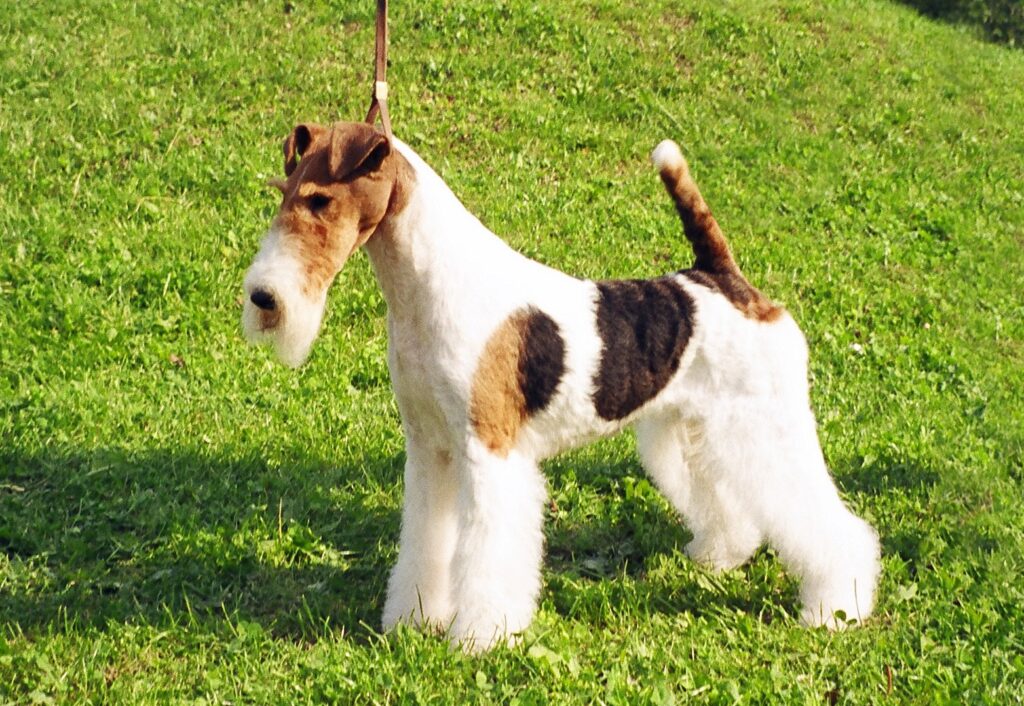
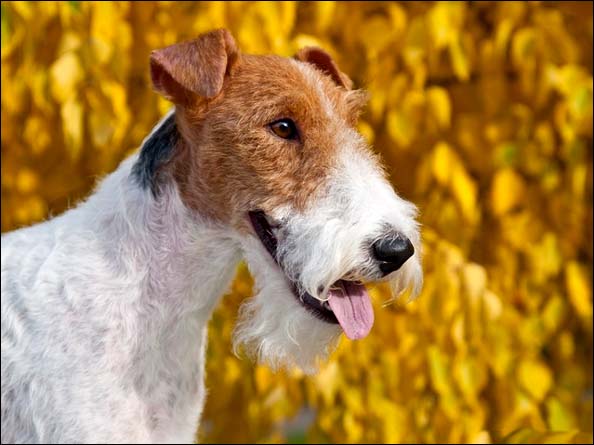
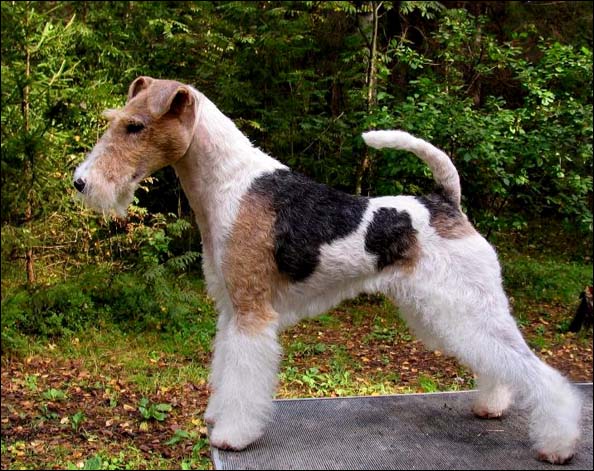
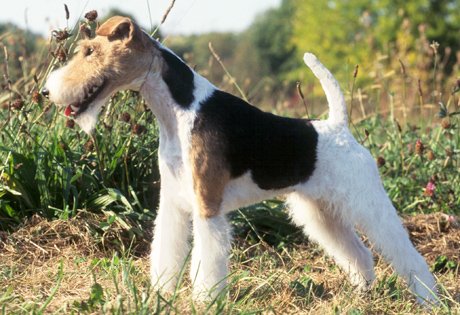
An aristocratic white bundle of energy and brains — lively and fearless: charismatic, clever, keen and devoted. The Wire Fox Terrier is a classic English earthdog with a wiry coat; inexhaustibly energetic and clever, it is an ideal partner for sporty, active owners, but its keen character and low boredom threshold call for experience and constant exercise.
Apartment · with caveatsKidsCats · not suitableOther dogs · with caveatsBeginners · not suitable
The Wire Fox Terrier is more than just a dog; it's a true ball of energy, intelligence, and irrepressible cheerfulness. This charismatic dog, with its aristocratic looks and the fearless heart of a hunter, makes a perfect companion for active people who can't imagine their lives without movement, sport, and adventure. Its sharp mind, loyalty, and spirited character require a special approach, but in return, you'll gain not just a pet, but a faithful friend and partner in all your endeavours. We will delve into all the intricacies of caring for and understanding the character of this unique terrier later on Tvaryny.
Dogs of this breed are best suited for athletes and experienced owners. For older people or those who prefer a more tranquil lifestyle, coping with their temperament would be incredibly challenging. If you have very young children in the family, you should carefully weigh the pros and cons, as Wire Fox Terriers do not tolerate rough handling. However, if you are an energetic person ready to dedicate time to training and long walks, then a Wire Fox Terrier will become an irreplaceable friend for you.
Wire Fox Terrier: Key Breed Characteristics
Wire Fox Terrier: Key Breed Characteristics · 11
Parameter
Characteristic
Origin
Great Britain
FCI Classification
Group 3 (Terriers), Section 1 (Large and medium-sized terriers). Standard №169.
Predominantly white with black, black-and-tan or tan markings
Grooming
High maintenance: requires regular stripping (hand-stripping)
Activity
Very high, needs daily intense exercise
Training
Responds well, but can be stubborn; requires consistency
Interesting Facts About the Breed
Movie and cartoon stars: The most famous Wire Fox Terrier in the world is probably Snowy (Milou) - the faithful companion of the main character of the Belgian comic "The Adventures of Tintin". A dog of this breed named Asta was also a star of the popular 1930s and 40s "Thin Man" films.
Royal favourite: King Edward VII of Great Britain was a great admirer of the breed. His favourite Fox Terrier was named Caesar, and he accompanied the monarch everywhere.
Show champions: Wire Fox Terriers are among the most successful show dogs. They have won the most prestigious "Best in Show" award at the Westminster Kennel Club Dog Show a record number of times (15).
White colour for safety: The predominantly white coat was deliberately bred. During hunting, it helped hunters easily distinguish the dog from the fox in the heat of the chase.
Escape artists: Thanks to their inquisitiveness, agility, and love of digging, Fox Terriers are true escape artists. They can dig under fences, jump over low barriers, and squeeze through the smallest gaps.
History of the Wire Fox Terrier Breed
The history of the Wire Fox Terrier is inextricably linked to fox hunting, which was extremely popular in 18th and 19th-century England. In fact, the very name of the breed, "Fox Terrier", translates as "fox terrier". Their main task was to flush the fox out of its den once the hounds had cornered it underground. This job required a small but immensely courageous, strong, and resilient dog with a fierce determination to hunt the quarry.
Initially, Fox Terriers were not divided into smooth-coated and wire-coated varieties; they were considered two types of the same breed and were often crossed with each other. The ancestors of modern Fox Terriers were various working terriers from the counties of Devon, Durham, and Wales, including black-and-tan and white English terriers. It is believed that to improve the breed, they were mixed with Beagle blood (for a better sense of smell) and Bull Terriers (for bravery and strength). The harsh, wire-like coat was an advantage for working in dense thickets and underground, as it provided excellent protection for the skin from injuries. The Wire Fox Terrier is also a close cousin to the Smooth Fox Terrier and shares common traits with other British terriers, such as the Welsh Terrier and the Lakeland Terrier.
The split into two types began in the late 19th century when the breed started to gain popularity in the show ring. Although the smooth-coated variety was initially more popular, the Wire Fox Terrier, with its striking appearance and charisma, quickly caught up. An official separate standard for the Wire Fox Terrier was adopted in 1913, putting an end to crossbreeding between the two varieties. Today, although both breeds share a common history, they have developed independently and have their own dedicated fanbases.
What a Wire Fox Terrier Looks Like: Standard and Appearance
The Wire Fox Terrier is the embodiment of elegance and athleticism. It is a compact, well-proportioned dog that literally radiates energy and a readiness for action. Its silhouette is reminiscent of a hunter's horse - short in the back but with long legs, which allows it to cover great distances.
Head: Long, with a nearly flat skull that tapers smoothly towards the eyes. The stop is barely visible. The muzzle is strong, with powerful jaws and a well-developed "beard" and "moustache" of harsh hair, which gives it a characteristic expression.
Eyes: Small, dark, and round. The gaze is lively, intelligent, and alert. Light-coloured eyes are considered a fault.
Ears: Small, V-shaped, and carried on a fold. The tips of the ears point forward and lie close to the cheeks. Prick or overly heavy ears are a deviation from the standard.
Body: The back is short, straight, and strong. The neck is long, muscular, and elegantly arched. The chest is deep but not too wide, with well-sprung ribs.
Tail: Set high, strong, and usually carried vertically. Previously, the tail was docked by about one-third, but today this practice is prohibited in many countries.
Coat: The main feature of the breed. It is very dense and harsh, feeling like coconut fibre to the touch. The hair on the back and sides is 2–4 cm long. Underneath the harsh outer coat is a short, soft undercoat. On the muzzle, the hair forms a characteristic beard and moustache, and on the legs, it creates thick "trousers".
Colour: White should be the dominant colour. Black, black-and-tan, or reddish-brown patches are permitted on a white background. Brindle, red, or liver patches are undesirable.
Character: The Wire Fox Terrier's Temperament and Behaviour
The character of a Wire Fox Terrier is a volatile mix of courage, inquisitiveness, and endless optimism. This is an extroverted dog that is always the centre of attention and ready to participate in any activity. They are incredibly devoted to their family, but at the same time, they retain a certain independence in decision-making, which is a typical trait for all terriers.
Key Character Traits:
Fearlessness. A Fox Terrier is completely unaware of its small size. It is ready to challenge any opponent, be it the neighbour's Great Dane or a rodent in the garden. This trait makes it an excellent watchdog that will always alert you to the approach of strangers with a loud bark.
High Intelligence. These dogs are very clever and learn quickly. However, their intelligence is combined with cunning and stubbornness. If training is boring and monotonous, a Fox Terrier will quickly find a more interesting activity for itself.
Hunting Instinct. Their original purpose—hunting—is deeply embedded in their genetics. They have an extremely strong chase instinct. Any small animal (a squirrel, cat, or hedgehog) will be seen as potential prey. This is why they are not recommended to be left unsupervised with other small pets. Unlike hounds, such as the Dunker or Spanish Hound, which chase prey over large areas, the Fox Terrier was bred to work directly in the den, which required an instant reaction and aggression towards the quarry.
High Energy. This dog is a perpetual motion machine. It needs daily, long, and intense physical activity. A simple walk on a lead around the block will be catastrophically insufficient. Without a proper outlet for its energy, a Fox Terrier can become destructive: chewing furniture, digging holes in the garden, and barking incessantly.
Tendency to Dominate. Fox Terriers can be assertive with other dogs, especially of the same sex. Early and proper socialisation is absolutely essential to raise a balanced and manageable dog.
Pros and Cons of the Breed
Pros and Cons of the Breed · 6
Pros
Cons
✅ High intelligence and quick wit: They learn new things quickly if you find the right approach.
❌ Extreme energy levels: They require daily intense physical and mental stimulation.
✅ Compact size: Convenient for apartment living, provided they get enough exercise.
❌ Prone to barking: They are very "vocal" and react to any noise.
✅ Sheds very little: With proper care (stripping), hair does not get left on furniture and clothes.
❌ Stubborn and independent: Can be challenging for novice owners to train.
✅ Devoted to the family: They become very attached to their owners and make wonderful companions.
❌ Strong hunting instinct: A danger to small animals (cats, rodents), and can run away when chasing prey.
✅ Courageous guardian: Will always warn you of danger, despite their size.
❌ Requires professional grooming: The coat must be regularly stripped, which takes time and money.
✅ Playful and cheerful character: Always ready for games and fun, an excellent partner for active recreation.
❌ Possible aggression towards other dogs: Requires careful and early socialisation.
Training and Socialisation
Training a Wire Fox Terrier is an exciting but also challenging process that requires patience, consistency, and a sense of humour from the owner. Thanks to their high intelligence, they can grasp commands almost instantly, but their innate stubbornness and independence mean they will always question your decisions.
Key Principles of Training:
Early socialisation: This is the most important stage. From a very young age, a puppy must be introduced to different people, sounds, places, and other dogs (only after a full course of vaccinations). This will help you raise a balanced and confident dog, not an aggressive troublemaker.
Positive reinforcement: Harsh methods, shouting, and physical punishment are completely ineffective for this breed. They will only lead to resistance and a loss of trust. The best results come from training based on praise, treats, and games.
Short and engaging sessions: Fox Terriers quickly lose interest in monotonous repetition. Training sessions should be short (10–15 minutes), dynamic, and varied.
Consistency: All family members must follow the same rules. If something is forbidden today, it must be forbidden tomorrow.
Sport: This is an ideal way to channel a Fox Terrier's energy in the right direction. They excel in disciplines such as agility, flyball, obedience, and lure coursing.
How to Care for Their Coat: Stripping and Daily Grooming
Caring for the Wire Fox Terrier's coat is the most important aspect of its maintenance, requiring special knowledge and effort. Their unique coat hardly sheds at all, but it needs regular care to maintain a healthy condition and proper texture.
The key procedure is stripping. This is the process of manually plucking out the dead outer coat hairs. It is stripping that allows the new, harsh-textured, vibrant-coloured coat to grow and maintain its protective properties. This procedure is done 2–4 times a year, depending on the coat's growth rate. It is crucial to understand that clipping a Wire Fox Terrier's coat with clippers spoils its structure. After clipping, the coat becomes soft, dull, loses its waterproof properties, and may start to shed more heavily.
Daily care: You should brush the dog daily with a metal comb and a brush to prevent matting, especially on the legs, under the armpits, and on the muzzle. The beard and moustache should be cleaned of food residue after each meal.
Bathing: You should only bathe a Wire Fox Terrier when necessary, using a special shampoo for wiry coats. Frequent washing can make the coat too soft.
Other procedures: Regularly check and clean their ears, wipe their eyes to prevent inflammation, and trim their claws approximately once a month if they don't wear down naturally.
Nutrition
Wire Fox Terrier Nutrition: Key Recommendations
Health and risks
Wire Fox Terrier Health: Typical Illnesses
Frequently Asked Questions (FAQ)
Does the Wire Fox Terrier shed a lot?
No, with proper care, this breed hardly sheds at all. Instead of seasonal shedding, their coat requires a stripping procedure (manual plucking) 2–4 times a year. This makes them a good choice for people who don't like dog hair in the house, but not for allergy sufferers, as allergies are caused not by hair but by saliva and skin particles.
Is a Fox Terrier suitable for apartment living?
Yes, thanks to its compact size, a Fox Terrier can live in an apartment. But there is one crucial condition: it must get enough daily physical and mental exercise. Two or three long walks with elements of games, running, and training are mandatory. Otherwise, the energy trapped within four walls will find a destructive outlet.
Do Fox Terriers get along with children and other animals?
With school-aged children who know how to behave around a dog, Fox Terriers usually get along well and become tireless playmates. However, they do not tolerate rough handling, so they are not recommended for families with very young children. As for other animals, the situation is complex. Due to their strong hunting instinct, they pose a threat to cats, rabbits, hamsters, and other small pets. They can also conflict with other dogs for dominance, so early socialisation is critically important.
How much does a Wire Fox Terrier puppy cost?
The cost of a Wire Fox Terrier puppy in the UK can vary significantly. The price depends on the parents' lineage, their show titles, and the puppy's own potential. Prices are adjusted to reflect current UK market rates for pedigree dogs. Allow for transport if the litter is in another part of the country or abroad, plus a quiet settling-in period afterwards.
What is the difference between stripping and clipping for a Fox Terrier?
They are fundamentally different procedures. Stripping is the plucking of old, dead hair, which allows new, harsh, and vibrant hair to grow. Clipping is the cutting of the hair with clippers. Clipping ruins the structure of a Fox Terrier's coat, making it soft, curly, dull, and less resistant to dirt and moisture. To maintain the breed's correct appearance, stripping is essential.
Video about the breed
FAQ
Is the Wire Fox Terrier suited to a novice?
Not really — an extremely energetic, keen and boredom-prone terrier; without experience, boundaries and serious exercise it becomes destructive. It suits sporty, active owners best.
How does the Wire Fox Terrier differ from the Smooth?
The main difference is the coat: the wire's is wiry and needs stripping; in size and character the breeds are almost the same.
Does the Fox Terrier get on with cats and dogs?
Cats are tricky — a strong hunting instinct; with other dogs it can be feisty, so early socialisation and control matter.