

| Height | 36–39 cm |
| Weight | 9–10 kg |
| Lifespan | 12–15 years |
| FCI group | 3 · terriers |
| Origin | United Kingdom (Wales) |
Exact ratings
Common health issues
Nutrition
The Welsh Terrier is more than just a dog; it’s a bundle of energy, intelligence, and loyalty packed into a compact, sturdy body. As versatile working dogs and superb companions, Welshies have a knack for winning hearts with their lively disposition and fearless character. They can be excellent hunters, reliable guards, rescue dogs, and even therapy animals. This breed is perfect for active individuals and families who are ready to dedicate time to their four-legged friend. If you’re looking for a tireless partner for hiking, running, or cycling, the Welsh Terrier is an ideal choice. For more details on this wonderful breed, read on here at Tvaryny.
Welsh Terrier: Key Breed Information
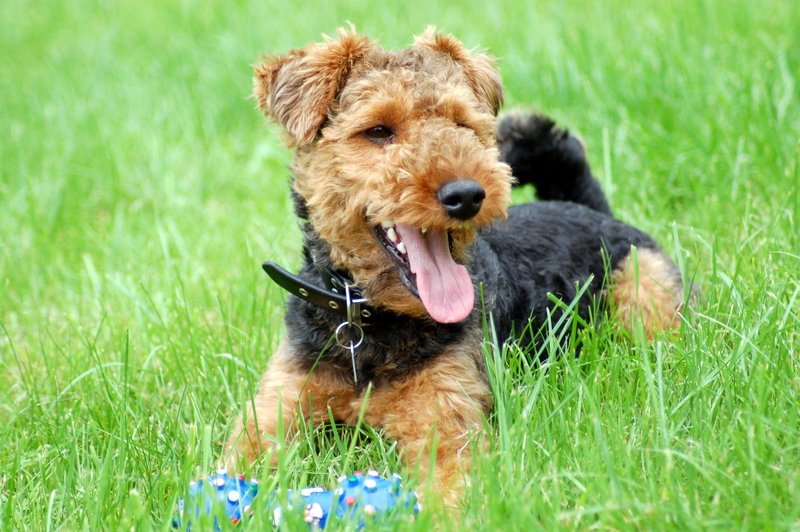
| Breed Name | Welsh Terrier |
| Country of Origin | Great Britain (Wales) |
| Date of Origin | 18th Century (Officially recognised in 1886) |
| Lifespan | 12-15 years |
| Height at Withers | Up to 39 cm |
| Weight | 9-9.5 kg |
| FCI Group | Group 3 (Terriers), Section 1 (Large and medium-sized terriers) |
| Temperament | Energetic, intelligent, playful, loyal, brave, slightly stubborn |
| Purpose | Hunting small game (fox, badger), companion dog |
The History and Origin of the Welsh Terrier
The history of the Welsh Terrier is deeply rooted in the rugged and picturesque landscapes of Wales. This breed is one of the oldest among the terriers of Great Britain. Its ancestors are thought to be the Old English Black and Tan Wire-haired Terriers, which were common across Britain. However, it was in the isolated mountainous regions of Wales that the breed developed, preserving its unique working qualities and recognisable appearance for centuries.
Initially, these dogs were bred exclusively for practical hunting purposes. Welsh Terriers were invaluable helpers for farmers. They bravely hunted in packs for foxes, badgers, and otters, protecting livestock and poultry from predators. Their compact size, strong jaws, endurance, and fearlessness allowed them to enter burrows and engage in a fight with an opponent much larger than themselves. Unlike many other terriers, Welshies worked as a team, which made them more social and less prone to conflict with other dogs.
For a long time, Welsh Terriers were considered purely working dogs, and their appearance was not a priority. The main selection criteria were hunting drive, courage, and stamina. This changed in the 19th century when the first dog shows began to take place. In 1886, the first Welsh Terrier Club was founded, and the same year, the Kennel Club officially recognised the breed and approved its standard. This marked the beginning of the breed’s popularisation outside of Wales. Gradually, Welshies spread throughout Europe and made their way to America, where they also gained recognition and affection. Despite their rich history, they remain a relatively rare and exclusive breed in many parts of the world, including the UK.
What the Welsh Terrier Looks Like: Standard and Appearance
The Welsh Terrier is a compact, square-framed, well-balanced dog that gives the impression of strength and energy in a small package. Its appearance is often compared to a miniature Airedale Terrier, yet the Welshie has its own unique features. Let’s take a closer look at the breed standard.
Head and Muzzle
The skull is flat and moderately wide between the ears. The stop (the transition from forehead to muzzle) is only slightly noticeable. The muzzle is of medium length, well-filled under the eyes, and has a rectangular shape—it should never be called wedge-shaped. The jaws are powerful, with a strong grip and a perfect scissor bite. The nose is large and exclusively black. The eyes are small, dark, and deep-set, with an intelligent and alert expression. The ears are V-shaped, small, set high on the head, and fold forward towards the cheeks.
Body and Limbs
The neck is of moderate length, muscular, slightly arched, and elegantly transitions into the shoulders. The back is short and strong, and the loins are powerful. The chest is deep but not too wide, with well-sprung ribs. The tail was traditionally docked, leaving approximately one-third of its length. Today, docking is banned in many countries. An undocked tail is carried vertically, like a ‘happy flag’, and is a continuation of the topline. The limbs are straight and parallel, with strong bone structure and well-developed muscles. The paws are small, compact, and round (‘cat-like’).
Coat and Colour of the Welsh Terrier
The coat is one of the breed’s main characteristics. It’s a double coat: a hard, wiry outer coat and a short, soft undercoat that provides reliable protection from the elements. The coat on the muzzle forms the characteristic ‘whiskers’ and ‘beard’.
The classic Welsh Terrier colour is a black and tan saddle. This means the head, neck, limbs, and lower part of the body have a rich reddish-brown (tan) colour, while a black or dark grey ‘saddle’ is located on the back. White markings are highly undesirable.
| Body Part | Standard Description |
|---|---|
| Head | Flat skull, rectangular muzzle, black nose |
| Eyes | Small, dark, deep-set |
| Ears | V-shaped, high-set, folding forward |
| Body | Compact, square, with a short back and deep chest |
| Tail | High-set, carried vertically |
| Coat | Hard, wiry with a dense undercoat |
| Colour | Black and tan saddle (black or grizzly ‘saddle’ on a tan background) |
Welsh Terrier Personality: Temperament and Behaviour
The Welsh Terrier is the epitome of the classic terrier temperament, but with some important mellowing. They are intelligent, clever, brave, and self-assured dogs. They are always ready for adventure, games, and any activity their owner proposes. Their endurance and inexhaustible energy make them excellent companions for outdoor fun. But beneath this lively exterior lies a deep affection for their family.
- Relationships with the Family: Welshies are very people-oriented and form strong bonds with their owners. They get along wonderfully with children, especially if they grow up together, becoming tireless playmates. However, as with any dog, interactions with small children should be supervised.
- Relationships with Other Animals: Their history as a hunter of small game is evident. The Welsh Terrier has a strong prey drive, so rodents, birds, and cats may be seen as quarry. Early and proper socialisation can help them get along with household cats, but the instinct may take over outdoors. They are generally more tolerant of other dogs than many other terriers (such as the Wire Fox Terrier), as their ancestors hunted in packs. However, a scrappy character can emerge if they are provoked.
- Intelligence and Stubbornness: These are incredibly smart dogs who learn new commands quickly. However, their intelligence is paired with a typical terrier independence and stubborn streak. They can analyse a situation and decide whether a command is worth following. Therefore, training must be consistent, patient, and based on positive reinforcement.
- Guard Dog Qualities: The Welsh Terrier is an excellent watchdog. He will always announce the approach of strangers with a loud bark. At the same time, they are not prone to barking without reason, provided their needs for activity and attention are met.
The Welshie’s character is in many ways similar to that of its close relative, the Lakeland Terrier—both breeds combine courage, playfulness, and loyalty.
Pros and Cons of the Welsh Terrier Breed
| Pros | Cons |
|---|---|
| Compact Size: Ideal for living in both flats and houses. | High Energy Level: Requires daily, long, and active walks. |
| High Intelligence: Learns quickly and is capable of complex commands and tricks. | Stubborn and Independent: Can be challenging to train for a novice owner. |
| Minimal Shedding: Considered a hypoallergenic breed, suitable for people with allergies. | Requires Professional Grooming: Regular hand stripping is necessary (2-4 times a year). |
| Loyalty and Love for Family: Becomes a wonderful companion for adults and children. | Strong Prey Drive: May chase small animals, requires a secure lead. |
| Robust Health and Stamina: Rarely gets ill with proper care. | Prone to Barking: Can be noisy if bored or if they hear something. |
| Playful and Cheerful Character: Never a dull moment with them. | Can be Dominant: Requires early socialisation and consistent training. |
Care and Maintenance: Everything an Owner Needs to Know
Welsh Terriers are low-maintenance dogs that adapt well to various living conditions, whether a city flat or a house with a large garden. The most important things for them are their owner’s attention, sufficient physical activity, and proper care.
Grooming the Welsh Terrier’s Coat
A key aspect of their care is looking after their unique hard coat. Welshies practically do not shed, which is a huge plus for indoor living. However, their coat requires regular grooming to maintain its health and tidy appearance.
- Hand Stripping: This is an essential procedure for a Welsh Terrier. Hand stripping involves manually plucking the dead outer hairs. It is done 2-4 times a year and helps maintain the correct hard coat texture, vibrant colour, and protective qualities. Clipping with an electric clipper is strongly discouraged as it spoils the coat’s structure, making it soft, dull, and prone to getting wet.
- Brushing: In between stripping sessions, the dog should be brushed 1-2 times a week with a metal comb or brush to remove dirt and prevent matting, especially on the ‘beard’ and legs.
- Bathing: Bathe the Welshie only when necessary, using special shampoos for wiry coats to avoid drying out the skin or softening the fur.
Exercise and Activity
This is a very energetic breed. They need at least 1-1.5 hours of active daily walks. This can be more than just a walk on a lead; it should include running, playing with a ball, frisbee, or swimming. Welsh Terriers love to chase things, so the ‘Fetch’ command is something they grasp naturally. They show excellent results in sports like agility, flyball, coursing, and nose work. Their hunting instinct and keen sense of smell make them similar to hounds, even though they are not. For comparison, specialised breeds like the Transylvanian Hound use their scent to track large game over long distances, while the Welshie uses it to find prey in burrows. Insufficient physical and mental stimulation can lead to destructive behaviour at home.
Other Aspects of Care
- Ears: Regularly check and clean their ears to prevent infections.
- Teeth: Brush their teeth 2-3 times a week with a special dog toothpaste to prevent tartar buildup.
- Claws: Trim their claws once a month if they don’t wear down naturally.
- Eyes: Keep an eye on the cleanliness of their eyes and, if necessary, rinse them with a chamomile infusion or a special lotion.
Welsh Terrier Training and Socialisation
Training a Welsh Terrier is an exciting but also responsible process. Their sharp minds allow them to quickly grasp commands, but their innate stubbornness requires patience and consistency from the owner. Training should be done in a playful manner, with plenty of praise and treats.
Early socialisation is key. From a very young age, a puppy needs to be introduced to different people, sounds, places, and other animals. This will help them grow into a balanced and confident dog that doesn’t show aggression or fear. Special attention should be given to teaching the ‘Come!’ command, as their prey drive can cause a Welshie to run after something interesting, ignoring their owner’s calls. For this reason, it’s best to walk them on a long lead in unfenced areas.
Harsh training methods and physical punishment are absolutely unacceptable. They can result in a dog becoming either fearful or, conversely, aggressive. The best approach is positive reinforcement, patience, and respect for your pet’s independent character. The temperament of a Glen of Imaal Terrier, which is known for its social and enduring nature, is another good example of why a positive approach is essential.
Welsh Terrier Health: Common Ailments and Prevention
Welsh Terrier Nutrition: Key Recommendations
Interesting Facts About the Breed
- A Presidential Dog: One of the most famous Welsh Terrier owners was US President John F. Kennedy. His dog was named Charlie.
- The “Miniature Airedale”: Due to their physical similarity, the Welsh Terrier is often called a smaller version of the Airedale Terrier, although they are two completely different breeds with distinct origins.
- A Rare Show Guest: Despite its long history, the Welsh Terrier has never been a particularly “fashionable” breed, remaining in the shadow of more popular terriers. This has allowed the breed to avoid the health problems associated with extreme breeding.
- Versatile Hunter: The Welsh Terrier is one of the few breeds capable of hunting both on land and in water (for example, for otters).
- A Pack Hunter: Unlike many other terriers bred for individual work, Welshies were traditionally used for pack hunting, which made them more sociable with their kin. This is a common trait with other breeds, such as the Airedale Terrier or the Wire Fox Terrier.
Frequently Asked Questions About the Welsh Terrier (FAQ)
Is the Welsh Terrier suitable for a first-time owner?
The Welsh Terrier can be a challenge for an inexperienced owner due to its stubbornness and high energy level. However, if a novice owner is willing to dedicate plenty of time to training and active walks, and is consistent and patient, they can handle it.
Does the Welsh Terrier shed much?
No, it practically doesn’t shed. Thanks to its wiry coat, which requires hand stripping, dead hairs do not fall out onto carpets and furniture. This makes the breed a great choice for people prone to allergies.
How much does a Welsh Terrier puppy cost?
The price of a Welsh Terrier puppy from a reputable breeder can vary significantly depending on the pedigree, the parents’ titles, and the kennel’s reputation. Since the breed is relatively rare, the cost is often higher than for more common breeds. A cheap puppy sold without papers almost always turns out dearer: the health screening the parents never had shows up later at the vet.
Can a Welsh Terrier live in a flat?
Yes, thanks to their compact size and minimal shedding, they do well in a flat. But there is one important condition: the dog must get enough daily physical and mental stimulation outdoors.
Are Welsh Terriers noisy?
They are prone to barking because they are excellent watchdogs. They will be sure to alert you to the arrival of guests or suspicious sounds outside the door. Proper training and sufficient activity help to control this tendency and prevent unnecessary barking.
Video About the Breed
- Friendly, obedient for a terrier
- Clever, versatile, trainable
- Barely moults
- Devoted, good with children
- Very high energy level
- Keeps a hunting instinct and drive
- Wiry coat needs stripping
- Prone to barking and digging
| Airedale Terrier | Lakeland Terrier | Wire Fox Terrier | |
|---|---|---|---|
| Height | 56–61 cm | 33–38 cm | 36–39 cm |
| Energy | 4.5 | 4.5 | 4.5 |
| Apartment | 2.5 | 3.5 | 3 |
| Beginners | 3 | 3 | 2.5 |
Is the Welsh Terrier calmer than other terriers?
How is the Welsh Terrier like the Airedale?
Who is the Welsh Terrier suited to?
FCI Standard No. 78 · The Kennel Club
For apartments · For kids · For beginners · Active · Smartest · Hypoallergenic · All rankings →