


| Height | Males ~62 cm, females ~58 cm |
| Weight | Males 35–45 kg, females 30–40 kg |
| Lifespan | 11–13 years |
| FCI group | 2 · molossoids |
| Origin | North Macedonia / Serbia |
Exact ratings
Common health issues
Nutrition
The Šarplaninac, or Yugoslavian Shepherd Dog, is a large mountain dog from the Balkans whose job, for centuries, was not to gather the flock but to stay inside it and keep predators away. The difference between those two tasks explains almost everything about the breed. A herding dog works in tandem with a person and waits for the command; a livestock guardian decides for itself — at night, in fog, kilometres from the fold, with nobody around to prompt it. That autonomy is what makes the Šarplaninac what it is, and it is also why the breed suits far from every family. Learn more on Tvaryny.
In the nomenclature of the Fédération Cynologique Internationale the breed is entered under number 41 with its original name, “Jugoslovenski ovčarski pas — šarplaninac”; the English version of the standard calls it “Yugoslavian Shepherd Dog — Sharplanina” and the French one “Chien de berger yougoslave de Charplanina”. The FCI gives North Macedonia and Serbia as countries of origin, and the name comes from the Šar Planina massif: the text of the standard says outright that the breed was named after the mountain range where it was most widespread. The same text admits that the origin of the breed remains disputed and that the ancestors of these dogs most probably reached Europe from Asia during prehistoric migrations.
What follows is a reading of the breed from the text of the current FCI standard No. 41 and from studies that examined the Šarplaninac in its own right rather than “large breeds in general”: genetic analyses of Balkan guardian dogs, a radiological study of dysplasia published in 1972, and field observations of working guardians on farms.
Šarplaninac: A Brief Breed Overview
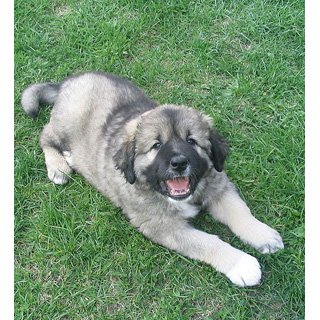
The standard describes the Šarplaninac as a robust, well-proportioned dog with generous bone, of a height noticeably above average, with a dense, long and rather harsh coat that visually shortens the body. The temperament is set out in the same passage in a few words worth reading carefully: “reliable, protective but not biting”, and then “incorruptible and devoted to its master”.
| FCI name | Jugoslovenski ovčarski pas — šarplaninac (standard No. 41) |
| Country of origin per the FCI | North Macedonia, Serbia |
| FCI group | Group 2 (Pinscher and Schnauzer type, Molossoid breeds, Swiss Mountain and Cattle Dogs), section 2.2 — mountain type molossoids; without working trial |
| Recognition | registered with the FCI since 1939 under the name “Ilirski ovčar” (Illyrian Shepherd Dog); definitively accepted under its present name on 24.07.1957 |
| Current standard | published 24.11.1970; the authentic language of the standard is French |
| Height at the withers | Males: 62 cm on average Females: 58 cm on average Males under 56 cm and females under 54 cm are not admitted to breeding |
| Weight | Males: 35–45 kg Females: 30–40 kg |
| Coat | 10–12 cm at the withers; hair shorter than 7 cm is a disqualifying fault |
| Lifespan | 11–13 years |
History of the Šarplaninac Breed
The historical summary inside the standard itself is short and cautious. It says that the dog has been bred “from time immemorial” in the south-eastern mountain regions of the former Yugoslavia, that the breed was named after the Šar Planina range where it occurred most often, and that the original type has survived precisely where intensive stock-keeping still exists and where the dog continues to do its first job — guarding the flock. That detail matters: the standard ties the preservation of type not to shows, but to the presence of real work.
The official cynological chronology is written into the standard as well. The FCI registered the breed under number 41 in 1939 — but at that time it was called “Ilirski ovčar”, the Illyrian Shepherd Dog. In 1957 the General Assembly of the FCI accepted the proposal of the Yugoslav cynological federation to rename it “Yugoslavian Shepherd Dog — Sharplanina”; the date of definitive acceptance recorded in the nomenclature is 24 July 1957. The current standard was published on 24 November 1970 and its authentic language is French — the English version appeared only on 3 October 1980.
The most interesting moment in this history is the one when a single “Illyrian Shepherd Dog” produced two breeds. The date is given not by standard No. 41 but by the standard of the neighbouring breed: the text of FCI standard No. 278 for the Karst Shepherd Dog states that until 16 March 1968 the shepherd dog of the Karst massif and the shepherd dog of the Šar Planina massif bore the same name, and that on that day the Central Cynological Society of Yugoslavia decided to call the first the “Karst Shepherd Dog” and the second the “Šarplaninac”. Since then the two breeds have been entirely independent of one another. It is worth noting the method here: the history of a breed is often set out more precisely in the standard of the neighbouring breed it was separated from than in its own.
The question of the breed’s national belonging is a sensitive one in the Balkans, so it is better to stay with documents rather than retellings. In the English text of the standard, dated 1980, the origin field reads “Serbia/Macedonia”; in the current FCI nomenclature entry the countries of origin are North Macedonia and Serbia. The historical summary of the standard itself ties the name not to a state but to a mountain: the breed was named after the Šar Planina range, where it was most common. That is exactly what the federation’s official documents record, and those are the documents to cite.
The breed was not purely peasant property: at the end of the twentieth century Šarplaninacs were kept and trained in military dog-handling centres. This is not folklore — the genetic study published in 2020 in Acta Veterinaria-Beograd collected its material not only at three dog shows but also at a military dog-training centre in Serbia. The authors of the same work note separately that outside the registry system, on holdings in the mountain areas of the Western Balkans, a local, locally adapted population of this breed still lives — and it was not part of their sample. The breed also shares common roots with the other Balkan flock guardians, such as the Tornjak and the Karst Shepherd Dog.
What the Šarplaninac Looks Like: Standard and Appearance
The first thing to remember from the section on size: the standard gives different figures for males and females, and they must not be merged into a single range. The average height at the withers is 62 cm for males and 58 cm for females. A separate limit is written down below which a dog is not admitted to breeding: males under 56 cm and females under 54 cm. Weight in working condition is 35–45 kg in males and 30–40 kg in females. The length of the body slightly exceeds the height at the withers; the standard gives a ratio of about 8:10 for males and 10:12 for females.
- Head: proportionate to the body, about 25 cm in total length, which corresponds to roughly 40 % of the height at the withers. The skull is slightly longer than the muzzle — the standard gives the ratio 57:43. The line of the skull is slightly convex, the bridge of the nose straight, and the lines of the profiles converge.
- Muzzle and teeth: the muzzle is shorter than the skull, broad and deep at the base, tapering smoothly towards a broad black nose. The lips are moderately thick and dry, the corners clean, without a hint of flews. Scissor bite, complete dentition — the standard places the absence of premolars among the disqualifying faults.
- Eyes: almond-shaped, neither large nor deep-set, dark or light brown. The standard’s phrasing about expression deserves quoting: the gaze is calm but penetrating, and it “must never betray fear”. Eyelids and visible mucous membranes are black.
- Ears: set on the line running from the tip of the nose through the inner corner of the eye, or slightly below it; V-shaped, drooping, lying close to the cheeks and covered with short dense hair. An ear set too high or standing away from the head is placed by the standard among the serious faults.
- Neck and body: the neck is of medium length, broad, deep and muscular, without dewlap; the long hair and the marked “collar” at the junction with the head make it look shorter than it is. The back is straight and broad, the loin shorter, the croup of medium length and sloping. The topline is horizontal or slightly inclined towards the croup; in dogs bred in the mountains the standard tolerates a croup a little higher than the withers, while considering it undesirable.
- Chest: deep, with the sternum at elbow level, ribs slightly sprung. The standard requires the chest girth to exceed the height at the withers by at least 20 % — this is exactly the deep, capacious chest that the health section will come back to.
- Tail: long, reaching at least the hock, thick at the root, with fringing on the underside. Carried in a light sabre curve; when the dog is excited the curve deepens and the tail may rise above the line of the back. A tail carried with a lateral deviation is a serious fault.
- Limbs and gait: the elbows sit at about 55 % of the total height at the withers; the shoulder blade forms an angle of about 65° with the horizontal, the upper arm about 55°, the stifle about 125° and the hock about 130°. Dewclaws are rare and are to be removed. The habitual gait is the trot, long and springy; at the gallop, as the standard says outright, the dog looks somewhat clumsy, although its strides are long.
- Coat: short on the head, the ears and the front of the limbs; long, almost straight and rather harsh around the neck, on the croup, at the back of the limbs and on the tail. Under the outer coat lies an abundant, short and fine undercoat. At the withers the hair must be 10–12 cm and never shorter than 7 cm; anything under 7 cm is a disqualification.
- Colour: a dog of solid colour. All shades from white to dark brown, almost black, are admitted, and the standard names greenish grey (iron grey) and dark grey as the desired ones. Piebald patterning and white markings are not allowed; in pigmented dogs tiny white marks on the chest and toes are possible but undesirable. The top of the head, the neck and the body are darker, and towards the extremities the tone lightens gradually to dirty white or yellowish grey — the transition must be very gradual and must never give the impression of patterning.
Colour deserves a separate word, because a misunderstanding is common here. People often picture the Šarplaninac as exclusively iron grey, and the fault lies not in an error but in the wording of the standard: it calls the grey tones desired, not the only ones. In fact the standard accepts the whole range of solid colours from white to almost black dark brown, and forbids something else — patterning. A brindle pattern and extensive white markings are disqualifying, whereas a uniformly fawn or white dog is not in conflict with the standard. So “the wrong colour” in a conversation about this breed most often means patterning, not a shade.
The list of disqualifying faults in this breed is telling, because it does not concern appearance alone. Besides height below the permitted minimum, hair shorter than 7 cm, brindle colour and extensive white markings, a dog is disqualified for unpigmented visible mucous membranes and eyes, the absence of premolars, a sharp disproportion between the length of the body and the height — and, as a separate point, aggressiveness or excessive shyness. In other words, the standard screens both extremes of temperament out of breeding, not only “vicious” dogs. The closing note adds one more requirement: only functionally and clinically healthy dogs of typical breed conformation should be used for breeding.
Šarplaninac Character: Temperament and Behaviour
A livestock guardian is not “a very serious sheepdog”. It is a different profession. A herding breed is taught to react to a person: look, go round, press, turn back. A guardian is taught almost nothing — it is raised among its charges, and from then on it decides for itself what counts as a threat, when to get up and how much pressure to apply. The Šarplaninac works its shift without a supervisor, and its “disobedience” in the domestic sense is in fact the intact ability to work without one.
What this looks like in figures was shown by a study published in 2025 in PLoS ONE: German researchers spent two years (May 2022 – January 2024) observing 113 guardian dogs on 25 farms, and Šarplaninacs were among the breeds studied. The overall picture is this: the dogs stayed mostly within one body length of the animal they guarded, goats or horses; towards their owner and familiar people they behaved in a friendly way; towards strangers and unfamiliar dogs, dominantly and warily. The authors noted separately that Šarplaninacs, together with Caucasian Shepherd Dogs and their crosses, stayed within one to three body lengths of the goats and horses more often than Pyrenean Mountain Dogs and Kangals did. In other words, “sticking” to the charges is more pronounced in this breed than in some other guardians.
The mechanism that turns a puppy into a guardian is described in the methodology of the same study: the dogs are brought onto the farm young and grow up among the animals and people they will later work with — and it was by the degree of this early rearing that the authors classified the dogs in the sample. The practical conclusion for a family sounds unexpectedly simple: a Šarplaninac will guard whatever it grew up among. If it grew up among goats, goats become its world; if among a family and a yard, then the family and the yard. So the question of “what exactly will it consider its own” is settled in the first months, not later on a training ground.
The standard describes the desired temperament with restraint: an even disposition, good character, reliability, “protective but not biting”, incorruptibility and devotion to the master. The key words are “not biting”: from a correct Šarplaninac one expects not a quick attack but a heavy, convincing presence. It does not usually spend itself on trifles, but it shares territory very badly with unfamiliar dogs, especially of the same sex, and does not treat visitors as something neutral. Within the family, among its own, this same dog is calm and patient — but its patience with children cancels out neither its mass nor its guarding logic: two children playing with shouting and running about may be read as a conflict and prompt it to intervene. A similar combination of weight, calm and readiness to defend is found in other mountain giants, such as the Pyrenean Mastiff.
There is one more detail worth knowing for anyone who goes by documents. In the FCI nomenclature the breed is listed without working trial: to obtain a title or confirmation, a dog does not have to pass any flock-guarding test. This means that the official system checks conformation and behaviour in the ring — where, let us recall, both aggressiveness and excessive shyness are disqualifying — but does not check working ability as such. So there is no point in judging the working qualities of a particular line by its titles; what to ask about is what the puppy’s parents do and in what conditions they live.
The honest conclusion is this: the Šarplaninac is not a breed for everyone. It needs space, a solid fence and an owner ready to direct a dog that is used to deciding on its own. For anyone looking for a companion for a city flat, parks and cafés, this breed will not do — and no amount of upbringing will change that, because the issue is not manners but a working specialisation deliberately preserved in the breed for centuries.
Pros and Cons of the Šarplaninac Breed
| Pros | Cons |
|---|---|
| ✅ Works with the flock on its own, without human commands | ❌ Needs space and a solid fence, not for a flat |
| ✅ A calm, level-headed type of guardian | ❌ Shares territory badly with unfamiliar dogs |
| ✅ Strong attachment to its charges and family | ❌ Self-reliance is easily read as stubbornness |
| ✅ Endures bad weather and a mountain climate | ❌ Wary of strangers by default |
| ✅ Undemanding in coat care | ❌ The dense undercoat sheds heavily |
| ✅ The standard screens out both aggression and shyness from breeding | ❌ A hard breed for a novice |
Šarplaninac Health: Typical Diseases and Prevention
How to Care for a Šarplaninac’s Coat and Hygiene
The Šarplaninac’s coat is built the way the standard describes it: long, almost straight and rather harsh guard hair of 10–12 cm at the withers, and beneath it an abundant, short and fine undercoat. On the head, ears and front of the limbs the hair is short, so the whole volume falls on the neck, croup, back of the limbs and tail. This is the two-layer construction of a mountain dog: the guard hair sheds water and snow, the undercoat holds air.
The practical consequences are simple. Care means not clipping but brushing, roughly once or twice a week, rising to daily during the seasonal moult, when the undercoat comes out in masses. The trouble spots are the “collar” on the neck, the “trousers” on the thighs and the tail: that is where mats form. Frequent bathing is unnecessary: a dense harsh outer coat with a live undercoat cleans itself well, and extra washing only strips the protective layer. Every few weeks it is worth examining the ears (they hang and lie close to the cheeks, so they ventilate worse than erect ones), watching the eyes and nails, and brushing the teeth once or twice a week with a special paste — all the more so because complete dentition is a requirement of the standard in this breed.
Training and Socialisation of the Šarplaninac
Training a livestock guardian differs from training a working utility breed as much as their jobs differ. The Šarplaninac understands perfectly well what is wanted of it, but carries out what it sees the sense in, and does so at its own pace. Because of this it is often called stubborn, though it would be more correct to put it differently: unconditional obedience was not selected for in this breed, because on the pasture it would even have been harmful. So what works is not the command “because I said so” but consistency, predictability and clear rules. Roughness and physical punishment are unacceptable with such a dog — they do not make it more obedient, but they quickly destroy trust, and a large, distrustful, wronged dog is a genuine safety problem.
Sobriety about socialisation itself matters too. In the field part of the German study already mentioned (direct observations covered 19 dogs) something non-obvious emerged: dogs that arrived on the farm as puppies and were socialised there showed behaviour of the “dominant-aggressive” category more often than those brought in as adults. In the authors’ classification this category takes in a broad set of expressions — from a high-tailed posture and barking to threat and pursuit. This should be read not as an argument against socialisation but as a realistic correction: early socialisation builds attachment to the charges and the ability to live among one’s own, but it does not turn a guardian into a dog indifferent to strangers. Life with a Šarplaninac has to be planned around the second fact.
What is really needed from the first weeks: calm acquaintance with different people, surfaces, sounds and animals; getting the dog used to examination, handling, collar and lead while it still weighs less than its owner; clear rules about doors, gates and visitors. The fence is a separate point: the territory must be enclosed reliably, because for this breed “my land” is a working concept, not an abstraction. Exercise is needed daily but not of a sporting kind: long quiet work on foot suits it better than intense games, and here the Šarplaninac differs from utility breeds. The same seriousness of approach to upbringing is demanded by the Japanese giant, the Tosa Inu.
Šarplaninac Feeding: Key Recommendations
Interesting Facts About the Šarplaninac
- The official authentic language of the breed standard is French, although the breed itself is Balkan: the English version of the standard was published only on 3 October 1980, while the current original is dated 24 November 1970.
- The standard states a requirement for the look of the eyes that is rarely met in this form: the gaze must be calm and penetrating and “must never betray fear”.
- Until 16 March 1968 the Šarplaninac and the Karst Shepherd Dog were officially considered a single breed — the Illyrian Shepherd Dog. The breed also shares common roots with other Balkan flock guardians, notably the Tornjak.
- An analysis of the breed’s mitochondrial DNA published in 2024 in Acta agriculturae Slovenica found nine haplotypes in it, grouping into three main clades — A, B and C — with shares of 43 %, 43 % and 14 %.
- In the 2014 genetic study, clustering methods failed to separate Šarplaninacs from Caucasian Shepherd Dogs — even though on other indicators all the Balkan breeds examined turned out to be genetically distinct from one another.
- The Šarplaninac is depicted on the Macedonian 1 denar coin.
- At one time the Yugoslav authorities banned the export of these dogs from the country, and this is considered one of the reasons why the breed remained little known abroad for so long.
- Historically these dogs guarded flocks not only from wolves but also from bears.
- Today Šarplaninacs are used as working livestock guardians far beyond the Balkans: in the German study of 2025 they appear among the breeds that farmers import to protect livestock from wolves.
Frequently Asked Questions About the Breed (FAQ)
Is the Šarplaninac suitable for life in a flat?
No. This dog needs space and a private plot with a solid fence: guarding territory is work for it, not an invention of its owner.
How does the Šarplaninac differ from a herding sheepdog?
By specialisation. Herding breeds move the flock on a person’s commands, while the Šarplaninac lives inside the flock and defends it on its own, with no handler beside it. Hence both its independence and the difficulty of everyday obedience.
What are the height and weight of an adult Šarplaninac?
Under FCI standard No. 41 the average height at the withers is 62 cm in males and 58 cm in females; weight in working condition is 35–45 kg in males and 30–40 kg in females. Males under 56 cm and females under 54 cm are not admitted to breeding.
How does the Šarplaninac get on with children?
With its own children it is usually patient, but a large guardian dog beside small children needs supervision: it may read boisterous play as a conflict and step in.
Do they bark a lot?
For a flock guardian the voice is a working tool: it is addressed to whoever the dog considers a stranger. In the German observation of 2025 the guardian dogs behaved in a friendly way towards their owner and familiar people, and dominantly and warily towards unfamiliar people and dogs.
Can a Šarplaninac be kept on a chain?
No. A chain deprives the dog of the very thing it was bred for — the ability to patrol its territory and choose the distance itself — and easily turns a balanced guardian into an unmanageable one.
Video About the Breed
- Works with the flock on its own, without commands
- Calm, level-headed type of guardian
- Devoted to family and charges
- Withstands harsh weather
- Independent, self-reliant — not for a novice
- Prone to barking at night
- Wary of strangers
- Needs space and a solid fence
- Dense coat sheds heavily
| Caucasian Shepherd Dog | Karst Shepherd Dog | Kangal | |
|---|---|---|---|
| Height | 64–75 cm | 54–63 cm | 72–81 cm |
| Energy | 2.5 | 3 | 2.5 |
| Apartment | 2 | 2 | 2 |
| Beginners | 2 | 2.5 | 2 |
Is the Šarplaninac suited to a novice?
How does it differ from a herding sheepdog?
What are the height and weight of an adult dog?
Is the Šarplaninac aggressive?
Can it be kept in a flat?
What should be checked in a puppy's parents?
FCI Standard No. 41 · FCI nomenclature · Acta Veterinaria-Beograd (2020) · J. Anim. Breed. Genet. (2014) · Sustainability (2021) · PLoS ONE (2025) · JAVMA (2000)
For apartments · For kids · For beginners · Active · Smartest · Hypoallergenic · All rankings →